Adam Gearey - Böcker
Visar alla böcker från författaren Adam Gearey. Handla med fri frakt och snabb leverans.
11 produkter
11 produkter
593 kr
Skickas inom 10-15 vardagar
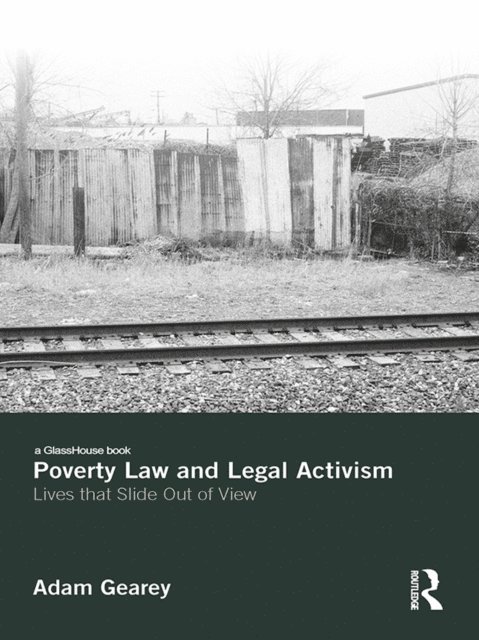
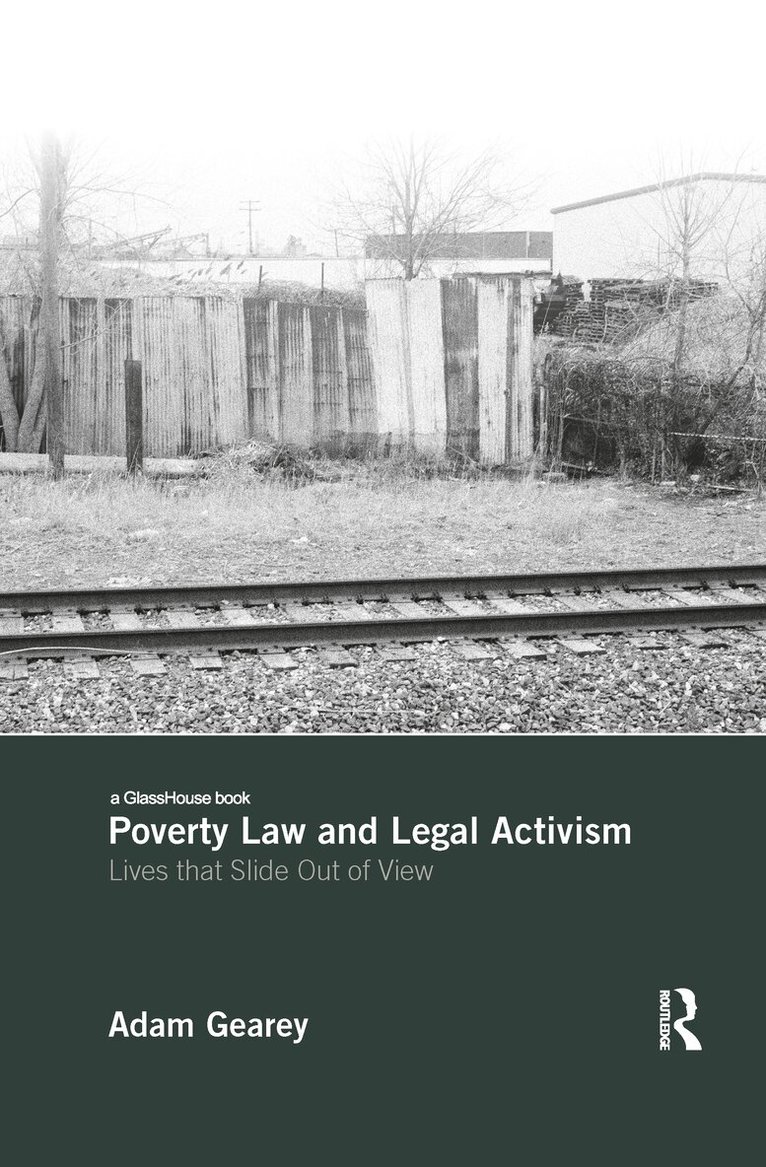
Linking critical legal thinking to constitutional scholarship and a practical tradition of US lawyering that is orientated around anti-poverty activism, this book offers an original, revisionist account of contemporary jurisprudence, legal theory and legal activism. The book argues that we need to think in terms of a much broader inheritance for critical legal thinking that derives from the social ethics of the progressive era, new left understandings of "creative democracy" and radical theology. To this end, it puts jurisprudence and legal theory in touch with recent scholarship on the American left and, indeed, with attempts to recover the legacies of progressive era thinking, the civil rights struggle and the Great Society. Focusing on the theory and practice of poverty law in the period stretching from the mid-1960s to the present day, the book argues that at the heart of both critical and liberal thinking is an understanding of the lawyer as an ethical actor: inspired by faith or politics to appreciate the potential and limits of law in the struggle against economic inequality.
2 290 kr
Skickas inom 10-15 vardagar
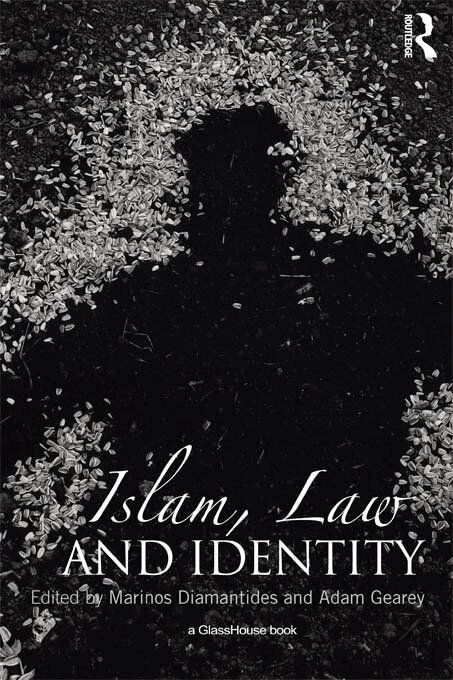
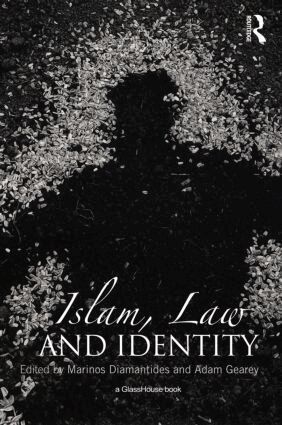
The essays brought together in Islam, Law and Identity are the product of a series of interdisciplinary workshops that brought together scholars from a plethora of countries. Funded by the British Academy the workshops convened over a period of two years in London, Cairo and Izmir. The workshops and the ensuing papers focus on recent debates about the nature of sacred and secular law and most engage case studies from specific countries including Egypt, Israel, Kazakhstan, Mauritania, Pakistan and the UK. Islam, Law and Identity also addresses broader and over-arching concerns about relationships between religion, human rights, law and modernity. Drawing on a variety of theoretical and empirical approaches, the collection presents law as central to the complex ways in which different Muslim communities and institutions create and re-create their identities around inherently ambiguous symbols of faith. From their different perspectives, the essays argue that there is no essential conflict between secular law and Shari`a but various different articulations of the sacred and the secular. Islam, Law and Identity explores a more nuanced and sophisticated understanding of the tensions that animate such terms as Shari`a law, modernity and secularization
692 kr
Skickas inom 10-15 vardagar
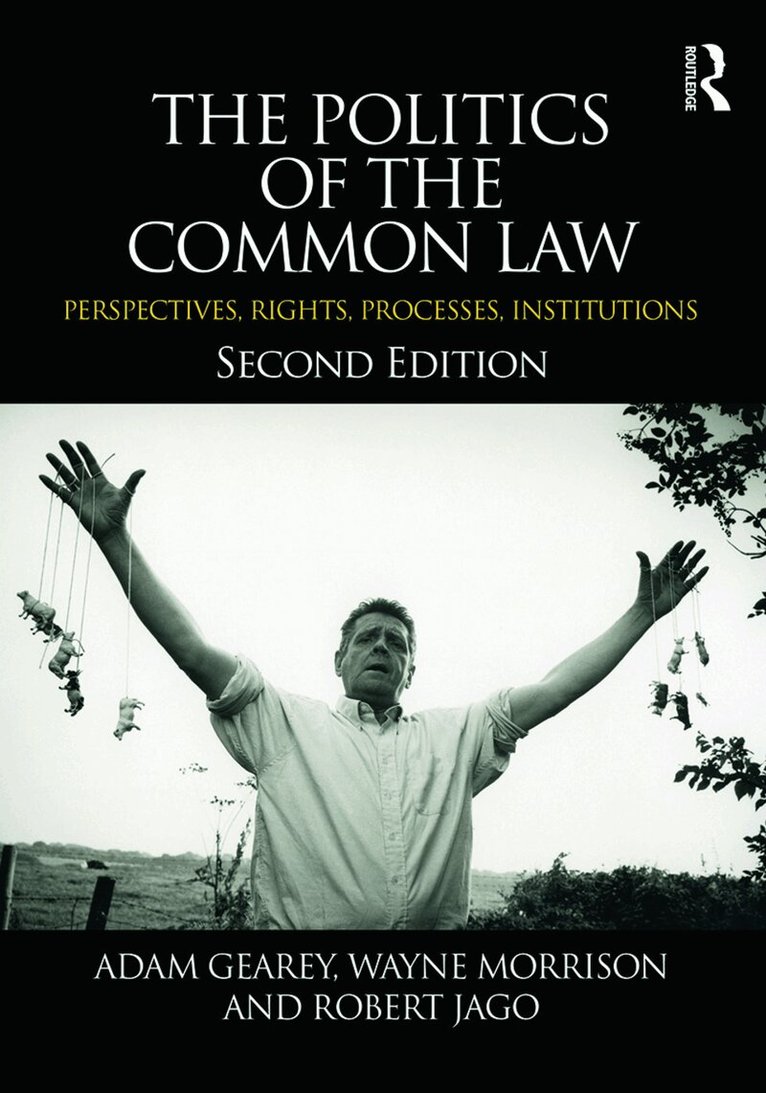
The Politics of the Common Law offers a critical introduction to the legal system of England and Wales. Unlike other conventional accounts, this revised and updated second edition presents a coherent argument, organised around the central claim that contemporary postcolonial common law must be understood as an articulation of human rights and open justice. The book examines the impact of the European Convention and European Union law on the structures and ideologies of the common law and engages with the politics of the rule of law. These themes are read into normative accounts of civil and criminal procedure that stress the importance of due process. The final sections of the book address the reality of civil and criminal procedure in the light of recent civil unrest in the UK and the growing privatisation of public services. The book questions whether it is possible to find a balance between the requirements of economics and the demands of justice.
576 kr
Skickas inom 10-15 vardagar
The essays brought together in Islam, Law and Identity are the product of a series of interdisciplinary workshops that brought together scholars from a plethora of countries. Funded by the British Academy the workshops convened over a period of two years in London, Cairo and Izmir. The workshops and the ensuing papers focus on recent debates about the nature of sacred and secular law and most engage case studies from specific countries including Egypt, Israel, Kazakhstan, Mauritania, Pakistan and the UK. Islam, Law and Identity also addresses broader and over-arching concerns about relationships between religion, human rights, law and modernity. Drawing on a variety of theoretical and empirical approaches, the collection presents law as central to the complex ways in which different Muslim communities and institutions create and re-create their identities around inherently ambiguous symbols of faith. From their different perspectives, the essays argue that there is no essential conflict between secular law and Shari`a but various different articulations of the sacred and the secular. Islam, Law and Identity explores a more nuanced and sophisticated understanding of the tensions that animate such terms as Shari`a law, modernity and secularization
1 930 kr
Skickas inom 10-15 vardagar
Linking critical legal thinking to constitutional scholarship and a practical tradition of US lawyering that is orientated around anti-poverty activism, this book offers an original, revisionist account of contemporary jurisprudence, legal theory and legal activism. The book argues that we need to think in terms of a much broader inheritance for critical legal thinking that derives from the social ethics of the progressive era, new left understandings of "creative democracy" and radical theology. To this end, it puts jurisprudence and legal theory in touch with recent scholarship on the American left and, indeed, with attempts to recover the legacies of progressive era thinking, the civil rights struggle and the Great Society. Focusing on the theory and practice of poverty law in the period stretching from the mid-1960s to the present day, the book argues that at the heart of both critical and liberal thinking is an understanding of the lawyer as an ethical actor: inspired by faith or politics to appreciate the potential and limits of law in the struggle against economic inequality.
339 kr
Skickas inom 7-10 vardagar
This book explores the many approaches available to the study of law and literature. An exploration of the many relationships between law and literature. Looks at what law and literature can learn from one another. Makes those involved in literary studies more conscious of the impact that law has had on literary history. Treats subjects as diverse as Socrates and Marx. Contributors are significant scholars from the fields of legal theory and critical theory.
1 964 kr
Skickas inom 10-15 vardagar
Justice as Welfare provides an egalitarian account of distributive justice by rethinking notions of welfare. It first considers possible forms of decentered welfare to promote communal and individual autonomy rather than the bureaucratic, centralized market-oriented control. Next, it uses theoretical resources to rethink the conventional notions of solidarity that support welfare. Drawing on recent work in continental philosophy, Justice as Welfare suggests that welfare requires a notion of social ontology. It provides both an account of the existential context of communal risk sharing and a framework to think about desire, value, and opportunity. Noting present political and economic realities, it suggests that international strategies to control 'flight capital' are necessary to create and maintain egalitarian welfare. Justice as Welfare aims to present a convincing theoretical account of welfare as social justice and to show how this requires the assertion of democratic control over economic and social reproduction at both national and international levels.This philosophically informed argument about egalitarian justice will appeal to anyone researching issues of social welfare, political theory, and applied political philosophy.
528 kr
Skickas inom 10-15 vardagar
Justice as Welfare provides an egalitarian account of distributive justice by rethinking notions of welfare. It first considers possible forms of decentered welfare to promote communal and individual autonomy rather than the bureaucratic, centralized market-oriented control. Next, it uses theoretical resources to rethink the conventional notions of solidarity that support welfare. Drawing on recent work in continental philosophy, Justice as Welfare suggests that welfare requires a notion of social ontology. It provides both an account of the existential context of communal risk sharing and a framework to think about desire, value, and opportunity. Noting present political and economic realities, it suggests that international strategies to control 'flight capital' are necessary to create and maintain egalitarian welfare. Justice as Welfare aims to present a convincing theoretical account of welfare as social justice and to show how this requires the assertion of democratic control over economic and social reproduction at both national and international levels. This philosophically informed argument about egalitarian justice will appeal to anyone researching issues of social welfare, political theory, and applied political philosophy.
394 kr
Skickas inom 10-15 vardagar
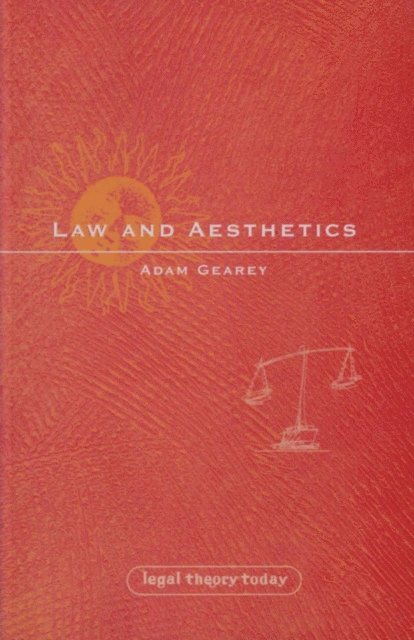
Law and Aesthetics draws on the work of poets as well as philosophers. Taking as its starting point Shelleys assertion that poets are unacknowledged legislators,the book suggests that there is a way of thinking that, as yet, has not been taken up by those who make use of literary aesthetics to understand law. The book tracks this aesthetic thinking through the failures of critical legal studies and stages an encounter with psychoanalysis, before suggesting that an aesthetics of law can be exhumed from Nietzsches work. The aesthetic is a call to the creative: fashion new law. A review of contemporary legal theory that makes use of aesthetic perspectives suggests that dissident and radical Nietzschean energies continue to animate legal thought. In the final chapter, an aesthetics of law is shown to make for an interruption of legal categories, and the generation of new legal relationships. The book concludes with a further meditation on Shelleys poetry, and a call to continue in the spirit of aesthetic reinvention.
1 142 kr
Skickas inom 10-15 vardagar
Law and Aesthetics draws on the work of poets as well as philosophers. Taking as its starting point Shelleys assertion that poets are unacknowledged legislators,the book suggests that there is a way of thinking that, as yet, has not been taken up by those who make use of literary aesthetics to understand law. The book tracks this aesthetic thinking through the failures of critical legal studies and stages an encounter with psychoanalysis, before suggesting that an aesthetics of law can be exhumed from Nietzsches work. The aesthetic is a call to the creative: fashion new law. A review of contemporary legal theory that makes use of aesthetic perspectives suggests that dissident and radical Nietzschean energies continue to animate legal thought. In the final chapter, an aesthetics of law is shown to make for an interruption of legal categories, and the generation of new legal relationships. The book concludes with a further meditation on Shelleys poetry, and a call to continue in the spirit of aesthetic reinvention.
535 kr
Skickas inom 10-15 vardagar
Jurisprudence is the prudence of jus, law's consciousness and conscience. Throughout history, when thinkers wanted to contemplate the organisation of society or the relationship between authority and the subject, they turned to law. All great philosophers, from Plato to Hobbes, Kant, Hegel, Marx and Weber had either studied the law or had a deep understanding of legal operations. But jurisprudence is also the conscience of law, the exploration of law's justice and of an ideal law or equity at the bar of which state law is always judged. Jurisprudence brings together 'is' and 'ought', the positive and the normative, law and justice. But after a long process of decay, legal theory is today characterised by cognitive and moral poverty. Jurisprudence has become restricted and academically peripheral, a guidebook to technocratic legalism and a legitimation of the existent. Critical jurisprudence returns to the classical tradition of a general philosophy of law and adopts a much wider concept of legality. It is concerned both with posited law and with the law of the law.All legal aspects of the economic, political, emotional and physical modes of production and reproduction of society are part of critical jurisprudence. This widening of scope allows a radical rethinking of the nature of rights, justice, sovereignty and judgement. A political philosophy of justice today must examine the political economy of law; transitions from Empire to nation; ideological and imaginary constructions through which we understand ourselves and relate to others; ways in which gender, race or sexuality create forms of identity that both discipline bodies and offer sites of resistance. Law's complicity with political oppression, violence and racism has to be faced before it is possible to speak of a new beginning for legal thought, which in turn is the necessary precondition for a theory of justice. Critical Jurisprudence offers an ethics of law against the nihilism of power and an aesthetics of existence for the melancholic lawyer.