Adam Sharr – författare
89 kr
Läs direkt efter köp
90 kr
Läs direkt efter köp
110 kr
Skickas inom 5-8 vardagar
344 kr
Skickas inom 5-8 vardagar
2 714 kr
Skickas inom 10-15 vardagar
1 033 kr
Skickas inom 10-15 vardagar
1 736 kr
Skickas inom 10-15 vardagar
408 kr
Skickas inom 10-15 vardagar
2 856 kr
Skickas inom 10-15 vardagar
705 kr
Skickas inom 10-15 vardagar
652 kr
Läs direkt efter köp
This collection introduces, illustrates, and advances fresh ideas about creative practice inquiry in architecture. It concerns architectural knowledge: how architects can use their distinctive skills, habits, and values to advance professional insight, and how such insights can be extended to make wider contributions to society, culture, and scholarship. It shows how architectural ways of knowing and working can be mobilised as tools for research.
Collected here are a series of creative practices that emerge out of architecture and actively engage with other fields and methods reaching across the academic landscape. Architectural inquiries collected in this book probe matters that lie beyond the obvious expectations, the conventions, the default, of the discipline. Drawing, borrowing, adapting, dramatising, perhapsing, monstering, experimenting, cartooning—the tools and methods of each inquiry vary but they all share a common outward gaze, engaging architectural ways of knowing with other disciplines and practices including the arts, biological sciences, ethnography, and technology. Chapters gathered here offer insight not only into incipient modes and tools of architectural research, but emerging ethical, practical, and philosophical positions intimately tied to the creative practices involved.
Setting-out the idea of creative practice inquiry in architecture, this innovative volume offers a lively and resourceful contribution to a growing body of work on design as research. It will be of interest to: students keen to pursue architectural ways of thinking and writing; practitioners who want to use their distinctive professional abilities to contribute to architectural and scholarly knowledge; and academics and doctoral candidates keen to engage with the burgeoning scholarly field of design research.
652 kr
Läs direkt efter köp
This collection introduces, illustrates, and advances fresh ideas about creative practice inquiry in architecture. It concerns architectural knowledge: how architects can use their distinctive skills, habits, and values to advance professional insight, and how such insights can be extended to make wider contributions to society, culture, and scholarship. It shows how architectural ways of knowing and working can be mobilised as tools for research.
Collected here are a series of creative practices that emerge out of architecture and actively engage with other fields and methods reaching across the academic landscape. Architectural inquiries collected in this book probe matters that lie beyond the obvious expectations, the conventions, the default, of the discipline. Drawing, borrowing, adapting, dramatising, perhapsing, monstering, experimenting, cartooning—the tools and methods of each inquiry vary but they all share a common outward gaze, engaging architectural ways of knowing with other disciplines and practices including the arts, biological sciences, ethnography, and technology. Chapters gathered here offer insight not only into incipient modes and tools of architectural research, but emerging ethical, practical, and philosophical positions intimately tied to the creative practices involved.
Setting-out the idea of creative practice inquiry in architecture, this innovative volume offers a lively and resourceful contribution to a growing body of work on design as research. It will be of interest to: students keen to pursue architectural ways of thinking and writing; practitioners who want to use their distinctive professional abilities to contribute to architectural and scholarly knowledge; and academics and doctoral candidates keen to engage with the burgeoning scholarly field of design research.
1 989 kr
Skickas inom 10-15 vardagar
559 kr
Skickas inom 10-15 vardagar
471 kr
Läs direkt efter köp
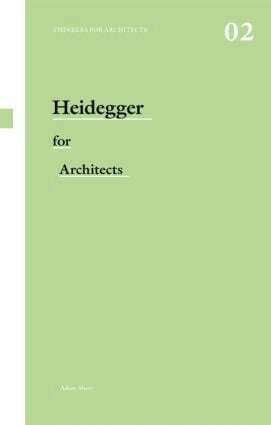
Informing the designs of architects as diverse as Peter Zumthor, Steven Holl, Hans Scharoun and Colin St. John Wilson, the work of Martin Heidegger has proved of great interest to architects and architectural theorists.
The first introduction to Heidegger’s philosophy written specifically for architects and students of architecture introduces key themes in his thinking, which has proved highly influential among architects as well as architectural historians and theorists. This guide familiarizes readers with significant texts and helps to decodes terms as well as providing quick referencing for further reading.
This concise introduction is ideal for students of architecture in design studio at all levels; students of architecture pursuing undergraduate and postgraduate courses in architectural theory; academics and interested architectural practitioners. Heidegger for Architects is the second book in the new Thinkers for Architects series.
471 kr
Läs direkt efter köp
Informing the designs of architects as diverse as Peter Zumthor, Steven Holl, Hans Scharoun and Colin St. John Wilson, the work of Martin Heidegger has proved of great interest to architects and architectural theorists.
The first introduction to Heidegger’s philosophy written specifically for architects and students of architecture introduces key themes in his thinking, which has proved highly influential among architects as well as architectural historians and theorists. This guide familiarizes readers with significant texts and helps to decodes terms as well as providing quick referencing for further reading.
This concise introduction is ideal for students of architecture in design studio at all levels; students of architecture pursuing undergraduate and postgraduate courses in architectural theory; academics and interested architectural practitioners. Heidegger for Architects is the second book in the new Thinkers for Architects series.
1 203 kr
Läs direkt efter köp
This innovative edited collection charts the rise, fall and possible futures of the word primitive.
The word primitive is fundamental to the discipline of architecture in the west, providing a convenient starting point for the many myths of architecture''s origins. Since the almost legendary 1970s conference on the Primitive, with the advent of post-modernism and, in particular, post-colonialism, the word has fallen from favour in many disciplines. Despite this, architects continue to use the word to mythologize and reify the practice of simplicity.
Primitive includes contributions from some of today’s leading architectural commentators including Dalibor Vesely, Adrian Forty, David Leatherbarrow, Richard Weston and Richard Coyne. Structured around five sections, Negotiating Origins; Urban Myths; Questioning Colonial Constructs; Making Marks; and Primitive Futures, the essays highlight the problematic nature of ideas of the primitive, engage with contemporary debate in the field of post colonialism and respond to a burgeoning interest in the non-expert architecture.
This now controversial subject remains, for better or worse, intrinsic to the very structure of Modernism and deeply embedded in architectural theory. Considering a broad range of approaches, this book provides a rounded past, present and future of the word primitive in the architectural sphere.
1 214 kr
Läs direkt efter köp
This innovative edited collection charts the rise, fall and possible futures of the word primitive.
The word primitive is fundamental to the discipline of architecture in the west, providing a convenient starting point for the many myths of architecture''s origins. Since the almost legendary 1970s conference on the Primitive, with the advent of post-modernism and, in particular, post-colonialism, the word has fallen from favour in many disciplines. Despite this, architects continue to use the word to mythologize and reify the practice of simplicity.
Primitive includes contributions from some of today’s leading architectural commentators including Dalibor Vesely, Adrian Forty, David Leatherbarrow, Richard Weston and Richard Coyne. Structured around five sections, Negotiating Origins; Urban Myths; Questioning Colonial Constructs; Making Marks; and Primitive Futures, the essays highlight the problematic nature of ideas of the primitive, engage with contemporary debate in the field of post colonialism and respond to a burgeoning interest in the non-expert architecture.
This now controversial subject remains, for better or worse, intrinsic to the very structure of Modernism and deeply embedded in architectural theory. Considering a broad range of approaches, this book provides a rounded past, present and future of the word primitive in the architectural sphere.
826 kr
Läs direkt efter köp
Architecture displays the values involved in its inhabitation, construction, procurement and design. It traces the thinking of the individuals who have participated in it, their relationships, and their involvement in the cultures where they lived and worked. In this way, buildings, their details, and the documents used to make them, can be read closely for cultural insights.
Introducing the idea of reading buildings as cultural artefacts, this book presents perceptive readings by eminent writers which demonstrate the power of this approach.
The chapters show that close readings of architecture and its materials can test commonplace assumptions, help architects to appreciate the contexts in which they work, and indicate ways to think more astutely about design. The readings collected in this innovative and accessible book address buildings, specifications and photographs. They range in time from the fifteenth century – examining the only surviving drawing made by Leon Battista Alberti – to the recent past – projects completed by Norman Foster in 2006 and Herzog and De Meuron in 2008. They range geographically from France to Puerto Rico to Kazakhstan and they range in fame from buildings celebrated by critics to house extensions and motorway service areas.
Taken together, these essays demonstrate important research methods which yield powerful insights for designers, critics and historians, and lessons for students.
819 kr
Läs direkt efter köp
Architecture displays the values involved in its inhabitation, construction, procurement and design. It traces the thinking of the individuals who have participated in it, their relationships, and their involvement in the cultures where they lived and worked. In this way, buildings, their details, and the documents used to make them, can be read closely for cultural insights.
Introducing the idea of reading buildings as cultural artefacts, this book presents perceptive readings by eminent writers which demonstrate the power of this approach.
The chapters show that close readings of architecture and its materials can test commonplace assumptions, help architects to appreciate the contexts in which they work, and indicate ways to think more astutely about design. The readings collected in this innovative and accessible book address buildings, specifications and photographs. They range in time from the fifteenth century – examining the only surviving drawing made by Leon Battista Alberti – to the recent past – projects completed by Norman Foster in 2006 and Herzog and De Meuron in 2008. They range geographically from France to Puerto Rico to Kazakhstan and they range in fame from buildings celebrated by critics to house extensions and motorway service areas.
Taken together, these essays demonstrate important research methods which yield powerful insights for designers, critics and historians, and lessons for students.
791 kr
Skickas inom 10-15 vardagar
1 427 kr
Kommande
919 kr
Läs direkt efter köp
919 kr
Läs direkt efter köp
2 286 kr
Skickas inom 10-15 vardagar
234 kr
Läs direkt efter köp
234 kr
Läs direkt efter köp