Adham Saouli – författare
629 kr
Skickas inom 10-15 vardagar
2 438 kr
Skickas inom 10-15 vardagar
2 269 kr
Skickas inom 10-15 vardagar
740 kr
Läs direkt efter köp
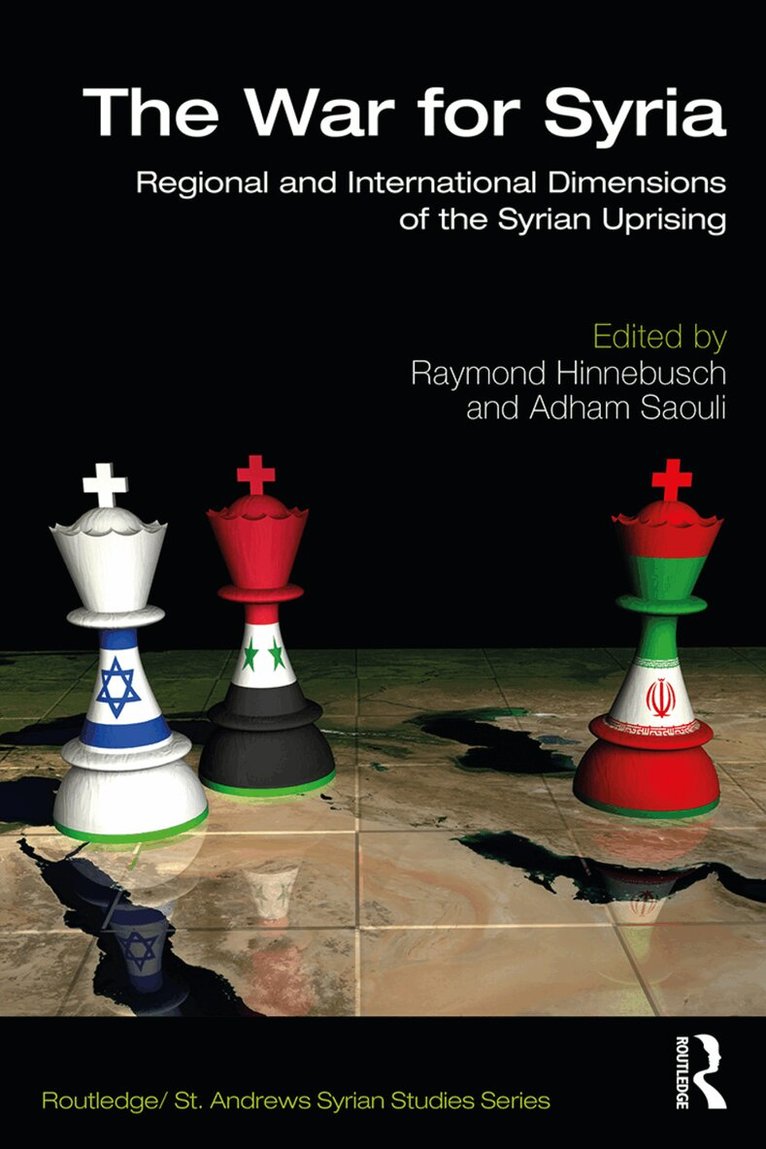
Examining the international dimensions of the Syrian conflict, this book studies external factors relating to the Uprising. It explores the involvement of outside powers and the events’ impact both on regional and international level.
Syria was widely perceived to be essential to the regional power balance, hence it was a valued prize to be fought over. The book examines the impact of global and regional powers in propelling the conflict in Syria; looks at the motives and strategies of the key regional and international actors (Hizbollah, Palestinians, Iran, Qatar, Saudi Arabia, US, Russia, EU); and analyses the impact of the Syrian conflict on key relations between regional states (Turkey-Syria, Turkey-Iran, Iraq-Syria). Finally, several chapters treat the impact on Syria of international sanctions and the "Responsibility to Protect" doctrine. This book follows on to The Syrian Uprising: Domestic Origins and Early Trajectory, edited by Raymond Hinnebusch and Omar Imady (2018). Subsequent volumes will examine the later evolution of the conflict.
Taking an innovative and interdisciplinary approach that seeks to capture the full complexity of the phenomenon, this book contributes significantly to our understanding of the Syrian conflict and will therefore be a valuable resource for anyone studying Middle Eastern Politics.
740 kr
Läs direkt efter köp
Examining the international dimensions of the Syrian conflict, this book studies external factors relating to the Uprising. It explores the involvement of outside powers and the events’ impact both on regional and international level.
Syria was widely perceived to be essential to the regional power balance, hence it was a valued prize to be fought over. The book examines the impact of global and regional powers in propelling the conflict in Syria; looks at the motives and strategies of the key regional and international actors (Hizbollah, Palestinians, Iran, Qatar, Saudi Arabia, US, Russia, EU); and analyses the impact of the Syrian conflict on key relations between regional states (Turkey-Syria, Turkey-Iran, Iraq-Syria). Finally, several chapters treat the impact on Syria of international sanctions and the "Responsibility to Protect" doctrine. This book follows on to The Syrian Uprising: Domestic Origins and Early Trajectory, edited by Raymond Hinnebusch and Omar Imady (2018). Subsequent volumes will examine the later evolution of the conflict.
Taking an innovative and interdisciplinary approach that seeks to capture the full complexity of the phenomenon, this book contributes significantly to our understanding of the Syrian conflict and will therefore be a valuable resource for anyone studying Middle Eastern Politics.
1 372 kr
Kommande
526 kr
Kommande
858 kr
Läs direkt efter köp
This book explores the conditions of state formation and survival in the Middle East. Based on Historical Sociology, it provides a model for study of the state in the Arab world and a theory to explain its survival.
Examining states as a ‘process’, the author argues that what emerged in the Middle East in the beginning of the twentieth century are ‘social fields’—where states form and deform—and not states as defined by Max Weber. He explores the constitutions of these fields—their cultural, material and political structures—and identifies three stages of state development in which different cases can be located. Capturing the dilemmas that ‘late-forming states’ face as regimes within them cope with domestic and international pressure, the author illustrates several Middle East cases and presents a detailed analysis of state developments in Saudi Arabia and Iraq.
He maintains that more than the domestic characteristics of individual states, state survival in the Middle East is also a function of the anarchic nature of the international (and by extension the regional) states-system.
The first to raise the question on the survivability of the territorial states in the Middle East while engaging with both International Relations and Comparative Politics theories, this book will be of interest to students and scholars of Middle East politics, Comparative Politics and International Relations.
858 kr
Läs direkt efter köp
This book explores the conditions of state formation and survival in the Middle East. Based on Historical Sociology, it provides a model for study of the state in the Arab world and a theory to explain its survival.
Examining states as a ‘process’, the author argues that what emerged in the Middle East in the beginning of the twentieth century are ‘social fields’—where states form and deform—and not states as defined by Max Weber. He explores the constitutions of these fields—their cultural, material and political structures—and identifies three stages of state development in which different cases can be located. Capturing the dilemmas that ‘late-forming states’ face as regimes within them cope with domestic and international pressure, the author illustrates several Middle East cases and presents a detailed analysis of state developments in Saudi Arabia and Iraq.
He maintains that more than the domestic characteristics of individual states, state survival in the Middle East is also a function of the anarchic nature of the international (and by extension the regional) states-system.
The first to raise the question on the survivability of the territorial states in the Middle East while engaging with both International Relations and Comparative Politics theories, this book will be of interest to students and scholars of Middle East politics, Comparative Politics and International Relations.
728 kr
Skickas inom 10-15 vardagar
1 530 kr
Skickas inom 7-10 vardagar
371 kr
Skickas inom 7-10 vardagar