Adriaan T. Peperzak - Böcker
Visar alla böcker från författaren Adriaan T. Peperzak. Handla med fri frakt och snabb leverans.
14 produkter
14 produkter
233 kr
Skickas inom 10-15 vardagar
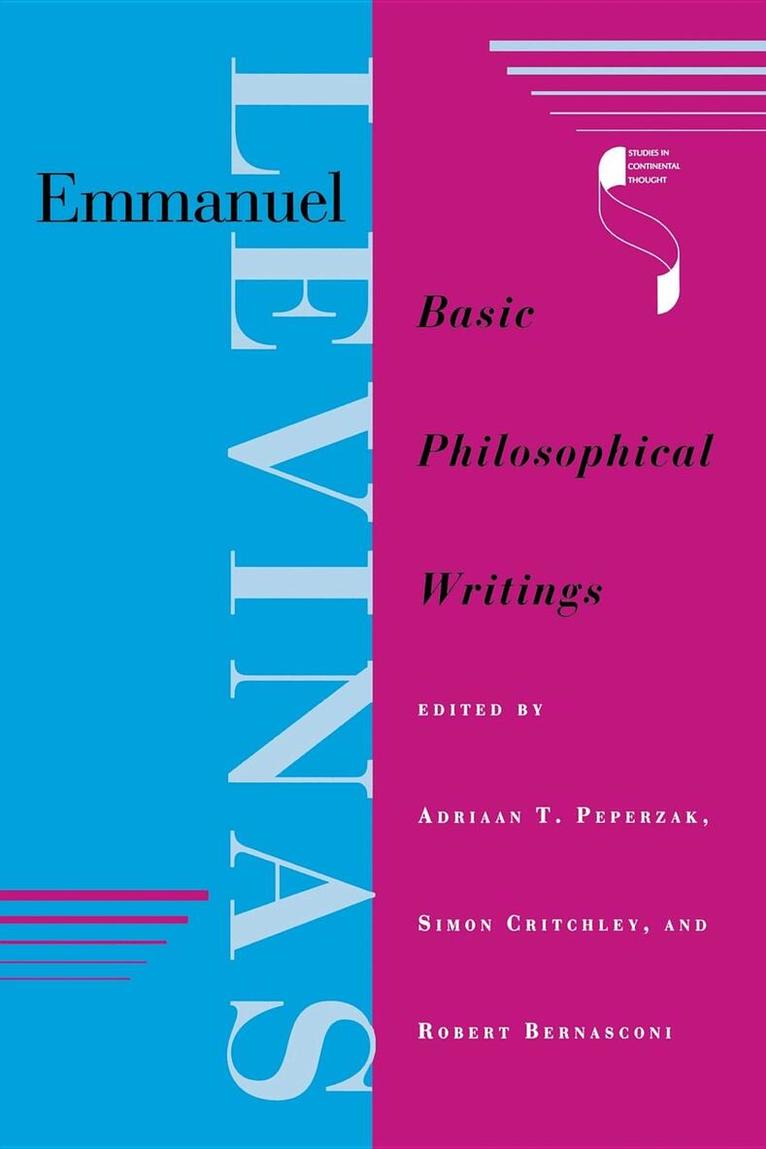
Emmanuel Levinas (1906–1996) has exerted a profound influence on 20th-century continental philosophy. This anthology, including Levinas's key philosophical texts over a period of more than forty years, provides an ideal introduction to his thought and offers insights into his most innovative ideas. Five of the ten essays presented here appear in English for the first time. An introduction by Adriaan Peperzak outlines Levinas's philosophical development and the basic themes of his writings. Each essay is accompanied by a brief introduction and notes. This collection is an ideal text for students of philosophy concerned with understanding and assessing the work of this major philosopher.
3 178 kr
Skickas inom 10-15 vardagar
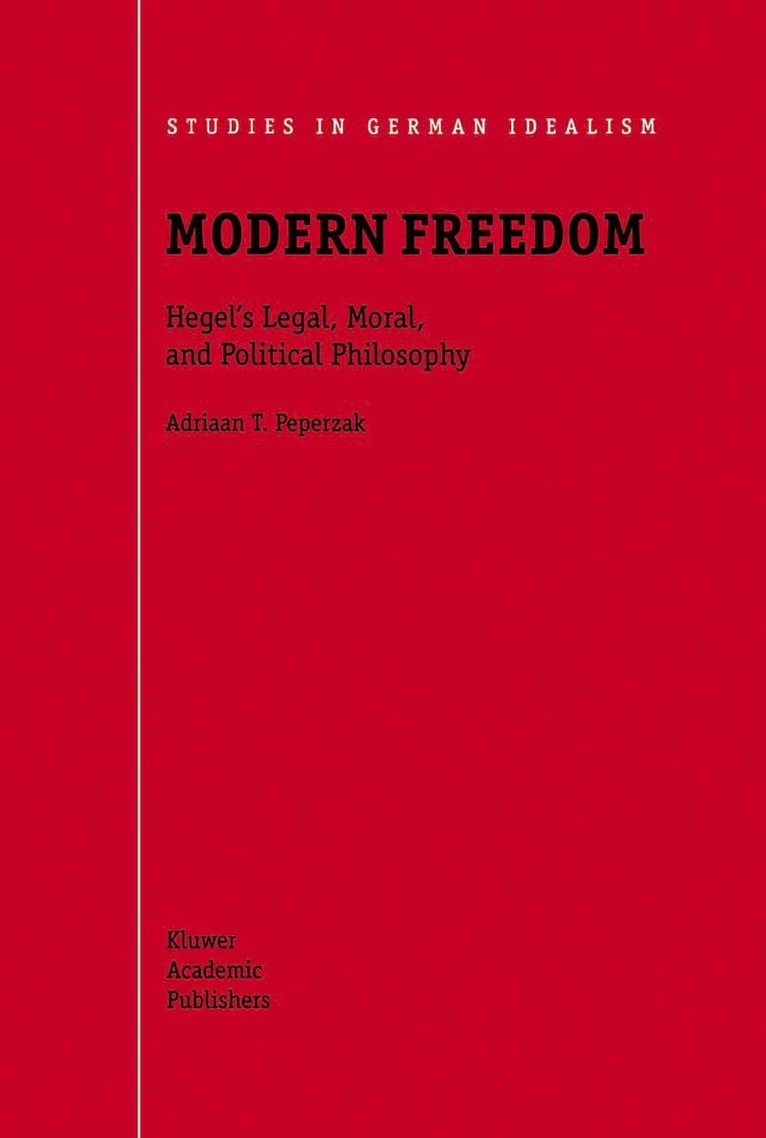
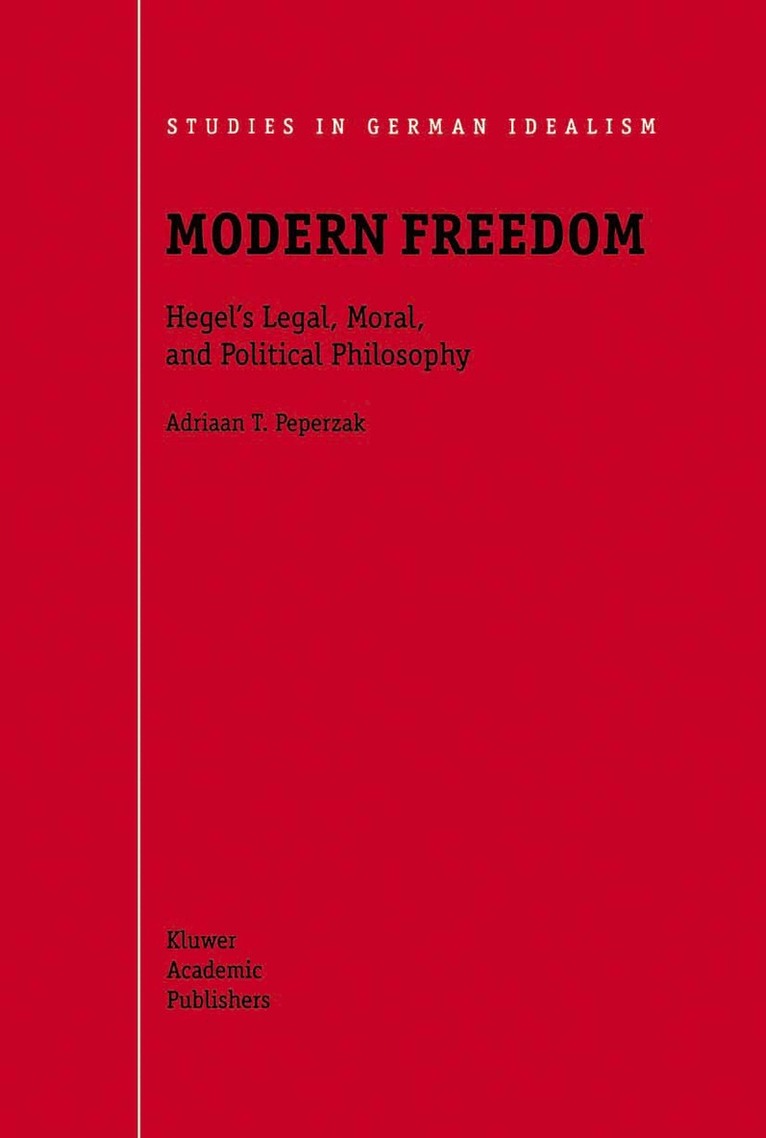
This title gives an integral interpretation of G.W.F. Hegel's mature practical philosophy as contained in his textbook, "Grundlinien der Philosophie des Rechts", published in 1820, and the courses he gave on the same subject between 1817 and 1830. The content of Hegel's book encompasses not only "right" or "law" in our sense of those words, but also morality, the family, economies ("civil society"), politics ("the state" and "international politics"), and world history. These matters are treated philosophically, that is, the treatise is dominated by an implicit logic, which has puzzled all scholars who have tried to reconstruct Hegel's arguments.
1 674 kr
Skickas inom 10-15 vardagar
This work renews the basic questions and principles of philosophical ethics and provides a thorough account of how being oneself presupposes freedom and responsibility. Elements of Ethics focuses on the descriptive and conceptual analysis of the experiences through which human lives become aware of themselves and shows how we are provoked to respond appropriately to the various dimensions and phenomena of the universe. Operating on the provocative thesis that "if the ethical is real, it cannot be proved, because it is either nothing at all or an irreducible origin," this book pursues the question that defines ethics: "How should I live?" After setting out a preliminary definition of terms, Elements of Ethics gives insight into the relation of human individuals and the world by showing that the traditional separation between "is" and "ought" overlooks their profound coincidence, and by clarifying the determining, though often overlooked, role of affectivity and katharsis in all ethical experiences.
415 kr
Skickas inom 7-10 vardagar
This work renews the basic questions and principles of philosophical ethics and provides a thorough account of how being oneself presupposes freedom and responsibility. Elements of Ethics focuses on the descriptive and conceptual analysis of the experiences through which human lives become aware of themselves and shows how we are provoked to respond appropriately to the various dimensions and phenomena of the universe. Operating on the provocative thesis that "if the ethical is real, it cannot be proved, because it is either nothing at all or an irreducible origin," this book pursues the question that defines ethics: "How should I live?" After setting out a preliminary definition of terms, Elements of Ethics gives insight into the relation of human individuals and the world by showing that the traditional separation between "is" and "ought" overlooks their profound coincidence, and by clarifying the determining, though often overlooked, role of affectivity and katharsis in all ethical experiences.
965 kr
Skickas inom 10-15 vardagar
One of our most distinguished thinkers, Adriaan Peperzak has masterfully explored the connections between philosophy, ethics, religion, and the social and historical contexts of human experience. He offers a personal gathering of influences on his own work as guides to the uses of philosophy in our search for sense and meaning. In concise, direct, and deeply felt chapters, Peperzak moves from Plato, Plotinus, and the Early Christian theologians to Anselm, Bonaventure, Descartes, Pascal, Leibniz, Hegel, and Levinas. Throughout these carefully linked essays, he touches on the fundamental ideas-from reason and faith to freedom and tradition-that inform the questions his work has consistently addressed, most specifically those concerning philosophy as a practice.
387 kr
Skickas inom 7-10 vardagar
One of our most distinguished thinkers, Adriaan Peperzak has masterfully explored the connections between philosophy, ethics, religion, and the social and historical contexts of human experience. He offers a personal gathering of influences on his own work as guides to the uses of philosophy in our search for sense and meaning. In concise, direct, and deeply felt chapters, Peperzak moves from Plato, Plotinus, and the Early Christian theologians to Anselm, Bonaventure, Descartes, Pascal, Leibniz, Hegel, and Levinas. Throughout these carefully linked essays, he touches on the fundamental ideas-from reason and faith to freedom and tradition-that inform the questions his work has consistently addressed, most specifically those concerning philosophy as a practice.
912 kr
Skickas inom 10-15 vardagar
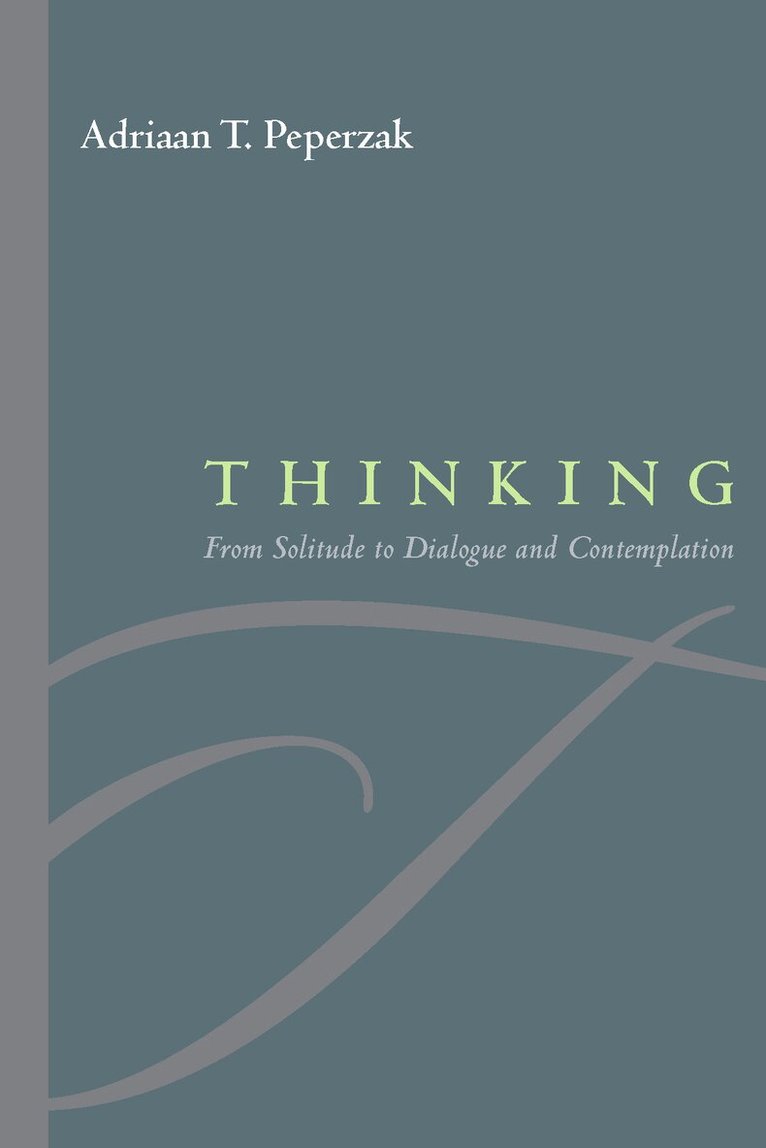
Philosophers speak—or, rather, they respond to various forms of speaking that are handed to them. This book by one of our most distinguished philosophers focuses on the communicative aspect of philosophical thought. Peperzak's central focus is "addressing": what distinguishes speaking or writing from rumination is their being directed by someone to someone. To be involved in philosophy is to be part of a tradition through which thinkers propose their findings to others, who respond by offering their own appropriations to their interlocutors.After a critical sketch of the conception of modern philosophy, Peperzak presents a succinct analysis of speaking, insisting on the radical distinction between speaking about and speaking to. He enlarges this analysis to history and tries to answer the question whether philosophy also implies a certain form of listening and responding to words of God.Since philosophical speech about persons can neither honor nor reveal their full truth, speaking and thinking about God is even more problematic. Meditation about the archaic Word cannot reach the Speaker unless it turns into prayer, or—as Descartes wrote—into a contemplation that makes the thinker "consider, admire, and adore the beauty of God's immense light, as much as the eyesight of my blinded mind can tolerate.""Thinking is a work of genuine and original scholarship which responds to the tradition of philosophical thinking with a critique of its language, style, focus, and scope."—Catriona Hanley, Loyola College, Maryland
406 kr
Skickas inom 10-15 vardagar
Philosophers speak—or, rather, they respond to various forms of speaking that are handed to them. This book by one of our most distinguished philosophers focuses on the communicative aspect of philosophical thought. Peperzak's central focus is "addressing": what distinguishes speaking or writing from rumination is their being directed by someone to someone. To be involved in philosophy is to be part of a tradition through which thinkers propose their findings to others, who respond by offering their own appropriations to their interlocutors.After a critical sketch of the conception of modern philosophy, Peperzak presents a succinct analysis of speaking, insisting on the radical distinction between speaking about and speaking to. He enlarges this analysis to history and tries to answer the question whether philosophy also implies a certain form of listening and responding to words of God.Since philosophical speech about persons can neither honor nor reveal their full truth, speaking and thinking about God is even more problematic. Meditation about the archaic Word cannot reach the Speaker unless it turns into prayer, or—as Descartes wrote—into a contemplation that makes the thinker "consider, admire, and adore the beauty of God's immense light, as much as the eyesight of my blinded mind can tolerate.""Thinking is a work of genuine and original scholarship which responds to the tradition of philosophical thinking with a critique of its language, style, focus, and scope."—Catriona Hanley, Loyola College, Maryland
965 kr
Skickas inom 10-15 vardagar
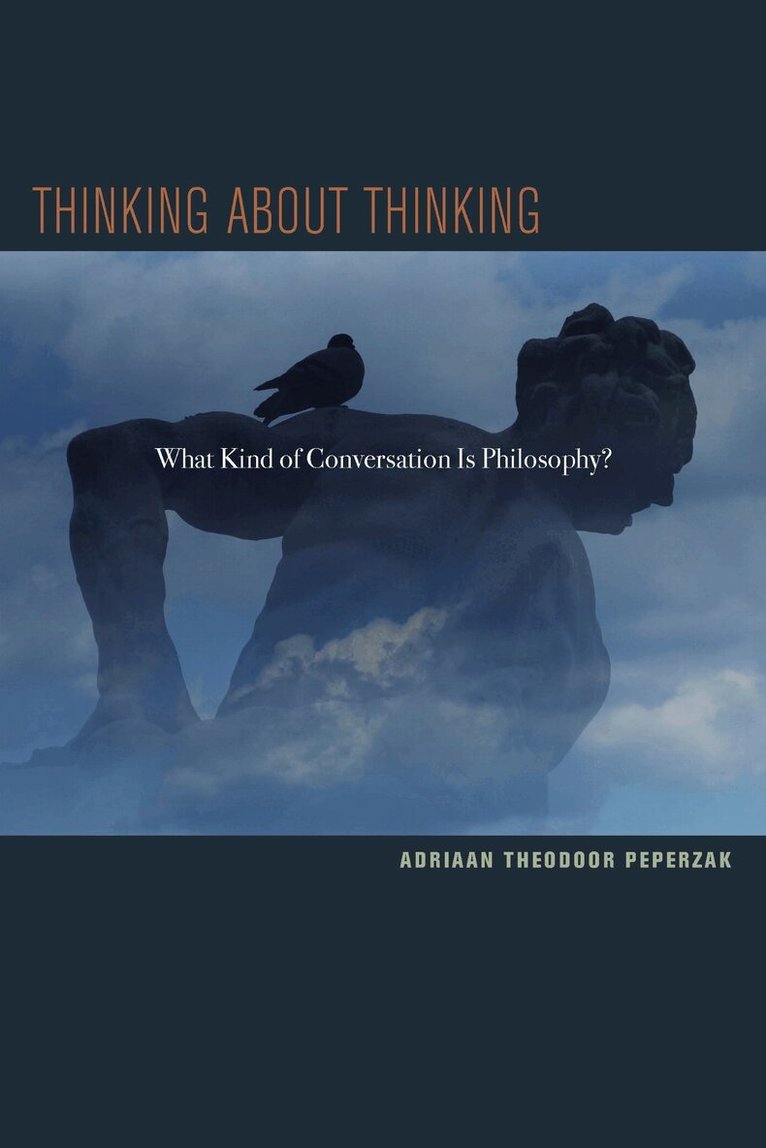
Thinking about Thinking examines philosophy from a variety of perspectives as a practice realized by persons who communicate with one another while reflecting about the meaning of human life and thought.Without forgetting the logical and methodological conditions of systematic thought, the author insists on the intimate connections that tie all philosophical texts and conversations to the lives from which they emerge. As product of an individual thinker, who, thanks to individual teachers, has been familiarized with particular traditions of a particular culture, each philosophy is unique. If it is a good one, it is also revealing for many—perhaps even for all—other philosophers. At the same time, all thinking is addressed to individual interlocutors, each of whom responds to it by transforming it into a different philosophy. This fact invites us to explore the dialogical dimension of thinking, which, in turn, refers us to the communitarian and historical contexts from which solitude, as well as solidarity, competition, alliances, and friendships in thought, emerge.
347 kr
Skickas inom 11-20 vardagar
Thinking about Thinking examines philosophy from a variety of perspectives as a practice realized by persons who communicate with one another while reflecting about the meaning of human life and thought.Without forgetting the logical and methodological conditions of systematic thought, the author insists on the intimate connections that tie all philosophical texts and conversations to the lives from which they emerge. As product of an individual thinker, who, thanks to individual teachers, has been familiarized with particular traditions of a particular culture, each philosophy is unique. If it is a good one, it is also revealing for many—perhaps even for all—other philosophers. At the same time, all thinking is addressed to individual interlocutors, each of whom responds to it by transforming it into a different philosophy. This fact invites us to explore the dialogical dimension of thinking, which, in turn, refers us to the communitarian and historical contexts from which solitude, as well as solidarity, competition, alliances, and friendships in thought, emerge.
859 kr
Skickas inom 10-15 vardagar
This phenomenological study begins by presenting trust as a characteristic form of interpersonal and communal relationship. In the second chapter, the scope is narrowed to someone's reliance on one or more trustworthy individuals. Chapters 3 to 5 explore specific aspects of trust, insofar as we confide in social structures or movements, the impersonal regularities and events of nature, or our own particular talents, motivations, and possibilities.In a world that is ravaged by the omnipresence of suffering and the most outrageous manifestations of evil, no philosopher can avoid the question of what kind of trust may be profound and strong enough to overcome the ultimate anxiety or despair that threatens all human existence. In the Western tradition of belief, thinking, faith, and searching for the first and ultimate, that question is approached here through reflection upon the radical difference between trust (or faith) in the universe (the totality) and faith (or trust) in God.
322 kr
Skickas inom 7-10 vardagar
This phenomenological study begins by presenting trust as a characteristic form of interpersonal and communal relationship. In the second chapter, the scope is narrowed to someone's reliance on one or more trustworthy individuals. Chapters 3 to 5 explore specific aspects of trust, insofar as we confide in social structures or movements, the impersonal regularities and events of nature, or our own particular talents, motivations, and possibilities.In a world that is ravaged by the omnipresence of suffering and the most outrageous manifestations of evil, no philosopher can avoid the question of what kind of trust may be profound and strong enough to overcome the ultimate anxiety or despair that threatens all human existence. In the Western tradition of belief, thinking, faith, and searching for the first and ultimate, that question is approached here through reflection upon the radical difference between trust (or faith) in the universe (the totality) and faith (or trust) in God.
3 178 kr
Skickas inom 10-15 vardagar
'0 ~{oc; ~paxuc;, ~ O£ 't£XVll ~a1(pft (Hippokrates) That life is short needs no proof when we are engaged in ambitious projects. When I began this book, almost forty years ago, I did not forsee that its completion would take such a long time, although I was well aware that some of Hegel's texts stubbornly resist a thorough deciphering of their meaning and argumenta tion. Having written a dissertation on the young Hegel's moral, political, and religious philosophy (Lejeune Hegel et la vision morale du monde, 1960'), I was asked to teach ethics, social philosophy, and philosophy of law at various universities of The Netherlands. While studying and teaching the classics of ethics and politics, I began to focus on the textbook that Hegel had written for his courses on practical philosophy: Elements of the Philosophy of Right (1820). The first result of my research was a study of the historical and philosophical context of this text (Philosophy and Politics: A Commentary on the Preface to Hegel's Philosophy of Right, 1981/1987), but the interpretation of its content proceeded slowly. While con ferences and colloquia occasioned fragments whose traces can be found in the following pages, the ramifications of Hegel's thought and the overwhelming amount of secondary literature demanded a great deal of time and attention and other interests continued to interrupt the project.
Philosophy and Politics
A Commentary on the Preface to Hegel’s Philosophy of Right
Häftad, Engelska, 1986
1 064 kr
Skickas inom 10-15 vardagar
There is a didactical as well as a philosophical importance to providing a commentary on the Preface to Hegel's handbook on the philosophy of right. Considering the fact that the text brings us the thought of a great and difficult philosopher in a non-rigorous, "exoteric" way, it is well suited to the task of introducing students to the world of think ing. It is, however, too difficult to do this without being supplemented by some explanation. Analysis and hints for further study are necessi tated here by both the interweaving of political and philosophical viewpoints and the philosophical presuppositions with which this Preface is full. The philosophical importance of a commentary on Hegel's text can be found partially in the incessant quotation of the Preface in the literature on Hegel's philosophy to justify very different and contra dictory interpretations. As long as the specialists do not agree about the meaning of the Preface to the Philosophy of Right, anyone trying to explain it cannot avoid the task of making his or her own contribu tion to the philosophical debate concerning the nature and content of Hegel's work.