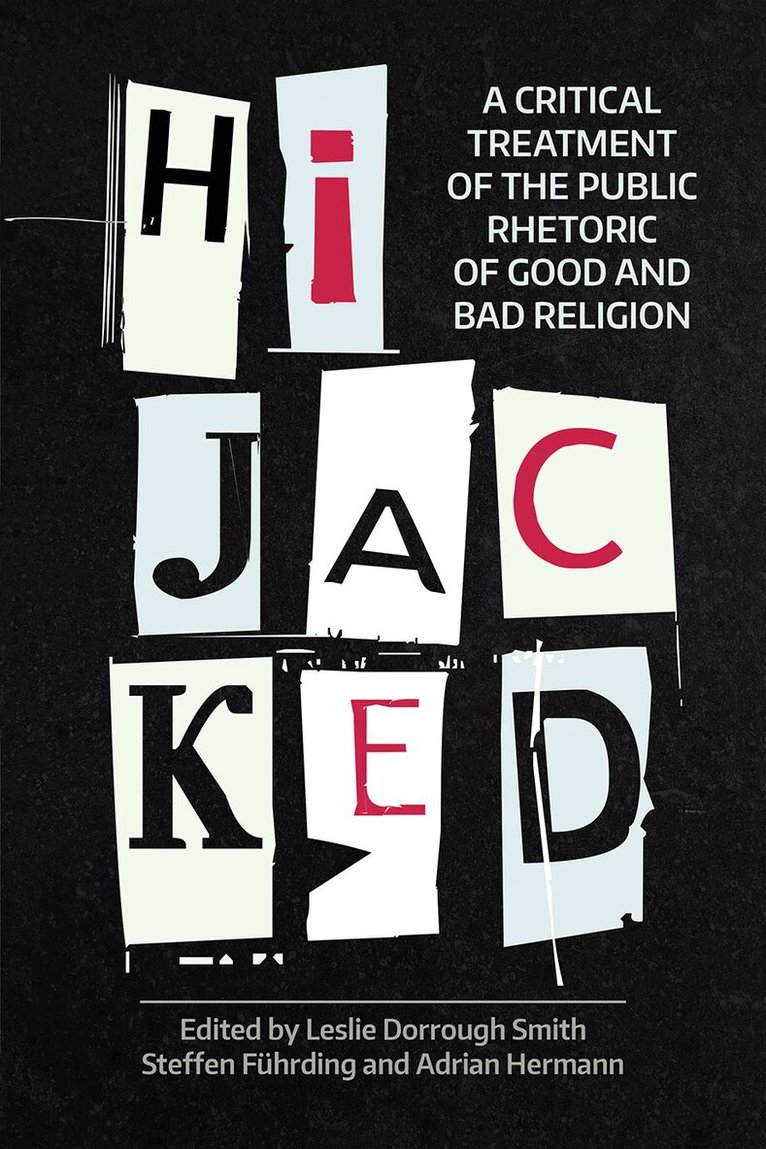
Whether intentionally or not much of our public discourse on religion involves a subtle, but incredibly powerful, distinction between "good" and "bad" religion. The implications of these labeling practices are far-reaching, indeed, for such judgments manifest in terms such as "fundamentalist," "radical," and "extremist," words that are often the gauge by which governments worldwide determine everything from the parameters of religious freedom, to what constitutes an act of terrorism, to whether certain groups receive legal protections. Conversely, it is often surprising to see how different groups that may otherwise better typify the extremist profile remain unscathed by punitive governmental or social measures because of their pre-existing social popularity or perceived normalcy. This volume argues that public inquiry into religion is guided by unspoken value judgments, which are themselves the products of rarely-discussed political interests. This volume opens with a critical introduction which lays out the nature of the issue and its practical ramifications. The following chapter demonstrates how one can analytically critique the good/bad religion rhetoric as it appears in scholarship today. Hijacked is then organized around four different social institutions through which these value judgments have been established and deployed - namely, within politics, the media, the university, and the classroom. After a short introduction by the editors, each section begins with a chapter that highlights a particular case study or example of this good/bad distinction at work. The three to four responses that follow extrapolate from some element of the exemplar to provide an analysis on how such rhetoric operates in that particular social realm.
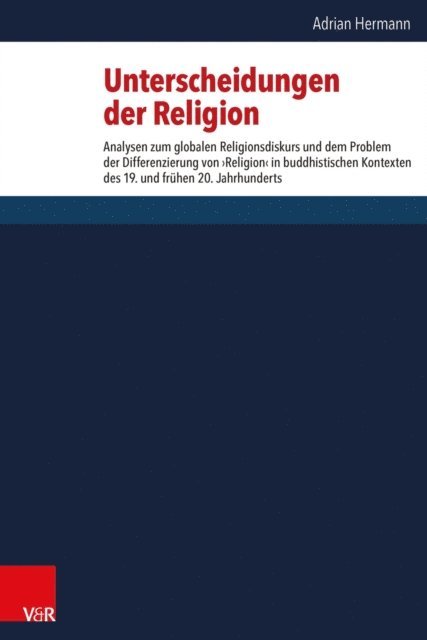
Which distinctions characterize the global discourse of religion? Adrian Hermann proposes a twofold change of perspective in the debate about the eurocentrism of the concept of ''religion'' and the possible identification of its non-Western equivalents. He argues that the search for such equivalents should be replaced by an analysis of the emergence of hypothetical equivalences in historical processes of translation. On the basis of a distinction between theory-of-religion and discourse-theoretical approaches, Hermann describes ''religion'' not as a phenomenon, but as a global discourse. ''Plurality'' and ''differentiation'' are identified as two central distinctions of religion. In light of this perspective, he investigates discourses of ''religion'' in the context of Buddhist modernism, especially in 19th century Thailand. Drawing on Niklas Luhmann''s world society theory, Hermann concludes the study by discussing the challenges of developing a theory of modernity in Religious Studies and the possibility of writing a ''global history of religion''.
Whether intentionally or not much of our public discourse on religion involves a subtle, but incredibly powerful, distinction between "good" and "bad" religion. The implications of these labeling practices are far-reaching, indeed, for such judgments manifest in terms such as "fundamentalist," "radical," and "extremist," words that are often the gauge by which governments worldwide determine everything from the parameters of religious freedom, to what constitutes an act of terrorism, to whether certain groups receive legal protections. Conversely, it is often surprising to see how different groups that may otherwise better typify the extremist profile remain unscathed by punitive governmental or social measures because of their pre-existing social popularity or perceived normalcy. This volume argues that public inquiry into religion is guided by unspoken value judgments, which are themselves the products of rarely-discussed political interests. This volume opens with a critical introduction which lays out the nature of the issue and its practical ramifications. The following chapter demonstrates how one can analytically critique the good/bad religion rhetoric as it appears in scholarship today. Hijacked is then organized around four different social institutions through which these value judgments have been established and deployed - namely, within politics, the media, the university, and the classroom. After a short introduction by the editors, each section begins with a chapter that highlights a particular case study or example of this good/bad distinction at work. The three to four responses that follow extrapolate from some element of the exemplar to provide an analysis on how such rhetoric operates in that particular social realm.
Which distinctions characterize the global discourse of religion? Adrian Hermann proposes a twofold change of perspective in the debate about the eurocentrism of the concept of ''religion'' and the possible identification of its non-Western equivalents. He argues that the search for such equivalents should be replaced by an analysis of the emergence of hypothetical equivalences in historical processes of translation. On the basis of a distinction between theory-of-religion and discourse-theoretical approaches, Hermann describes ''religion'' not as a phenomenon, but as a global discourse. ''Plurality'' and ''differentiation'' are identified as two central distinctions of religion. In light of this perspective, he investigates discourses of ''religion'' in the context of Buddhist modernism, especially in 19th century Thailand. Drawing on Niklas Luhmann''s world society theory, Hermann concludes the study by discussing the challenges of developing a theory of modernity in Religious Studies and the possibility of writing a ''global history of religion''.