Adriana Petryna - Böcker
Visar alla böcker från författaren Adriana Petryna. Handla med fri frakt och snabb leverans.
7 produkter
7 produkter
When Experiments Travel
Clinical Trials and the Global Search for Human Subjects
Häftad, Engelska, 2009
388 kr
Skickas inom 7-10 vardagar
The phenomenal growth of global pharmaceutical sales and the quest for innovation are driving an unprecedented search for human test subjects, particularly in middle- and low-income countries. Our hope for medical progress increasingly depends on the willingness of the world's poor to participate in clinical drug trials. While these experiments often provide those in need with vital and previously unattainable medical resources, the outsourcing and offshoring of trials also create new problems. In this groundbreaking book, anthropologist Adriana Petryna takes us deep into the clinical trials industry as it brings together players separated by vast economic and cultural differences. Moving between corporate and scientific offices in the United States and research and public health sites in Poland and Brazil, When Experiments Travel documents the complex ways that commercial medical science, with all its benefits and risks, is being integrated into local health systems and emerging drug markets. Providing a unique perspective on globalized clinical trials, When Experiments Travel raises central questions: Are such trials exploitative or are they social goods?How are experiments controlled and how is drug safety ensured? And do these experiments help or harm public health in the countries where they are conducted? Empirically rich and theoretically innovative, the book shows that neither the language of coercion nor that of rational choice fully captures the range of situations and value systems at work in medical experiments today. When Experiments Travel challenges conventional understandings of the ethics and politics of transnational science and changes the way we think about global medicine and the new infrastructures of our lives.
275 kr
Skickas inom 7-10 vardagar
On April 26, 1986, Unit Four of the Chernobyl nuclear reactor exploded in then Soviet Ukraine. More than 3.5 million people in Ukraine alone, not to mention many citizens of surrounding countries, are still suffering the effects. Life Exposed is the first book to comprehensively examine the vexed political, scientific, and social circumstances that followed the disaster. Tracing the story from an initial lack of disclosure to post-Soviet democratizing attempts to compensate sufferers, Adriana Petryna uses anthropological tools to take us into a world whose social realities are far more immediate and stark than those described by policymakers and scientists. She asks: What happens to politics when state officials fail to inform their fellow citizens of real threats to life? What are the moral and political consequences of remedies available in the wake of technological disasters? Through extensive research in state institutions, clinics, laboratories, and with affected families and workers of the so-called Zone, Petryna illustrates how the event and its aftermath have not only shaped the course of an independent nation but have made health a negotiated realm of entitlement.She tracks the emergence of a "biological citizenship" in which assaults on health become the coinage through which sufferers stake claims for biomedical resources, social equity, and human rights. Life Exposed provides an anthropological framework for understanding the politics of emergent democracies, the nature of citizenship claims, and everyday forms of survival as they are interwoven with the profound changes that accompanied the collapse of the Soviet Union.
388 kr
Skickas inom 7-10 vardagar
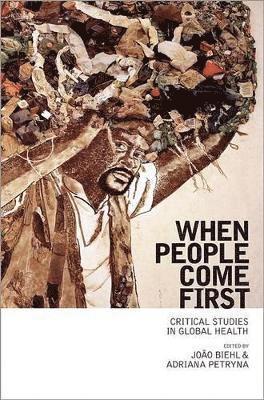
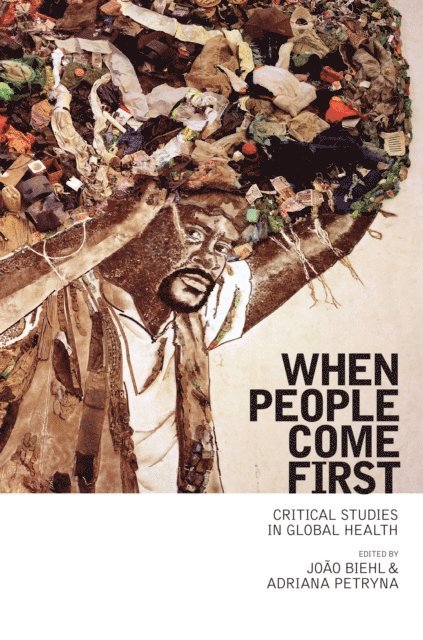
When People Come First critically assesses the expanding field of global health. It brings together an international and interdisciplinary group of scholars to address the medical, social, political, and economic dimensions of the global health enterprise through vivid case studies and bold conceptual work. The book demonstrates the crucial role of ethnography as an empirical lantern in global health, arguing for a more comprehensive, people-centered approach. Topics include the limits of technological quick fixes in disease control, the moral economy of global health science, the unexpected effects of massive treatment rollouts in resource-poor contexts, and how right-to-health activism coalesces with the increased influence of the pharmaceutical industry on health care. The contributors explore the altered landscapes left behind after programs scale up, break down, or move on. We learn that disease is really never just one thing, technology delivery does not equate with care, and biology and technology interact in ways we cannot always predict.The most effective solutions may well be found in people themselves, who consistently exceed the projections of experts and the medical-scientific, political, and humanitarian frameworks in which they are cast. When People Come First sets a new research agenda in global health and social theory and challenges us to rethink the relationships between care, rights, health, and economic futures.
298 kr
Skickas inom 7-10 vardagar
A new way of thinking about the climate crisis as an exercise in delimiting knowable, and habitable, worldsAs carbon dioxide emissions continue to rise, Earth’s fragile ecosystems are growing increasingly unstable and unpredictable. Horizon Work explores how climate change is disrupting our fundamental ability to project how the environment will act over time, and how these rapidly faltering predictions are colliding with the dangerous new realities of emergency response.Anthropologist Adriana Petryna examines the climate crisis through the lens of “horizoning,” a mode of reckoning that considers unnatural disasters against a horizon of expectation in which people and societies can act. She talks to wildfire scientists who, amid chaotic fire seasons and shifting fire behaviors, are revising predictive models calibrated to conditions that no longer exist. Petryna tells the stories of wildland firefighters who could once rely on memory of previous fires to gauge the behaviors of the next. Trust in patterns has become an occupational hazard. Sometimes, the very concept of projection becomes untenable. Yet if all we see is doom, we will overlook something crucial about the scientific and ethical labor needed to hold back climate chaos. Here is where the work of horizoning begins.From experiments probing our planetary points of no return to disaster ecologies where the stark realities of climate change are being confronted, Horizon Work reveals how this new way of thinking has the power to reverse harmful legacies while turning voids where projection falters into spaces of collective action and recoverable futures.
164 kr
Skickas inom 7-10 vardagar
A new way of thinking about the climate crisis as an exercise in delimiting knowable, and habitable, worldsAs carbon dioxide emissions continue to rise, Earth’s fragile ecosystems are growing increasingly unstable and unpredictable. Horizon Work explores how climate change is disrupting our fundamental ability to project how the environment will act over time, and how these rapidly faltering predictions are colliding with the dangerous new realities of emergency response.Anthropologist Adriana Petryna examines the climate crisis through the lens of “horizoning,” a mode of reckoning that considers unnatural disasters against a horizon of expectation in which people and societies can act. She talks to wildfire scientists who, amid chaotic fire seasons and shifting fire behaviors, are revising predictive models calibrated to conditions that no longer exist. Petryna tells the stories of wildland firefighters who could once rely on memory of previous fires to gauge the behaviors of the next. Trust in patterns has become an occupational hazard. Sometimes, the very concept of projection becomes untenable. Yet if all we see is doom, we will overlook something crucial about the scientific and ethical labor needed to hold back climate chaos. Here is where the work of horizoning begins.From experiments probing our planetary points of no return to disaster ecologies where the stark realities of climate change are being confronted, Horizon Work reveals how this new way of thinking has the power to reverse harmful legacies while turning voids where projection falters into spaces of collective action and recoverable futures.
1 243 kr
Skickas inom 7-10 vardagar
In some parts of the world spending on pharmaceuticals is astronomical. In others people do not have access to basic or life-saving drugs. Individuals struggle to afford medications; whole populations are neglected, considered too poor to constitute profitable markets for the development and distribution of necessary drugs. The ethnographies brought together in this timely collection analyze both the dynamics of the burgeoning international pharmaceutical trade and the global inequalities that emerge from and are reinforced by market-driven medicine. They demonstrate that questions about who will be treated and who will not filter through every phase of pharmaceutical production, from preclinical research to human testing, marketing, distribution, prescription, and consumption.Whether considering how American drug companies seek to create a market for antidepressants in Japan, how Brazil has created a model HIV/AIDS prevention and treatment program, or how the urban poor in Delhi understand and access healthcare, these essays illuminate the roles of corporations, governments, NGOs, and individuals in relation to global pharmaceuticals. Some essays show how individual and communal identities are affected by the marketing and availability of medications. Among these are an exploration of how the pharmaceutical industry shapes popular and expert understandings of mental illness in North America and Great Britain. There is also an examination of the agonizing choices facing Ugandan families trying to finance AIDS treatment. Several essays explore the inner workings of the emerging international pharmaceutical regime. One looks at the expanding quest for clinical research subjects; another at the entwining of science and business interests in the Argentine market for psychotropic medications. By bringing the moral calculations involved in the production and distribution of pharmaceuticals into stark relief, this collection charts urgent new territory for social scientific research.Contributors. Kalman Applbaum, JoÃo Biehl, Ranendra K. Das, Veena Das, David Healy, Arthur Kleinman, Betty Kyaddondo, Andrew Lakoff, Anne Lovell, Lotte Meinert, Adriana Petryna, Michael A. Whyte, Susan Reynolds Whyte
362 kr
Skickas inom 7-10 vardagar
In some parts of the world spending on pharmaceuticals is astronomical. In others people do not have access to basic or life-saving drugs. Individuals struggle to afford medications; whole populations are neglected, considered too poor to constitute profitable markets for the development and distribution of necessary drugs. The ethnographies brought together in this timely collection analyze both the dynamics of the burgeoning international pharmaceutical trade and the global inequalities that emerge from and are reinforced by market-driven medicine. They demonstrate that questions about who will be treated and who will not filter through every phase of pharmaceutical production, from preclinical research to human testing, marketing, distribution, prescription, and consumption.Whether considering how American drug companies seek to create a market for antidepressants in Japan, how Brazil has created a model HIV/AIDS prevention and treatment program, or how the urban poor in Delhi understand and access healthcare, these essays illuminate the roles of corporations, governments, NGOs, and individuals in relation to global pharmaceuticals. Some essays show how individual and communal identities are affected by the marketing and availability of medications. Among these are an exploration of how the pharmaceutical industry shapes popular and expert understandings of mental illness in North America and Great Britain. There is also an examination of the agonizing choices facing Ugandan families trying to finance AIDS treatment. Several essays explore the inner workings of the emerging international pharmaceutical regime. One looks at the expanding quest for clinical research subjects; another at the entwining of science and business interests in the Argentine market for psychotropic medications. By bringing the moral calculations involved in the production and distribution of pharmaceuticals into stark relief, this collection charts urgent new territory for social scientific research.Contributors. Kalman Applbaum, JoÃo Biehl, Ranendra K. Das, Veena Das, David Healy, Arthur Kleinman, Betty Kyaddondo, Andrew Lakoff, Anne Lovell, Lotte Meinert, Adriana Petryna, Michael A. Whyte, Susan Reynolds Whyte