Agnès Guiderdoni - Böcker
Visar alla böcker från författaren Agnès Guiderdoni. Handla med fri frakt och snabb leverans.
2 produkter
2 produkter
Del 61 - Brill’s Studies on Art, Art History, and Intellectual History
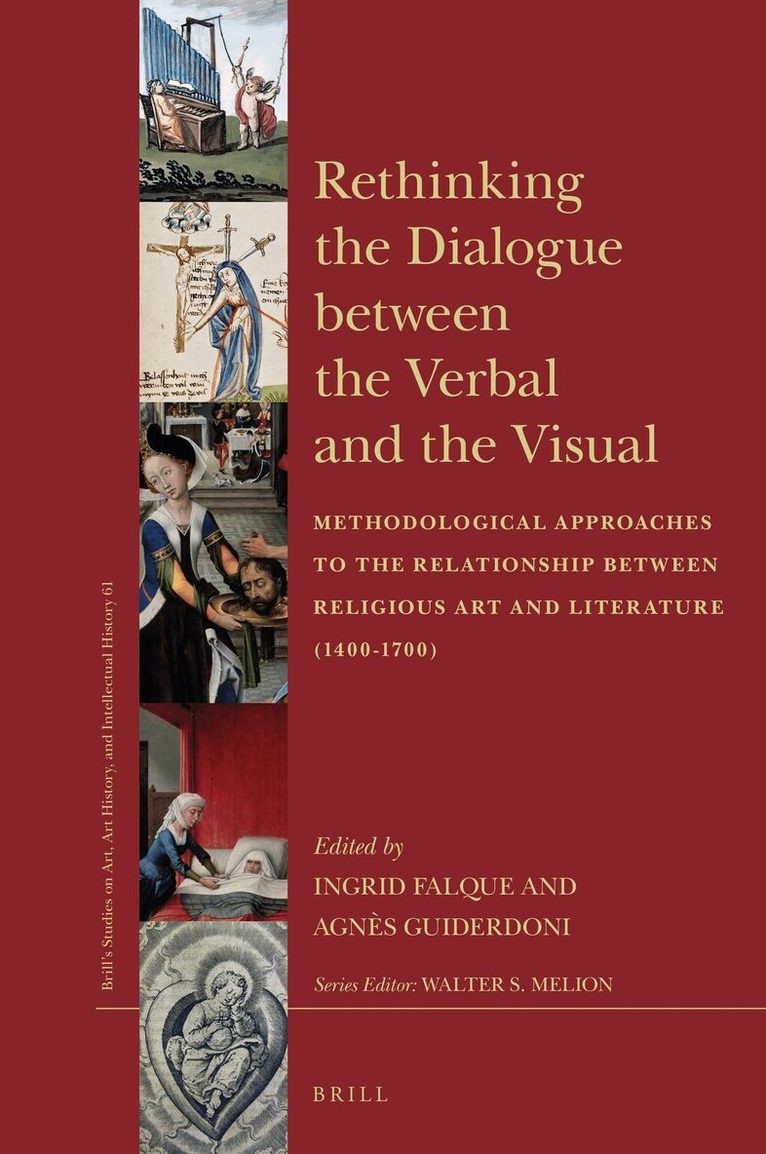
Rethinking the Dialogue between the Verbal and the Visual
Methodological Approaches to the Relationship Between Religious Art and Literature (1400–1700)
Inbunden, Engelska, 2022
2 337 kr
Skickas inom 5-8 vardagar
Intermediality, figurability, iconotext, visual exegesis: these are some of the many new ways in which the relationship between text and image has been explored in recent decades. Scholars have benefited from theoretical work in the fields of anthropology, psychoanalysis, and semiotics, alongside more traditional fields such as literature, art history and cultural history. Focusing on religious texts and images between 1400 and 1700, the essays gathered in this volume contribute to these developments by grounding their case studies in methodology. In considering various relations between the visual and the verbal, the editors have adopted the broadest position possible, emphasizing the phenomenological point of view from which the objects under discussion are examined.Contributors to this volume: Ralph Dekoninck, Anna Dlabačová, Grégory Ems, Ingrid Falque, Agnès Guiderdoni, Walter S. Melion, Kees Schepers, Paul J. Smith, and Elliott D. Wise.
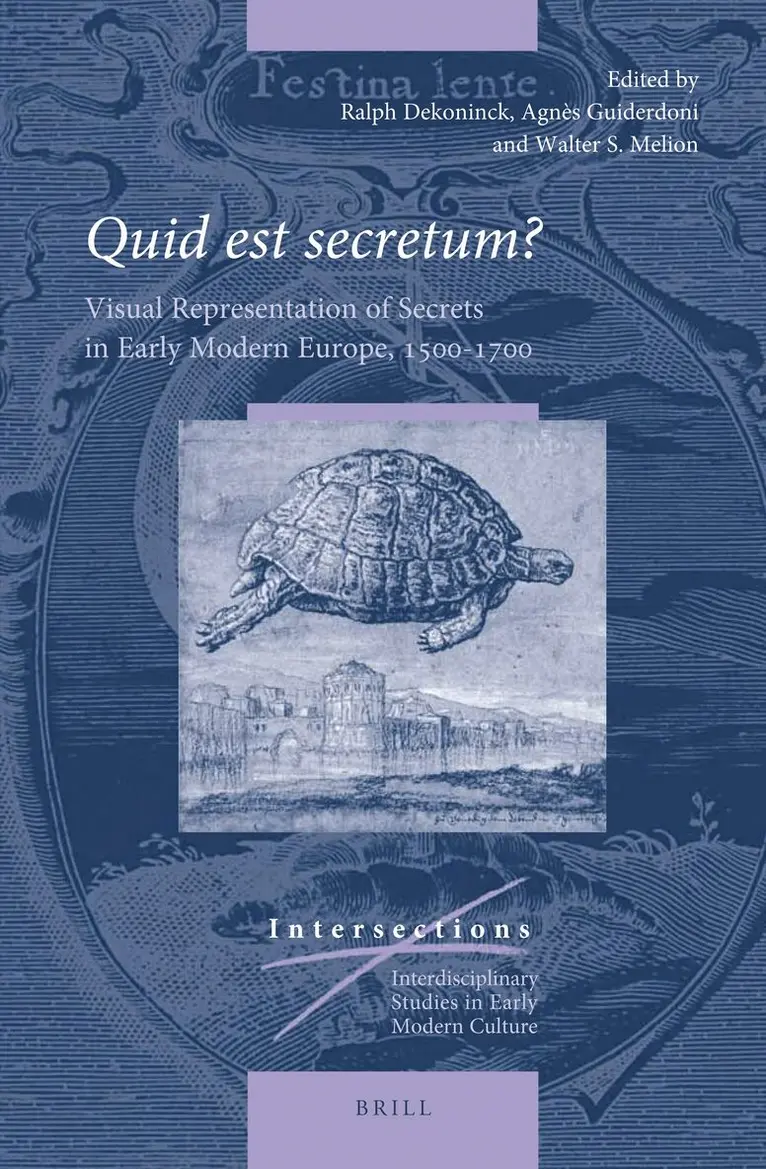
Quid est secretum?
Visual Representation of Secrets in Early Modern Europe, 1500–1700
Inbunden, Engelska, 2020
4 116 kr
Skickas inom 5-8 vardagar
Quid est secretum? Visual Representation of Secrets in Early Modern Europe, 1500–1700 is the companion volume to Intersections 65.1, Quid est sacramentum? Visual Representation of Sacred Mysteries in Early Modern Europe, 1400–1700. Whereas the latter volume focused on sacramental mysteries, the current one examines a wider range of secret subjects. The book examines how secret knowledge was represented visually in ways that both revealed and concealed the true nature of that knowledge, giving and yet impeding access to it. In the early modern period, the discursive and symbolical sites for the representation of secrets were closely related to epistemic changes that transformed conceptions of the transmissibility of knowledge.Contributors: Monika Biel, Alicja Bielak, C. Jean Campbell, Tom Conley, Ralph Dekoninck, Peter G.F. Eversmann, Ingrid Falque, Agnès Guiderdoni, Koenraad Jonckheere, Suzanne Karr Schmidt, Stephanie Leitch, Carme López Calderón, Mark A. Meadow, Walter S. Melion, Eelco Nagelsmit, Lars Cyril Nørgaard, Alexandra Onuf, Bret L. Rothstein, Xavier Vert, Madeleine C. Viljoen, Mara R. Wade, Lee Palmer Wandel, and Caecilie Weissert.