AHM Mustafizur Rahman – författare
Visar alla böcker från författaren AHM Mustafizur Rahman. Handla med fri frakt och snabb leverans.
5 produkter
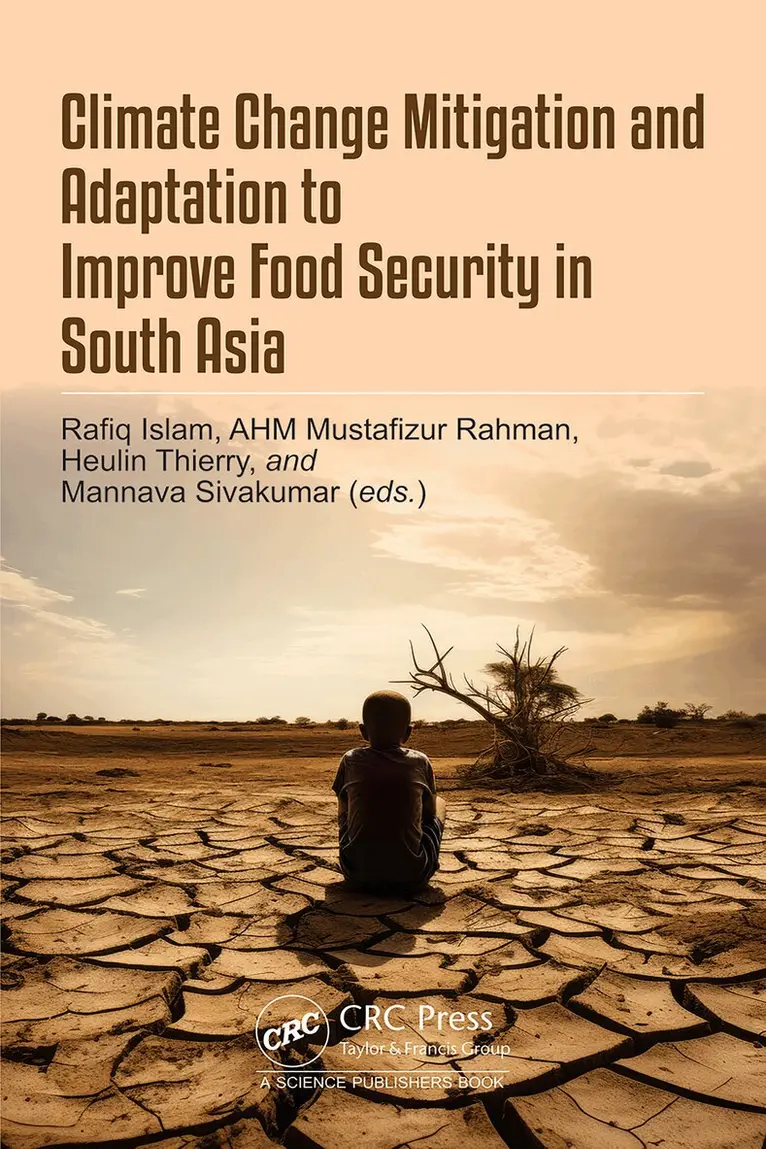
Climate Change Mitigation and Adaptation to Improve Food Security in South Asia
Av Rafiq Islam, AHM Mustafizur Rahman m. fl.
Inbunden, 2025
2131 kr
Lägg i varukorg
Both food security and agriculture contribute to, and are affected by, global climate change. The Intergovernmental Panel on Climate Change reports that food production systems account for up to 37% of global greenhouse gas emissions. At the same time, these systems are increasingly vulnerable to …
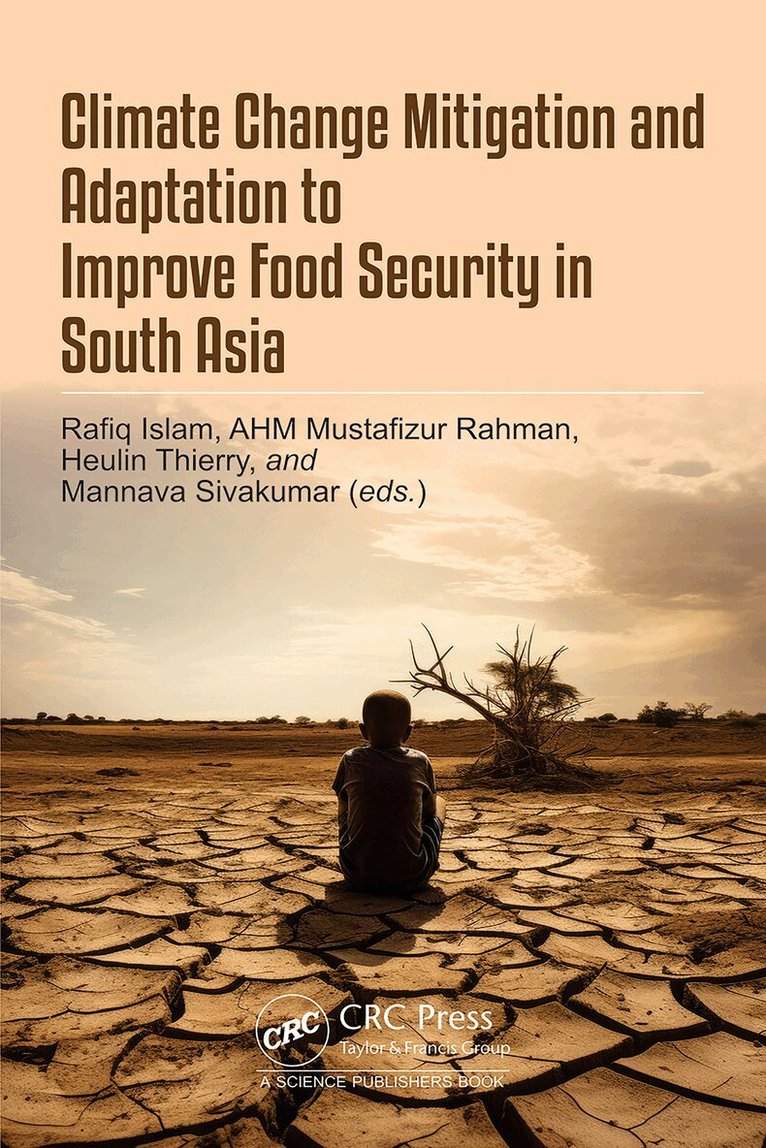
Climate Change Mitigation and Adaptation to Improve Food Security in South Asia
Av Rafiq Islam, AHM Mustafizur Rahman m. fl.
Häftad, 2026
822 kr
Lägg i varukorg
Both food security and agriculture contribute to, and are affected by, global climate change. The Intergovernmental Panel on Climate Change reports that food production systems account for up to 37% of global greenhouse gas emissions. At the same time, these systems are increasingly vulnerable to …
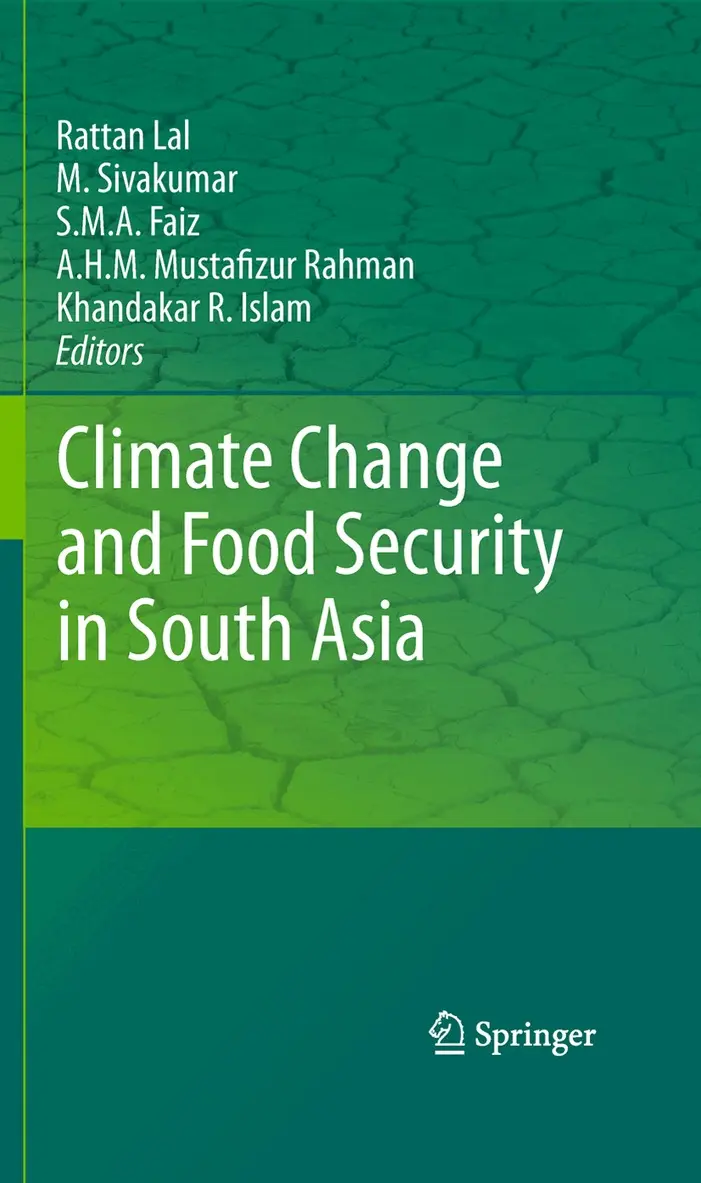
Climate Change and Food Security in South Asia
Av Rattan Lal, Mannava VK Sivakumar m. fl.
Inbunden, 2010
2179 kr
Lägg i varukorg
This book addresses an important topic of food security in South Asia with specific reference to climate change. Of the 1 billion food insecure people in the world, more than 30% are in South Asia. The problem of food insecurity may be exacerbated by the projected climate change especially because …
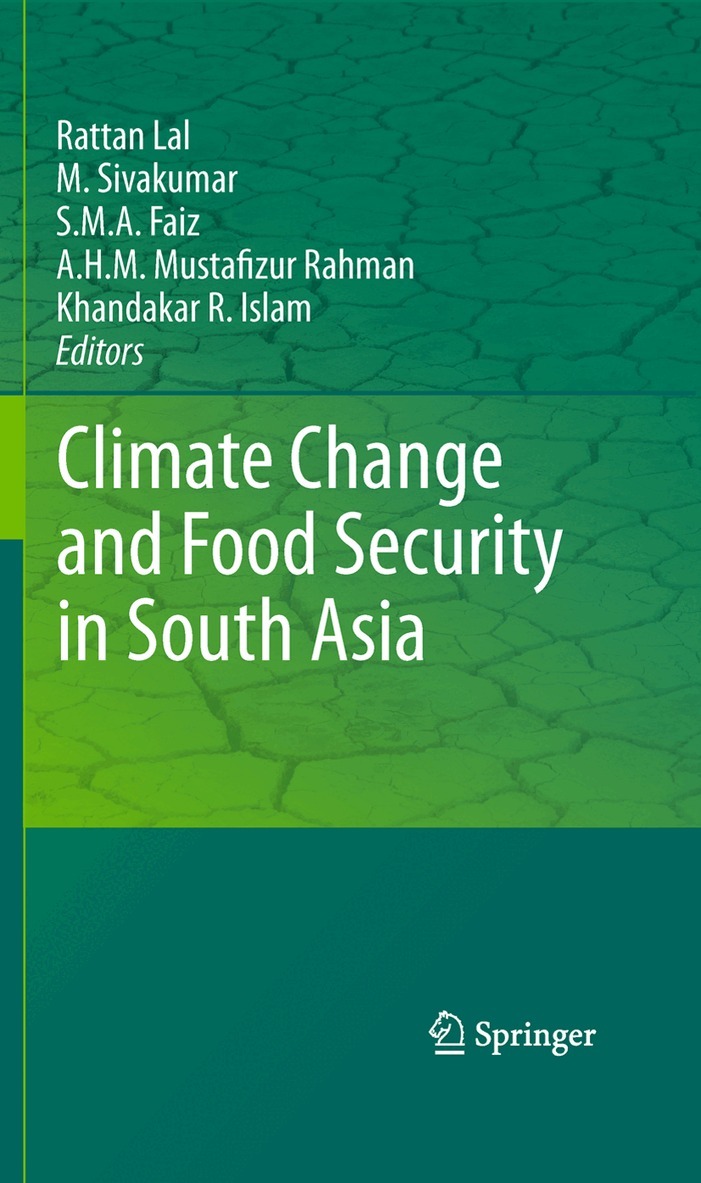
Climate Change and Food Security in South Asia
Av Khandakar R. Islam, A.H.M. Mustafizur Rahman m. fl.
E-bok, 2010
2925 kr
Lägg i varukorg
This book addresses an important topic of food security in South Asia with specific reference to climate change. Of the 1 billion food insecure people in the world, more than 30% are in South Asia. The problem of food insecurity may be exacerbated by the projected climate change especially because …
Climate Change and Food Security in South Asia
Av Rattan Lal, Mannava VK Sivakumar m. fl.
Häftad, 2014
2179 kr
Lägg i varukorg
This book addresses an important topic of food security in South Asia with specific reference to climate change. Of the 1 billion food insecure people in the world, more than 30% are in South Asia. The problem of food insecurity may be exacerbated by the projected climate change especially because …