Ahmed Ammar – författare
2 102 kr
Läs direkt efter köp
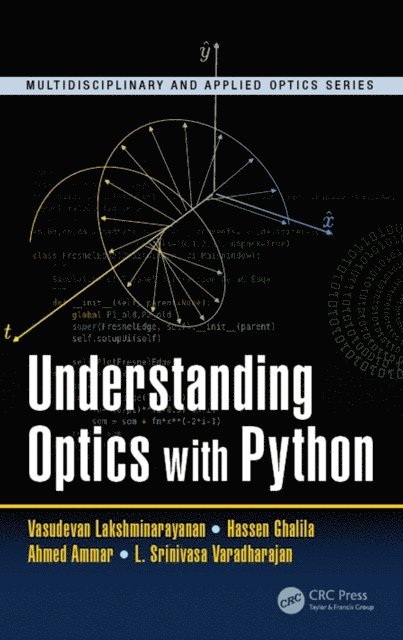
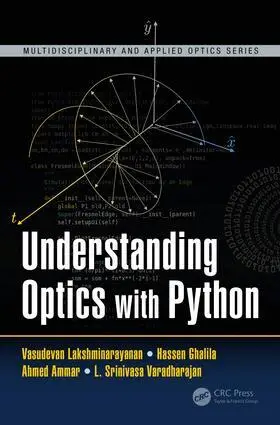
Optics is an enabling science that forms a basis for our technological civilization. Courses in optics are a required part of the engineering or physics undergraduate curriculum in many universities worldwide. The aim of Understanding Optics with Python is twofold: first, to describe certain basic ideas of classical physical and geometric optics; second, to introduce the reader to computer simulations of physical phenomena. The text is aimed more broadly for those who wish to use numerical/computational modeling as an educational tool that promotes interactive teaching (and learning). In addition, it offers an alternative to developing countries where the necessary equipment to carry out the appropriate experiments is not available as a result of financial constraints. This approach contributes to a better diffusion of knowledge about optics. The examples given in this book are comparable to those found in standard textbooks on optics and are suitable for self-study. This text enables the user to study and understand optics using hands-on simulations with Python. Python is our programming language of choice because of its open-source availability, extensive functionality, and an enormous online support. Essentials of programming in Python 3.x, including graphical user interface, are also provided. The codes in the book are available for download on the book’s website.
Discusses most standard topics of traditional physical and geometrical optics through Python and PyQt5
Provides visualizations and in-depth descriptions of Python’s programming language and simulations
Includes simulated laboratories where students are provided a "hands-on" exploration of Python software
Coding and programming featured within the text are available for download on the book’s corresponding website.
"Understanding Optics with Python by Vasudevan Lakshminarayanan, Hassen Ghalila, Ahmed Ammar, and L. Srinivasa Varadharajan is born around a nice idea: using simulations to provide the students with a powerful tool to understand and master optical phenomena. The choice of the Python language is perfectly matched with the overall goal of the book, as the Python language provides a completely free and easy-to-learn platform with huge cross-platform compatibility, where the reader of the book can conduct his or her own numerical experiments to learn faster and better."— Costantino De Angelis, University of Brescia, Italy
"Teaching an important programming language like Python through concrete examples from optics is a natural and, in my view, very effective approach. I believe that this book will be used by students and appreciated greatly by instructors. The topic of modelling optical effects and systems where the students should already have a physical background provides great motivation for students to learn the basics of a powerful programming language without the intimidation factor that often goes with a formal computer science course." — John Dudley, FEMTO-ST Institute, Besançon, France
2 423 kr
Skickas inom 10-15 vardagar
2 102 kr
Läs direkt efter köp
Optics is an enabling science that forms a basis for our technological civilization. Courses in optics are a required part of the engineering or physics undergraduate curriculum in many universities worldwide. The aim of Understanding Optics with Python is twofold: first, to describe certain basic ideas of classical physical and geometric optics; second, to introduce the reader to computer simulations of physical phenomena. The text is aimed more broadly for those who wish to use numerical/computational modeling as an educational tool that promotes interactive teaching (and learning). In addition, it offers an alternative to developing countries where the necessary equipment to carry out the appropriate experiments is not available as a result of financial constraints. This approach contributes to a better diffusion of knowledge about optics. The examples given in this book are comparable to those found in standard textbooks on optics and are suitable for self-study. This text enables the user to study and understand optics using hands-on simulations with Python. Python is our programming language of choice because of its open-source availability, extensive functionality, and an enormous online support. Essentials of programming in Python 3.x, including graphical user interface, are also provided. The codes in the book are available for download on the book’s website.
Discusses most standard topics of traditional physical and geometrical optics through Python and PyQt5
Provides visualizations and in-depth descriptions of Python’s programming language and simulations
Includes simulated laboratories where students are provided a "hands-on" exploration of Python software
Coding and programming featured within the text are available for download on the book’s corresponding website.
"Understanding Optics with Python by Vasudevan Lakshminarayanan, Hassen Ghalila, Ahmed Ammar, and L. Srinivasa Varadharajan is born around a nice idea: using simulations to provide the students with a powerful tool to understand and master optical phenomena. The choice of the Python language is perfectly matched with the overall goal of the book, as the Python language provides a completely free and easy-to-learn platform with huge cross-platform compatibility, where the reader of the book can conduct his or her own numerical experiments to learn faster and better."— Costantino De Angelis, University of Brescia, Italy
"Teaching an important programming language like Python through concrete examples from optics is a natural and, in my view, very effective approach. I believe that this book will be used by students and appreciated greatly by instructors. The topic of modelling optical effects and systems where the students should already have a physical background provides great motivation for students to learn the basics of a powerful programming language without the intimidation factor that often goes with a formal computer science course." — John Dudley, FEMTO-ST Institute, Besançon, France
37 kr
Läs direkt efter köp
1 112 kr
Skickas inom 10-15 vardagar
1 459 kr
Läs direkt efter köp
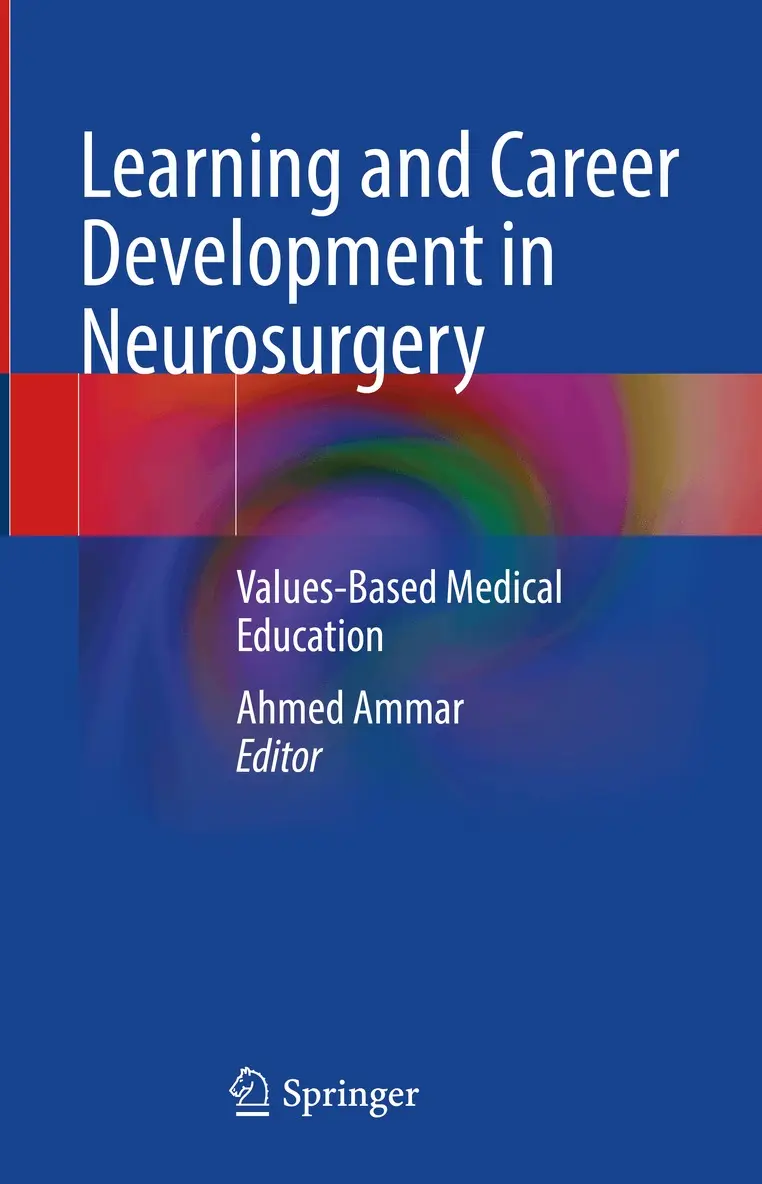
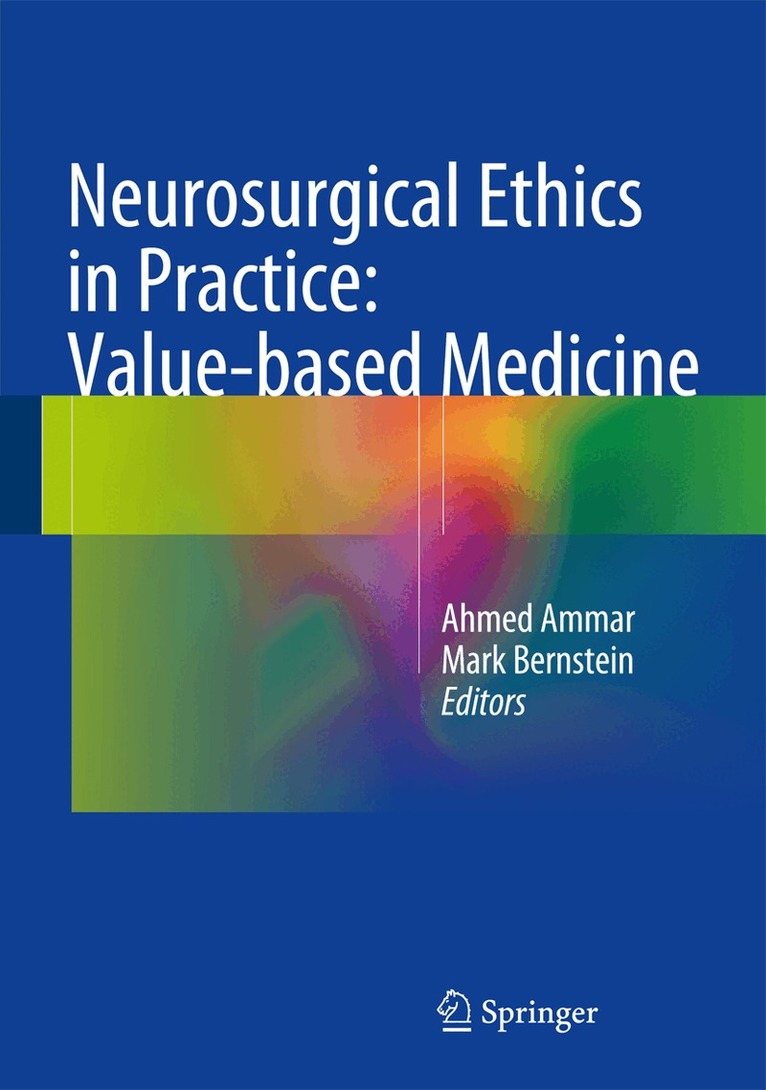
The neurosurgical, surgical and medical training and practice models have to keep up with the technological revolution in the 21st Century as our lives changed on a swift base. Making bioethics and metacognition a cornerstone in medical education and practice will flourish our humane societies.
Metacognition is thinking about one’s thinking, to plan, monitor and assess one’s understanding and performance. By adherence to medical ethics and Values-Based Medicine (VsBM) as guiding principles, we can develop benevolent medical practice. To enhance knowledge application, skills, and character qualities in realms beyond the immediate context in which they were learned.
In this book, we developed a framework on how to evolve medical education and training by utilizing hi-tech. We divided the book into five principal components; Current and traditional root analysis of the learning process, Ethics and metacognition of education, learning and career development, Obstacles, difficulties and setbacks in learning and career development process, Learning in the digital era, and Mentorship.The author believes we are entering a new era of information technology, which will have a significant impact on the education, sciences, strategies and philosophy. Therefore, in preparation for this colossal transformation, the author brings together the best brains in the neurosurgical field from around the globe. Twenty distinguished Professors of Neurosurgery and educators from Canada, the USA, Colombia, the UK, Italy, the Netherland, India, Japan, China, Rwanda, Egypt and Saudi Arabia gathered their experiences and thoughts in this book to shade light on an evolving world that will be the norm in near future.1 112 kr
Skickas inom 10-15 vardagar
1 554 kr
Skickas inom 10-15 vardagar
1 955 kr
Läs direkt efter köp
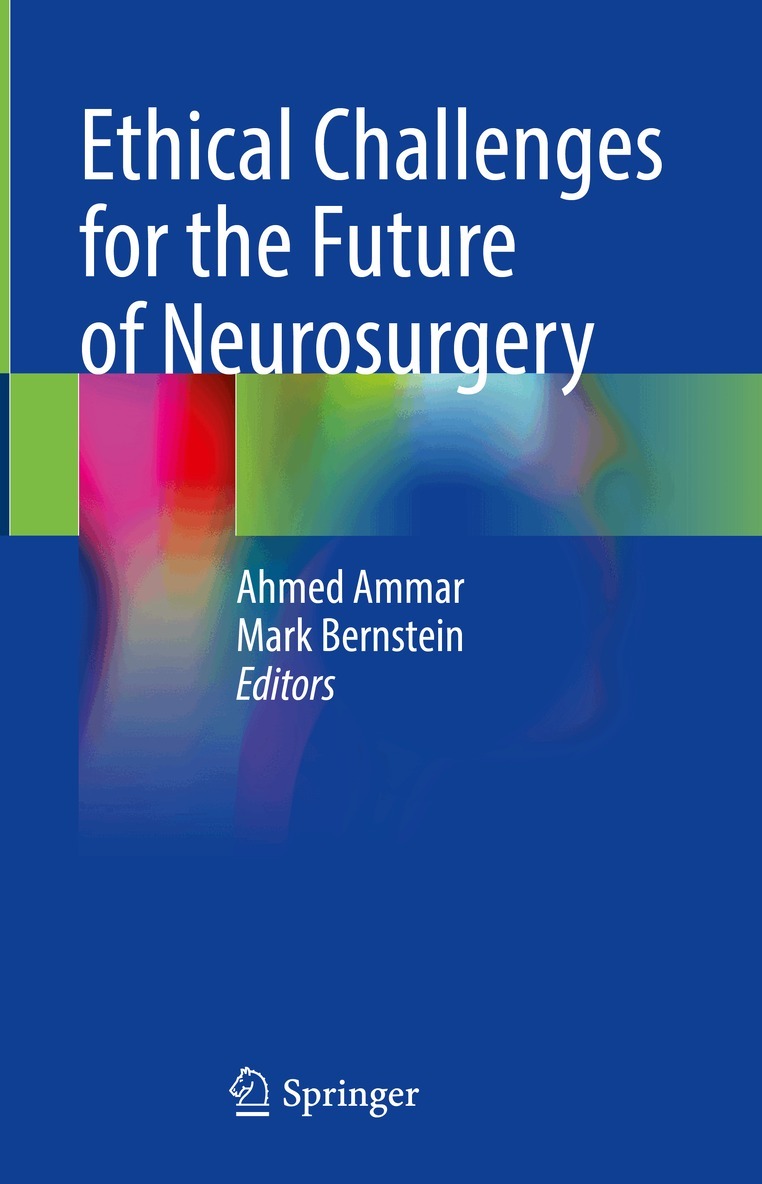
This work informs about major changes in health care systems at present and to come, and the ethical consequences. Rapid technological developments, especially in the fields of communication and virtual communication, artificial intelligence, implanted brain chips, augmented reality, in situ real-time pathological diagnosis of lesions during surgery, and others are challenging aspects of neurosciences in particular and medicine in general. Most of these modern technologies are available nowadays, just waiting to be tried and used. Ethicists (and neurosurgeons!) are facing unprecedented challenges as they have to be one step ahead in reading the future and predict what is coming and how the implementation of these technologies may affect patients’ safety, dignity, and autonomy. This book supports neurosurgeons and medical care providers to understand and implement the newly developed technologies, which will help advance medical care.
Each chapter has been written by a world leader. Some of these authors are making the future and producing new advanced technologies. The authors discuss all the new innovations and the editors asked the authors to point out the ethical dilemmas if such technologies are implemented. The ethical questions are highlighted and suggestions are provided for solving such ethical problems to guarantee patient safety and dignity. According to the definition and principles of the Values-Based Medicine concept, the patient is the center of care, is the sole center of care. No compromising of patients’ well-being and safety can be allowed!
1 222 kr
Skickas inom 10-15 vardagar
1 459 kr
Läs direkt efter köp
1 112 kr
Skickas inom 10-15 vardagar
1 664 kr
Skickas inom 10-15 vardagar
1 575 kr
Läs direkt efter köp
1 293 kr
Skickas inom 11-20 vardagar
616 kr
Skickas inom 5-8 vardagar
616 kr
Skickas inom 5-8 vardagar
616 kr
Skickas inom 5-8 vardagar
600 kr
Skickas inom 5-8 vardagar
616 kr
Skickas inom 5-8 vardagar