Ahmed Ragab - Böcker
Visar alla böcker från författaren Ahmed Ragab. Handla med fri frakt och snabb leverans.
8 produkter
8 produkter
1 108 kr
Skickas inom 7-10 vardagar
Critical Approaches to Science and Religion offers a new direction for scholarship on science and religion that examines social, political, and ecological concerns long part of the field but never properly centered. The works that make up this volume are not preoccupied with traditional philosophical or theological issues. Instead, the book draws on three vital schools of thought: critical race theory, feminist and queer theory, and postcolonial theory. Featuring a diverse array of contributors, it develops critical perspectives by examining how histories of empire, slavery, colonialism, and patriarchy have shaped the many relationships between science and religion in the modern era. In so doing, this book lays the groundwork for scholars interested in speaking directly to matters such as climate change, structural racism, immigration, health care, reproductive justice, and sexual identity.
282 kr
Skickas inom 7-10 vardagar
Critical Approaches to Science and Religion offers a new direction for scholarship on science and religion that examines social, political, and ecological concerns long part of the field but never properly centered. The works that make up this volume are not preoccupied with traditional philosophical or theological issues. Instead, the book draws on three vital schools of thought: critical race theory, feminist and queer theory, and postcolonial theory. Featuring a diverse array of contributors, it develops critical perspectives by examining how histories of empire, slavery, colonialism, and patriarchy have shaped the many relationships between science and religion in the modern era. In so doing, this book lays the groundwork for scholars interested in speaking directly to matters such as climate change, structural racism, immigration, health care, reproductive justice, and sexual identity.
Medicine and Religion in the Life of an Ottoman Sheikh
Al-Damanhuri’s "Clear Statement" on Anatomy
Inbunden, Engelska, 2019
2 088 kr
Skickas inom 10-15 vardagar
In 1768, Aḥmad al-Damanhūrī became the rector (shaykh) of al-Azhar, which was one of the most authoritative and respected positions in the Ottoman Empire. He occupied this position until his death. Despite being a prolific author, whose writings are largely extant, al-Damanhūrī remains almost unknown, and much of his work awaits study and analysis. This book aims to shed light on al-Damanhūrī’s diverse intellectual background, and that of and his contemporaries, building on and continuing the scholarship on the academic thought of the late Ottoman Empire.The book specifically investigates the intersection of medical and religious knowledge in Eighteenth-Century Egypt. It takes as its focus a manuscript on anatomy by al-Damanhūrī (d. 1778), entitled "The Clear Statement on the Science of Anatomy (al-qawl al-ṣarīḥ fī ʿilm al-tashrīḥ),". The book includes an edited translation of The Clear Statement, which is a well-known but unstudied and unpublished manuscript. It also provides a summary translation and analysis of al-Damanhūrī’s own intellectual autobiography. As such, the book provides an important window into a period that remains deeply understudied and a topic that continues to cause debates and controversies.This study, therefore, will be of keen interest to scholars working on the "post-Classical" Islamic world, as well as historians of religion, science, and medicine looking beyond Europe in the Early Modern period.
630 kr
Skickas inom 10-15 vardagar
How did pious medieval Muslims experience health and disease? Rooted in the prophet’s experiences with medicine and healing, Muslim pietistic literature developed cosmologies in which physical suffering and medical interventions interacted with religious obligations and spiritual health. This book traces the development of prophetic medical literature and religious writings around health and disease to give a new perspective on how patienthood was conditioned by the intersection of medicine and Islam. The author investigates the early and foundational writings on prophetic medicine and related pietistic writings on health and disease produced during the Islamic Classical Age. Looking at attitudes from and towards clerics, physicians and patients, sickness and health are gradually revealed as a social, gendered, religious, and cultural experience. Patients are shown to experience certain sensoria that are conditioned not only by medical knowledge, but also by religious and pietistic attitudes. This is a fascinating insight into the development of Muslim pieties and the traditions of medical practice. It will be of great interest to scholars interested in Islamic Studies, history of religion, history of medicine, science and religion and the history of embodied religious practice, particularly in matters of health and medicine.
Medicine and Religion in the Life of an Ottoman Sheikh
Al-Damanhuri’s "Clear Statement" on Anatomy
Häftad, Engelska, 2020
630 kr
Skickas inom 10-15 vardagar
In 1768, Aḥmad al-Damanhūrī became the rector (shaykh) of al-Azhar, which was one of the most authoritative and respected positions in the Ottoman Empire. He occupied this position until his death. Despite being a prolific author, whose writings are largely extant, al-Damanhūrī remains almost unknown, and much of his work awaits study and analysis. This book aims to shed light on al-Damanhūrī’s diverse intellectual background, and that of and his contemporaries, building on and continuing the scholarship on the academic thought of the late Ottoman Empire.The book specifically investigates the intersection of medical and religious knowledge in Eighteenth-Century Egypt. It takes as its focus a manuscript on anatomy by al-Damanhūrī (d. 1778), entitled "The Clear Statement on the Science of Anatomy (al-qawl al-ṣarīḥ fī ʿilm al-tashrīḥ),". The book includes an edited translation of The Clear Statement, which is a well-known but unstudied and unpublished manuscript. It also provides a summary translation and analysis of al-Damanhūrī’s own intellectual autobiography. As such, the book provides an important window into a period that remains deeply understudied and a topic that continues to cause debates and controversies.This study, therefore, will be of keen interest to scholars working on the "post-Classical" Islamic world, as well as historians of religion, science, and medicine looking beyond Europe in the Early Modern period.
2 088 kr
Skickas inom 10-15 vardagar
How did pious medieval Muslims experience health and disease? Rooted in the prophet’s experiences with medicine and healing, Muslim pietistic literature developed cosmologies in which physical suffering and medical interventions interacted with religious obligations and spiritual health. This book traces the development of prophetic medical literature and religious writings around health and disease to give a new perspective on how patienthood was conditioned by the intersection of medicine and Islam. The author investigates the early and foundational writings on prophetic medicine and related pietistic writings on health and disease produced during the Islamic Classical Age. Looking at attitudes from and towards clerics, physicians and patients, sickness and health are gradually revealed as a social, gendered, religious, and cultural experience. Patients are shown to experience certain sensoria that are conditioned not only by medical knowledge, but also by religious and pietistic attitudes. This is a fascinating insight into the development of Muslim pieties and the traditions of medical practice. It will be of great interest to scholars interested in Islamic Studies, history of religion, history of medicine, science and religion and the history of embodied religious practice, particularly in matters of health and medicine.
1 258 kr
Skickas inom 7-10 vardagar
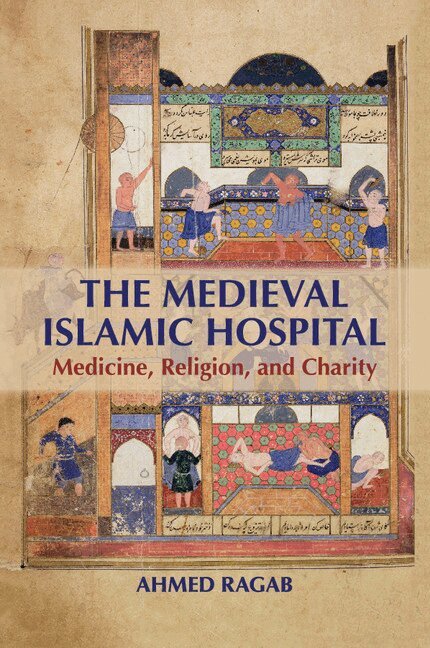
The first monograph on the history of Islamic hospitals, this volume focuses on the under-examined Egyptian and Levantine institutions of the twelfth to fourteenth centuries. By the twelfth century, hospitals serving the sick and the poor could be found in nearly every Islamic city. Ahmed Ragab traces the varying origins and development of these institutions, locating them in their urban environments and linking them to charity networks and patrons' political projects. Following the paths of patients inside hospital wards, he investigates who they were and what kinds of experiences they had. The Medieval Islamic Hospital explores the medical networks surrounding early hospitals and sheds light on the particular brand of practice-oriented medicine they helped to develop. Providing a detailed picture of the effect of religion on medieval medicine, it will be essential reading for those interested in history of medicine, history of Islamic sciences, or history of the Mediterranean.
428 kr
Skickas inom 7-10 vardagar
The first monograph on the history of Islamic hospitals, this volume focuses on the under-examined Egyptian and Levantine institutions of the twelfth to fourteenth centuries. By the twelfth century, hospitals serving the sick and the poor could be found in nearly every Islamic city. Ahmed Ragab traces the varying origins and development of these institutions, locating them in their urban environments and linking them to charity networks and patrons' political projects. Following the paths of patients inside hospital wards, he investigates who they were and what kinds of experiences they had. The Medieval Islamic Hospital explores the medical networks surrounding early hospitals and sheds light on the particular brand of practice-oriented medicine they helped to develop. Providing a detailed picture of the effect of religion on medieval medicine, it will be essential reading for those interested in history of medicine, history of Islamic sciences, or history of the Mediterranean.