Aina Urdze - Böcker
Visar alla böcker från författaren Aina Urdze. Handla med fri frakt och snabb leverans.
6 produkter
6 produkter
2 354 kr
Skickas inom 5-8 vardagar
2 437 kr
Skickas inom 5-8 vardagar
1 917 kr
Skickas inom 3-6 vardagar
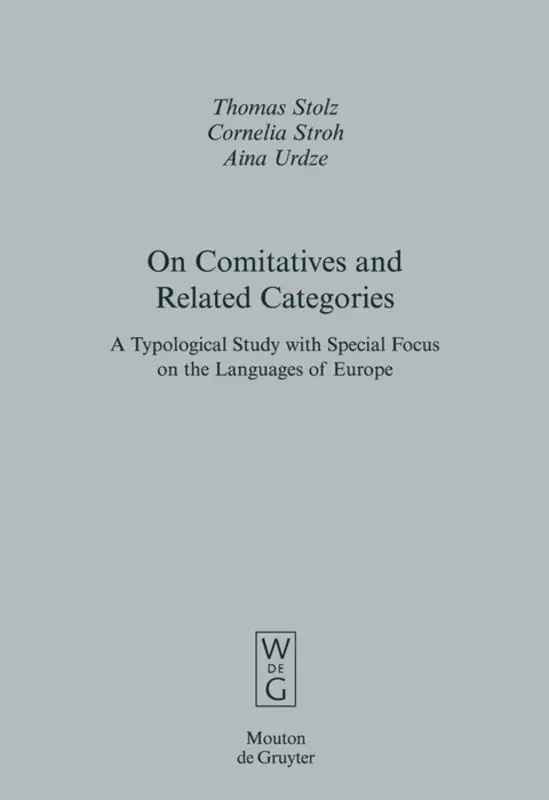
On Comitatives and Related Categories
A Typological Study with Special Focus on the Languages of Europe
Inbunden, Engelska, 2006
3 019 kr
Skickas inom 5-8 vardagar
This is the first book-length functional-typologically inspired crosslinguistic study of comitatives and related categories such as the instrumental. On the basis of data drawn from 400 languages world-wide (covering all major phyla and areas), the authors test and revise a variety of general linguistic hypotheses about the grammar and cognitive foundations of comitatives. Three types of languages are identified according to the morphological treatment of the comitative and its syncretistic association with other concepts. It is shown that the structural behaviour of comitatives is areally biassed and that the languages of Europe tend to diverge from the majority of the world's languages. This has important repercussions for a language-independent definition of the comitative. The supposed conceptual closeness of comitative and instrumental is discussed in some detail and a semantic map of the comitative is put forward. Markedness is the crucial concept for the evaluation of the relation that ties comitatives and instrumentals to each other. In a separate chapter, the diachrony of comitatives is looked into from the perspective of grammaticalisation research. Throughout the book, the argumentation is richly documented by empirical data. The book contains three case-studies of the comitative in Icelandic, Latvian and Maltese - each of which represents one of the three language types identified earlier in the text. For the purpose of comparing the languages of Europe, a chapter is devoted to the analysis of a large parallel literary corpus (covering 64 languages) which reveals that the parameters of genetic affiliation, areal location and typological classification interact in intricate ways when it comes to predicting whether or not two languages of the sample behave similarly as to the use to which they put their comitative morphemes. With a view to determining the degree of similarity between the languages of the European sub-sample, methods of quantitative typology are employed. General linguists with an interest in case, functional typologists, grammaticalisation researchers and experts of markedness issues will value this book as an important contribution to their respective fields of interest.We regret that, due to a PDF problem, the figure on page 111 is partly shown in black. Please find the correct table here.
2 272 kr
Skickas inom 5-8 vardagar
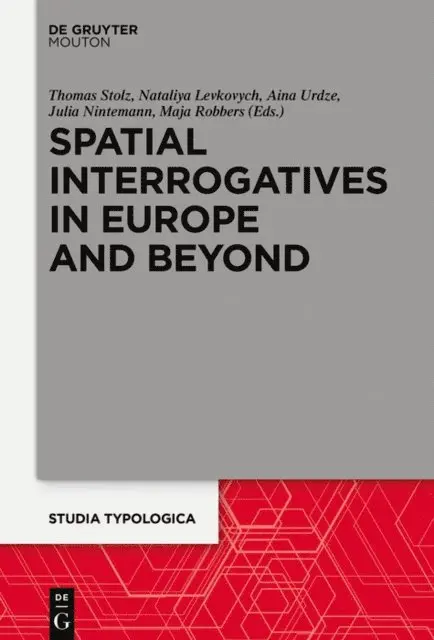
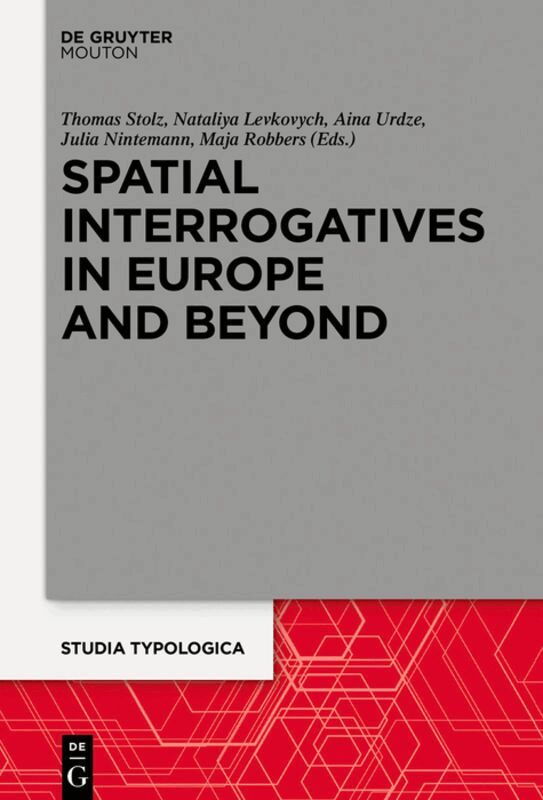
The extant generalizations about the grammar of space rely heavily on the analyses of declarative sentences. There is a need to check whether these generalizations also hold in the domain of interrogation. To this end this book analyzes data from some 450 languages (including non-standard varieties). The focus is on paradigms of spatial interrogatives such as English where, whither and whence and their internal organization. These paradigms are checked for recurrent patterns of morphological mismatches (such as syncretism) and different degrees of complexity (e.g. the number of segments). The data-base consists of a large parallel literary corpus (Le petit prince and translations thereof) which is complemented by further sources of information such as descriptive grammars. The data are analyzed from a synchronic perspective. However, diachronic issues are addressed unsystematically, too. It is shown that the distribution of phenomena which characterize paradigms of spatial interrogatives are subject to areal-linguistic factors. This is the first typological study of spatial interrogatives. It provides new insights for students of the grammar of space, morphological paradigms, and language typology.
1 645 kr
Skickas inom 5-8 vardagar
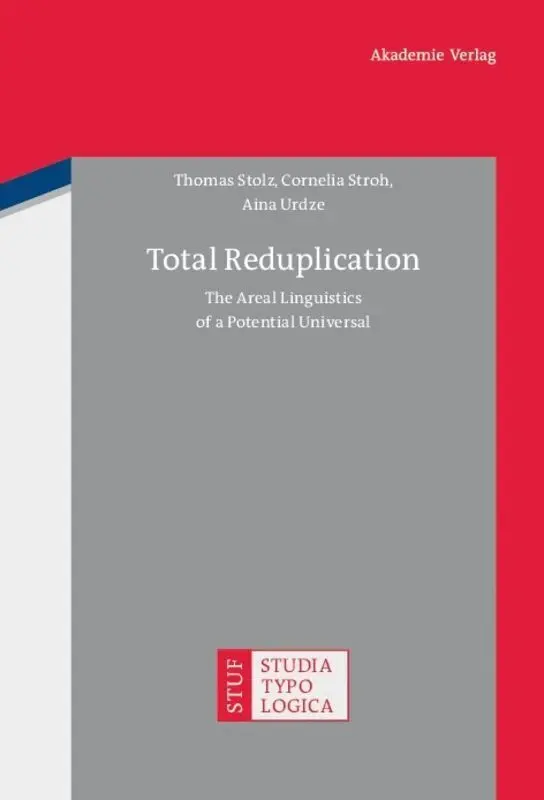
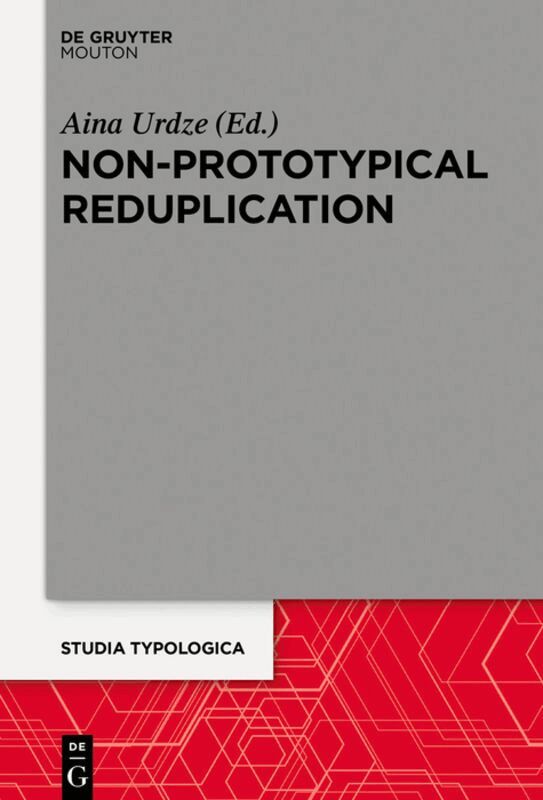
As “reduplication” is a continuously discussed topic in the field of linguistic typology and morphology there is still the need to reach a deeper understanding of reduplicative processes. This volume aims to explore the boundaries of reduplication proper from an outside angle, i.e. by looking into non-prototypical cases which challenge the formal and functional criteria for reduplication proper. The articles selected cover various linguistic areals from Southeast Asia, Africa and Europe. Abbi explores echo formations and reduplicative expressives in Southeast Asia. Anderson presents an in-depth study on various reduplication phenomena in the Munda language family. Nintemann addresses a formal problem of reduplication proper in Bantu languages. Finkbeiner discusses a case of triplication in German, contrasting it with the framework of reduplication. Kallergi & Konstantinidou provide an detailed insight into several kinds of echo formations in Modern Greek, including diachronic aspects. Rozhanskiy’s focus is on unexpected reduplicative patterns found in the formation of Komi ideophones. Stolz delivers a thorough crosslinguistic investigation on reduplicative phenomena, favouring the canonical approach over the prototype method.