Akhtar Ali – författare
1 938 kr
Skickas inom 10-15 vardagar
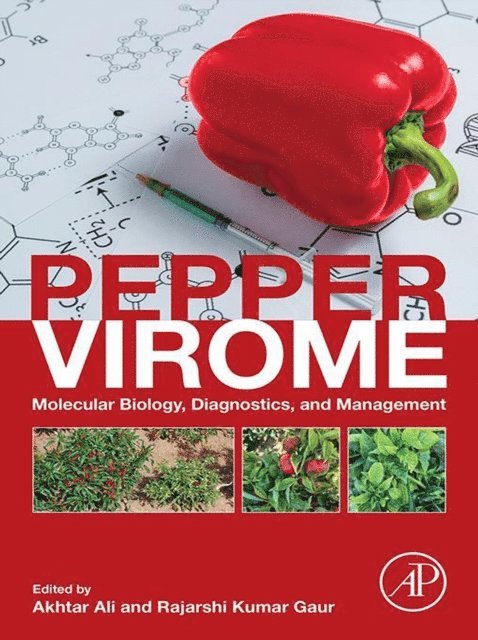
Pepper Virome: Molecular Biology, Diagnostics and Management presents detailed information about the plant viruses that infect pepper worldwide, providing crucial insights for both the scientific community and producers. Understanding the nature of the viruses, their transmission methods, and possible sources of resistance in order to minimize the yield losses as well as to reduce the spread of these viruses to new locations or countries is of global importance. Pepper is an important commodity worldwide, cultivated for both fresh produce and for processing industry as a spice. However, various diseases affect pepper production and cause significant yield losses in pepper yield.The increasing outbreaks of virus species infecting Capsicum spp. have become a major problem for growers. A combination of factors, including expansion and intensification of pepper cultivation, availability of volunteer hosts, abundance of insect vectors, and climate change have all contributed to the issue. This book provides in-depth information on both the viruses infecting peppers and eco-friendly management measures to decrease the rate of spread of viruses.
Focuses on symptomatology, transmission, and epidemiology of pepper virusesReveals the impact on host, yield, and virus-vector interactionsEvaluates management strategies against viruses and how they have evolved2 662 kr
Läs direkt efter köp
1 378 kr
Skickas inom 11-20 vardagar
Learn how to get the most out of your molecular biology experiments
Experimental Techniques in Molecular Biology is a comprehensive, hands-on resource designed to equip students, researchers and laboratory professionals with the practical skills and foundational knowledge needed to explore biology at the molecular level.
This essential and unique resource provides a comprehensive guide to identifying and characterizing organisms, locating genes and disease-causing agents, and applying molecular insights to solve real-world biological challenges.
Covering a broad range of laboratory techniques fundamental to recombinant DNA technology, the book brings together everything needed in one accessible volume. Readers will learn how to work with nucleic acids, including single- and double-stranded RNA and DNA―as well as proteins from a wide variety of organisms.
The book offers detailed, step-by-step laboratory protocols for working with nucleic acids and proteins from a variety of biological sources, including virus-infected plant tissues, fungi, and other biological specimens. Readers will learn how to prepare laboratory solutions and buffers, as well as extract and analyze RNA, dsRNA, DNA, and proteins with confidence, accuracy, and precision.
Each technique is presented with a clear conceptual foundation, practical rationale, and thorough explanations of the reagents and their functions, making complex molecular procedures easier to understand and apply. The text also covers essential methods for the isolation, quantification, in vitro amplification, and manipulation, cloning into plasmid vectors, characterization, and sequencing of nucleic acids, as well as the detection of proteins by serological techniques.
Ideal for both classroom instruction and laboratory application, this book serves as a valuable reference for anyone seeking to strengthen their understanding of molecular biology techniques and their applications in contemporary bioscience research.
Key Features:
• Comprehensive coverage of core and advanced molecular biology laboratory techniques
• Step-by-step experimental protocols with practical guidance
• Covers techniques often absent from core molecular biology textbooks
• Includes 100 full-color illustrations to enhance understanding and visualization
• Written by an experienced academic and researcher with extensive teaching and research experience
159 kr
Läs direkt efter köp