Ala Al-Hamarneh – författare
Visar alla böcker från författaren Ala Al-Hamarneh. Handla med fri frakt och snabb leverans.
3 produkter
3 produkter
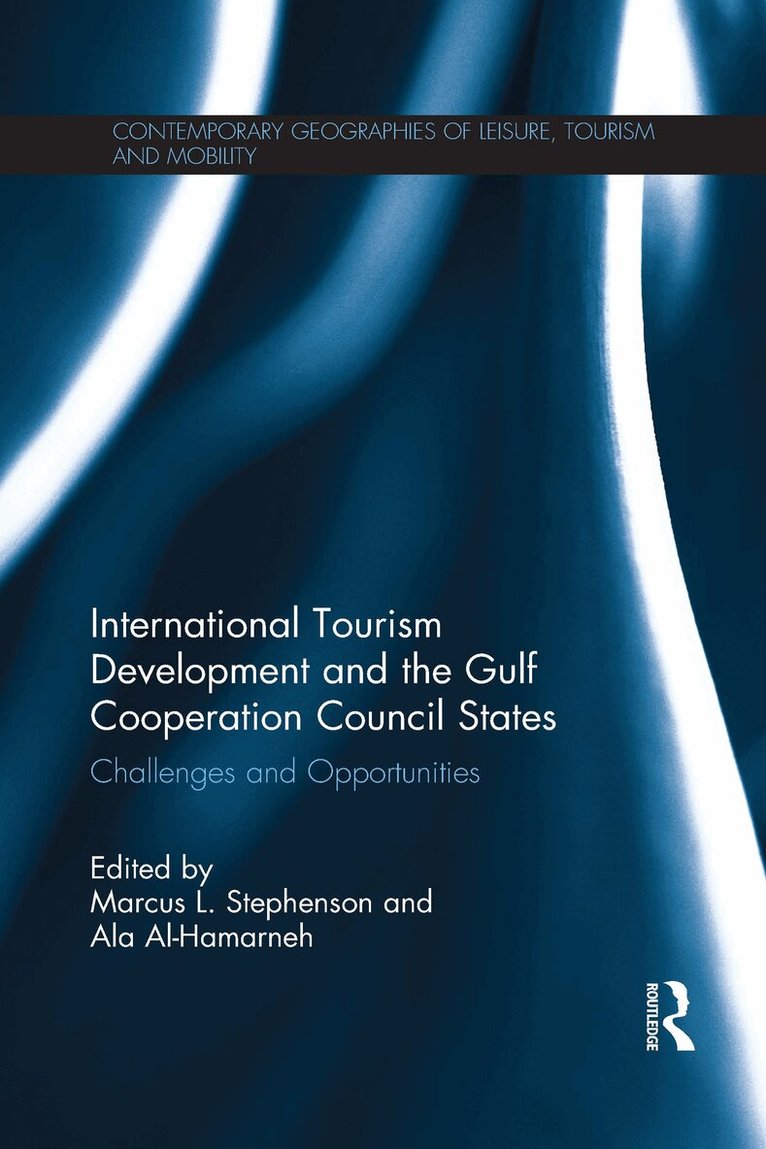
International Tourism Development and the Gulf Cooperation Council States
Challenges and Opportunities
Häftad, Engelska, 2022
637 kr
Skickas inom 10-15 vardagar
This book examines the challenges facing the development of tourism in the six member states of the Gulf Cooperation Council (GCC): Bahrain, Kuwait, Oman, Qatar, Saudi Arabia and the United Arab Emirates (UAE). This region, which largely comprises the Arabian Peninsula, possesses some of the fastest growing economies in the world and is remarkably unique. It shares similar associations and affinities: tribal histories, royal kinship, political associations, Bedu cultural roots, Islamic heritage, rapid urbanization, oil wealth, rentier dynamics, state capitalist structures, migrant labour, economic diversification policies and institutional restructuring. Therefore, this volume takes the study of tourism away from its normative unit of analysis, where tourism in the region is being examined within the context of the Middle East and the wider Islamic and Arab world, towards an enquiry focusing on a specific geo-political territory and socially defined region.Although international tourism development in the region embodies a range of challenges, complexities and conflicts, which are deeply contextualized in this volume, the approach overall does not endorse the normative ‘Gulf bashing’ position that has predominated within the critical enquiries in the region. It presents a forward-looking and realistic assessment of international tourism development, examining development potentialities and constructive ways forward for GCC states and the region as a whole. This edited volume provides a real attempt to examine critically ways in which tourism and its development intersect with the socio-cultural, economic, political, environmental and industrial change that is taking place in the region. By doing so, the book provides a theoretically engaged analysis of the social transformations and discourses that shape our contemporary understanding of tourism development within the GCC region. Moreover, it deciphers tourism development’s role within the context of the GCC states undergoing rapid transformation, urbanization, ultra-modernization, internationalization and globalization. In addition to state-specific illustrations and destination case studies, the work provides insights into relatable themes associated with international tourism development in the region, such as tourism’s relationship with religion, heritage and identity, the environment and sustainability, mobility and cross-border movements, the transport industry, image production and destination branding, mega-development and political stability and instability. The book combines theory with diverse case study illustrations, drawing on disciplinary knowledge from such fields as sociology, political economy and social geography.This timely and original contribution is essential reading for students, researchers and academics in the field of tourism studies and related subject areas, along with those who have regional interests in Middle East studies, including Gulf and Arabian Peninsula studies.
International Tourism Development and the Gulf Cooperation Council States
Challenges and Opportunities
Inbunden, Engelska, 2017
2 176 kr
Skickas inom 10-15 vardagar
This book examines the challenges facing the development of tourism in the six member states of the Gulf Cooperation Council (GCC): Bahrain, Kuwait, Oman, Qatar, Saudi Arabia and the United Arab Emirates (UAE). This region, which largely comprises the Arabian Peninsula, possesses some of the fastest growing economies in the world and is remarkably unique. It shares similar associations and affinities: tribal histories, royal kinship, political associations, Bedu cultural roots, Islamic heritage, rapid urbanization, oil wealth, rentier dynamics, state capitalist structures, migrant labour, economic diversification policies and institutional restructuring. Therefore, this volume takes the study of tourism away from its normative unit of analysis, where tourism in the region is being examined within the context of the Middle East and the wider Islamic and Arab world, towards an enquiry focusing on a specific geo-political territory and socially defined region.Although international tourism development in the region embodies a range of challenges, complexities and conflicts, which are deeply contextualized in this volume, the approach overall does not endorse the normative ‘Gulf bashing’ position that has predominated within the critical enquiries in the region. It presents a forward-looking and realistic assessment of international tourism development, examining development potentialities and constructive ways forward for GCC states and the region as a whole. This edited volume provides a real attempt to examine critically ways in which tourism and its development intersect with the socio-cultural, economic, political, environmental and industrial change that is taking place in the region. By doing so, the book provides a theoretically engaged analysis of the social transformations and discourses that shape our contemporary understanding of tourism development within the GCC region. Moreover, it deciphers tourism development’s role within the context of the GCC states undergoing rapid transformation, urbanization, ultra-modernization, internationalization and globalization. In addition to state-specific illustrations and destination case studies, the work provides insights into relatable themes associated with international tourism development in the region, such as tourism’s relationship with religion, heritage and identity, the environment and sustainability, mobility and cross-border movements, the transport industry, image production and destination branding, mega-development and political stability and instability. The book combines theory with diverse case study illustrations, drawing on disciplinary knowledge from such fields as sociology, political economy and social geography.This timely and original contribution is essential reading for students, researchers and academics in the field of tourism studies and related subject areas, along with those who have regional interests in Middle East studies, including Gulf and Arabian Peninsula studies.
820 kr
Skickas inom 5-8 vardagar
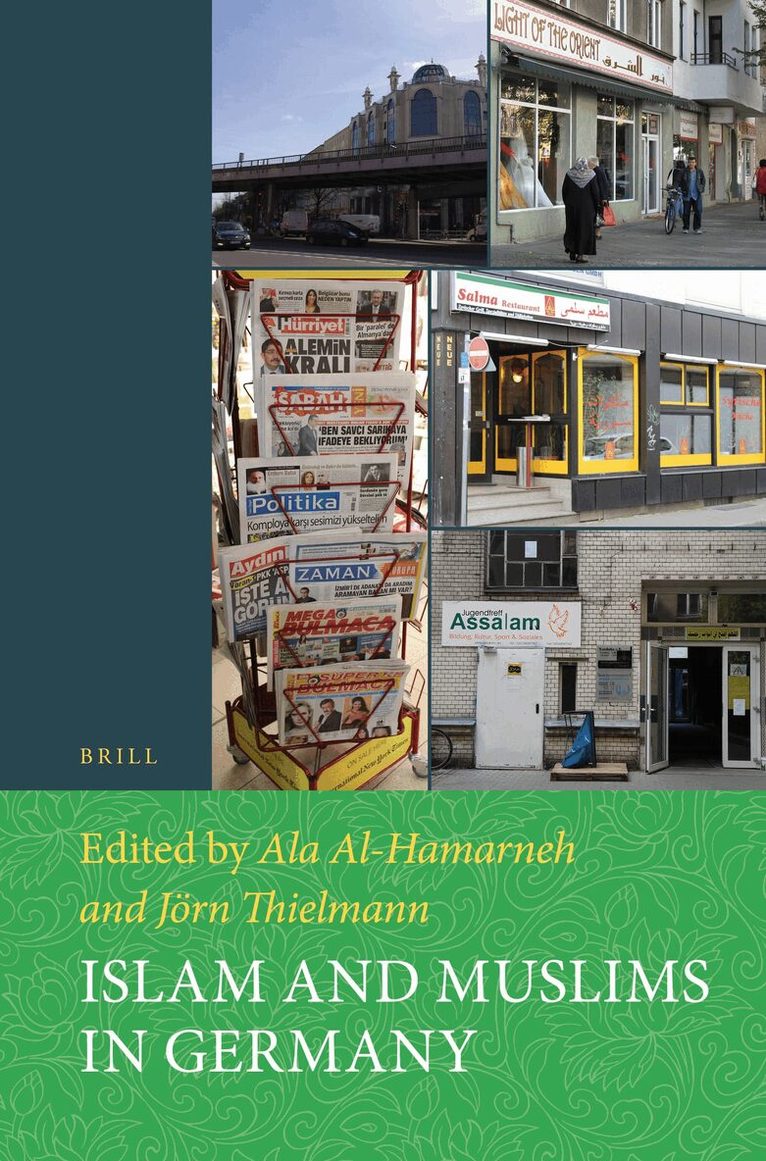
In the European discourse of post 9/11 reality, concepts such as “Multiculturalism”, “Integration” and “European Islam” are becoming more and more topical. The empirically- based contributions in this volume aim to reflect the variety of current Muslim social practices and life-worlds in Germany. The volume goes beyond the fragmented methods of minority case studies and the monolithic view of Muslims as portrayed by mass media to present fresh theoretical approaches and in-depth analyses of a rich mosaic of communities, cultures and social practices. Issues of politics, religion, society, economics, media, art, literature, law and gender are addressed. The result is a vibrant state-of-the-art publication of studies of real-life communities and individuals.Contributors are Kilian Bälz, Kea Eilers, Friedmann Eissler, Konrad Hirschler, Jeanette S. Jouili, Melanie Kamp, Matthias Kulinna, Judith Pies, Claudia Preckel, Robert Pütz, Mathias Rohe, Sabine Schiffer, Verena Schreiber, Christoph Schumann†, Wolfgang G. Schwanitz, Clara Seitz, Faruk Şen, Viola Shafik, Yafa Shanneik, Martin Sökefeld, Margrete Søvik, Levent Tezcan, Jörn Thielmann, Nikola Tietze and Maria Wurm.