
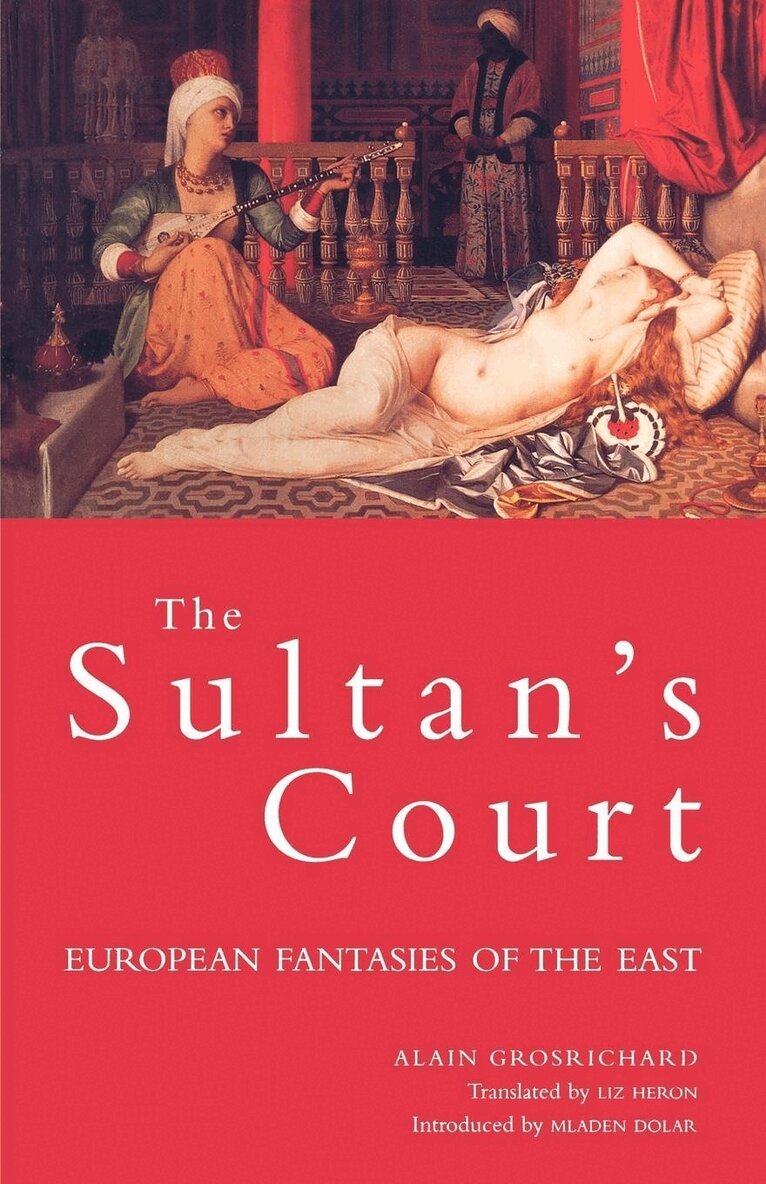
Edward Said's Orientalism (1978) has justly attracted great respect and attention for its account of Western perceptions and representations of the Orient, but the English-speaking world has for too long been unaware of another classic in the same field which appeared in France only a year later. Alain Grosrichard's The Sultan's Court is a fascinating and careful deconstruction of Western accounts of "Oriental despotism" in the seventeenth and eighteenth centuries, focusing particularly on portrayals of the Ottoman Empire and the supposedly enigmatic and opaque structure of the despot's power and his court of viziers, janissaries, mutes, dwarfs, eunuchs and countless wives.Drawing on the writings of travelers and philosophers such as Montesquieu, Rousseau and Voltaire, Grosrichard goes further than merely cataloguing their intense fascination with the vortex of capriciousness, violence, cruelty, lust, sexual perversion and slavery which they perceived in the seraglio. Deftly and subtly using a Lacanian psychoanalytic framework, he describes the process as one in which these leading Enlightenment figures were constructing a fantasmatic Other to counterpose to their project of a rationally based society. The Sultan's Court seeks not to refute the misconceptions but rather to expose the nature of the fantasy and what it can reveal about modern political thought and power relations more generally.
Cuando el libro de Alain Grosrichard salió a la luz en París, en 1979, el despotismo tomaba formas nuevas bajo banderas diversas. El contexto en 2023 ya no es el mismo. Sin embargo, la obra se reedita; señal de que trasciende lo coyuntural. Los viajeros occidentales escrutaron el Oriente persa, turco, ruso, y vieron despotismo. Vieron que el déspota es el dueño y monopolizador de la mirada: los demás obedecen ciegamente, y si no, se los ciega. Pero su mirada viajera fue tan intensa que se volvió sobre sí misma para descubrir en sus propios sistemas políticos rasgos de lo que percibieron a ojo desnudo en esos bárbaros tan maltratados desde Aristóteles. Esta es la invitación del libro: reconocer en él la repetibilidad de estructuras históricas más allá del significante que hoy nombra el "despotismo" e identificar lo innovador, lo que cambia, lo singular y único, es decir, el acontecimiento. La estructura es la del poder.
Edward Said's Orientalism (1978) has justly attracted great respect and attention for its account of Western perceptions and representations of the Orient, but the English-speaking world has for too long been unaware of another classic in the same field which appeared in France only a year later. Alain Grosrichard's The Sultan's Court is a fascinating and careful deconstruction of Western accounts of "Oriental despotism" in the seventeenth and eighteenth centuries, focusing particularly on portrayals of the Ottoman Empire and the supposedly enigmatic and opaque structure of the despot's power and his court of viziers, janissaries, mutes, dwarfs, eunuchs and countless wives.Drawing on the writings of travelers and philosophers such as Montesquieu, Rousseau and Voltaire, Grosrichard goes further than merely cataloguing their intense fascination with the vortex of capriciousness, violence, cruelty, lust, sexual perversion and slavery which they perceived in the seraglio. Deftly and subtly using a Lacanian psychoanalytic framework, he describes the process as one in which these leading Enlightenment figures were constructing a fantasmatic Other to counterpose to their project of a rationally based society. The Sultan's Court seeks not to refute the misconceptions but rather to expose the nature of the fantasy and what it can reveal about modern political thought and power relations more generally.

Cuando el libro de Alain Grosrichard salió a la luz en París, en 1979, el despotismo tomaba formas nuevas bajo banderas diversas. El contexto en 2023 ya no es el mismo. Sin embargo, la obra se reedita; señal de que trasciende lo coyuntural. Los viajeros occidentales escrutaron el Oriente persa, turco, ruso, y vieron despotismo. Vieron que el déspota es el dueño y monopolizador de la mirada: los demás obedecen ciegamente, y si no, se los ciega. Pero su mirada viajera fue tan intensa que se volvió sobre sí misma para descubrir en sus propios sistemas políticos rasgos de lo que percibieron a ojo desnudo en esos bárbaros tan maltratados desde Aristóteles. Esta es la invitación del libro: reconocer en él la repetibilidad de estructuras históricas más allá del significante que hoy nombra el "despotismo" e identificar lo innovador, lo que cambia, lo singular y único, es decir, el acontecimiento. La estructura es la del poder.