Alan Beaulieu – författare
501 kr
Skickas inom 5-8 vardagar
376 kr
Läs direkt efter köp
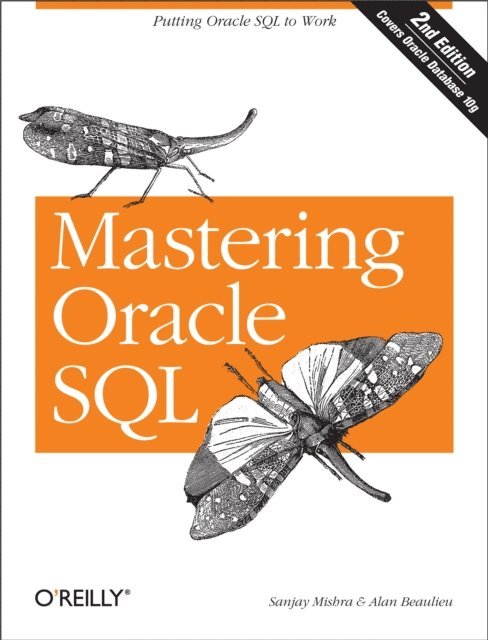
The vast majority of Oracle SQL books discuss some syntax, provide the barest rudiments of using Oracle SQL, and perhaps include a few simple examples. It might be enough to pass a survey course, or give you some buzz words to drop in conversation with real Oracle DBAs. But if you use Oracle SQL on a regular basis, you want much more. You want to access the full power of SQL to write queries in an Oracle environment. You want a solid understanding of what''s possible with Oracle SQL, creative techniques for writing effective and accurate queries, and the practical, hands-on information that leads to true mastery of the language. Simply put, you want useful, expert best practices that can be put to work immediately, not just non-vendor specific overview or theory.Updated to cover the latest version of Oracle, Oracle 10g, this edition of the highly regarded Mastering Oracle SQL has a stronger focus on technique and on Oracle''s implementation of SQL than any other book on the market. It covers Oracle s vast library of built-in functions, the full range of Oracle SQL query-writing features, regular expression support, new aggregate and analytic functions, subqueries in the SELECT and WITH clauses, multiset union operators, enhanced support for hierarchical queries: leaf and loop detection, and the CONNECT_BY_ROOT operator, new partitioning methods (some introduced in Oracle9i Release 2), and the native XML datatype, XMLType.Mastering Oracle SQL, 2nd Edition fills the gap between the sometimes spotty vendor documentation, and other books on SQL that just don''t explore the full depth of what is possible with Oracle-specific SQL. For those who want to harness the untapped (and often overlooked) power of Oracle SQL, this essential guide for putting Oracle SQL to work will prove invaluable.
287 kr
Läs direkt efter köp
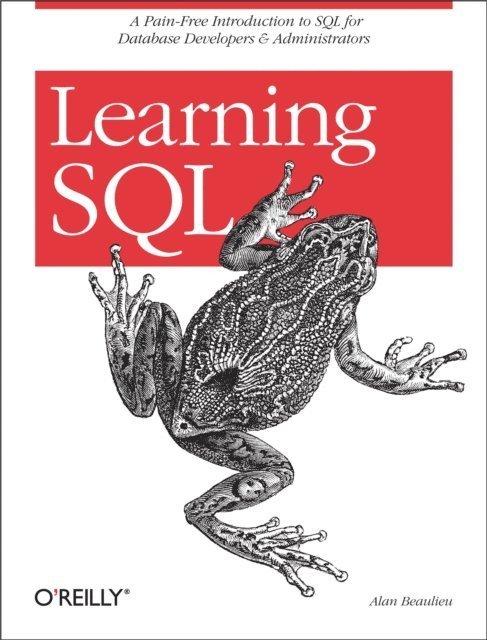
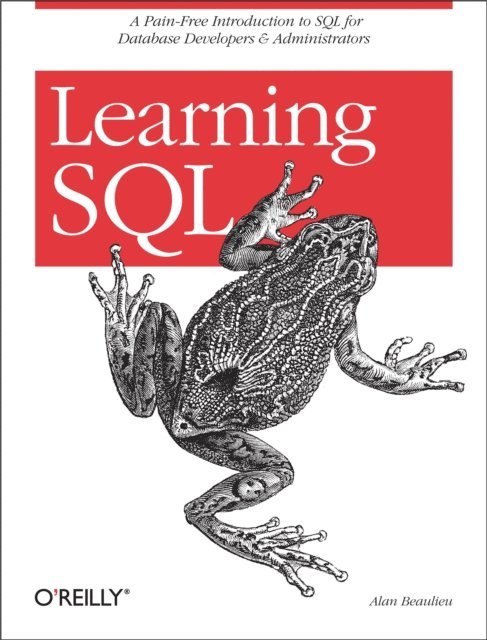
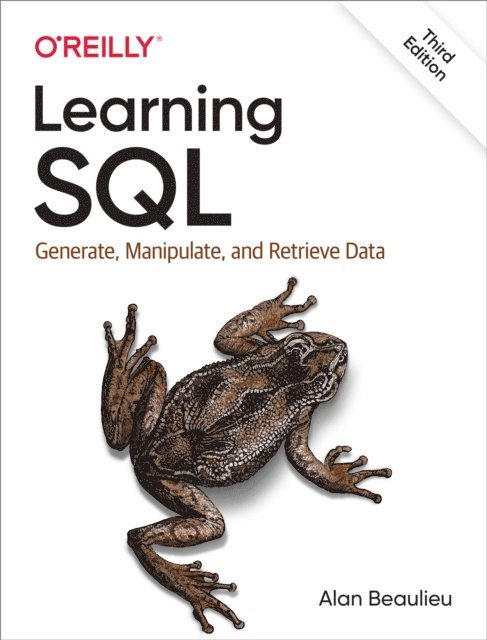
SQL (Structured Query Language) is a standard programming language for generating, manipulating, and retrieving information from a relational database. If you''re working with a relational database--whether you''re writing applications, performing administrative tasks, or generating reports--you need to know how to interact with your data. Even if you are using a tool that generates SQL for you, such as a reporting tool, there may still be cases where you need to bypass the automatic generation feature and write your own SQL statements.
To help you attain this fundamental SQL knowledge, look to Learning SQL, an introductory guide to SQL, designed primarily for developers just cutting their teeth on the language.
Learning SQL moves you quickly through the basics and then on to some of the more commonly used advanced features. Among the topics discussed:
The history of the computerized databaseSQL Data Statements--those used to create, manipulate, and retrieve data stored in your database; example statements include select, update, insert, and deleteSQL Schema Statements--those used to create database objects, such as tables, indexes, and constraintsHow data sets can interact with queriesThe importance of subqueriesData conversion and manipulation via SQL''s built-in functionsHow conditional logic can be used in Data StatementsBest of all, Learning SQL talks to you in a real-world manner, discussing various platform differences that you''re likely to encounter and offering a series of chapter exercises that walk you through the learning process. Whenever possible, the book sticks to the features included in the ANSI SQL standards. This means you''ll be able to apply what you learn to any of several different databases; the book covers MySQL, Microsoft SQL Server, and Oracle Database, but the features and syntax should apply just as well (perhaps with some tweaking) to IBM DB2, Sybase Adaptive Server, and PostgreSQL.Put the power and flexibility of SQL to work. With Learning SQL you can master this important skill and know that the SQL statements you write are indeed correct.
320 kr
Läs direkt efter köp
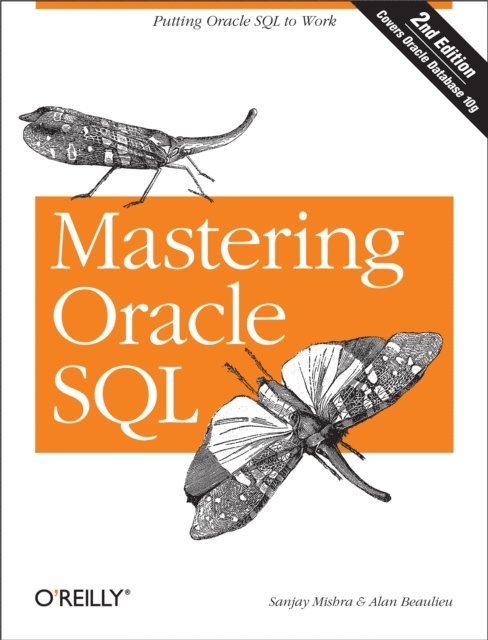
The vast majority of Oracle SQL books discuss some syntax, provide the barest rudiments of using Oracle SQL, and perhaps include a few simple examples. It might be enough to pass a survey course, or give you some buzz words to drop in conversation with real Oracle DBAs. But if you use Oracle SQL on a regular basis, you want much more. You want to access the full power of SQL to write queries in an Oracle environment. You want a solid understanding of what''s possible with Oracle SQL, creative techniques for writing effective and accurate queries, and the practical, hands-on information that leads to true mastery of the language. Simply put, you want useful, expert best practices that can be put to work immediately, not just non-vendor specific overview or theory.Updated to cover the latest version of Oracle, Oracle 10g, this edition of the highly regarded Mastering Oracle SQL has a stronger focus on technique and on Oracle''s implementation of SQL than any other book on the market. It covers Oracle s vast library of built-in functions, the full range of Oracle SQL query-writing features, regular expression support, new aggregate and analytic functions, subqueries in the SELECT and WITH clauses, multiset union operators, enhanced support for hierarchical queries: leaf and loop detection, and the CONNECT_BY_ROOT operator, new partitioning methods (some introduced in Oracle9i Release 2), and the native XML datatype, XMLType.Mastering Oracle SQL, 2nd Edition fills the gap between the sometimes spotty vendor documentation, and other books on SQL that just don''t explore the full depth of what is possible with Oracle-specific SQL. For those who want to harness the untapped (and often overlooked) power of Oracle SQL, this essential guide for putting Oracle SQL to work will prove invaluable.
268 kr
Läs direkt efter köp
SQL (Structured Query Language) is a standard programming language for generating, manipulating, and retrieving information from a relational database. If you''re working with a relational database--whether you''re writing applications, performing administrative tasks, or generating reports--you need to know how to interact with your data. Even if you are using a tool that generates SQL for you, such as a reporting tool, there may still be cases where you need to bypass the automatic generation feature and write your own SQL statements.
To help you attain this fundamental SQL knowledge, look to Learning SQL, an introductory guide to SQL, designed primarily for developers just cutting their teeth on the language.
Learning SQL moves you quickly through the basics and then on to some of the more commonly used advanced features. Among the topics discussed:
The history of the computerized databaseSQL Data Statements--those used to create, manipulate, and retrieve data stored in your database; example statements include select, update, insert, and deleteSQL Schema Statements--those used to create database objects, such as tables, indexes, and constraintsHow data sets can interact with queriesThe importance of subqueriesData conversion and manipulation via SQL''s built-in functionsHow conditional logic can be used in Data StatementsBest of all, Learning SQL talks to you in a real-world manner, discussing various platform differences that you''re likely to encounter and offering a series of chapter exercises that walk you through the learning process. Whenever possible, the book sticks to the features included in the ANSI SQL standards. This means you''ll be able to apply what you learn to any of several different databases; the book covers MySQL, Microsoft SQL Server, and Oracle Database, but the features and syntax should apply just as well (perhaps with some tweaking) to IBM DB2, Sybase Adaptive Server, and PostgreSQL.Put the power and flexibility of SQL to work. With Learning SQL you can master this important skill and know that the SQL statements you write are indeed correct.
708 kr
Läs direkt efter köp
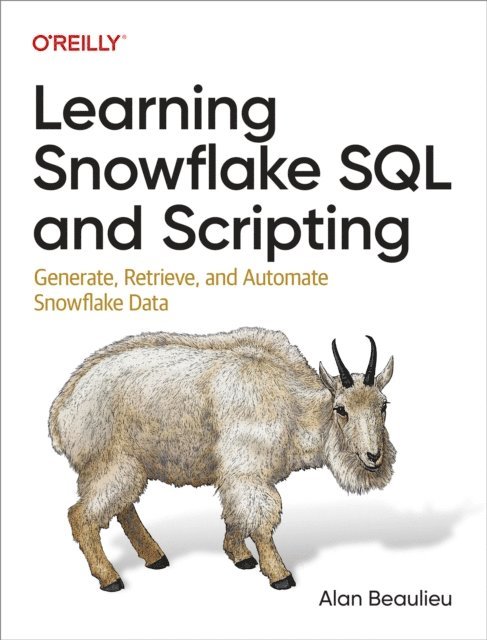
To help you on the path to becoming a Snowflake pro, this concise yet comprehensive guide reviews fundamentals and best practices for Snowflake''s SQL and Scripting languages. Developers and data professionals will learn how to generate, modify, and query data in the Snowflake relational database management system as well as how to apply analytic functions for reporting.
Author Alan Beaulieu also shows you how to create scripts, stored functions, and stored procedures to return data sets using Snowflake Scripting. This book is ideal whether you''re new to databases and need to run queries or reports against a Snowflake database, or transitioning from databases such as Oracle, SQL Server, or MySQL to cloud-based platforms.
With this book, you will:
Generate and modify Snowflake data using INSERT, UPDATE, DELETEQuery data in Snowflake using SELECT, including joining multiple tables, using subqueries, and groupingApply analytic functions for performing subtotals, grand totals, row comparisons, and other reporting functionalityBuild scripts combining SQL statements with looping, if-then-else, and exception handlingLearn how to build stored procedures and functionsUse stored procedures to return data sets708 kr
Läs direkt efter köp
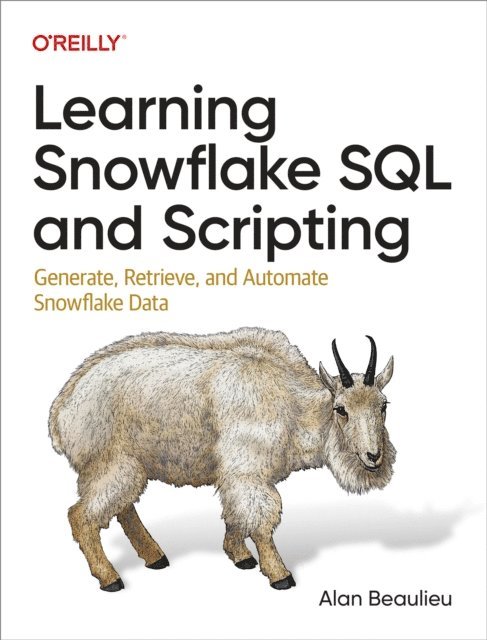
To help you on the path to becoming a Snowflake pro, this concise yet comprehensive guide reviews fundamentals and best practices for Snowflake''s SQL and Scripting languages. Developers and data professionals will learn how to generate, modify, and query data in the Snowflake relational database management system as well as how to apply analytic functions for reporting.
Author Alan Beaulieu also shows you how to create scripts, stored functions, and stored procedures to return data sets using Snowflake Scripting. This book is ideal whether you''re new to databases and need to run queries or reports against a Snowflake database, or transitioning from databases such as Oracle, SQL Server, or MySQL to cloud-based platforms.
With this book, you will:
Generate and modify Snowflake data using INSERT, UPDATE, DELETEQuery data in Snowflake using SELECT, including joining multiple tables, using subqueries, and groupingApply analytic functions for performing subtotals, grand totals, row comparisons, and other reporting functionalityBuild scripts combining SQL statements with looping, if-then-else, and exception handlingLearn how to build stored procedures and functionsUse stored procedures to return data sets606 kr
Skickas inom 5-8 vardagar
250 kr
Skickas inom 5-8 vardagar
295 kr
Läs direkt efter köp
In Prosperity in the Age of Decline, Brian and Alan Beaulieu—the CEO and President of the Institute for Trend Research® (ITR)—offer an informed, meticulously-researched look at the future and the coming Great Depression. Drawing on ITR''s 94.7% forecast accuracy rate, the book outlines specific, actionable strategies for capitalizing on cyclical opportunities and dodging economic danger. In this important resource, the authors reveal what it will take for individual investors and business leaders to prosper as the economy heats up prior to the predicted downturn, preserve wealth in the upcoming Great Depression, and profit on the way out of the depression. The imbalances and maladjustments have a while to play out and the authors pinpoint the investment opportunities to be had in the countdown period.
The Beaulieu''s examine the major economic trends at play, such as low interest rates, burgeoning government debt, and an aging population. They discuss which trends will last and what investors should do with this knowledge in order to thrive. The book also reviews the group of leading economic indicators that most consistently achieve reliable results for predicting where the economy is headed. Designed as a useful tool for investors, the book includes a working list of key trends, describes the upside potential of each trend, and explains the potential threat stemming from a particular trend. Understanding how to capitalize on these trends and knowing how to avoid the common pitfalls are the keys to creating a solid economic future for individual investors and business leaders.
Contains the strategies for capitalizing on cyclical opportunities and avoiding economic dangers Offers an examination of major economic trends Includes information on the leading economic indicators that most reliably achieve results Shows how to preserve wealth and avoid the most common investing pitfallsThis comprehensive resource offers guidelines for averting cyclical downturns and building on rising industry trends.
295 kr
Läs direkt efter köp
In Prosperity in the Age of Decline, Brian and Alan Beaulieu—the CEO and President of the Institute for Trend Research® (ITR)—offer an informed, meticulously-researched look at the future and the coming Great Depression. Drawing on ITR''s 94.7% forecast accuracy rate, the book outlines specific, actionable strategies for capitalizing on cyclical opportunities and dodging economic danger. In this important resource, the authors reveal what it will take for individual investors and business leaders to prosper as the economy heats up prior to the predicted downturn, preserve wealth in the upcoming Great Depression, and profit on the way out of the depression. The imbalances and maladjustments have a while to play out and the authors pinpoint the investment opportunities to be had in the countdown period.
The Beaulieu''s examine the major economic trends at play, such as low interest rates, burgeoning government debt, and an aging population. They discuss which trends will last and what investors should do with this knowledge in order to thrive. The book also reviews the group of leading economic indicators that most consistently achieve reliable results for predicting where the economy is headed. Designed as a useful tool for investors, the book includes a working list of key trends, describes the upside potential of each trend, and explains the potential threat stemming from a particular trend. Understanding how to capitalize on these trends and knowing how to avoid the common pitfalls are the keys to creating a solid economic future for individual investors and business leaders.
Contains the strategies for capitalizing on cyclical opportunities and avoiding economic dangers Offers an examination of major economic trends Includes information on the leading economic indicators that most reliably achieve results Shows how to preserve wealth and avoid the most common investing pitfallsThis comprehensive resource offers guidelines for averting cyclical downturns and building on rising industry trends.
564 kr
Läs direkt efter köp
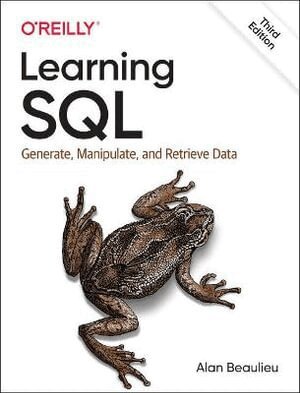
As data floods into your company, you need to put it to work right away—and SQL is the best tool for the job. With the latest edition of this introductory guide, author Alan Beaulieu helps developers get up to speed with SQL fundamentals for writing database applications, performing administrative tasks, and generating reports. You’ll find new chapters on SQL and big data, analytic functions, and working with very large databases.
Each chapter presents a self-contained lesson on a key SQL concept or technique using numerous illustrations and annotated examples. Exercises let you practice the skills you learn. Knowledge of SQL is a must for interacting with data. With Learning SQL, you’ll quickly discover how to put the power and flexibility of this language to work.
Move quickly through SQL basics and several advanced featuresUse SQL data statements to generate, manipulate, and retrieve dataCreate database objects, such as tables, indexes, and constraints with SQL schema statementsLearn how datasets interact with queries; understand the importance of subqueriesConvert and manipulate data with SQL’s built-in functions and use conditional logic in data statements605 kr
Läs direkt efter köp
As data floods into your company, you need to put it to work right away—and SQL is the best tool for the job. With the latest edition of this introductory guide, author Alan Beaulieu helps developers get up to speed with SQL fundamentals for writing database applications, performing administrative tasks, and generating reports. You’ll find new chapters on SQL and big data, analytic functions, and working with very large databases.
Each chapter presents a self-contained lesson on a key SQL concept or technique using numerous illustrations and annotated examples. Exercises let you practice the skills you learn. Knowledge of SQL is a must for interacting with data. With Learning SQL, you’ll quickly discover how to put the power and flexibility of this language to work.
Move quickly through SQL basics and several advanced featuresUse SQL data statements to generate, manipulate, and retrieve dataCreate database objects, such as tables, indexes, and constraints with SQL schema statementsLearn how datasets interact with queries; understand the importance of subqueriesConvert and manipulate data with SQL’s built-in functions and use conditional logic in data statements251 kr
Skickas inom 3-6 vardagar
346 kr
Skickas inom 3-6 vardagar