In the age of the African Renaissance, southern Africa has needed to reinterpret the past in fresh and more appropriate ways. The last 500 years represent a strikingly unexplored and misrepresented period which remains disfigured by colonial/apartheid assumptions, most notably in the way that African societies are depicted as fixed, passive, isolated, un-enterprising and unenlightened. This period is one the most formative in relation to southern Africa’s past while remaining, in many ways, the least known. Key cultural contours of the sub-continent took shape, while in a jagged and uneven fashion some of the features of modern identities emerged. Enormous internal economic innovation and political experimentation was taking place at the same time as expanding European mercantile forces started to press upon southern African shores and its hinterlands. This suggests that interaction, flux and mixing were a strong feature of the period, rather than the homogeneity and fixity proposed in standard historical and archaeological writings. Five Hundred Years Rediscovered represents the first step, taken by a group of archaeologists and historians, to collectively reframe, revitalise and re-examine the last 500 years. By integrating research and developing trans-frontier research networks, the group hopes to challenge thinking about the region’s expanding internal and colonial frontiers, and to broaden current perceptions about southern Africa’s colonial past.
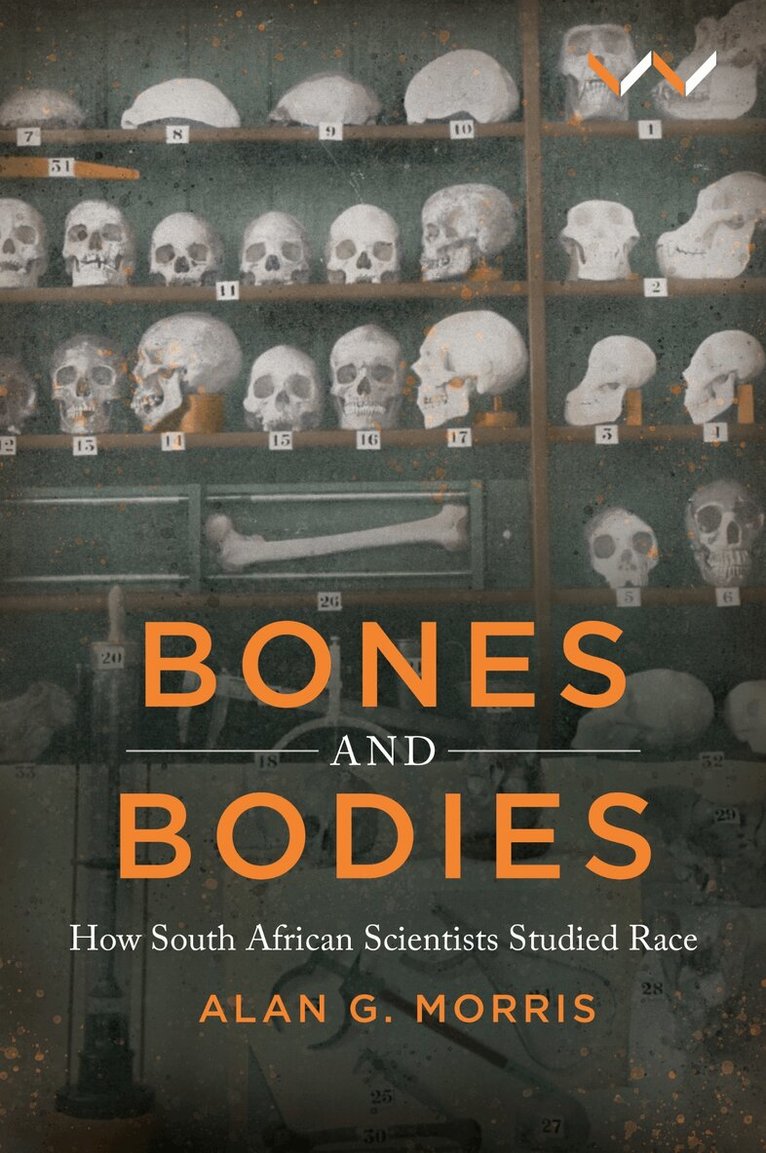
Alan G. Morris critically examines the history of evolutionary anthropology in South Africa, uncovering the often racist philosophical motivations of these physical anthropology researchers and the discipline itselfSouth Africa is famed for its contribution to the study of human evolution. In Bones and Bodies Alan G. Morris takes us back over the past century of anthropological discovery in South Africa and uncovers the stories of the individual scientists and how they contributed to our knowledge of the peoples of southern Africa, both ancient and modern. Not all of this history is one which we should feel comfortable with, as much of the earlier anthropological studies have been tainted with the tarred brush of race science. Morris critically examines the work of Raymond Dart, Thomas Dreyer, Matthew Drennan, and Robert Broom who all described their fossil discoveries with the mirror of racist interpretation, as well as the life and times in which they worked.Morris also considers how modern anthropology tried to rid itself of the stigma of these early racist accounts. In the 1960s and 1970s, Ronald Singer and Phillip Tobias introduced modern methods into the discipline that jettisoned much of what the public wished to believe about race and human evolution. Modern methods in physical anthropology rely on sophisticated mathematics and molecular genetics but are difficult to translate and sometimes fail to challenge preconceived assumptions.In an age where the authority of the expert and empirical science is questioned, this book shows the battle facing modern anthropology in how to explain science in a context that seems to be at odds with life experience. In this highly accessible insider account, Morris examines the philosophical motivations of these researchers and the discipline itself. Much of the material draws on old correspondence and interviews as well as from published resources.
Bones and Bodies is a highly accessible account of the establishment of the scientific discipline of biological anthropology. Alan G Morris takes us back over the past century of anthropological discovery in South Africa and uncovers the stories of individual scientists and researchers who played a significant role in shaping perceptions of how peoples of southern Africa, both ancient and modern, came to be viewed and categorised both in the public imagination and the scientific literature. Morris reveals how much of the earlier anthropological studies were tainted with the tarred brush of race science. He evaluates the works of famous anthropologists and archaeologists such as Raymond Dart, Thomas Dreyer, Matthew Drennan and Robert Broom, and demonstrates through a wide array of sources how they described their fossil discoveries through the prism of racist interpretation. Morris also shows how modern anthropology tried to rid itself of the stigma of these early racist accounts. In the 1960s and 1970s, Ronald Singer and Phillip Tobias introduced modern methods into the discipline that disputed much of what the public believed about race and human evolution. In an age in which the authority of experts and empirical science is increasingly being questioned, this book shows the battle facing modern anthropology to acknowledge its racial past but also how its study of human variation remains an important field of enquiry at institutions of higher learning.
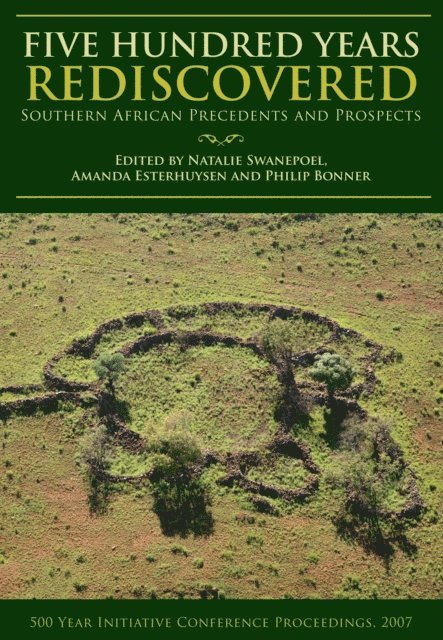
In the age of the African Renaissance, southern Africa has needed to reinterpret the past in fresh and more appropriate ways. The last 500 years represent a strikingly unexplored and misrepresented period which remains disfigured by colonial/apartheid assumptions, most notably in the way that African societies are depicted as fixed, passive, isolated, un-enterprising and unenlightened. This period is one the most formative in relation to southern Africa's past while remaining, in many ways, the least known. Key cultural contours of the sub-continent took shape, while in a jagged and uneven fashion some of the features of modern identities emerged. Enormous internal economic innovation and political experimentation was taking place at the same time as expanding European mercantile forces started to press upon southern African shores and its hinterlands. This suggests that interaction, flux and mixing were a strong feature of the period, rather than the homogeneity and fixity proposed in standard historical and archaeological writings. Five Hundred Years Rediscovered represents the first step, taken by a group of archaeologists and historians, to collectively reframe, revitalise and re-examine the last 500 years. By integrating research and developing trans-frontier research networks, the group hopes to challenge thinking about the region's expanding internal and colonial frontiers, and to broaden current perceptions about southern Africa's colonial past.
In the age of the African Renaissance, southern Africa has needed to reinterpret the past in fresh and more appropriate ways. The last 500 years represent a strikingly unexplored and misrepresented period which remains disfigured by colonial/apartheid assumptions, most notably in the way that African societies are depicted as fixed, passive, isolated, un-enterprising and unenlightened. This period is one the most formative in relation to southern Africa’s past while remaining, in many ways, the least known. Key cultural contours of the sub-continent took shape, while in a jagged and uneven fashion some of the features of modern identities emerged. Enormous internal economic innovation and political experimentation was taking place at the same time as expanding European mercantile forces started to press upon southern African shores and its hinterlands. This suggests that interaction, flux and mixing were a strong feature of the period, rather than the homogeneity and fixity proposed in standard historical and archaeological writings. Five Hundred Years Rediscovered represents the first step, taken by a group of archaeologists and historians, to collectively reframe, revitalise and re-examine the last 500 years. By integrating research and developing trans-frontier research networks, the group hopes to challenge thinking about the region’s expanding internal and colonial frontiers, and to broaden current perceptions about southern Africa’s colonial past.