Alan Hamilton - Böcker
Visar alla böcker från författaren Alan Hamilton. Handla med fri frakt och snabb leverans.
7 produkter
7 produkter
Field Guide to the Forest Trees of Uganda
For Identification and Conservation
Inbunden, Engelska, 2020
962 kr
Skickas inom 7-10 vardagar
This book is a guide for the identification of the indigenous forest trees of Uganda. It will be useful for those who wish to contribute towards the conservation of the forests or to plant indigenous trees. Information is provided on how to propagate and cultivate about 80 of the most valuable species. Indigenous trees provide numerous resources useful for welfare and development. They include many types of timber and non-timber forest products, such as craft materials, foods and medicines. The proximity of indigenous forest helps to moderate the local climate, making it more suitable for agriculture. Indigenous forests protect springs, therefore safeguarding water supplies more effectively than exotic trees such as pines and eucalyptus. All 450 known indigenous tree species from the forests are included. Both scientific and local names are provided, the latter in 21 languages. Local names facilitate access to knowledge and values traditionally attached to the species, useful when planning pathways of development firmly rooted in local culture. The book will be invaluable for botanists, foresters, rural development workers and members of the general public concerned about contributing to conservation and sustainable development in Uganda. Many of the species grow in neighbouring countries, so the book has relevance there too.
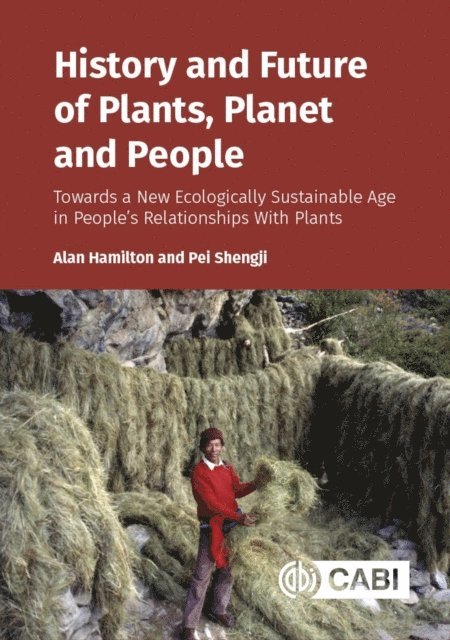
History and Future of Plants, Planet and People
Towards a New Ecologically Sustainable Age in People’s Relationships With Plants
Inbunden, Engelska, 2024
1 580 kr
Skickas inom 7-10 vardagar
This fascinating book presents the experiences and pooled knowledge of two very different conservation scientists; Pei Shengji from Sichuan, China and Alan Hamilton from London, UK. They have been drawn together over many years through working on some of the same conservation projects and have discovered that they overlap in their ideas about the sorts of work that needs to be done and how it can best be carried out. The book describes some of their own experiences, set within the contexts of their varied careers and the development of their thinking. Plant conservation is crucial to the preservation of natural ecosystems, but conventional approaches have met with only limited success. The authors have concluded that plant conservationists need social allies - elements of society that have other primary concerns, but whose efforts, if successful, will bring benefits to plant conservation too. It is the state and condition of plants on the ground that ultimately matter in conserving ecosystems, and therefore it is the role of local people who interact directly with them which enables success. Ethnobotany is a key skill required of practical plant conservationists. Its techniques enable them to explore connections between people and plants, learn about local perspectives and establish relationships with the people upon whom conservation and sustainable development relies. This book: recommends how to advance plant conservation, based on real experiences. will inspire more people to become involved in plant conservation. demonstrates how the very different backgrounds of the authors have influenced the courses of their careers, but have enabled them to come to very similar conclusions about conservation practice. demonstrates the importance of geographically-based biocultural diversity, as a counterbalancing force to globalisation.
History and Future of Plants, Planet and People
Towards a New Ecologically Sustainable Age in People’s Relationships With Plants
Häftad, Engelska, 2025
599 kr
Skickas inom 7-10 vardagar
This fascinating book presents the experiences and pooled knowledge of two very different conservation scientists; Pei Shengji from Sichuan, China and Alan Hamilton from London, UK. They have been drawn together over many years through working on some of the same conservation projects and have discovered that they overlap in their ideas about the sorts of work that needs to be done and how it can best be carried out. The book describes some of their own experiences, set within the contexts of their varied careers and the development of their thinking. Plant conservation is crucial to the preservation of natural ecosystems, but conventional approaches have met with only limited success. The authors have concluded that plant conservationists need social allies - elements of society that have other primary concerns, but whose efforts, if successful, will bring benefits to plant conservation too. It is the state and condition of plants on the ground that ultimately matter in conserving ecosystems, and therefore it is the role of local people who interact directly with them which enables success. Ethnobotany is a key skill required of practical plant conservationists. Its techniques enable them to explore connections between people and plants, learn about local perspectives and establish relationships with the people upon whom conservation and sustainable development relies. This book: recommends how to advance plant conservation, based on real experiences. will inspire more people to become involved in plant conservation. demonstrates how the very different backgrounds of the authors have influenced the courses of their careers, but have enabled them to come to very similar conclusions about conservation practice. demonstrates the importance of geographically-based biocultural diversity, as a counterbalancing force to globalisation.
1 591 kr
Tillfälligt slut
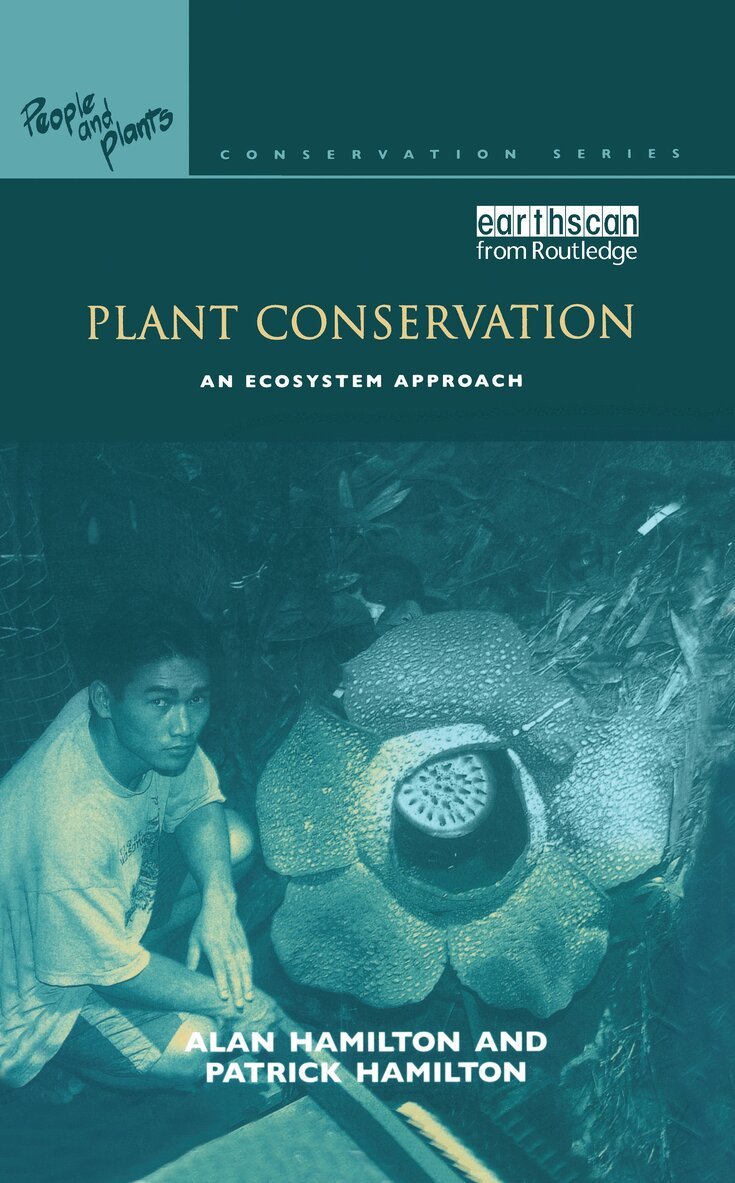
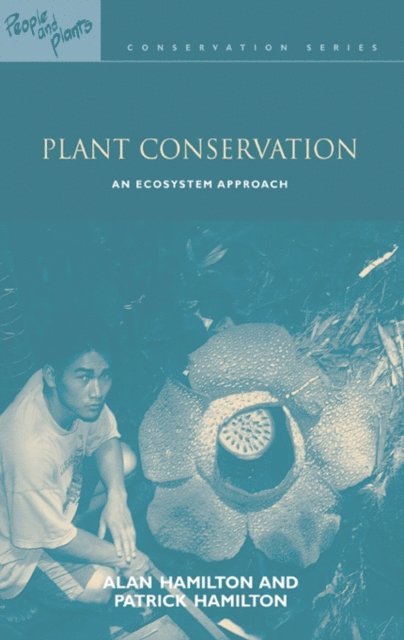
In this, the latest in the People and Plants series, plant conservation is described in the context of livelihoods and development, and ways of balancing the conservation of plant diversity with the use of plants and the environment for human benefit are discussed. A central contention in this book is that local people must be involved if conservation is to be successful. Also examined are ways of prioritizing plants and places for conservation initiatives, approaches to in situ and ex situ conservation, and how to approach problems of unsustainable harvesting of wild plants. Roles for botanists, foresters, sociologists, development workers and others are discussed. This book acts as a unifying text for the series, integrating case studies and methodologies considered in previous volumes and pointing out in a comprehensive, accessible volume the valuable lessons to be learned.
807 kr
Skickas inom 10-15 vardagar
In this, the latest in the People and Plants series, plant conservation is described in the context of livelihoods and development, and ways of balancing the conservation of plant diversity with the use of plants and the environment for human benefit are discussed. A central contention in this book is that local people must be involved if conservation is to be successful. Also examined are ways of prioritizing plants and places for conservation initiatives, approaches to in situ and ex situ conservation, and how to approach problems of unsustainable harvesting of wild plants. Roles for botanists, foresters, sociologists, development workers and others are discussed. This book acts as a unifying text for the series, integrating case studies and methodologies considered in previous volumes and pointing out in a comprehensive, accessible volume the valuable lessons to be learned.

499 kr
Skickas inom 5-8 vardagar
319 kr
Skickas