Alan K. Knapp – författare
Visar alla böcker från författaren Alan K. Knapp. Handla med fri frakt och snabb leverans.
4 produkter
4 produkter
E-bok
Engelska, 2007876 kr
Läs direkt efter köp
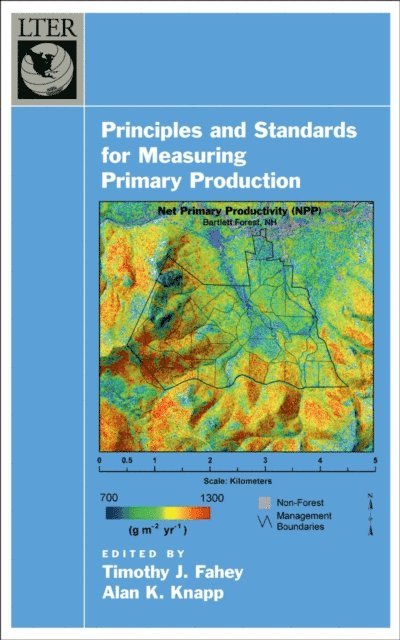
Principles and Standards for Measuring Net Primary Production in Long-Term Ecological Studies is the first book to establish a standardized method for measuring net primary productivity (NPP) in ecological research. Primary productivity is the rate at which energy is stored in the organic matter of plants per unit area of the earth''s surface. As the beginning stage of the carbon cycle, our ability to accurately measure NPP is essential to any ecological analysis, as well as agronomy, forestry, fisheries, limnology and oceanography. In fact, NPP measurements are fundamental to ecosystem studies at thousands of sites around the world. All 26 LTER sites will be expected to collect and report data using these new standards, but the standards should reach well beyond LTER sites. Identified standards for NPP measurements will allow researchers from diverse biomes to authoritatively compare measurements among their sites. Comparable measurements will build a foundation for a broad scale understanding of the environmental, biological, and nutrition controls on NPP. The book includes chapters for each of the critical biome types, including special techniques that work best in each environment. For example, there are chapters that discuss grassland ecosystems, urban ecosystems, marine pelagic ecosystems, forest ecosystems, and salt marsh ecosystems, among others.
Inbunden, Engelska, 1998
1 330 kr
Skickas inom 7-10 vardagar
This book is the first in a series of planned synthesis volumes from sites funded by the National Science Foundation's Long-term Ecological Research Program. This volume focuses on over 15 years of research at the Konza Prairie in NE Kansas and provides a unique perspective on the structural and functional ecology of a grassland ecosystem that once covered most of central North America.
Inbunden, Engelska, 2007
1 062 kr
Skickas inom 5-8 vardagar
This volume will lay out the best methods for measuring net primary productivity (NPP) in ecological research. Primary productivity is the rate at which energy is stored in the organic matter of plants per unit area of the earth's surface. NPP is the beginning point of the carbon cycle, so our ability to accurately measure NPP is important. The book includes chapters for each of the critical biome types to offer special techniques that work best in each biome. For example, there are chapters that discuss grassland ecosystems, urban ecosystems, marine pelagic ecosystems, forest ecosystems, and salt marsh ecosystems, among others. All 26 LTER sites will be expected to collect and report data using these methods, but ecologists more generally should also find these methods useful and authoritative. Currently no standard methods or standards exist. Measuring NPP is fundamental to many ecosystem studies at thousands of sites, and having identified standards and methods would be extremely useful for comparing measurements among sites and for compiling a broad scale understanding of the environmental, biological, and nutrition controls on NPP. This book would resemble the Standard Soil Measurement volume in the LTER series in that it reaches well beyond any single LTER site to apply to any ecosystem. It should be rather more widely used than the soil measurements volume, in that measuring productivity is so fundamental to any ecological analyses as well as agronomy, forestry, fisheries, limnology and oceanography.
E-bok
PDF, Engelska, 2007884 kr
Läs direkt efter köp
Principles and Standards for Measuring Net Primary Production in Long-Term Ecological Studies is the first book to establish a standardized method for measuring net primary productivity (NPP) in ecological research. Primary productivity is the rate at which energy is stored in the organic matter of plants per unit area of the earth''s surface. As the beginning stage of the carbon cycle, our ability to accurately measure NPP is essential to any ecological analysis, as well as agronomy, forestry, fisheries, limnology and oceanography. In fact, NPP measurements are fundamental to ecosystem studies at thousands of sites around the world. All 26 LTER sites will be expected to collect and report data using these new standards, but the standards should reach well beyond LTER sites. Identified standards for NPP measurements will allow researchers from diverse biomes to authoritatively compare measurements among their sites. Comparable measurements will build a foundation for a broad scale understanding of the environmental, biological, and nutrition controls on NPP. The book includes chapters for each of the critical biome types, including special techniques that work best in each environment. For example, there are chapters that discuss grassland ecosystems, urban ecosystems, marine pelagic ecosystems, forest ecosystems, and salt marsh ecosystems, among others.