Alan Nadel - Böcker
Visar alla böcker från författaren Alan Nadel. Handla med fri frakt och snabb leverans.
13 produkter
13 produkter
2 221 kr
Skickas inom 5-8 vardagar
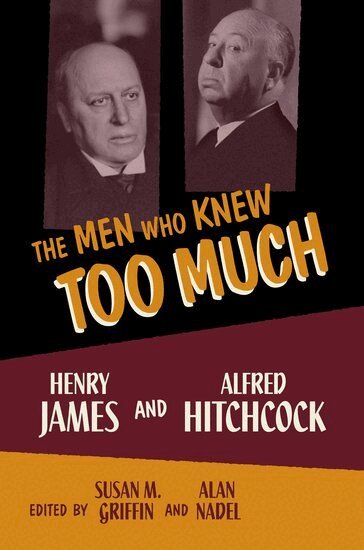
Henry James and Alfred Hitchcock knew too much. Self-imposed exiles fully in the know, they approached American and European society as inside-outsiders, a position that afforded them a kind of double vision. Masters of their arts, manipulators of their audiences, prescient and pathbreaking in their techniques, these demanding and meticulous artists fiercely defended authorial and directorial control. Their fictions and films are obsessed with knowledge and its powers: who knows what? What is there to know?The Men Who Knew Too Much innovatively pairs these two greats, showing them to be at once classic and contemporary. Over a dozen major scholars and critics take up works by James and Hitchcock, in paired sets, to explore the often surprising ways that reading James helps us watch Hitchcock and what watching Hitchcock tells us about reading James. A wide-range of approaches offer fresh insights about spectatorship, narrative structure, and cinematic representation, as well as the relationship between technology and art, the powers of silence, sensory-and sensational-experiences, the impact of cognition, and the uncertainty of interpretation. The essays explore the avowal and disavowal of familial bonds, as well as questions of Victorian convention, female agency, and male anxiety. And they fruitfully engage issues related to patriarchy, colonialism, national, transnational, and global identities. The capacious collection, with its brilliant insights and intellectual surprises, is equally compelling in its range and cogency for James readers and film theorists, for Hitchcock fans and James scholars.
489 kr
Skickas inom 5-8 vardagar
Henry James and Alfred Hitchcock knew too much. Self-imposed exiles fully in the know, they approached American and European society as inside-outsiders, a position that afforded them a kind of double vision. Masters of their arts, manipulators of their audiences, prescient and pathbreaking in their techniques, these demanding and meticulous artists fiercely defended authorial and directorial control. Their fictions and films are obsessed with knowledge and its powers: who knows what? What is there to know?The Men Who Knew Too Much innovatively pairs these two greats, showing them to be at once classic and contemporary. Over a dozen major scholars and critics take up works by James and Hitchcock, in paired sets, to explore the often surprising ways that reading James helps us watch Hitchcock and what watching Hitchcock tells us about reading James. A wide-range of approaches offer fresh insights about spectatorship, narrative structure, and cinematic representation, as well as the relationship between technology and art, the powers of silence, sensory-and sensational-experiences, the impact of cognition, and the uncertainty of interpretation. The essays explore the avowal and disavowal of familial bonds, as well as questions of Victorian convention, female agency, and male anxiety. And they fruitfully engage issues related to patriarchy, colonialism, national, transnational, and global identities. The capacious collection, with its brilliant insights and intellectual surprises, is equally compelling in its range and cogency for James readers and film theorists, for Hitchcock fans and James scholars.
446 kr
Skickas inom 10-15 vardagar
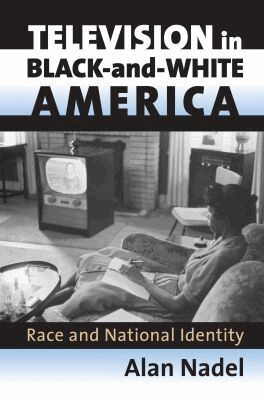
Alan Nadel's provocative new book reminds us that most of the images on early TV were decidedly Caucasian and directed at predominantly white audiences. Television did not invent whiteness for America, but it did reinforce it as the norm - particularly during the Cold War years. Nadel now shows just how instrumental it was in constructing a narrow, conservative, and very white vision of America. Nadel depicts a time when television effectively hijacked and monopolized the nation's vision of itself to create a virtual but severely distorted civic space. On Cold War TV's three channels there were no double beds, no liberated housewives, no social criticism, and no homosexuality. And the few available black faces overwhelmingly belonged to athletes, musical entertainers, and actors playing menial roles. Even America's beloved Walt Disney promoted his highly popular TV and themepark versions of society as utterly homogeneous representations of reality. During this era, prime-time TV was dominated by ""adult westerns,"" with heroes like ""The Rebel's Johnny Yuma"" reincarnating southern values and ""Bonanza's"" Cartwright family reinforcing the notion of white patriarchy - programs that, Nadel shows, bristled with Cold War messages even as they spoke to the nation's mythology. America had become visually reconfigured as a vast Ponderosa, crisscrossed by concrete highways designed to carry suburban white drivers beyond the moral challenge of racism and racial poverty and increasingly vocal civil rights demands. ""Television in Black-and-White America"" revisits a time and space that some might miss for its simplicity and relative innocence. Nadel, however, entreats us to look beyond such nostalgia to see how, even in its earliest days, television had already become a powerful mediator of social norms that both controlled and warped our sense of reality.
Flatlining on the Field of Dreams
Cultural Narratives in the Films of President Reagan's America
Häftad, Engelska, 1997
370 kr
Skickas inom 5-8 vardagar
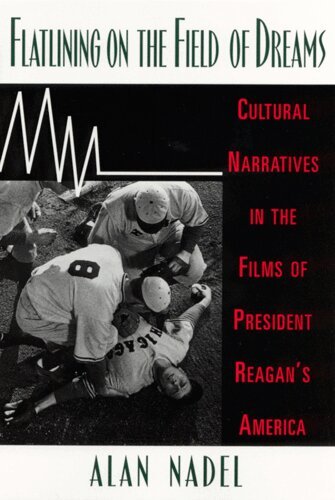
"Flatlining on the Field of Dreams takes a apart some of the most commercially successful films of the epoch, demonstrating how they reflected, debated, and played with the dominant ideology of the time. . . . cleverly and wittily written . . . . The book will work extremely well in the classroom."-Film Quarterly"From Back to the Future to Forrest Gump, Nadel shows not only how notions of cinematic time re-script political change but how our very conceptualizations of change are thematized by our experiences of watching movies. This is not simply film history, or film as history, but film affirming "history" in the same way that Ronald Reagan affirmed film narratives."-Susan Jeffords, University of Washington"Flatlining on the Field of Dreams brilliantly restages the cultural narratives associated with Reaganism within a neo-imperialist cinematic space and reveals the heretofore unexamined role class played in the reproduction of those narratives."-Donald E. Pease, Dartmouth CollegeFlatlining on the Field of Dreams demonstrates, with witty prose and careful analysis, how the overindulgent, image-conscious years of the Reagan administration are reflected in sundry aspects of American films produced during that era. Discussing dozens of films, including Home Alone, Beetlejuice, Ghost, The Little Mermaid, Working Girl, Who Framed Roger Rabbit?, and Trading Places, Alan Nadel identifies narratives about credit, deregulation, gender, race, and masculinity that defined "President Reagan's America." Linking the way Hollywood films work to the stories they tell, he explains how the ideas and values of Reaganism became the symbolic food of a hyper-consumptive society. The book provides hard-to-ignore demonstrations of the extensive synergy between politics, history, and popular culture.
491 kr
Skickas inom 7-10 vardagar
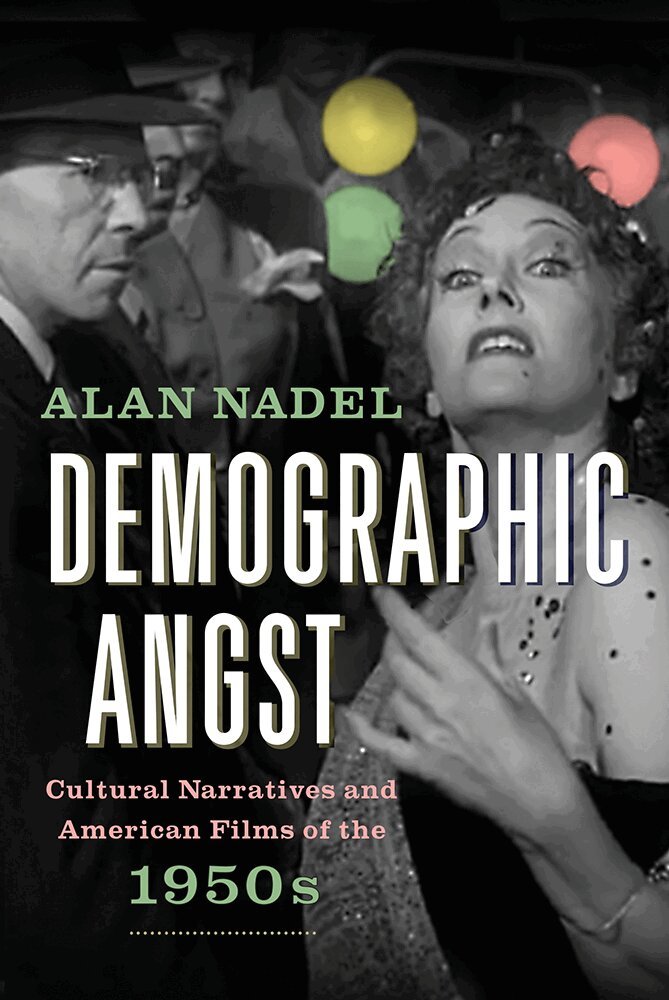
Prolific literature, both popular and scholarly, depicts America in the period of the High Cold War as being obsessed with normality, implicitly figuring the postwar period as a return to the way of life that had been put on hold, first by the Great Depression and then by Pearl Harbor. Demographic Angst argues that mandated normativity-as a political agenda and a social ethic-precluded explicit expression of the anxiety produced by America’s radically reconfigured postwar population. Alan Nadel explores influential non-fiction books, magazine articles, and public documents in conjunction with films such as Singin’ in the Rain, On the Waterfront, Sunset Boulevard, and Sayonara, to examine how these films worked through fresh anxieties that emerged during the 1950s.
1 819 kr
Skickas inom 7-10 vardagar
Prolific literature, both popular and scholarly, depicts America in the period of the High Cold War as being obsessed with normality, implicitly figuring the postwar period as a return to the way of life that had been put on hold, first by the Great Depression and then by Pearl Harbor. Demographic Angst argues that mandated normativity-as a political agenda and a social ethic-precluded explicit expression of the anxiety produced by America’s radically reconfigured postwar population. Alan Nadel explores influential non-fiction books, magazine articles, and public documents in conjunction with films such as Singin’ in the Rain, On the Waterfront, Sunset Boulevard, and Sayonara, to examine how these films worked through fresh anxieties that emerged during the 1950s.
414 kr
Skickas inom 7-10 vardagar
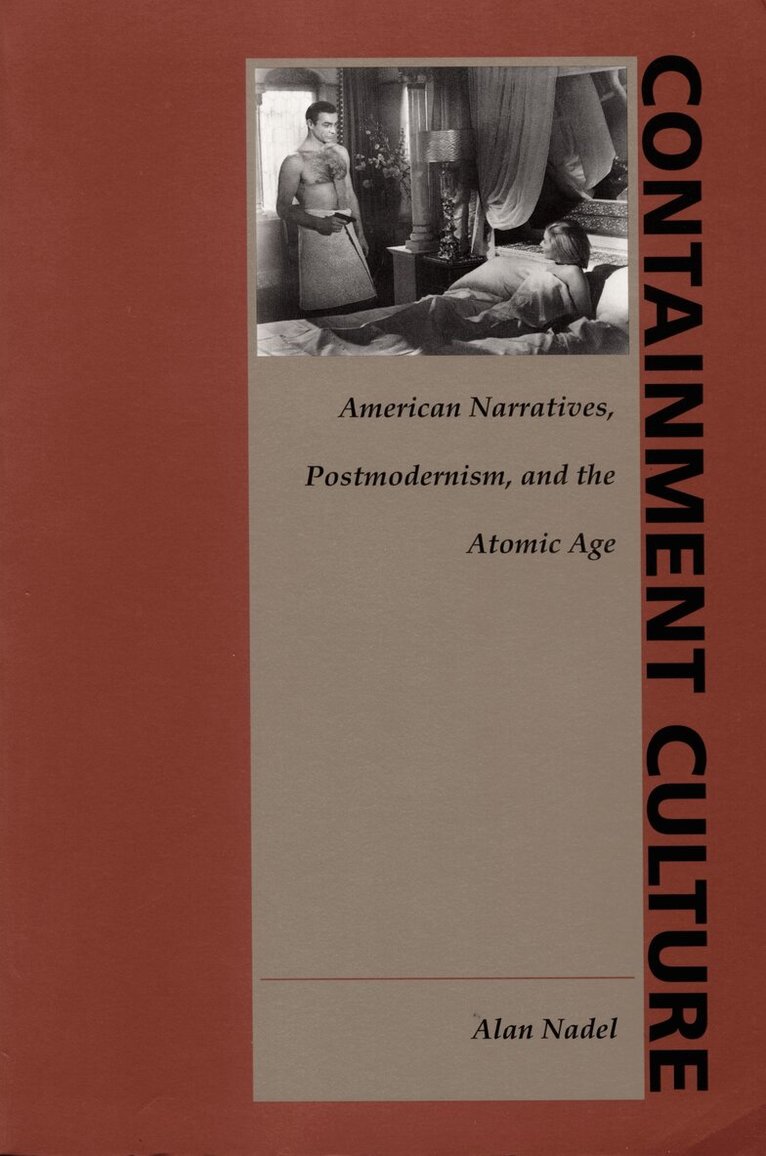
Alan Nadel provides a unique analysis of the rise of American postmodernism by viewing it as a breakdown in Cold War cultural narratives of containment. These narratives, which embodied an American postwar foreign policy charged with checking the spread of Communism, also operated, Nadel argues, within a wide spectrum of cultural life in the United States to contain atomic secrets, sexual license, gender roles, nuclear energy, and artistic expression. Because these narratives were deployed in films, books, and magazines at a time when American culture was for the first time able to dominate global entertainment and capitalize on global production, containment became one of the most widely disseminated and highly privileged national narratives in history.Examining a broad sweep of American culture, from the work of George Kennan to Playboy Magazine, from the movies of Doris Day and Walt Disney to those of Cecil B. DeMille and Alfred Hitchcock, from James Bond to Holden Caulfield, Nadel discloses the remarkable pervasiveness of the containment narrative. Drawing subtly on insights provided by contemporary theorists, including Baudrillard, Foucault, Jameson, Sedgwick, Certeau, and Hayden White, he situates the rhetoric of the Cold War within a gendered narrative powered by the unspoken potency of the atom. He then traces the breakdown of this discourse of containment through such events as the Bay of Pigs invasion and the Free Speech Movement at Berkeley, and ties its collapse to the onset of American postmodernism, typified by works such as Catch–22 and The Man Who Shot Liberty Valence. An important work of cultural criticism, Containment Culture links atomic power with postmodernism and postwar politics, and shows how a multifarious national policy can become part of a nation’s cultural agenda and a source of meaning for its citizenry.
Dramatic Apparitions and Theatrical Ghosts
The Staging of Illusion across Time and Cultures
Inbunden, Engelska, 2023
1 391 kr
Skickas inom 10-15 vardagar
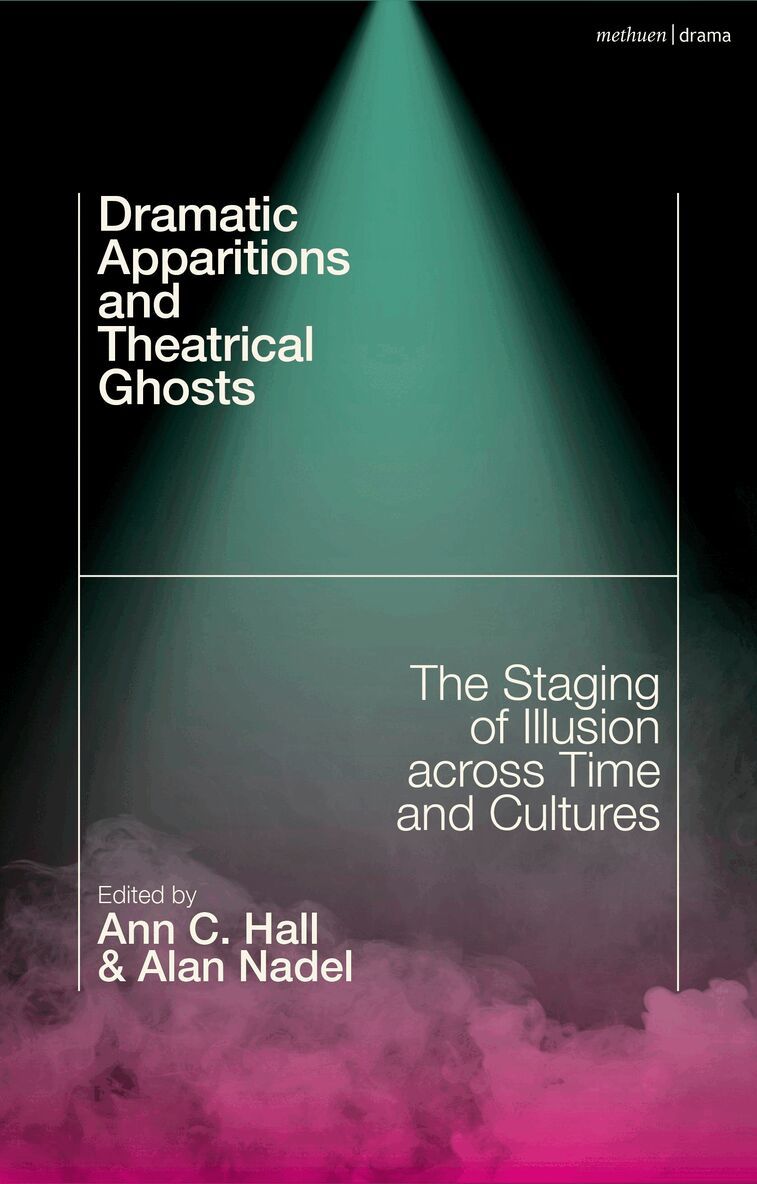
Ghosts haunt the stages of world theatre, appearing in classical Greek drama through to the plays of 21st-century dramatists. Tracing the phenomenon across time and in different cultures, the chapters collected here examine their representation, dramatic function, and what they may tell us about the belief systems of their original audiences and the conditions of theatrical production. As illusions of illusions, they foreground many dramatic themes common to a wide variety of periods and cultures.Arranged chronologically, this collection examines how ghosts represent political change in Athenian culture in three plays by Aeschylus; their function in traditional Japanese drama; the staging of the supernatural in the dramatic liturgy of the early Middle Ages; ghosts within the dramatic works of Middleton, George Peele, and Christopher Marlowe, and the technologies employed in the 18th and 19th centuries to represent the supernatural on stage.Coverage of the dramatic representation of ghosts in the 20th and 21st centuries includes studies of Noël Coward’s Blithe Spirit, August Wilson’s Pittsburgh Cycle, plays by Sam Shepard, David Mamet, and Sarah Ruhl, Paddy Chayefsky’s The Tenth Man, Suzan-Lori Parks’ Topdog/Underdog, and the spectral imprint of Shakespeare’s ghosts in the Irish drama of Marina Carr, Martin McDonagh, William Butler Yeats, and Samuel Beckett. The volume closes by examining three contemporary American indigenous plays by Anishinaabe author, Alanis King.
Dramatic Apparitions and Theatrical Ghosts
The Staging of Illusion across Time and Cultures
Häftad, Engelska, 2025
453 kr
Skickas inom 10-15 vardagar
Ghosts haunt the stages of world theatre, appearing in classical Greek drama through to the plays of 21st-century dramatists. Tracing the phenomenon across time and in different cultures, the chapters collected here examine their representation, dramatic function, and what they may tell us about the belief systems of their original audiences and the conditions of theatrical production. As illusions of illusions, they foreground many dramatic themes common to a wide variety of periods and cultures.Arranged chronologically, this collection examines how ghosts represent political change in Athenian culture in three plays by Aeschylus; their function in traditional Japanese drama; the staging of the supernatural in the dramatic liturgy of the early Middle Ages; ghosts within the dramatic works of Middleton, George Peele, and Christopher Marlowe, and the technologies employed in the 18th and 19th centuries to represent the supernatural on stage.Coverage of the dramatic representation of ghosts in the 20th and 21st centuries includes studies of Noël Coward’s Blithe Spirit, August Wilson’s Pittsburgh Cycle, plays by Sam Shepard, David Mamet, and Sarah Ruhl, Paddy Chayefsky’s The Tenth Man, Suzan-Lori Parks’ Topdog/Underdog, and the spectral imprint of Shakespeare’s ghosts in the Irish drama of Marina Carr, Martin McDonagh, William Butler Yeats, and Samuel Beckett. The volume closes by examining three contemporary American indigenous plays by Anishinaabe author, Alanis King.
1 698 kr
Skickas inom 10-15 vardagar
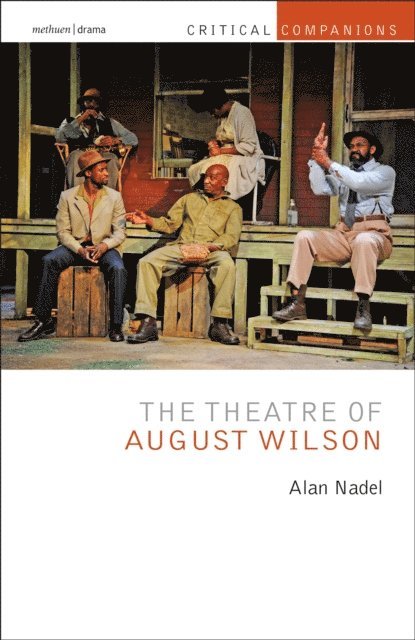
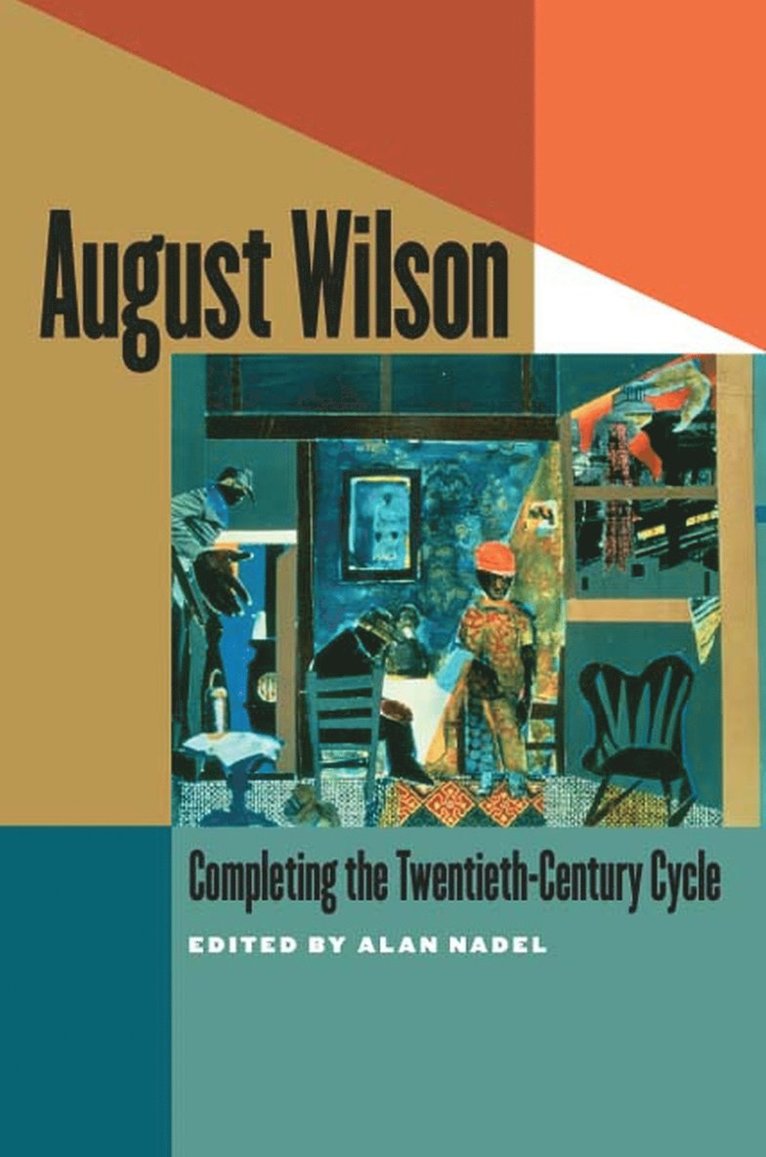
The first comprehensive study of August Wilson’s drama introduces the major themes and motifs that unite Wilson’s ten-play cycle about African American life in each decade of the twentieth century. Framed by Wilson’s life experiences and informed by his extensive interviews, this book provides fresh, coherent, detailed readings of each play, well-situated in the extant scholarship. It also provides an overview of the cycle as a whole, demonstrating how it comprises a compelling interrogation of American culture and historiography.Keenly aware of the musical paradigms informing Wilson’s dramatic technique, Nadel shows how jazz and, particularly, the blues provide the structural mechanisms that allow Wilson to examine alternative notions of time, property, and law. Wilson’s improvisational logics become crucial to expressing his notions of black identity and resituating the relationship of literal to figurative in the African American community. The final two chapters include contributions by scholars Harry J. Elam, Jr. and Donald E. Pease
361 kr
Skickas inom 10-15 vardagar
The first comprehensive study of August Wilson’s drama introduces the major themes and motifs that unite Wilson’s ten-play cycle about African American life in each decade of the twentieth century. Framed by Wilson’s life experiences and informed by his extensive interviews, this book provides fresh, coherent, detailed readings of each play, well-situated in the extant scholarship. It also provides an overview of the cycle as a whole, demonstrating how it comprises a compelling interrogation of American culture and historiography.Keenly aware of the musical paradigms informing Wilson’s dramatic technique, Nadel shows how jazz and, particularly, the blues provide the structural mechanisms that allow Wilson to examine alternative notions of time, property, and law. Wilson’s improvisational logics become crucial to expressing his notions of black identity and resituating the relationship of literal to figurative in the African American community. The final two chapters include contributions by scholars Harry J. Elam, Jr. and Donald E. Pease
620 kr
Skickas inom 7-10 vardagar
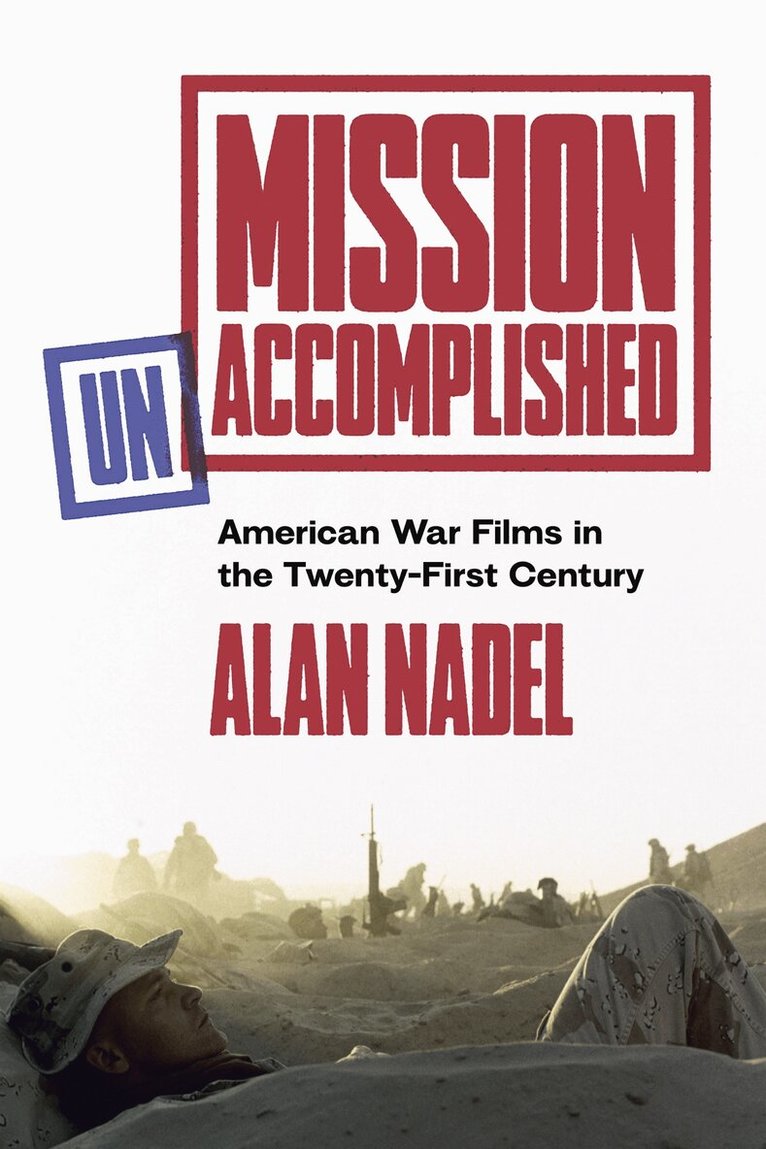
An analysis of how post-9/11 war movies changed from following soldiers on specific missions to chronicling war as a day-to-day occupation.In 2003, the United States began a war in Iraq without a mission. Instead of fighting to restore peace-the traditional objective of warfare-servicemembers faced the grim reality that there was no goal. Lacking even certainty as to who was the enemy, soldiers discovered that their task was simply to survive. Mission Unaccomplished explores how Hollywood grasped the experience of Iraq from the perspective of US soldiers, reinventing the war film in the process. Historically, films such as Saving Private Ryan valorized the goals of war by chronicling missions that unambiguously contribute to the defeat of the enemy and the restoration of peace. But in The Hurt Locker, American Sniper, Green Zone, and other recent dramas, soldiers just try to outlast the chaos. Dramatizing the aimlessness of the war, events occur in random order, and soldiers have no sense of how their actions contribute to victory or peace. Looking to recent WWII movies such as Dunkirk and Hacksaw Ridge, which use this same cinematic vocabulary to position soldiering as merely a deadly job to be endured, Alan Nadel argues that the disillusionment of Iraq has influenced cinema broadly, inspiring a newly critical war film genre.
279 kr
Skickas inom 7-10 vardagar