Alan Newell - Böcker
Visar alla böcker från författaren Alan Newell. Handla med fri frakt och snabb leverans.
5 produkter
5 produkter
2 098 kr
Skickas inom 10-15 vardagar
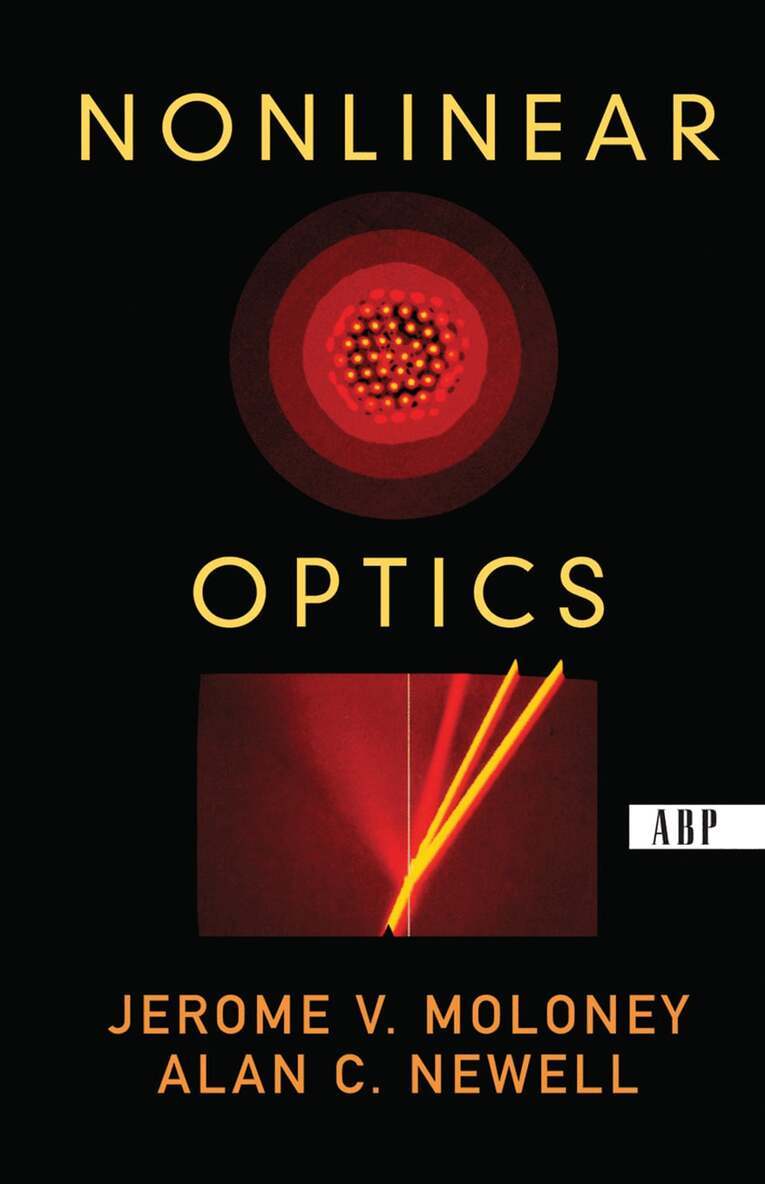
This book is about Nonlinear Optics, the study of how high-intensity light propagates through and interacts with matter. It takes the reader from the starting point of Maxwell's equations to some of the frontiers of modern research in the subject.
1 042 kr
Skickas inom 10-15 vardagar
Nonlinear optics, the study of the nonlinear effects associated with the propagation of light through matter, is so scientifically rich and technologically promising that it is destined to become one of the most important areas of scientific research into the next century. This book is written for graduate students or anyone interested in getting a unified picture of this emerging field. Nonlinear Optics allows the reader to see all these manifestations of the light-matter interaction as part of the unified whole. Professors Newell and Moloney show how to use these simple equations both to gain a better understanding of the physical processes involved and to deal with the practical applications. Specific topics include: the notion of the nonlinear refractive index and self-phase modulation, the propagation and use of nonlinear waves and solitons in optical fibers and waveguides, two-and-three lasers, optical bistability, the interaction of co- and counter-propagating beams, stimulated Raman and Brillouin scattering, and self-induced transparency. The final chapter discusses mathematical and computational methods such as multiple time scaling, linear and nonlinear wave propagation, solitons, numerical methods, and useful software packages.
735 kr
Skickas inom 10-15 vardagar
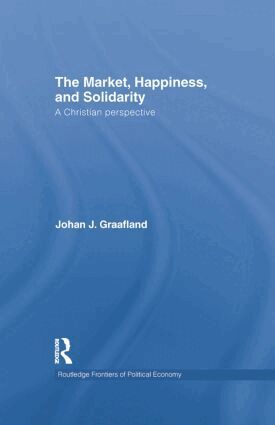
The past two decades of market operation has generated welfare and economic growth in Western countries, but increasing income inequalities, depletion of the natural environment and the current financial crisis have led to an intense debate about the advantages and disadvantages of the free market. With this book, Professor Graafland makes a valuable contribution to the Christian debate about the market economy. In particular, it aims to clarify the links between ethical values, Christian belief and economics, as well as informing theologians and economists about recent economic insights into market operation.The book investigates the effect of free market operation on welfare and well-being, calling into question why one would favour more market competition as a means of increasing happiness. As well as this, Professor Graafland examines how free market competition relates to principles of justice and looks at whether it enforces or crowds out Christian virtues like love, humility and temperance. Books that systematically link biblical teaching about the economy to recent theoretical and empirical research in economics on free market operation are rare. Most Christian books on the market system are theologically oriented, lacking a sound basis in the extensive knowledge of the recent economic literature on market operation. This book confronts Christian ethical standards with current economic literature on the effects of market operation on welfare, happiness, human rights, inequality and virtues in order to develop a well-based and balanced view of the pros and cons of market operation. This book will be of interest to both undergraduate and postgraduate students of economics, philosophy and theology.
Technology in Cognitive Rehabilitation
A Special Issue of Neuropsychological Rehabilitation
Häftad, Engelska, 2015
735 kr
Skickas inom 10-15 vardagar
Communication and Information Technology has been used to support older and disabled people for over thirty years and there have been many successes in this field. Until recently, research has largely concentrated on people with physical or sensory dysfunction; computer technology has been increasingly used to support cognitive activities in able bodied people but its use to support people with disabilities has not had much widespread recognition. Yet well-designed C and IT systems have great potential to enhance the quality of life and independence of people with cognitive dysfunction, by: enabling them to retain a higher level of independence and control over their lives, providing appropriate levels of monitoring and supervision of 'at risk' people, without violating privacy, keeping people intellectually and physically active, and providing communications methods to reduce social isolation. This special issue of Neuropsychological Rehabilitation recognises the potential of information technology to provide support for people with cognitive dysfunction, including the use of computers to provide traditional prostheses, albeit within the cognitive domain. The selection of papers in this issue shows that the help and support available can be far more than the 'artificial replacement of part of the body' (the literal definition of prosthesis) and can include techniques to provide lifestyle support for people who would not be thought of as requiring 'prosthetic support'.
Technology in Cognitive Rehabilitation
A Special Issue of Neuropsychological Rehabilitation
Inbunden, Engelska, 2004
2 160 kr
Skickas inom 10-15 vardagar
Communication and Information Technology has been used to support older and disabled people for over thirty years and there have been many successes in this field. Until recently, research has largely concentrated on people with physical or sensory dysfunction; computer technology has been increasingly used to support cognitive activities in able bodied people but its use to support people with disabilities has not had much widespread recognition. Yet well-designed C and IT systems have great potential to enhance the quality of life and independence of people with cognitive dysfunction, by: enabling them to retain a higher level of independence and control over their lives, providing appropriate levels of monitoring and supervision of 'at risk' people, without violating privacy, keeping people intellectually and physically active, and providing communications methods to reduce social isolation. This special issue of Neuropsychological Rehabilitation recognises the potential of information technology to provide support for people with cognitive dysfunction, including the use of computers to provide traditional prostheses, albeit within the cognitive domain. The selection of papers in this issue shows that the help and support available can be far more than the 'artificial replacement of part of the body' (the literal definition of prosthesis) and can include techniques to provide lifestyle support for people who would not be thought of as requiring 'prosthetic support'.