Alberto F. De Toni - Böcker
Visar alla böcker från författaren Alberto F. De Toni. Handla med fri frakt och snabb leverans.
6 produkter
6 produkter
2 103 kr
Skickas inom 10-15 vardagar
The world changes like the patterns in a kaleidoscope: trends expand, contract, break up, melt, disintegrate and disappear, while others are formed. Change – as opposed to stasis – is our normal condition, the only certainty in our lives, hence the need to create tools that provide organizations with the means to tackle change and navigate complexity. We must accept the reality of constant change and be prepared for a heavy shift in perspective: interconnection versus separation, acceleration versus linearity and discontinuity versus continuity.Anticipating the future requires more than the traditional predictive models (forecasting) based on the forward projection of past experiences. Advanced methods use anticipation logic (foresight) and build probable scenarios taking into account weak signals, emerging trends, coexisting presents and potential paths of evolution.Corporate foresight is fundamental to interpret and lead change. The two cornerstones of foresight are organization and management. As concerns organization, the authors advocate the separation of research (oriented to the market of tomorrow) from development (oriented to the market of today), the establishment of a foresight unit and the concentration of research activities mainly on the acquisition and recombination of external know-how. As regards management, after an overview of state-of-the-art literature on forecasting methods, the authors propose the implementation of a "future coverage" methodology, which enables companies to measure and verify the consistency between trends, strategic vision and offered products. These organizational and managing tools are then tested in a case study: the Italian company Eurotech SpA, a leader in the ICT sector.
616 kr
Skickas inom 10-15 vardagar
The world changes like the patterns in a kaleidoscope: trends expand, contract, break up, melt, disintegrate and disappear, while others are formed. Change – as opposed to stasis – is our normal condition, the only certainty in our lives, hence the need to create tools that provide organizations with the means to tackle change and navigate complexity. We must accept the reality of constant change and be prepared for a heavy shift in perspective: interconnection versus separation, acceleration versus linearity and discontinuity versus continuity.Anticipating the future requires more than the traditional predictive models (forecasting) based on the forward projection of past experiences. Advanced methods use anticipation logic (foresight) and build probable scenarios taking into account weak signals, emerging trends, coexisting presents and potential paths of evolution.Corporate foresight is fundamental to interpret and lead change. The two cornerstones of foresight are organization and management. As concerns organization, the authors advocate the separation of research (oriented to the market of tomorrow) from development (oriented to the market of today), the establishment of a foresight unit and the concentration of research activities mainly on the acquisition and recombination of external know-how. As regards management, after an overview of state-of-the-art literature on forecasting methods, the authors propose the implementation of a "future coverage" methodology, which enables companies to measure and verify the consistency between trends, strategic vision and offered products. These organizational and managing tools are then tested in a case study: the Italian company Eurotech SpA, a leader in the ICT sector.
Self-Organised Schools
Educational Leadership and Innovative Learning Environments
Inbunden, Engelska, 2022
2 044 kr
Skickas inom 10-15 vardagar
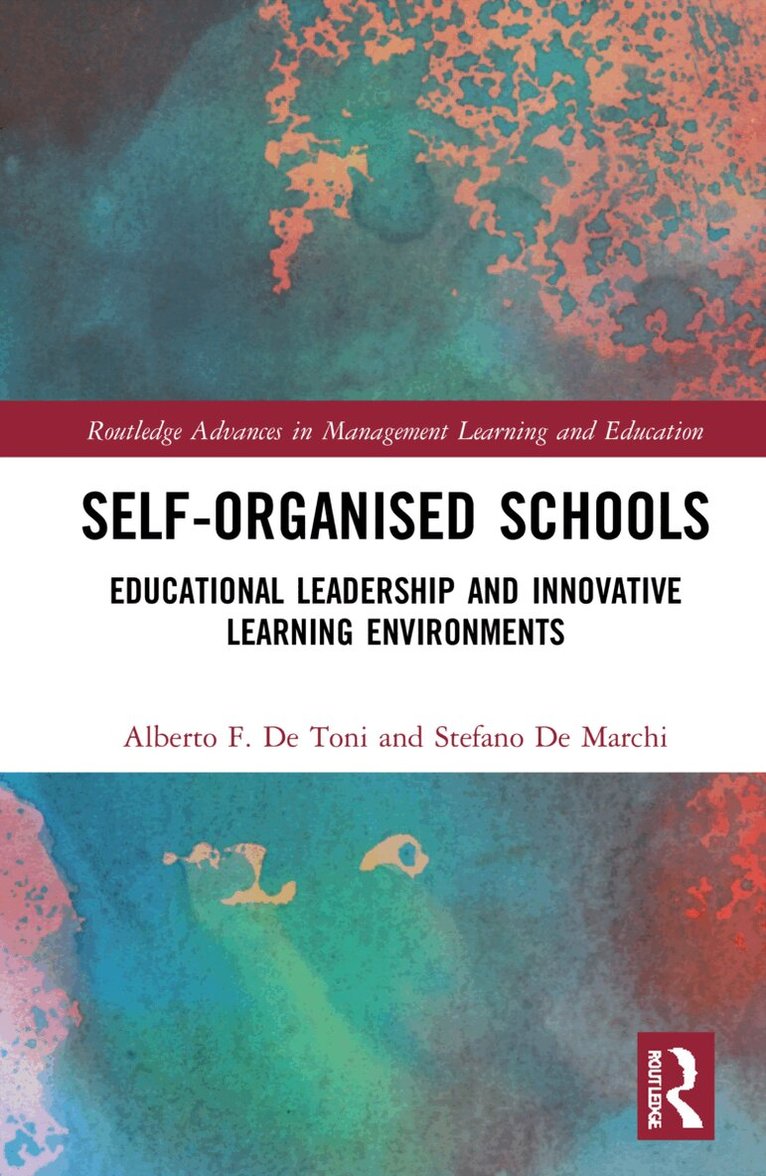
Self-Organised Schools: Educational Leadership and Innovative Learning Environments describes the results of the research we carried out at fourteen Italian schools that highlight how there is a positive correlation between the capabilities of school self-organization and the innovativeness of learning environments: in other words, the more self-organized schools are, the more innovative learning environments are. The results of this work are part of the strand of research of bottom-up emergency and self-organization, an extremely fruitful trend as shown by Sugata Mitra, the founder of the Self-Organized Learning Environments, according to whom, education is a self-organized system where learning is an emerging phenomenon. This book gives new insights on self-organization studies, and most of all, to the idea that change - organizational and educational innovation - sparks from the bottom. This book is aimed specifically at school principals of all levels, scholastic reformers, educational scholars, organisation and management consultants who want to innovate learning and management of learning. These actors will benefit drawing useful examples from more than thirty different learning environments worldwide, fourteen examples of schools that self-organize, two frameworks - and two ready-to-use questionnaires - measuring the innovativeness of a learning environment, and the capability of a school to self-organize. Self-organization is the most fascinating future of innovative principals
Self-Organised Schools
Educational Leadership and Innovative Learning Environments
Häftad, Engelska, 2024
592 kr
Skickas inom 10-15 vardagar
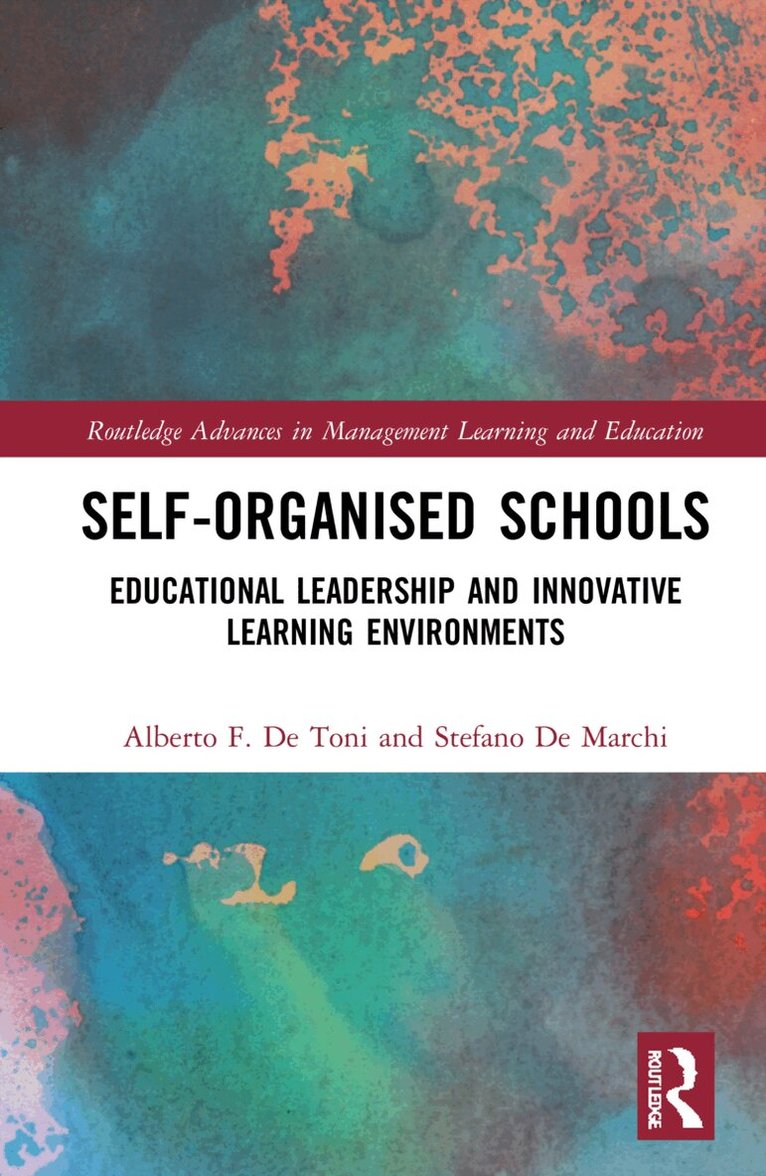
Self-Organised Schools: Educational Leadership and Innovative Learning Environments describes the results of the research we carried out at fourteen Italian schools that highlight how there is a positive correlation between the capabilities of school self-organization and the innovativeness of learning environments: in other words, the more self-organized schools are, the more innovative learning environments are. The results of this work are part of the strand of research of bottom-up emergency and self-organization, an extremely fruitful trend as shown by Sugata Mitra, the founder of the Self-Organized Learning Environments, according to whom, education is a self-organized system where learning is an emerging phenomenon. This book gives new insights on self-organization studies, and most of all, to the idea that change - organizational and educational innovation - sparks from the bottom. This book is aimed specifically at school principals of all levels, scholastic reformers, educational scholars, organisation and management consultants who want to innovate learning and management of learning. These actors will benefit drawing useful examples from more than thirty different learning environments worldwide, fourteen examples of schools that self-organize, two frameworks - and two ready-to-use questionnaires - measuring the innovativeness of a learning environment, and the capability of a school to self-organize. Self-organization is the most fascinating future of innovative principals
550 kr
Skickas inom 10-15 vardagar
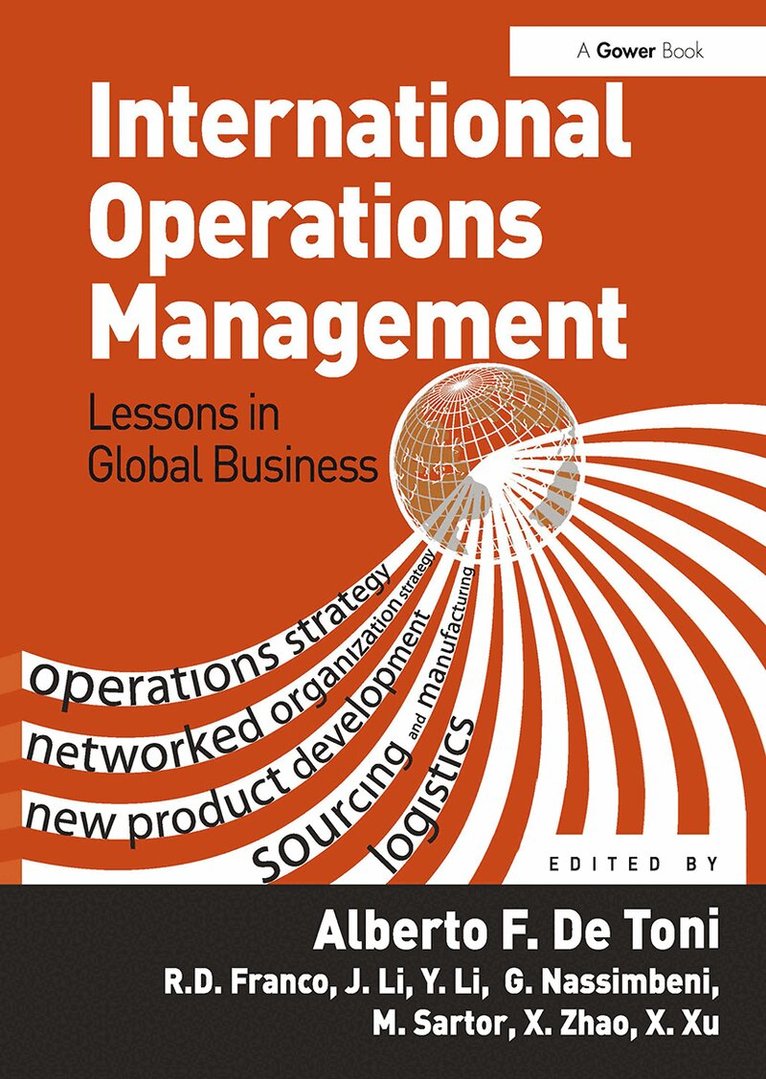
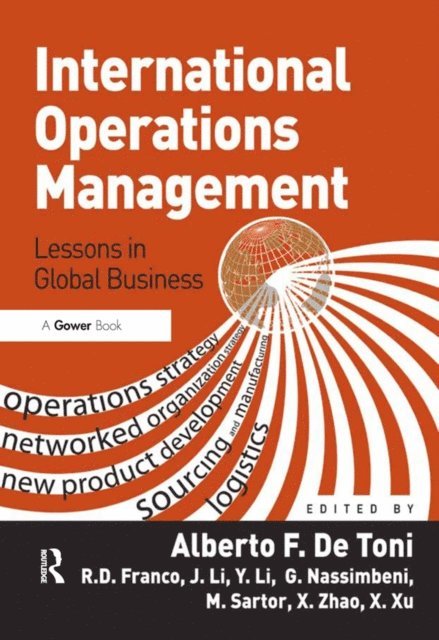
International Operations Management: Lessons in Global Business uses a fascinating selection of case studies researched during the 'International Operations Management Project', sponsored by the European Commission, to produce a valuable view of businesses in Western and Eastern traditions. Ranging from China Post and Flextronics International (Singapore) to Electrolux, Ford, and GlaxoSmithKline, the studies link conceptual and practical approaches in five areas: international operations management strategy, sourcing and manufacturing, new product development, logistics, and networked organisations. Throughout, the authors compare the Western and Eastern approaches to business, and introduce theory to clarify the comparison and the real consequences of internationalisation. With its balance of theoretical and applied content, this volume, created from an exciting collaboration between universities and schools of management in Europe and China, serves as both a primary and supplementary source for higher level students and educators, and as a worthwhile read for interested practitioners.
2 166 kr
Skickas inom 10-15 vardagar
International Operations Management: Lessons in Global Business uses a fascinating selection of case studies researched during the 'International Operations Management Project', sponsored by the European Commission, to produce a valuable view of businesses in Western and Eastern traditions. Ranging from China Post and Flextronics International (Singapore) to Electrolux, Ford, and GlaxoSmithKline, the studies link conceptual and practical approaches in five areas: international operations management strategy, sourcing and manufacturing, new product development, logistics, and networked organisations. Throughout, the authors compare the Western and Eastern approaches to business, and introduce theory to clarify the comparison and the real consequences of internationalisation. With its balance of theoretical and applied content, this volume, created from an exciting collaboration between universities and schools of management in Europe and China, serves as both a primary and supplementary source for higher level students and educators, and as a worthwhile read for interested practitioners.