Albrecht Muller – författare
Visar alla böcker från författaren Albrecht Muller. Handla med fri frakt och snabb leverans.
27 produkter
Von der Parteiendemokratie zur Mediendemokratie
Beobachtungen zum Bundestagswahlkampf 1998 im Spiegel früherer Erfahrungen
E-bok, 2013
452 kr
Lägg i varukorg
Dr. Norbert Schneider Daß Fernsehen auf Wahlentscheidungen erheblich einwirkt, wird von nie mandem ernsthaft bestritten. Aber welche Wirkungen sind das im Näheren? Und wie verläuft der Weg vom Schirm in die Wahlurne? Wirkung - auf und für wen? Und auf welche Weise, ausgelöst wodurch? Durch Themen, …
Meinungsmache
Wie Wirtschaft, Politik und Medien uns das Denken abgewöhnen wollen
E-bok, 2010
89 kr
Lägg i varukorg
Viele Wähler schließen mit der Politik ab, denn diese wird zunehmend über ihre Köpfe hinweg gemacht. Damit die Menschen trotzdem schlucken, was man ihnen vorsetzt, beeinflussen parteiische Experten und gezielte Kampagnen massiv die öffentliche Meinung. Albrecht Müller deckt auf, wer diese Kampagnen …
Towards a Theory of Thinking
Building Blocks for a Conceptual Framework
Av Britt Glatzeder, Vinod Goel m. fl.
Inbunden, 2010
1693 kr
Lägg i varukorg
What is Thinking? – Trying to Define an Equally Fascinating and Elusive Phenomenon Human thinking is probably the most complex phenomenon that evolution has come up with until now. There exists a broad spectrum of definitions, from subs- ing almost all processes of cognition to limiting it to …
Towards a Theory of Thinking
Building Blocks for a Conceptual Framework
Av Albrecht Muller, Vinod Goel m. fl.
E-bok, 2010
2044 kr
Lägg i varukorg
What is Thinking? – Trying to Define an Equally Fascinating and Elusive Phenomenon Human thinking is probably the most complex phenomenon that evolution has come up with until now. There exists a broad spectrum of definitions, from subs- ing almost all processes of cognition to limiting it to …
Towards a Theory of Thinking
Building Blocks for a Conceptual Framework
Av Britt Glatzeder, Vinod Goel m. fl.
Häftad, 2012
1643 kr
Lägg i varukorg
What is Thinking? – Trying to Define an Equally Fascinating and Elusive Phenomenon Human thinking is probably the most complex phenomenon that evolution has come up with until now. There exists a broad spectrum of definitions, from subs- ing almost all processes of cognition to limiting it to …
Die qualitative und quantitative Bestimmung des Holzschliffes im Papier
Eine chemisch-technische Studie
Häftad, 1886
568 kr
Lägg i varukorg
Die qualitative und quantitative Bestimmung des Holzschliffes im Papier
Eine chemisch-technische Studie
E-bok, 2013
587 kr
Lägg i varukorg
Von der Parteiendemokratie zur Mediendemokratie
Beobachtungen zum Bundestagswahlkampf 1998 im Spiegel früherer Erfahrungen
Häftad, 1999
568 kr
Lägg i varukorg
Dr. Norbert Schneider Daß Fernsehen auf Wahlentscheidungen erheblich einwirkt, wird von nie mandem ernsthaft bestritten. Aber welche Wirkungen sind das im Näheren? Und wie verläuft der Weg vom Schirm in die Wahlurne? Wirkung - auf und für wen? Und auf welche Weise, ausgelöst wodurch? Durch Themen, …
Nachdenken über Deutschland
Das kritische Jahrbuch 2013 / 2014
Av Wolfgang Lieb, Albrecht Muller
E-bok, 2013
127 kr
Lägg i varukorg
Nach der Krise ist vor der KriseWolfgang Lieb und Albrecht Müller fassen die wichtigsten politischen Themen des Jahres 2013 zusammen und liefern Nachrichten, Analysen und Hintergrundinformationen, die im Medienmainstream sonst nicht zu hören oder zu sehen sind. Sie regen zum Nachdenken an mit dem …
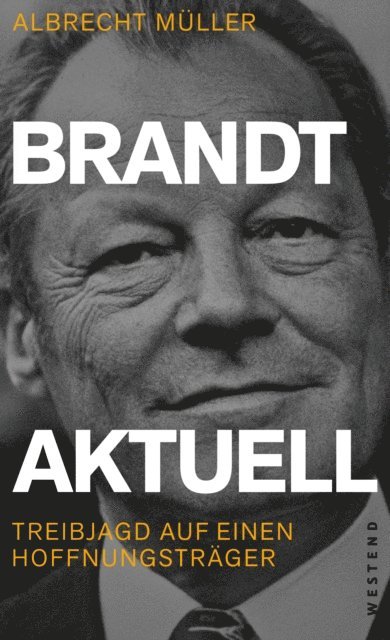
Brandt aktuell
Treibjagd auf einen Hoffnungsträger
E-bok, 2013
119 kr
Lägg i varukorg
Der letzte Glücksfall für DeutschlandKanzler Adenauer lästerte öffentlich über Brandts uneheliche Geburt, Helmut Schmidt nannte ihn einen Scheißkerl, Herbert Wehner diktierte in Moskau den Journalisten in den Block, Brandt bade lau. Dieser üblen Treibjagd ist Willy Brandt erlegen. Viel zu früh. Was …
Der falsche Präsident
Was Pfarrer Gauck noch lernen muss, damit wir glücklich mit ihm werden
E-bok, 2012
58 kr
Lägg i varukorg
Vom Bestseller-Autor und Mitherausgeber der NachDenkSeiten, "dem unverzichtbaren Albrecht Müller" Frank SchirrmacherNoch nie war ein Bundespräsident schon vor seiner Wahl so populär wie Joachim Gauck. Nach dem ungeeigneten Vorgänger hoffen viele jetzt auf den "richtigen" Präsidenten. Albrecht …
NachDenkSeiten
Das kritische Jahrbuch 2012/13
Av Wolfgang Lieb, Albrecht Muller
E-bok, 2012
140 kr
Lägg i varukorg
Mit den NachDenkSeiten setzen sich Wolfgang Lieb und Albrecht Müller wohltuend seit Jahren vom Medienmainstream ab. In ihrem neuen Jahrbuch durchleuchten sie kritisch die Berichterstattung zu den wichtigsten Themen und decken auf, wie wir alle von den Meinungsmachern aus Politik, Wirtschaft und …
Nachdenken über Deutschland
Das kritische Jahrbuch 2015 / 2016
Av Wolfgang Lieb, Albrecht Muller
E-bok, 2015
140 kr
Lägg i varukorg
Wie funktioniert Meinungsmache?Wolfgang Lieb und Albrecht Müller fassen die politisch wichtigsten Themen des Jahres 2015 zusammen und liefern Nachrichten, Analysen und Hintergrundinformationen, die im Medienmainstream sonst nicht zu hören oder zu sehen sind. Und sie regen zum Nachdenken an mit dem …
Nachdenken über Deutschland
Das kritische Jahrbuch 2016/2017
Av Jens Berger, Albrecht Muller
E-bok, 2016
166 kr
Lägg i varukorg
Das Jahrbuch der NachDenkSeiten fasst die wichtigsten politischen Themen des Jahres 2016 zusammen mit Nachrichten, Analysen und Hintergrundinformationen, die im Medienmainstream sonst nicht zu hören oder zu sehen sind. Das Jahrbuch soll anregen zum Nachdenken mit dem Ziel, dass immer mehr …
Nachdenken über Deutschland
Das kritische Jahrbuch 2017/2018
Av Jens Berger, Albrecht Muller
E-bok, 2017
153 kr
Lägg i varukorg
Die besten kritischen Analysen zum politischen GeschehenDas Jahrbuch der NachDenkSeiten fasst die wichtigsten politischen Themen des Jahres 2017 zusammen mit Nachrichten, Analysen und Hintergrundinformationen, die im Medienmainstream sonst nicht zu hören oder zu sehen sind. Das Jahrbuch soll …
Nachdenken über Deutschland
Das kritische Jahrbuch 2018/2019
Av Jens Berger, Albrecht Muller
E-bok, 2018
168 kr
Lägg i varukorg
Was bewegte Deutschland und die Welt in diesem Jahr? Welche politischen Themen waren prominent vertreten und welche wurden vom Mainstream der Medien schnell wieder weggespült? In den treffsicheren Analysen von Albrecht Müller und Jens Berger spiegeln sich die wichtigsten politischen und …
Nachdenken über Deutschland
Das kritische Jahrbuch 2019/2020
Av Jens Berger, Albrecht Muller
E-bok, 2019
149 kr
Lägg i varukorg
Alle Jahre wieder spiegelt das Jahrbuch der NachDenkSeiten was Deutschland und die Welt bewegt. Die brillanten wie treffsicheren Analysen von Albrecht Müller und Jens Berger haben dabei nicht nur die wichtigsten politischen und wirtschaftlichen Entwicklungen des Jahres im Blick, sondern auch die …
Die Revolution ist fällig
Aber sie ist verboten
E-bok, 2020
168 kr
Lägg i varukorg
Bestsellerautor Albrecht Müller zeigt, dass und wie sich die Verhältnisse grundlegend verschlechtert haben. Die Revolution ist überfällig! Aber leider im Grundgesetz nicht vorgesehen …Der Idee nach haben wir eine schöne Demokratie, tatsächlich aber verhärtete Verhältnisse: Die Einkommen sind …
Nachdenken über Deutschland
Das kritische Jahrbuch 2020/2021
Av Jens Berger, Albrecht Muller
E-bok, 2020
153 kr
Lägg i varukorg
Der Jahresrückblick mit den besten kritischen Analysen zum politischen Geschehen.Für kritische Geister sind die NachDenkSeiten schon lange kein Geheimtipp mehr. Bekannt sind sie für ihre differenzierte Auseinandersetzungen mit wirtschaftlichen und tagespolitischen Geschehnissen, die meist aus …
Die im Dunkeln sieht man nicht
70 Zeitzeugen zu den missachteten Folgen der Corona-Politik
E-bok, 2020
130 kr
Lägg i varukorg
70 Zeitzeugen berichten von den harten Folgen der Corona-Einschränkungen - vom Logistikarbeiter über die Psychotherapeutin und die alleinerziehende Mutter bis zum Gastwirt, von Eltern betroffener Kinder über einsame Alte bis zur Sängerin, Honorarkräfte, Teilzeitarbeitende, Musiker, Theaterleute, …
Nachdenken über Deutschland
Das kritische Jahrbuch 2021/2022
Av Jens Berger, Albrecht Muller
E-bok, 2021
163 kr
Lägg i varukorg
Der Jahresrückblick mit den besten kritischen Analysen zum politischen Geschehen.Für kritische Geister sind die NachDenkSeiten schon lange kein Geheimnis mehr. Bekannt sind sie für ihre kritische Auseinandersetzungen mit wirtschaftlichen und tagespolitischen Geschehnissen, die meist aus …
Glaube wenig, hinterfrage alles, denke selbst
Wie man Manipulationen durchschaut
E-bok, 2022
89 kr
Lägg i varukorg
Demokratie klingt schön. Tatsächlich wird sie täglich ausgehöhlt. Wir alle werden ständig bedrängt zu denken, was andere uns vorsagen. Die meisten politischen Entscheidungen werden unter dem Einfluss massiver Propaganda getroffen - von der Agenda 2010 bis zu den neuen Kriegen.Dieses Buch hilft, …
Nachdenken über Deutschland
Das kritische Jahrbuch 2011/2012
Av Wolfgang Lieb, Albrecht Muller
E-bok, 2011
168 kr
Lägg i varukorg
Wer regiert uns wirklich?Wolfgang Lieb und Albrecht Müller fassen die politisch wichtigsten Themen des Jahres 2011 zusammen und benennen klipp und klar die Dinge, die im Medienmainstream sonst nicht zu hören oder zu sehen sind. Und sie regen zum Nachdenken an mit dem Ziel, dass immer mehr …