Alec Kyriakides - Böcker
Visar alla böcker från författaren Alec Kyriakides. Handla med fri frakt och snabb leverans.
5 produkter
5 produkter
Del 1 - Practical Food Microbiology
Salmonella
A Practical Approach to the Organism and its Control in Foods
Häftad, Engelska, 2001
1 594 kr
Skickas inom 7-10 vardagar
Human illness attributed to foodborne pathogenic microorganisms has been prominent in the mass media in recent years. The Practical Food Microbiology Series has been devised to give practical and accurate information about specific organisms of concern to public health. The information is designed for use by those in the food industry working in manufacturing, retailing and quality assurance, those in associated professional sectors e.g. public health, and students in each of these areas. The series is unique in its practical approach as it draws on real life situations to highlight practical means for controlling the organism in foods.Salmonella species are arguably the most commonly reported food associated human pathogens in the developed world. They are zoonotic agents and many different animal reservoirs are known. They can be found widely in the environment and may also establish in food processing environments. Over 2000 serotypes of Salmonella have been identified to-date, some of which cause very serious illness in humans particularly in vulnerable populations such as the elderly. Although rare, illness may result in fatality or long term debility and sequelae. Salmonella spp. are so widespread in raw foods and food source environments that the food industry has to maintain constant vigilance regarding contamination in raw materials, effectiveness of food processing systems and control of finished product characteristics for assuring food safety with respect to this important pathogen.This book details the causes of selected outbreaks and assesses the lessons that can be learnt from them. It examines the characteristics of Salmonella spp. and identifies factors that make foods susceptible to contamination and growth of these organisms. Specific product sectors are used to indicate practical measures that can be applied to control Salmonella spp. in foods and minimise their potential to cause harm to the consumer. It also provides guidance in selecting effective sampling plans and test methods to monitor and detect the organism and offers pragmatic advice on action to be taken when the organism is detected during monitoring programmes.
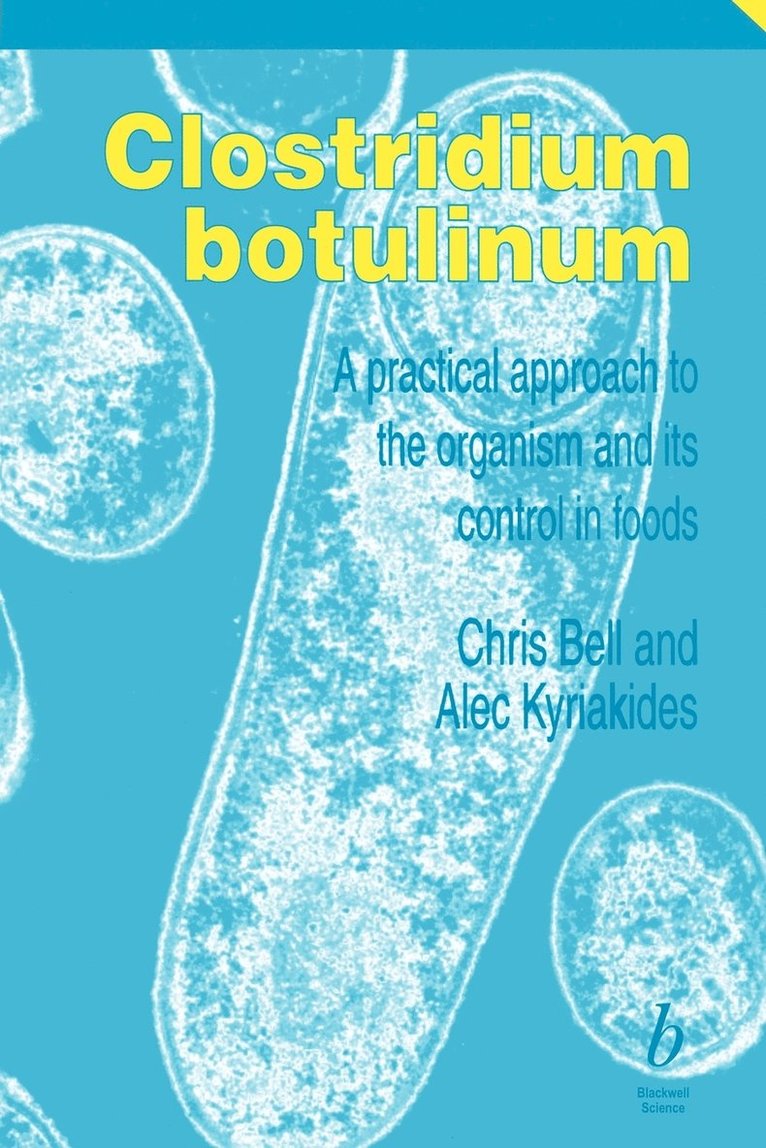
Clostridium Botulinum
A Practical Approach to the Organism and its Control in Foods
Häftad, Engelska, 2000
1 008 kr
Skickas inom 7-10 vardagar
The Practical Food Microbiology Series gives practical and accurate information about specific organisms of concern to public health. The information is designed for use by those in the food industry working in manufacturing, retailing and quality assurance, those in associated professional sectors e.g. public health, and students in each of these areas.Clostridium botulinum produces a toxin which causes the severe, often fatal illness, botulism. It is a potential hazard associated with a wide range of both ambient stable and chilled foods. Foodborne botulism still occurs all around the world. As new outbreaks are reported implicating yet more food types and food processes, so the food industry needs to regularly review processes and product characteristics to assure safety.
853 kr
Skickas inom 7-10 vardagar
Recent outbreaks of fatal food-borne illness associated with Vero cytotoxin-producing E.Coli (VTEC) have highlighted the need for thorough and coherent information to be provided to the food industry. The book details the causes of selected incidents and assesses the lessons that can be learnt from them. It examines the characteristics of E.Coli and VTEC and identifies factors which make foods susceptible to contamination by these pathogens. Specific product sectors are used to indicate practical measures that can be applied to control VTEC in foods and minimise its potential to cause harm to the consumer. It also provides guidance in selecting effective sampling plans and test methods to monitor and detect the organism and offers pragmatic advice on action taken when the organism is detected during monitoring programmes. This information is designed for use by the food industry, particularly personnel working in manufacturing, safety and quality control. It will also be useful for Environmental Health Officers and food research institutions.
551 kr
Skickas inom 10-15 vardagar
1 206 kr
Skickas inom 7-10 vardagar
Human illness attributed to foodborne pathogenic microorganisms has been prominent in the mass media in recent years. The Practical Food Microbiology Series has been devised to give practical and accurate information about specific microorganisms of concern to public health. This series is unique in its practical approach as it draws on real life situations to highlight practical means for controlling pathogenic microorganisms in foods. Listeria monocytogenes has been recognised as an animal pathogen for over 70 years, and in the last two or three decades concern has been focused on the role of food in the transmission of human listeriosis, and also on L. monocytogenes as a cause of febrile gastroenteritis. This second edition has been fully revised and updated to include the latest information on L. monocytogenes, including its taxonomy, details of recently documented outbreaks implicating the organism, and legislation relating to the organism. The book aims to give the reader an overview of Listeria and particularly L. monocytogenes. It is primarily intended as an aid for those persons who want to understand the nature of the hazard that this organism presents to food products, and the means of controlling it. The information is designed for use by those in the food industry working in manufacturing, retail, and quality assurance; those in associated professional sectors, e.g. healthcare; as well as students in each of these areas. The book is an invaluable tool and essential reference for all food microbiologists.