Alec Stone Sweet – författare
Visar alla böcker från författaren Alec Stone Sweet. Handla med fri frakt och snabb leverans.
21 produkter
21 produkter
Häftad, Engelska, 1998
1 610 kr
Skickas inom 7-10 vardagar
The European Union began in 1957 as a treaty among six nations but today constitutes a supranational polity - one that creates rules that are binding on its 15 member countries and their citizens. This majesterial study confronts some of the most enduring questions posed by the remarkable evolution of the EU: Why does policy-making sometimes migrate from the member states to the European Union? And why has integration proceeded more rapidly in some policy domains than in others? A distinguished team of scholars lead by Wayne Sandholtz and Alec Stone Sweet offers a fresh theory and clear propositions on the development of the EU. Combining broad data and probing case studies, the volume finds solid support for these propositions in a variety of policy domains. The coherent theoretical approach and extensive empirical analyses together constitute a significant challenge to approaches that see the EU as a straightforward product of member-state interests, power, and bargaining. This volume clearly demonstrates that a nascent transnational society and supranational institutions have played decisive roles in constructing the European Union.
Inbunden, Engelska, 2000
1 633 kr
Skickas inom 5-8 vardagar
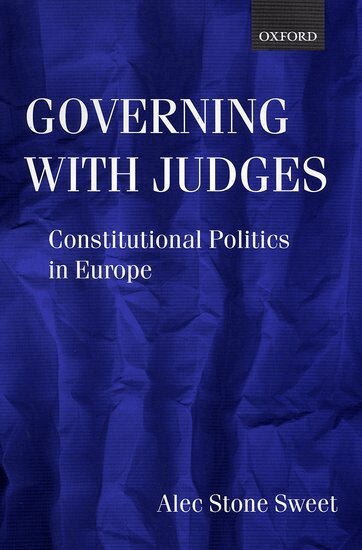
Constitutional Politics in Europe: Governing with Judges elaborates a theory of constitutional politics, the process through which the discursive practices and techniques of constitutional adjudication come to structure the work of governments, parliaments, judges, and administrators. Focusing on the cases of France, Germany, Italy, Spain, and the European Union, the book examines the sources and consequences of the pan-European movement to confer constitutional review authority on a new governmental institution, the constitutional court. Detailed case studies illustrate how and to what extent legislative processes have been placed under the influence of constitutional judges. In a growing number of policy domains, these judges function as powerful, adjunct legislators. As constitutional courts have consolidated their position as authoritative interpreters of the constitutional law, and especially of human rights provisions, the work of the judiciary, too, has gradually been constitutionalised. Today, ordinary judges seek to detect violations of the constitution in their application of the various codes, and to rewrite statutes that they deem unconstitutional. Constitutional politics have not only provoked the demise of traditional notions of parliamentary sovereignty, they have organized profound transformations in the very nature of European governance. Stone Sweet argues that constitutional adjudication constructs complex causal linkages between rule systems and normativity, on the one hand, and the strategic behaviour of individuals, on the other. The theory constitutes a novel synthesis of normative and rational approaches to politics. The book also addresses central questions raised by a wide range of ongoing theory projects, including the 'new institutionalism,'rational choice, principal-agent theories of delegation, and the new constitutionalism in Continental legal theory.
Häftad, Engelska, 2000
693 kr
Skickas inom 5-8 vardagar
Governing with Judges elaborates a theory of constitutional politics, the process through which the discursive practices and techniques of constitutional adjudication come to structure the work of governments, parliaments, judges, and administrators. Focusing on the cases of France, Germany, Italy, Spain, and the European Union, the book examines the sources and consequences of the pan-European movement to confer constitutional review authority on a new governmental institution, the constitutional court. Detailed case studies illustrate how and to what extent legislative processes have been placed under the influence of constitutional judges. In a growing number of policy domains, these judges function as powerful, adjunct legislators. As constitutional courts have consolidated their position as authoritative interpreters of the constitutional law, and especially of human rights provisions, the work of the judiciary, too, has gradually been constitutionalised. Today, ordinary judges seek to detect violations of the constitution in their application of the various codes, and to rewrite statutes that they deem unconstitutional. Constitutional politics have not only provoked the demise of traditional notions of parliamentary sovereignty, they have organized profound transformations in the very nature of European governance. Stone Sweet argues that constitutional adjudication constructs complex causal linkages between rule systems and normativity, on the one hand, and the strategic behaviour of individuals, on the other. The theory constitutes a novel synthesis of normative and rational approaches to politics. The book also addresses central questions raised by a wide range of ongoing theory projects, including the 'new institutionalism,'rational choice, principal-agent theories of delegation, and the new constitutionalism in Continental legal theory.
Inbunden, Engelska, 2017
1 752 kr
Skickas inom 5-8 vardagar
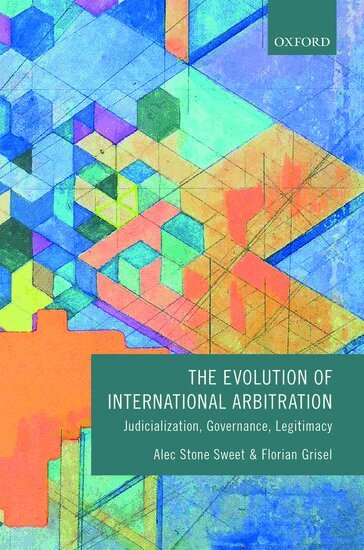
The development of international arbitration as an autonomous legal order is one of the most remarkable stories of institution building at the global level over the past century. Today, transnational firms and states settle their most important commercial and investment disputes not in courts, but in arbitral centres, a tightly networked set of organizations that compete with one another for docket, resources, and influence. In this book, Alec Stone Sweet and Florian Grisel show that international arbitration has undergone a self-sustaining process of institutional evolution that has steadily enhanced arbitral authority. This judicialization process was sustained by the explosion of trade and investment, which generated a steady stream of high stakes disputes, and the efforts of elite arbitrators and the major centres to construct arbitration as a viable substitute for litigation in domestic courts. For their part, state officials (as legislators and treaty makers), and national judges (as enforcers of arbitral awards), have not just adapted to the expansion of arbitration; they have heavily invested in it, extending the arbitral order's reach and effectiveness. Arbitration's very success has, nonetheless, raised serious questions about its legitimacy as a mode of transnational governance. The book provides a clear causal theory of judicialization using original data and analysis, and a broad, relatively non-technical overview of the evolution of the arbitral order. Each chapter compares international commercial and investor-state arbitration, across clearly specified measures of judicialization and governance. Topics include: the evolution of procedures; the development of precedent and the demand for appeal; balancing in the public interest; legitimacy debates and proposals for systemic reform. This book is a timely assessment of how arbitration has risen to become a key component of international economic law and why its future is far from settled.
Häftad, Engelska, 2017
516 kr
Skickas inom 7-10 vardagar
The development of international arbitration as an autonomous legal order comprises one of the most remarkable stories of institution building at the global level over the past century. Today, transnational firms and states settle their most important commercial and investment disputes not in courts, but in arbitral centres, a tightly networked set of organizations that compete with one another for docket, resources, and influence. In this book, Alec Stone Sweet and Florian Grisel show that international arbitration has undergone a self-sustaining process of institutional evolution that has steadily enhanced arbitral authority. This judicialization process was sustained by the explosion of trade and investment, which generated a steady stream of high stakes disputes, and the efforts of elite arbitrators and the major centres to construct arbitration as a viable substitute for litigation in domestic courts. For their part, state officials (as legislators and treaty makers), and national judges (as enforcers of arbitral awards), have not just adapted to the expansion of arbitration; they have heavily invested in it, extending the arbitral order's reach and effectiveness. Arbitration's very success has, nonetheless, raised serious questions about its legitimacy as a mode of transnational governance. The book provides a clear causal theory of judicialization, original data collection and analysis, and a broad, relatively non-technical overview of the evolution of the arbitral order. Each chapter compares international commercial and investor-state arbitration, across clearly specified measures of judicialization and governance. Topics include: the evolution of procedures; the development of precedent and the demand for appeal; balancing in the public interest; legitimacy debates and proposals for systemic reform. This book is a timely assessment of how arbitration has risen to become a key component of international economic law and why its future is far from settled.
Inbunden, Engelska, 2018
1 156 kr
Skickas inom 5-8 vardagar
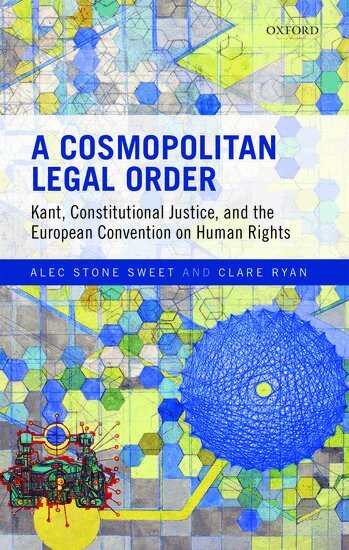
In this book, Stone Sweet and Ryan provide an accessible introduction to Kantian constitutional theory and the law and politics of European rights protection. Part I sets out Kant's blueprint for achieving Perpetual Peace and constitutional justice within and beyond the nation state. Part II applies these ideas to explain the gradual constitutionalization of a Cosmopolitan Legal Order: a transnational legal system in which justiciable rights are held by individuals; where public officials bear the obligation to fulfil the fundamental rights of all who come within the scope of their jurisdiction; and where domestic and transnational judges supervise how officials act. Such an order was instantiated in Europe through the combined effects of Protocol no. 11 (1998) to the ECHR and the incorporation of the Convention into national law. The authors then describe and assess the strengthening of the European Court's capacities to meet the challenge of chronic failures of protection at the domestic level; its progressive approach to the "qualified" rights covering privacy and family life, and the freedoms of expression, conscience, and religion; the robust enforcement of the "absolute" rights, including the prohibition of torture and inhuman treatment; and its determined efforts to render justice to all people that come under its jurisdiction, including non-citizens whose rights are violated beyond Europe. Today, the Strasbourg Court is the most active and important rights-protecting court in the world, its jurisprudence a catalyst for the construction of a cosmopolitan constitution in Europe and beyond.
Häftad, Engelska, 2042
340 kr
Kommande
In this book, Alec Stone Sweet and Clare Ryan provide an accessible introduction to Kantian constitutional theory and the law and politics of European rights protection. Part I sets out Kant's blueprint for achieving Perpetual Peace and constitutional justice within and beyond the nation state. Part II applies these ideas to explain the gradual constitutionalization of a Cosmopolitan Legal Order: a transnational legal system in which justiciable rights are held by individuals; where public officials bear the obligation to fulfil the fundamental rights of all who come within the scope of their jurisdiction; and where domestic and transnational judges supervise how officials act. Such an order was instantiated in Europe through the combined effects of Protocol no. 11 (1998) to the European Court of Human Rights (ECtHR) and the incorporation of the Convention into national law.The authors then describe and assess the strengthening of the European Court's capacities to meet the challenge of chronic failures of protection at the domestic level; its progressive approach to the "qualified" rights covering privacy and family life, and the freedoms of expression, conscience, and religion; the robust enforcement of the "absolute" rights, including the prohibition of torture and inhuman treatment; and its determined efforts to render justice to all people that come under its jurisdiction, including non-citizens whose rights are violated beyond Europe. Today, the Strasbourg Court is the most active and important rights-protecting court in the world, its jurisprudence a catalyst for the construction of a cosmopolitan constitution in Europe and beyond.
Inbunden, Engelska, 2019
1 262 kr
Skickas inom 5-8 vardagar
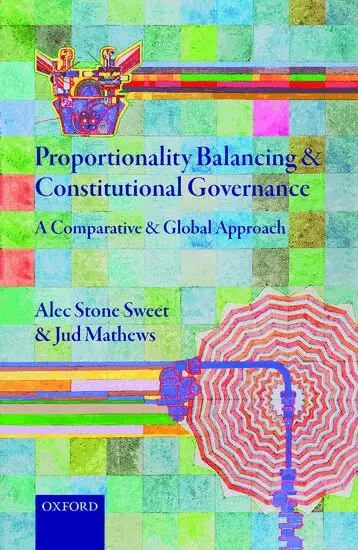
In this book, Alec Stone Sweet and Jud Mathews focus on the law and politics of rights protection in democracies, and in human rights regimes in Europe, the Americas, and Africa. After introducing the basic features of modern constitutions, with their emphasis on rights and judicial review, the authors present a theory of proportionality that explains why constitutional judges embraced it. Proportionality analysis is a highly intrusive mode of judicial supervision: it permits state officials to limit rights, but only when necessary to achieve a sufficiently important public interest. Since the 1950s, virtually every powerful domestic and international court has adopted proportionality analysis as the central method for protecting rights. In doing so, judges positioned themselves to review all important legislative and administrative decisions, and to invalidate them as unconstitutional when such policies fail the proportionality test. The result has been a massive - and global - transformation of law and politics. The book explicates the concepts of 'trusteeship', the 'system of constitutional justice', the 'effectiveness' of rights adjudication, and the 'zone of proportionality'. A wide range of case studies analyse: how proportionality has spread, and variation in how it is deployed; the extent to which the U.S. Supreme Court has evolved and resisted similar doctrines; the role of proportionality in building ongoing 'constitutional dialogues' with the other branches of government; and the importance of the principle to the courts of regional human rights regimes. While there is variance in the intensity of proportionality-based dialogues, such interactions are today at the very heart of governance in the modern constitutional state and beyond.
Häftad, Engelska, 2019
432 kr
Skickas inom 5-8 vardagar
In this book, Alec Stone Sweet and Jud Mathews focus on the law and politics of rights protection in democracies, and in human rights regimes in Europe, the Americas, and Africa. After introducing the basic features of modern constitutions, with their emphasis on rights and judicial review, the authors present a theory of proportionality that explains why constitutional judges embraced it. Proportionality analysis is a highly intrusive mode of judicial supervision: it permits state officials to limit rights, but only when necessary to achieve a sufficiently important public interest. Since the 1950s, virtually every powerful domestic and international court has adopted proportionality analysis as the central method for protecting rights. In doing so, judges positioned themselves to review all important legislative and administrative decisions, and to invalidate them as unconstitutional when such policies fail the proportionality test. The result has been a massive - and global - transformation of law and politics. The book explicates the concepts of 'trusteeship', the 'system of constitutional justice', the 'effectiveness' of rights adjudication, and the 'zone of proportionality'. A wide range of case studies analyse: how proportionality has spread, and variation in how it is deployed; the extent to which the U.S. Supreme Court has evolved and resisted similar doctrines; the role of proportionality in building ongoing 'constitutional dialogues' with the other branches of government; and the importance of the principle to the courts of regional human rights regimes. While there is variance in the intensity of proportionality-based dialogues, such interactions are today at the very heart of governance in the modern constitutional state and beyond.
Inbunden, Engelska, 2024
1 297 kr
Skickas inom 7-10 vardagar
Combining perspectives from law and the social sciences, this book provides an account of the origins and evolution of six regional human rights courts. In each of these cases, judges sought to overcome political forces and legal obstacles that threatened to render the regime stillborn. Alec Stone Sweet and Wayne Sandholtz focus on the struggle to raise standards of rights protection within multi-level "transnational systems of justice." A transnational system of justice is comprised of three components: a charter of rights; a court tasked with enforcing the charter; and the right of individuals to petition the court with a claim that their rights have been violated. The book analyzes the law and politics of such systems in diverse areas, including torture, inhuman treatment, non-discrimination, due process and access to justice, free expression, privacy and family, and other freedoms. In some cases, state officials have at times strongly supported enhancing the effectiveness of rights protections. In others, the activities of the courts have generated significant political "backlash," leading state officials to act to curb the court's authority, or to exit the regime altogether. The book describes and evaluates these attempts, the results of which have been mixed, with most court-curbing exercises failing.
Häftad, Engelska, 2024
461 kr
Skickas inom 5-8 vardagar
Combining perspectives from law and the social sciences, this book provides an account of the origins and evolution of six regional human rights courts. In each of these cases, judges sought to overcome political forces and legal obstacles that threatened to render the regime stillborn. Alec Stone Sweet and Wayne Sandholtz focus on the struggle to raise standards of rights protection within multi-level "transnational systems of justice." A transnational system of justice is comprised of three components: a charter of rights; a court tasked with enforcing the charter; and the right of individuals to petition the court with a claim that their rights have been violated. The book analyzes the law and politics of such systems in diverse areas, including torture, inhuman treatment, non-discrimination, due process and access to justice, free expression, privacy and family, and other freedoms. In some cases, state officials have at times strongly supported enhancing the effectiveness of rights protections. In others, the activities of the courts have generated significant political "backlash," leading state officials to act to curb the court's authority, or to exit the regime altogether. The book describes and evaluates these attempts, the results of which have been mixed, with most court-curbing exercises failing.
Inbunden, Engelska, 2001
1 910 kr
Skickas inom 5-8 vardagar
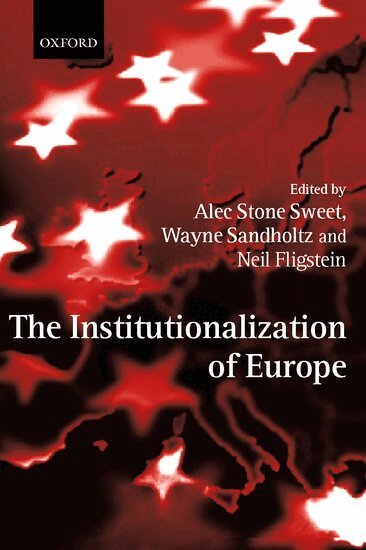
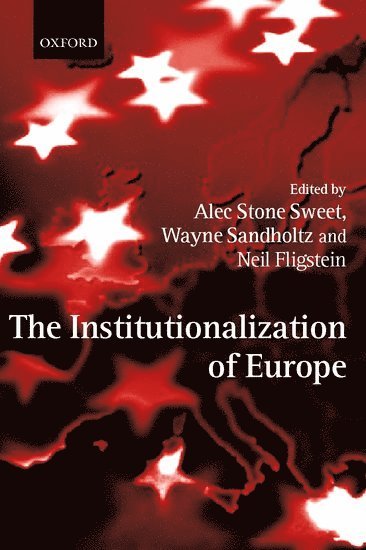
In 1950, a European political space existed, if only as a very primitive site of international governance. Today, the European Union governs in an ever-growing number of policy domains. Increasingly dense networks of transnational actors representing electorates, member state governments, firms, and specialized interests operate in arenas that are best understood as supranational. At the same time, the capacity of European organizations - the Bank, the Commission, and the Court of Justice - to make authoritative policy decisions has steadily expanded, profoundly transforming the very nature of the European polity.This book, a companion volume to European Integration and Supranational Governance, offers readers a sophisticated theoretical account of this transformation, as well as original empirical research. The editors elaborate an innovative synthesis of institutionalist theory that contributors use to explain the sources and consequences of the emergence and institutionalization of European political arenas. Some chapters examine the evolution of integration and supranational governance across time and policy domain. Others recount more discrete episodes, including: the development of women's rights, the judicial review of administrative acts, a stable system of interest group representation, and enhanced cooperation in foreign policy and security; the creation of the European Central Bank; the emergence of new policy competences, such as for policing and immigration; and the multi-dimensional impact of European policies on national modes of governance.
Häftad, Engelska, 2001
1 221 kr
Skickas inom 7-10 vardagar
In 1950, a European political space existed, if only as a very primitive site of international governance. Today, the European Union governs in an ever-growing number of policy domains. Increasingly dense networks of transnational actors representing electorates, member state governments, firms, and specialized interests operate in arenas that are best understood as supranational. At the same time, the capacity of European organizations - the Bank, the Commission, and the Court of Justice - to make authoritative policy decisions has steadily expanded, profoundly transforming the very nature of the European policy. This book, a companion volume to "European Integration and Supranational Governance", offers readers a sophisticated theoretical account of this transformation, as well as original empirical research. The editors elaborate an synthesis of institutionalist theory that contributors use to explain the sources and consequences of the emergence and institutionalization of European political arenas. The text examines the evolution of integration and supranational governance across time and policy domain.
Inbunden, Engelska, 2002
2 818 kr
Skickas inom 5-8 vardagar
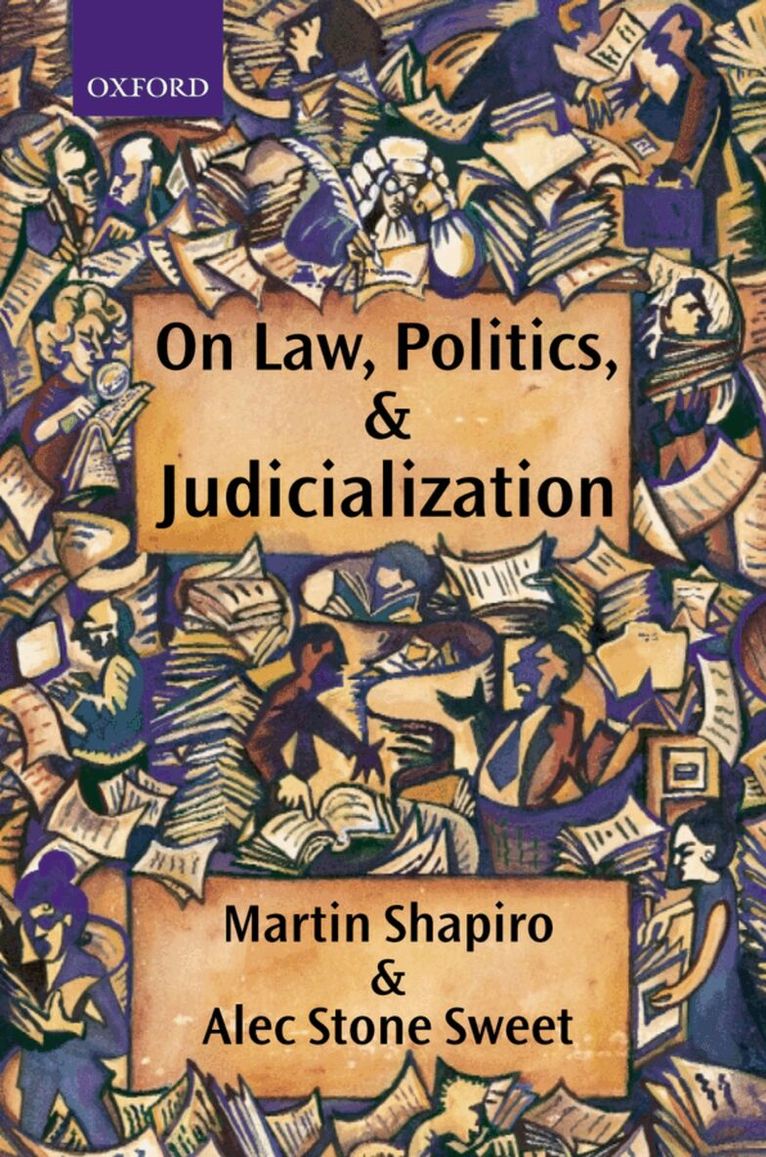
Across the globe, the domain of the litigator and the judge has radically expanded, making it increasingly difficult for those who study comparative and international politics, public policy and regulation, or the evolution of new modes of governance to avoid encountering a great deal of law and courts. In On Law, Politics, and Judicialization, two of the world's leading political scientists present the best of their research, focusing on how to build and test a social science of law and courts. The opening chapter features Shapiro's classic 'Political Jurisprudence,' and Stone Sweet's 'Judicialization and the Construction of Governance,' pieces that critically redefined research agendas on the politics of law and judging. Subsequent chapters take up diverse themes: the strategic contexts of litigation and judging; the discursive foundations of judicial power; the social logic of precedent and appeal; the networking of legal elites; the lawmaking dynamics of rights adjudication; the success and diffusion of constitutional review; the reciprocal impact of courts and legislatures; the globalization of private law; methods, hypothesis-testing, and prediction in comparative law; and the sources and consequences of the creeping 'judicialization of politics' around the world. Chosen empirical settings include the United States, the GATT-WTO, France and Germany, Imperial China and Islam, the European Union, and the transnational world of the Lex Mercatoria. Written for a broad, scholarly audience, the book is also recommended for use in graduate and advanced undergraduate courses in law and the social sciences.
Häftad, Engelska, 2002
740 kr
Skickas inom 5-8 vardagar
Across the globe, the domain of the litigator and the judge has radically expanded, making it increasingly difficult for those who study comparative and international politics, public policy and regulation, or the evolution of modes of governance to avoid encountering a great deal of law and courts. In this text two leading political scientists present the best of their research, focusing on how to build and test a social science of law and courts. The opening chapter features Shapiro's "Political Jurisprudence", and Stone Sweet's "Judicialization and the Construction of Governance".
Inbunden, Engelska, 2004
1 155 kr
Skickas inom 3-6 vardagar
The law and politics of European integration have been inseparable since the 1960s, when the European Court of Justice rendered a set of foundational decisions that gradually served to 'constitutionalize' the Treaty of Rome. In this book, Alec Stone Sweet, one of the world's foremost social scientists and legal scholars, blends deductive theory, quantitative analysis of aggregate data, and qualitative case studies to explain the dynamics of European integration and institutional change in the EU since 1959. He shows that the activities of market actors, lobbyists, legislators, litigators, and judges became connected to one another in various ways, giving the EU its fundamentally expansionary character. He then assesses the impact of Europe's unique legal system on the evolution of supranational governance, tracing outcomes in three policy domains: free movement of goods, sex equality, and environmental protection. The book integrates diverse themes, including: the testing of hypotheses derived from regional integration theory; the 'judicialization' of legislative processes; the path dependence of precedent and legal argumentation; the triumph of the 'rights revolution' in the EU; delegation, agency, and trusteeship; balancing as a technique of judicial rulemaking and governance; and why national administration and justice have been steadily 'Europeanized'. Written for a broad audience, the book is also recommended for use in graduate and advanced undergraduate courses in law and the social sciences.
Häftad, Engelska, 2004
836 kr
Skickas inom 7-10 vardagar
The law and politics of European integration have been inseparable since the 1960s, when the European Court of Justice rendered a set of foundational decisions that gradually served to 'constitutionalize' the Treaty of Rome. In this book, Alec Stone Sweet, one of the world's foremost social scientists and legal scholars, blends deductive theory, quantitative analysis of aggregate data, and qualitative case studies to explain the dynamics of European integration and institutional change in the EU since 1959. He shows that the activities of market actors, lobbyists, legislators, litigators, and judges became connected to one another in various ways, giving the EU its fundamentally expansionary character. He then assesses the impact of Europe's unique legal system on the evolution of supranational governance, tracing outcomes in three policy domains: free movement of goods, sex equality, and environmental protection. The book integrates diverse themes, including: the testing of hypotheses derived from regional integration theory; the 'judicialization' of legislative processes; the path dependence of precedent and legal argumentation; the triumph of the 'rights revolution' in the EU; delegation, agency, and trusteeship; balancing as a technique of judicial rulemaking and governance; and why national administration and justice have been steadily 'Europeanized'.Written for a broad audience, the book is also recommended for use in graduate and advanced undergraduate courses in law and the social sciences.
Inbunden, Engelska, 2008
1 910 kr
Skickas inom 5-8 vardagar
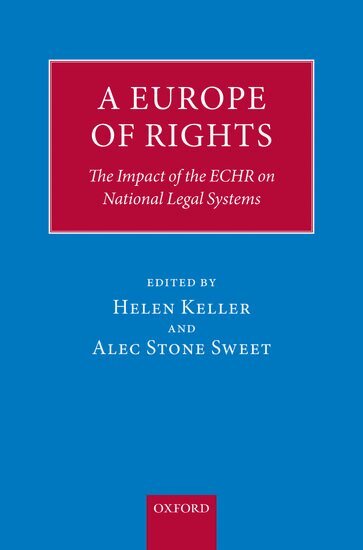
The European Convention on Human Rights has evolved into a sophisticated legal system, whose formal reach into the domestic law and politics of the Contracting States is limited only by the ever-widening scope of the Convention itself, as determined by a transnational court. In this book, a team of distinguished scholars trace and evaluate, comparatively, the impact of the ECHR and the European Court of Human Rights on law and politics in eighteen national systems: Ireland-UK; France-Germany, Italy-Spain, Belgium-Netherlands, Norway-Sweden, Greece-Turkey, Russia-Ukraine, Poland-Slovakia, and Austria-Switzerland. Although the Court's jurisprudence has provoked significant structural, procedural, and policy innovation in every State examined, its impact varies widely across States and legal domains. The book charts this variation and seeks to explain it. Across Europe, national officials - in governments, legislatures, and judiciaries - have chosen to incorporate the ECHR into domestic law, and they have developed a host of mechanisms designed to adapt the national legal system to the ECHR as it evolves. But how and why State actors have done so varies in important ways, and these differences heavily determine the relative status and effectiveness of Convention rights in national systems. Although problems persist, the book shows that national officials are, gradually but inexorably, being socialized into a Europe of rights, a unique transnational legal space now developing its own logics of political and juridical legitimacy.
Häftad, Engelska, 2004
680 kr
Skickas inom 10-15 vardagar
There is a growing interest in delegation to non-majoritarian institutions in Europe, following both the spread of principal-agent theory in political science and law and increasing delegation in practice. During the 1980s and 1990s, governments and parliaments in West European nations have delegated powers and functions to non-majoritarian bodies - the EU, independent central banks, constitutional courts and independent regulatory agencies. Whereas elected policymakers had been increasing their roles over several decades, delegation involves a remarkable reversal or at least transformation of their position. This volume examines key issues about the politics of delegation: how and why delegation has taken place; the institutional design of delegation to non-majoritarian institutions; the consequences of delegation to non-majoritarian institutions; the legitimacy of non-majoritarian institutions. The book addresses these questions both theoretically and empirically, looking at central areas of political life - central banking, the EU, the increasing role of courts and the establishment and impacts of independent regulatory agencies.
Inbunden, Engelska, 1998
1 873 kr
Skickas inom 10-15 vardagar
The essays comprising this volume are the outcome of a major and unique project which looks in detail at the application of EC law by national courts and the interaction of the demands of EC law with the constraints imposed by national legal orders and,especially, national constitutional orders. The volume comprises seven country studies which are shaped around a common research protocol. These are supplemented by three cross-cutting studies which draw on the country studies as well as on broader contextual research work aimed at trying to understand the role of the European Court of Justice in the round. The results of this multi-national research are certain to provoke widespread interest among scholars of European law, international law and European politics, for they offer the first systematic and rigorous attempt to assess the impact of the ECJ among the leading member states of the European Union.
Inbunden, Engelska, 2004
1 591 kr
Tillfälligt slut
There is a growing interest in delegation to non-majoritarian institutions in Europe, following both the spread of principal-agent theory in political science and law and increasing delegation in practice. During the 1980s and 1990s, governments and parliaments in West European nations have delegated powers and functions to non-majoritarian bodies - the EU, independent central banks, constitutional courts and independent regulatory agencies. Whereas elected policymakers had been increasing their roles over several decades, delegation involves a remarkable reversal or at least transformation of their position. This volume examines key issues about the politics of delegation: how and why delegation has taken place; the institutional design of delegation to non-majoritarian institutions; the consequences of delegation to non-majoritarian institutions; the legitimacy of non-majoritarian institutions. The book addresses these questions both theoretically and empirically, looking at central areas of political life - central banking, the EU, the increasing role of courts and the establishment and impacts of independent regulatory agencies.