Wayne Sandholtz - Böcker
Visar alla böcker från författaren Wayne Sandholtz. Handla med fri frakt och snabb leverans.
12 produkter
12 produkter
1 120 kr
Skickas inom 5-8 vardagar
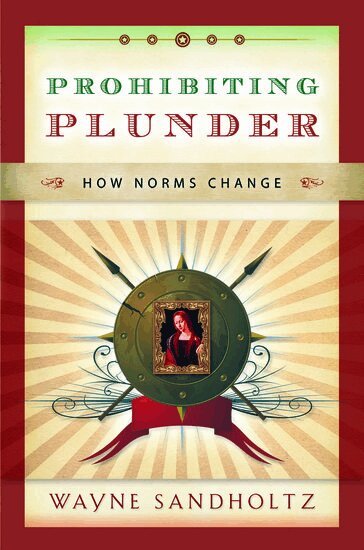
For much of history, the rules of war decreed that "to the victor go the spoils." The winners in warfare routinely seized for themselves the artistic and cultural treasures of the defeated; plunder constituted a marker of triumph. By the twentieth century, international norms declared the opposite, that cultural monuments should be shielded from destruction or seizure. Prohibiting Plunder traces and explains the emergence of international rules against wartime looting of cultural treasures, and explores how anti-plunder norms have developed over the past 200 years. The book covers highly topical events including the looting of thousands of antiquities from the Iraqi National Museum in Baghdad, and the return of "Holocaust Art" by prominent museums, including the highly publicized return of five Klimt paintings from the Austrian Gallery to a Holocaust survivor. The historical narrative includes first-hand reports, official documents, and archival records. Equally important, the book uncovers the debates and negotiations that produced increasingly clear and well-defined anti-plunder norms. The historical accounts in Prohibiting Plunder serve as confirming examples of an important dynamic of international norm change. Rules evolve in cycles; in each cycle, specific actions trigger arguments about the meaning and application of rules, and those arguments in turn modify the rules. International norms evolve through a succession of such cycles, each one drawing on previous developments and each one reshaping the normative context for subsequent actions and disputes. Prohibiting Plunder shows how historical episodes interlinked to produce modern, treaty-based rules against wartime plunder of cultural treasures.
1 280 kr
Skickas inom 5-8 vardagar
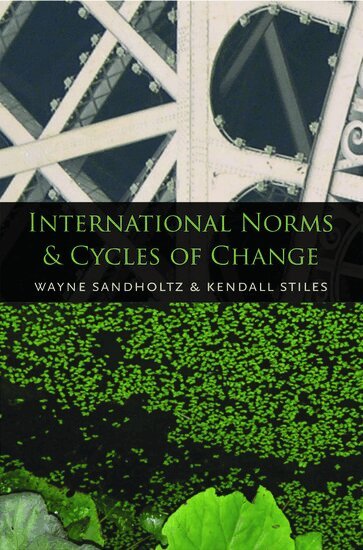
International lawyers and international relations scholars recognize that international norms change over time. Practices that were once permissible and even "normal" - like slavery, conquest, and wartime plundering - are now prohibited by international rules. Yet though we acknowledge norm change, we are just beginning to understand how and why international rules develop in the ways that they do. Wayne Sandholtz and Kendall Stiles sketch the primary theoretical perspectives on international norm change, the "legalization" and "transnational activist" approaches, and argue that both are limited by their focus on international rules as outcomes. The authors then present their "cycle theory," in which norm change is continual, a product of the constant interplay among rules, behavior, and disputes. International Norms and Cycles of Change is the natural follow-on to Prohibiting Plunder, testing the cycle theory against ten empirical cases. The cases range from piracy and conquest, to terrorism, slavery, genocide, humanitarian intervention, and the right to democracy. The key finding is that, across long stretches of time and diverse substantive areas, norm change occurs via the cycle dynamic. International Norms and Cycles of Change further advances the authors' theoretical approach by arguing that international norms have been shaped by two main currents: sovereignty rules and liberal rules. Sovereignty rules are the necessary norms for establishing an international society of sovereign states and deal with the rights, prerogatives, and duties of states. Liberal rules are norms that emerged out of the Enlightenment and enshrine the basic value, dignity, and inherent rights of each person. Sandholtz and Stiles include five cases of sovereignty rules and five of liberal rules in order to reveal the broad cyclic pattern of international change in these two categories of rules.
1 556 kr
Skickas inom 7-10 vardagar
The European Union began in 1957 as a treaty among six nations but today constitutes a supranational polity - one that creates rules that are binding on its 15 member countries and their citizens. This majesterial study confronts some of the most enduring questions posed by the remarkable evolution of the EU: Why does policy-making sometimes migrate from the member states to the European Union? And why has integration proceeded more rapidly in some policy domains than in others? A distinguished team of scholars lead by Wayne Sandholtz and Alec Stone Sweet offers a fresh theory and clear propositions on the development of the EU. Combining broad data and probing case studies, the volume finds solid support for these propositions in a variety of policy domains. The coherent theoretical approach and extensive empirical analyses together constitute a significant challenge to approaches that see the EU as a straightforward product of member-state interests, power, and bargaining. This volume clearly demonstrates that a nascent transnational society and supranational institutions have played decisive roles in constructing the European Union.
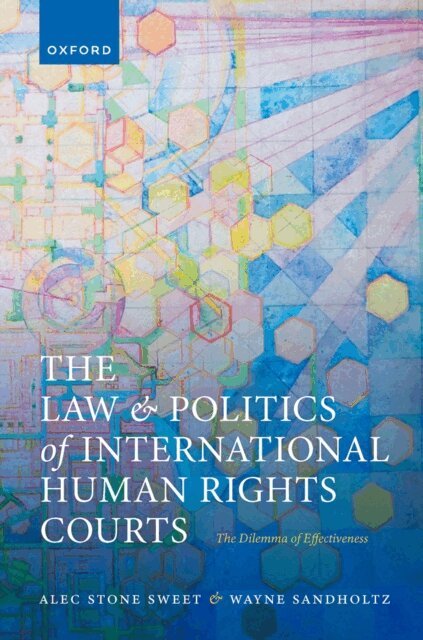
The Law and Politics of International Human Rights Courts
The Dilemma of Effectiveness
Inbunden, Engelska, 2024
1 241 kr
Skickas inom 7-10 vardagar
Combining perspectives from law and the social sciences, this book provides an account of the origins and evolution of six regional human rights courts. In each of these cases, judges sought to overcome political forces and legal obstacles that threatened to render the regime stillborn. Alec Stone Sweet and Wayne Sandholtz focus on the struggle to raise standards of rights protection within multi-level "transnational systems of justice." A transnational system of justice is comprised of three components: a charter of rights; a court tasked with enforcing the charter; and the right of individuals to petition the court with a claim that their rights have been violated. The book analyzes the law and politics of such systems in diverse areas, including torture, inhuman treatment, non-discrimination, due process and access to justice, free expression, privacy and family, and other freedoms. In some cases, state officials have at times strongly supported enhancing the effectiveness of rights protections. In others, the activities of the courts have generated significant political "backlash," leading state officials to act to curb the court's authority, or to exit the regime altogether. The book describes and evaluates these attempts, the results of which have been mixed, with most court-curbing exercises failing.
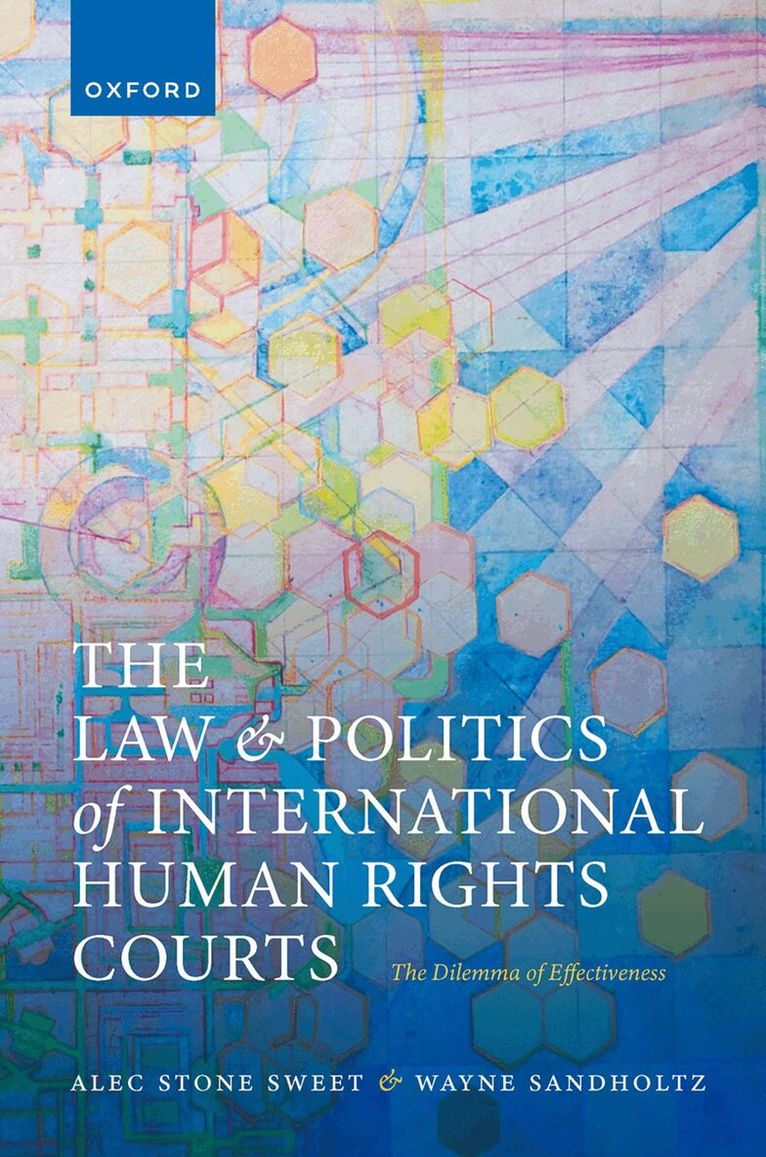
The Law and Politics of International Human Rights Courts
The Dilemma of Effectiveness
Häftad, Engelska, 2024
443 kr
Skickas inom 5-8 vardagar
Combining perspectives from law and the social sciences, this book provides an account of the origins and evolution of six regional human rights courts. In each of these cases, judges sought to overcome political forces and legal obstacles that threatened to render the regime stillborn. Alec Stone Sweet and Wayne Sandholtz focus on the struggle to raise standards of rights protection within multi-level "transnational systems of justice." A transnational system of justice is comprised of three components: a charter of rights; a court tasked with enforcing the charter; and the right of individuals to petition the court with a claim that their rights have been violated. The book analyzes the law and politics of such systems in diverse areas, including torture, inhuman treatment, non-discrimination, due process and access to justice, free expression, privacy and family, and other freedoms. In some cases, state officials have at times strongly supported enhancing the effectiveness of rights protections. In others, the activities of the courts have generated significant political "backlash," leading state officials to act to curb the court's authority, or to exit the regime altogether. The book describes and evaluates these attempts, the results of which have been mixed, with most court-curbing exercises failing.
1 937 kr
Skickas inom 5-8 vardagar
In 1950, a European political space existed, if only as a very primitive site of international governance. Today, the European Union governs in an ever-growing number of policy domains. Increasingly dense networks of transnational actors representing electorates, member state governments, firms, and specialized interests operate in arenas that are best understood as supranational. At the same time, the capacity of European organizations - the Bank, the Commission, and the Court of Justice - to make authoritative policy decisions has steadily expanded, profoundly transforming the very nature of the European polity.This book, a companion volume to European Integration and Supranational Governance, offers readers a sophisticated theoretical account of this transformation, as well as original empirical research. The editors elaborate an innovative synthesis of institutionalist theory that contributors use to explain the sources and consequences of the emergence and institutionalization of European political arenas. Some chapters examine the evolution of integration and supranational governance across time and policy domain. Others recount more discrete episodes, including: the development of women's rights, the judicial review of administrative acts, a stable system of interest group representation, and enhanced cooperation in foreign policy and security; the creation of the European Central Bank; the emergence of new policy competences, such as for policing and immigration; and the multi-dimensional impact of European policies on national modes of governance.
1 185 kr
Skickas inom 7-10 vardagar
In 1950, a European political space existed, if only as a very primitive site of international governance. Today, the European Union governs in an ever-growing number of policy domains. Increasingly dense networks of transnational actors representing electorates, member state governments, firms, and specialized interests operate in arenas that are best understood as supranational. At the same time, the capacity of European organizations - the Bank, the Commission, and the Court of Justice - to make authoritative policy decisions has steadily expanded, profoundly transforming the very nature of the European policy. This book, a companion volume to "European Integration and Supranational Governance", offers readers a sophisticated theoretical account of this transformation, as well as original empirical research. The editors elaborate an synthesis of institutionalist theory that contributors use to explain the sources and consequences of the emergence and institutionalization of European political arenas. The text examines the evolution of integration and supranational governance across time and policy domain.
Del 24 - Studies in International Political Economy
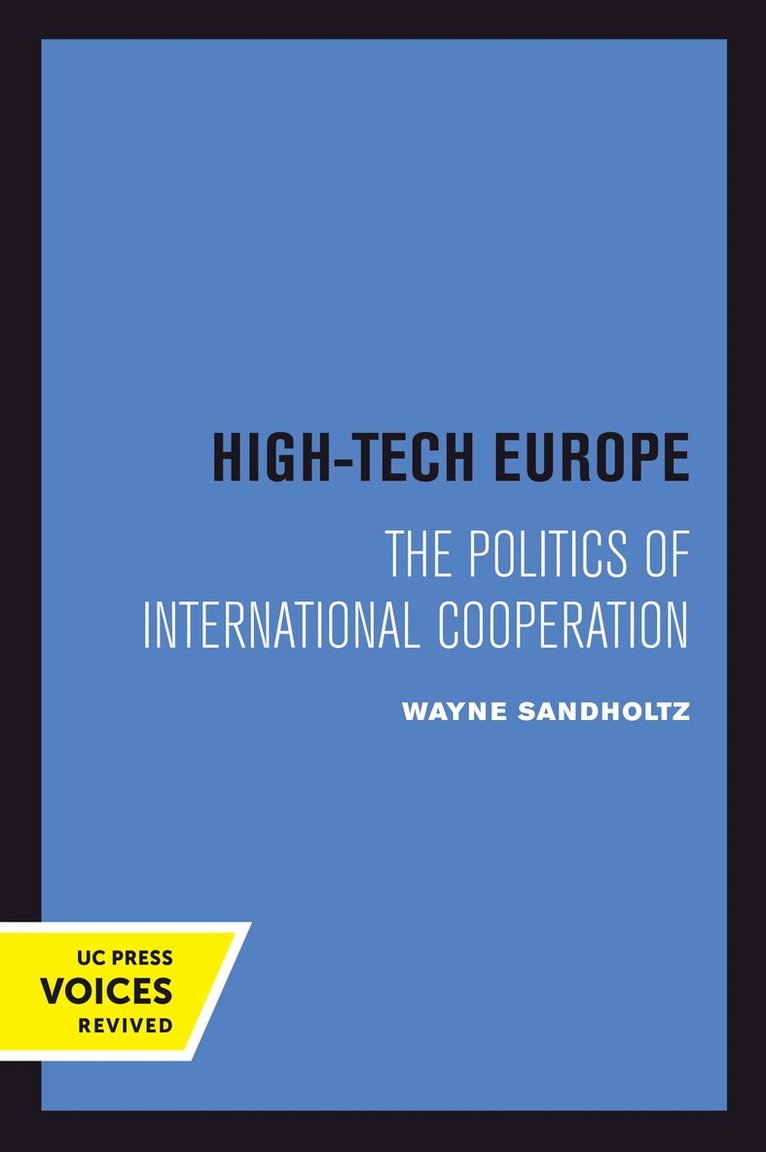
High-Tech Europe
The Politics of International Cooperation
Häftad, Engelska, 2018
665 kr
Skickas inom 3-6 vardagar
Governments have recognized for decades the dynamic role played by microelectronics, computers, and telecommunications in the modern economy. Although Europe's deficiencies in these crucial sectors had long been acknowledged, it was not until the 1980s that European nations began collaborating to develop and promote high-tech industries. Their collaboration gives rise to many questions. Why, for example, did the joint efforts come at such a late date rather than in the 1960s or '70s? And how is it possible to work together in economically sensitive areas? These questions point to fundamental issues in the areas of international cooperation, international institutions, and technology policy.Before the institution of the collaborative programs ESPRIT (European Strategic Programme for Research and Development in Information Technology), RACE (R & D in Advanced Communications-technologies in Europe), and EUREKA (European Research Coordination Agency) in the 1980s, each European country sought its own technological renaissance through protection of national firms behind walls of technical standards, procurement preferences, and research subsidies. This thorough, carefully researched work examines the breakdown of these walls. It will appeal to political scientists, economists, and scholars of technology and Western Europe interested in the political contours of the high-tech landscape. This title is part of UC Press's Voices Revived program, which commemorates University of California Press’s mission to seek out and cultivate the brightest minds and give them voice, reach, and impact. Drawing on a backlist dating to 1893, Voices Revived makes high-quality, peer-reviewed scholarship accessible once again using print-on-demand technology. This title was originally published in 1992.
Del 24 - Studies in International Political Economy
High-Tech Europe
The Politics of International Cooperation
Inbunden, Engelska, 2024
1 469 kr
Skickas inom 3-6 vardagar
Governments have recognized for decades the dynamic role played by microelectronics, computers, and telecommunications in the modern economy. Although Europe's deficiencies in these crucial sectors had long been acknowledged, it was not until the 1980s that European nations began collaborating to develop and promote high-tech industries. Their collaboration gives rise to many questions. Why, for example, did the joint efforts come at such a late date rather than in the 1960s or '70s? And how is it possible to work together in economically sensitive areas? These questions point to fundamental issues in the areas of international cooperation, international institutions, and technology policy.Before the institution of the collaborative programs ESPRIT (European Strategic Programme for Research and Development in Information Technology), RACE (R & D in Advanced Communications-technologies in Europe), and EUREKA (European Research Coordination Agency) in the 1980s, each European country sought its own technological renaissance through protection of national firms behind walls of technical standards, procurement preferences, and research subsidies. This thorough, carefully researched work examines the breakdown of these walls. It will appeal to political scientists, economists, and scholars of technology and Western Europe interested in the political contours of the high-tech landscape. This title is part of UC Press's Voices Revived program, which commemorates University of California Press’s mission to seek out and cultivate the brightest minds and give them voice, reach, and impact. Drawing on a backlist dating to 1893, Voices Revived makes high-quality, peer-reviewed scholarship accessible once again using print-on-demand technology. This title was originally published in 1992.
1 036 kr
Skickas inom 7-10 vardagar
The Rule of Law Under Pressure provides readers with an accessible and richly detailed assessment of recent challenges to the rule of law. The rule of law is closely tied to both democracy and human rights. The erosion of the rule of law, within a rising number of countries and in international relations, places populations under increasingly authoritarian and rights-abusing governments and threatens to destabilize peaceful relations among states. The book brings conceptual clarity to this complex and multidimensional topic and assesses recent trends in the rule of law at both national and international levels. The opening chapter clearly sets out the key concepts and evaluates broad transnational trends in the rule of law. Succeeding chapters assess rule of law developments at the international level and within key countries around the world. This title is also available as Open Access on Cambridge Core.
319 kr
Skickas inom 7-10 vardagar
The Rule of Law Under Pressure provides readers with an accessible and richly detailed assessment of recent challenges to the rule of law. The rule of law is closely tied to both democracy and human rights. The erosion of the rule of law, within a rising number of countries and in international relations, places populations under increasingly authoritarian and rights-abusing governments and threatens to destabilize peaceful relations among states. The book brings conceptual clarity to this complex and multidimensional topic and assesses recent trends in the rule of law at both national and international levels. The opening chapter clearly sets out the key concepts and evaluates broad transnational trends in the rule of law. Succeeding chapters assess rule of law developments at the international level and within key countries around the world. This title is also available as Open Access on Cambridge Core.
3 263 kr
Skickas inom 7-10 vardagar
What is the relationship between politics and international law? Rather than exploring this question through the lens of the dominant paradigms of international relations theory - realism, liberalism, and constructivism - this book proposes a different approach. Based on the premise that the relationship varies depending on the sites where it unfolds, and inspired by comparative politics and socio-legal studies, the book develops a novel framework for comparative analysis of politics and international law at different stages of governance and in different governance systems. Expert contributors apply this analytical framework to diverse fields of law and politics. Part I examines the problems of compliance, effectiveness and the domestic enforcement of international law, and legal institutions including domestic and international courts, national legislatures and regime complexes. Part II covers substantive fields of governance such as global financial regulation, environmental standards, trade, intellectual property and human rights. The final chapters in this Part tackle emerging yet critical issues in international law, including terrorism, cyber conflict and Internet regulation. Together, the chapters represent a significant step forward in the comparative analysis of politics and international law. This Research Handbook will be essential reading for students and academics in political science and law alike.Contributors include: W.C. Banks, R. Brewster, A. Chander, K.L. Cope, M. Elsig, B. Faude, T. Gehring, C. Hillebrecht, S. Katzenstein, M.R. Madsen, W. Mattli, J.J. Paust, M.J. Peterson, S. Puig, W. Sandholtz, J. Seddon, S.K. Sell, G. Shaffer, D. Sloss, M. Van Alstine, P.-H. Verdier, M. Versteeg, C.A. Whytock