Alenka Barber-Kersovan – författare
548 kr
Skickas inom 10-15 vardagar
687 kr
Läs direkt efter köp
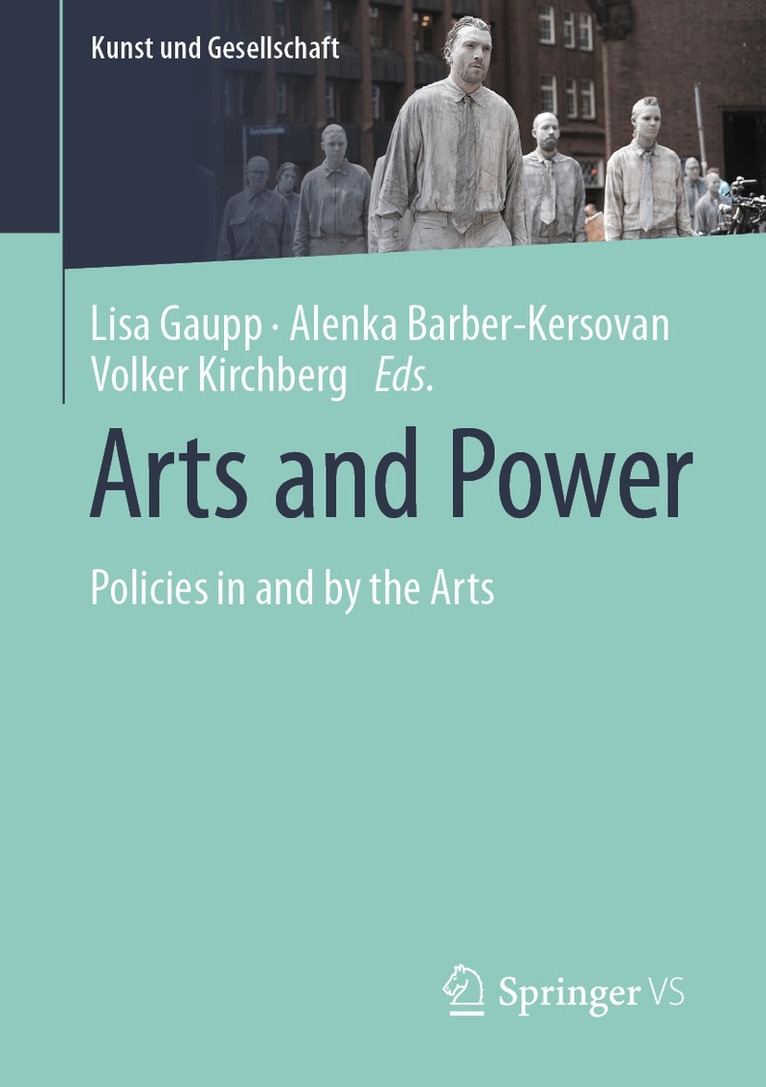
The focus on concepts of power and domination in societal structures has characterized sociology since its beginnings. Max Weber’s definition of power as “imposing one’s will on others” is still relevant to explaining processes in the arts, whether their production, imagination, communication, distribution, critique or consumption. Domination in the arts is exercised by internal and external rulers through institutionalized social structures and through beliefs about their legitimacy, achieved by defining and shaping art tastes.
The complexity of how the arts relate to power arises from the complexity of the policies of artistic production, distribution and consumption—policies which serve to facilitate or hinder an aesthetic object from reaching its intended public. Curators, critics and collectors employ a variety of forms of cultural and artistic communication to mirror and shape the dominant social, economic and political conditions.
Arts and Power: Policies in and by the Arts brings together diverse voices who position the societal functions of art in fields of domination and power, of structure and agency—whether they are used to impose hegemonic, totalitarian or unjust goals or to pursue social purposes fostering equal rights and grassroots democracy. The contributions in this volume are exploratory steps towards what we believe can be a more systematic, empirically and theoretically founded sociological debate on the arts and power. And they are an invitation to take further steps.
428 kr
Läs direkt efter köp
Die zunehmende Instrumentalisierung von Musik als Marketinginstrument und die Inszenierung urbaner Konglomerate als »Music Cities« dienen vor allem dem neoliberalen »City Branding«. Die komplexen Zusammenhänge zwischen Musik und Stadt wurden bislang nur punktuell untersucht.Dieser transdisziplinäre Band mit Beiträgen international renommierter Autoren und Autorinnen verbindet theoretische Grundlagen mit empirischen Ergebnissen, ausgewählten Fallstudien und historischen Abhandlungen. Mit der Fokussierung auf die Musik erweitert das Buch nicht nur den gängigen Diskurs um »Creative Cities«, sondern bringt auch wichtige Impulse für die kulturpolitische Praxis.
Der Band enthält folgende Beiträge:
Volker Kirchberg, Alenka Barber-Kersovan, Robin Kuchar, Music City - Musikalische Annäherung an die kreative Stadt (Vorwort)Adam Krims, What Is a Musically Creative City?Simon Frith, Musical Creativity as a Social FactAlenka-Barber-Kersovan, Topos Musikstadt als Politikum - Eine historische PerspektiveBastian Lange, Konfigurationen von Wertschöpfung - Musikproduktion zwischen Orten und SzenenAndy Bennett, Popular Music, the Peripheral City and Cultural Memory - A Case Study of Perth, AustraliaMartin Cloonan, Making Glasgow a City of Music - Some Ruminations on an UNESCO AwardRichard Lloyd, Differentiating Music City - Legacy Industry and Scene in NashvilleVolker Kirchberg, Governing Baltimore by Music - Insights from Governance and Governmentality StudiesAndreas Gebesmair, Immigrant Music City Vienna? Zur Relevanz ethnischer Kulturökonomien in kreativen StädtenRobin Kuchar, Musikproduktion in Hamburg - Musikalische Akteure im Spannungsfeld von Künstlerexistenz und neoliberaler StadtentwicklungAlexander Grimm, Die Hamburger Schule - Vom Entstehen und Vergehen eines Hamburger MusikclustersMalte Friedrich, Wie klingt die Stadt wenn sie vermarktet wird? Zum Zusammenhang von Musik und StadtmarketingSylvia Stiller, Jan Wedemeier, Die Musikwirtschaft in Hamburg - Status Quo und EntwicklungstrendsFriedrich Geiger, Gebaute Bürgerlichkeit - Zur Problemgeschichte der Elbphilharmonie