Alessandra Zanelli – författare
Visar alla böcker från författaren Alessandra Zanelli. Handla med fri frakt och snabb leverans.
10 produkter
10 produkter
Häftad, Engelska, 2020
689 kr
Skickas inom 5-8 vardagar
Inbunden, Engelska, 2020
770 kr
Skickas inom 5-8 vardagar
Inbunden, Engelska, 2019
549 kr
Skickas inom 10-15 vardagar
This open access book explores the strategic importance and advantages of adopting multidisciplinary and multiscalar approaches of inquiry and intervention with respect to the built environment, based on principles of sustainability and circular economy strategies. A series of key challenges are considered in depth from a multidisciplinary perspective, spanning engineering, architecture, and regional and urban economics. These challenges include strategies to relaunch socioeconomic development through regenerative processes, the regeneration of urban spaces from the perspective of resilience, the development and deployment of innovative products and processes in the construction sector in order to comply more fully with the principles of sustainability and circularity, and the development of multiscale approaches to enhance the performance of both the existing building stock and new buildings. The book offers a rich selection of conceptual, empirical, methodological, technical, and case study/project-based research. It will be of value for all who have an interest in regeneration of the built environment from a circular economy perspective.
Häftad, Engelska, 2020
549 kr
Skickas inom 10-15 vardagar
This open access book explores the strategic importance and advantages of adopting multidisciplinary and multiscalar approaches of inquiry and intervention with respect to the built environment, based on principles of sustainability and circular economy strategies. A series of key challenges are considered in depth from a multidisciplinary perspective, spanning engineering, architecture, and regional and urban economics. These challenges include strategies to relaunch socioeconomic development through regenerative processes, the regeneration of urban spaces from the perspective of resilience, the development and deployment of innovative products and processes in the construction sector in order to comply more fully with the principles of sustainability and circularity, and the development of multiscale approaches to enhance the performance of both the existing building stock and new buildings. The book offers a rich selection of conceptual, empirical, methodological, technical, and case study/project-based research. It will be of value for all who have an interest in regeneration of the built environment from a circular economy perspective.
Inbunden, Engelska, 2022
1 904 kr
Skickas inom 10-15 vardagar
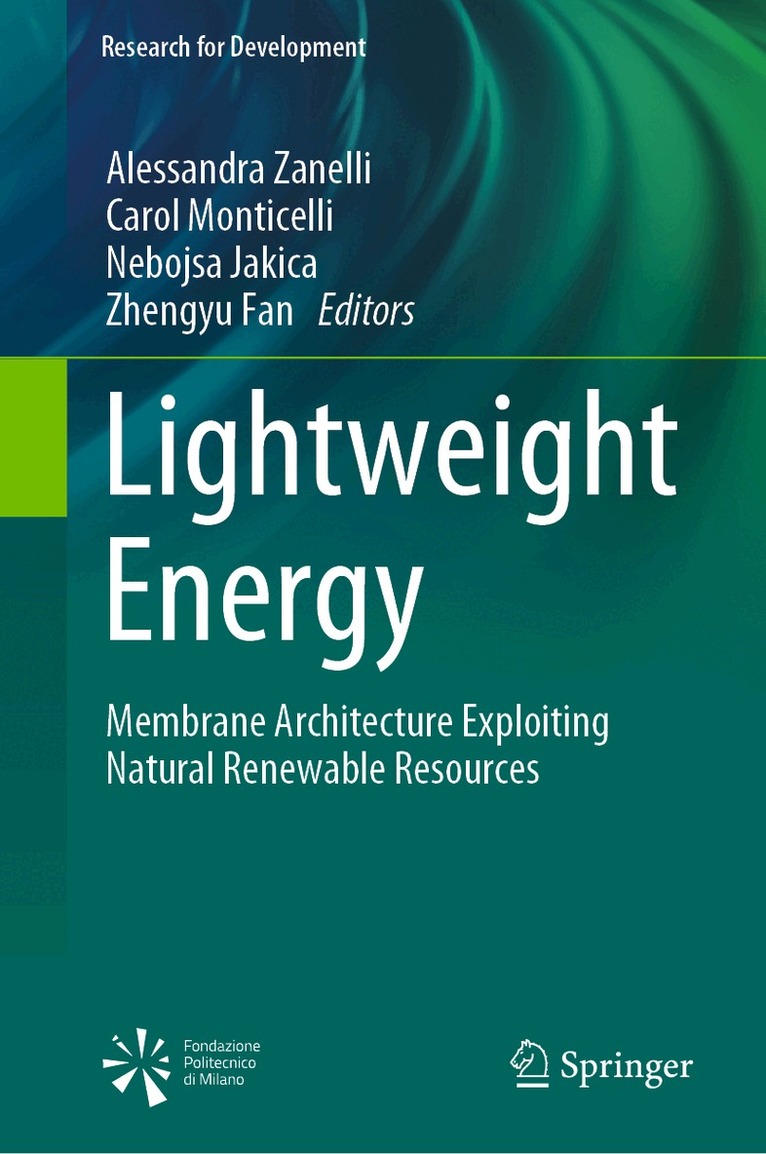
This book explores membrane materials as a means of translating natural and renewable resources into a more flexible, dynamic, and reactive architectural skin. It represents the first time that energy-saving design has been addressed systematically in relation to lightweight building systems and tensile membranes. Understanding of the energetic behavior of membranes and foils used as a building envelope is a fundamental theme, as it is the integration of flexible photovoltaics in membranes, as well as the exploitation of water and wind resources. A theoretical, methodological framework for consciously designing the membrane life cycle is presented. The authors cross-cut and combine exploration of climate-based design methodology and life cycle thinking strategies. Both active and passive systems are investigated, referring to alternative productive resources like sun, wind, and water. Case studies are brought forward in the book’s second half, highlighting energy lightness for anincreasingly dematerialized architecture and addressing inherent issues. Four main research and development paths are presented, the first two focusing on advancements in façade materials and Photovoltaic systems applicable to membrane architecture, the third referring to fog and dew harvesting and the fourth dealing with the future frontier of flexible transparency and designs for well-being through a passive solar system.
1 785 kr
Läs direkt efter köp
This book explores membrane materials as a means of translating natural and renewable resources into a more flexible, dynamic, and reactive architectural skin. It represents the first time that energy-saving design has been addressed systematically in relation to lightweight building systems and tensile membranes. Understanding of the energetic behavior of membranes and foils used as a building envelope is a fundamental theme, as it is the integration of flexible photovoltaics in membranes, as well as the exploitation of water and wind resources. A theoretical, methodological framework for consciously designing the membrane life cycle is presented. The authors cross-cut and combine exploration of climate-based design methodology and life cycle thinking strategies. Both active and passive systems are investigated, referring to alternative productive resources like sun, wind, and water. Case studies are brought forward in the book’s second half, highlighting energy lightness for anincreasingly dematerialized architecture and addressing inherent issues. Four main research and development paths are presented, the first two focusing on advancements in façade materials and Photovoltaic systems applicable to membrane architecture, the third referring to fog and dew harvesting and the fourth dealing with the future frontier of flexible transparency and designs for well-being through a passive solar system.
644 kr
Skickas inom 5-8 vardagar
Häftad, Engelska, 2023
1 346 kr
Skickas inom 10-15 vardagar
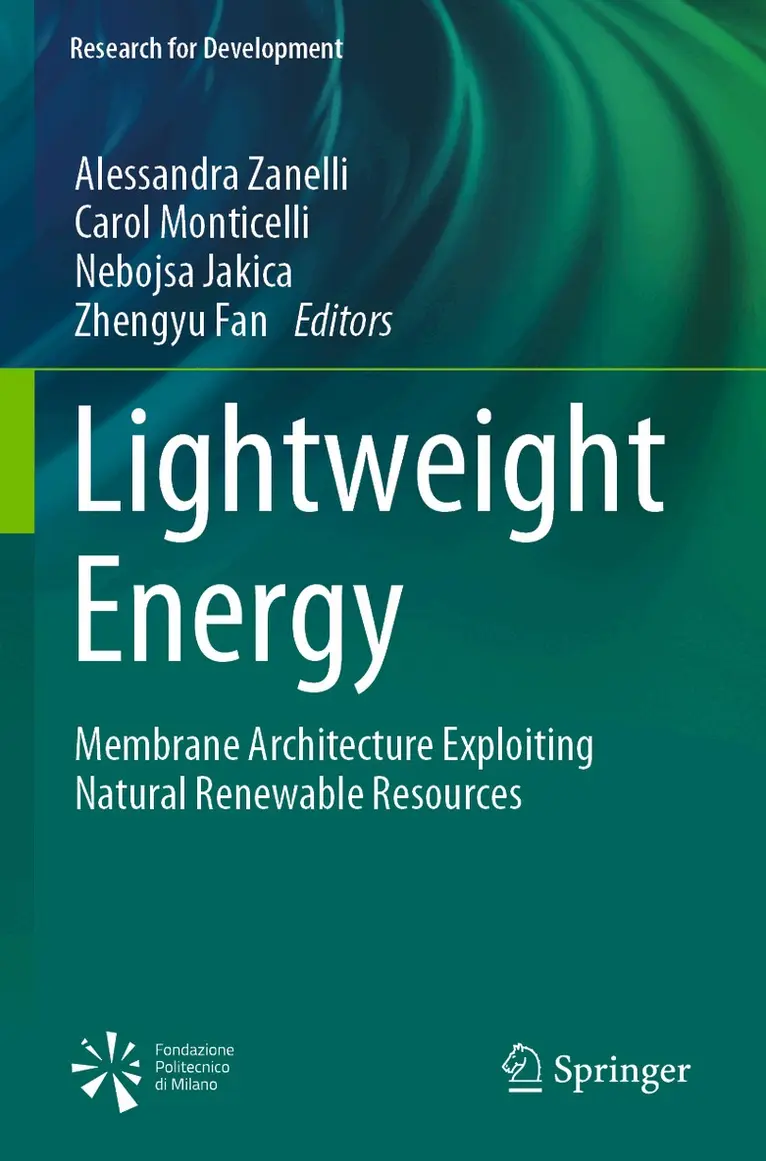
This book explores membrane materials as a means of translating natural and renewable resources into a more flexible, dynamic, and reactive architectural skin. It represents the first time that energy-saving design has been addressed systematically in relation to lightweight building systems and tensile membranes. Understanding of the energetic behavior of membranes and foils used as a building envelope is a fundamental theme, as it is the integration of flexible photovoltaics in membranes, as well as the exploitation of water and wind resources. A theoretical, methodological framework for consciously designing the membrane life cycle is presented. The authors cross-cut and combine exploration of climate-based design methodology and life cycle thinking strategies. Both active and passive systems are investigated, referring to alternative productive resources like sun, wind, and water. Case studies are brought forward in the book’s second half, highlighting energy lightness for anincreasingly dematerialized architecture and addressing inherent issues. Four main research and development paths are presented, the first two focusing on advancements in façade materials and Photovoltaic systems applicable to membrane architecture, the third referring to fog and dew harvesting and the fourth dealing with the future frontier of flexible transparency and designs for well-being through a passive solar system.
Häftad, Engelska, 2015
549 kr
Skickas inom 10-15 vardagar
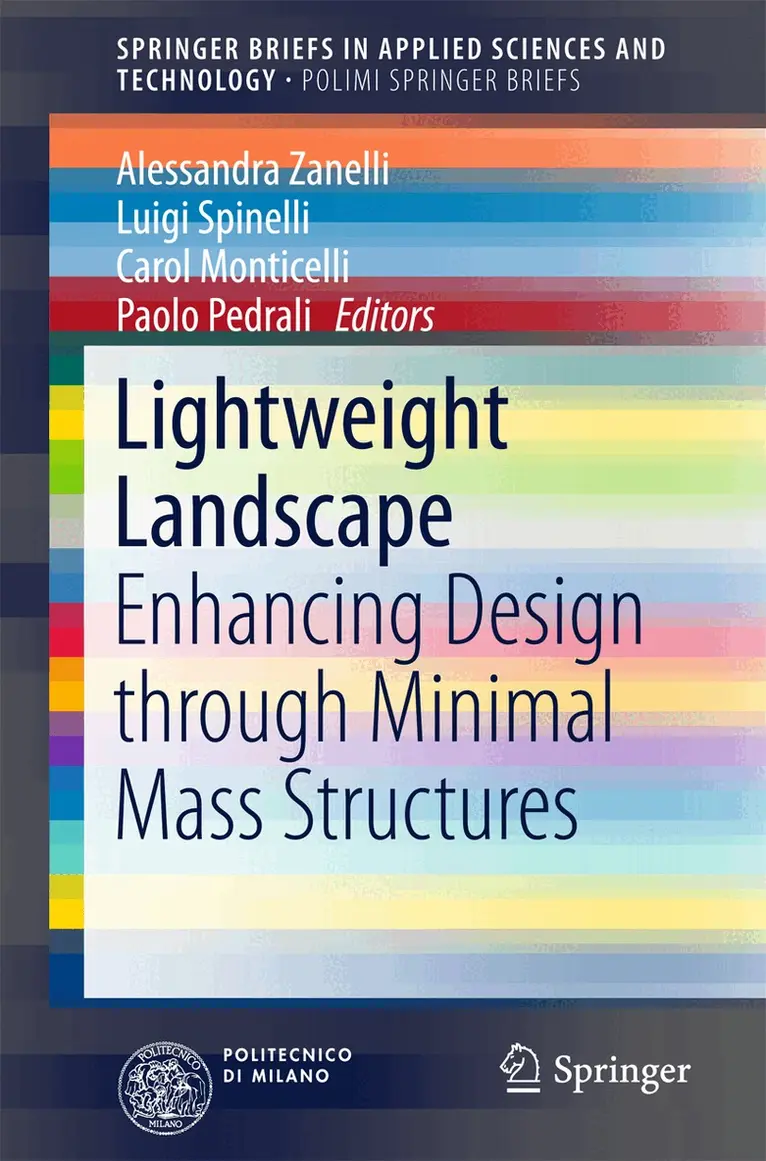
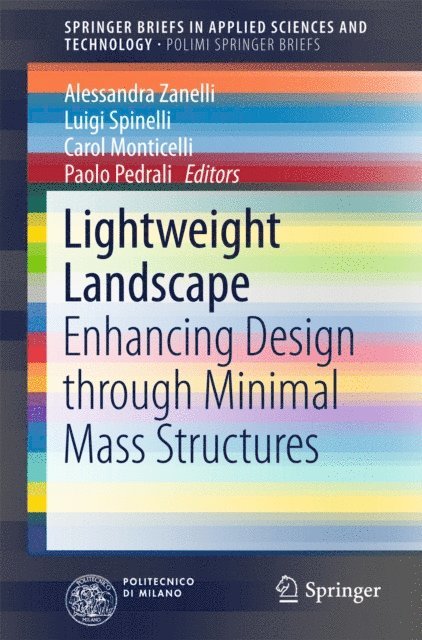
This book explains how lightweight materials and structures can be deployed in buildings to meet high environmental and aesthetic standards and emphasizes how the concept of lightness in building technology and design dovetails with the desire to enhance landscape. The first part of the book, on lightweight construction, aims to foster the use of membranes within the specific climatic context and in particular considers how lightweight materials and innovative technologies can enrich the quality of temporary spaces. The second part focuses exclusively on landscape, presenting novel approaches in the search for visual lightness and the quest to improve urban spaces. Particular attention is paid to the Italian experience, where the traditional appreciation of brick and stone has limited the scope for use of lightweight structures and membrane materials, often relegating them to a secondary or inappropriate role. The reader will come to appreciate how this attitude demeans a very advanced productive sector and neglects the ancient tradition of temporary architecture.
E-bok
PDF, Engelska, 2015687 kr
Läs direkt efter köp
This book explains how lightweight materials and structures can be deployed in buildings to meet high environmental and aesthetic standards and emphasizes how the concept of lightness in building technology and design dovetails with the desire to enhance landscape. The first part of the book, on lightweight construction, aims to foster the use of membranes within the specific climatic context and in particular considers how lightweight materials and innovative technologies can enrich the quality of temporary spaces. The second part focuses exclusively on landscape, presenting novel approaches in the search for visual lightness and the quest to improve urban spaces. Particular attention is paid to the Italian experience, where the traditional appreciation of brick and stone has limited the scope for use of lightweight structures and membrane materials, often relegating them to a secondary or inappropriate role. The reader will come to appreciate how this attitude demeans a very advanced productive sector and neglects the ancient tradition of temporary architecture.