Alex K. Tang – författare
Visar alla böcker från författaren Alex K. Tang. Handla med fri frakt och snabb leverans.
4 produkter
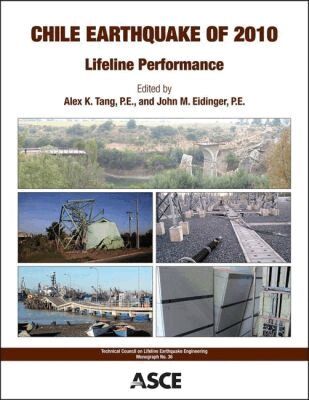
Chile Earthquake of 2010
Lifeline Performance
Av Alex K. Tang, John M. Eidinger
Häftad, 2013
1597 kr
Lägg i varukorg
When a magnitude 8.8 earthquake occurred off the coast of Chile on February 27, 2010, it affected 80 percent of Chile’s population. Damage to lifelines was caused by strong ground shaking, permanent ground deformation, lateral spread, and a tsunami in the coastal areas of Bio Bio and Maule. …
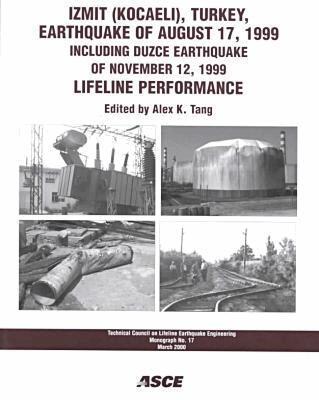
Izmit (Kocaeli) Turkey Earthquake of August 17 1999, Including Duzce Earthquake
Lifeline Performance
Av Alex K. Tang
Häftad, 2000
1263 kr
Tillfälligt slut
On August 17, 1999, the Izmit (Kocaeli) Earthquake tore through Kocaeli, Turkey, resulting in over 15,000 deaths and 27,000 injuries; 200,000 people were left homeless. The electric power system, nearly destroyed, sustained over US$70 million in damage. Another earthquake, November 12, to the east …
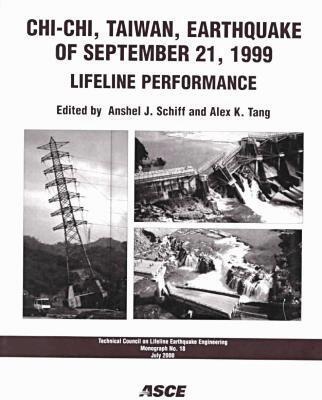
Chi Chi Taiwan Earthquake of September 21, 1999
Lifeline Performance
Av Anshel J. Schiff, Alex K. Tang
Häftad, 2000
998 kr
Tillfälligt slut
On September 21, 1999 central Taiwan was struck by a devastating earthquake resulting in over 2400 deaths, thousands of collapsed and severely damaged buildings, and economic losses of over US$20 billion. This book describes the earthquake performance, emergency response, and recovery for the …
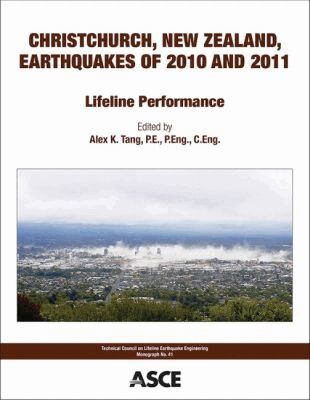
Christchurch, New Zealand, Earthquakes of 2010 and 2011
Lifeline Performance
Av Alex K. Tang
Häftad, 2016
1416 kr
Tillfälligt slut
Sponsored by the Infrastructure Resilience Division of ASCEDuring 2010 and 2011, a sequence of strong earthquakes affected two communities in the province of Canterbury on the South Island of New Zealand. Christchurch, which is the second largest city in New Zealand, and Kaiapoi, in the Waimakariri …