Alex Kirlik – författare
Visar alla böcker från författaren Alex Kirlik. Handla med fri frakt och snabb leverans.
11 produkter
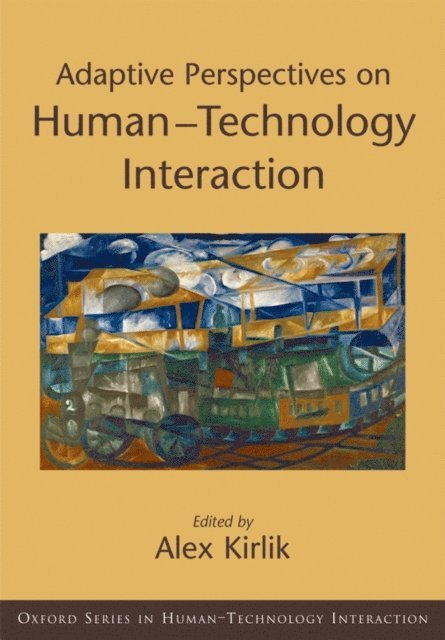
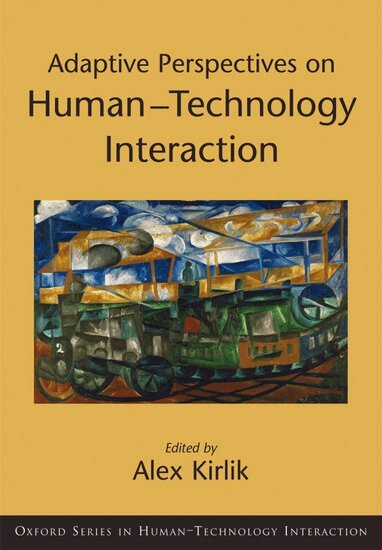
Adaptive Perspectives on Human-Technology Interaction
Methods and Models for Cognitive Engineering and Human-Computer Interaction
Av Alex Kirlik
E-bok, 2006
567 kr
Lägg i varukorg
In everyday life, and particularly in the modern workplace, information technology and automation increasingly mediate, augment, and sometimes even interfere with how humans interact with their environment. How to understand and support cognition in human-technology interaction is both a …
Attention
From Theory to Practice
Av Alex Kirlik, Douglas A. Wiegmann m. fl.
E-bok, 2006
1123 kr
Lägg i varukorg
The study of attention in the laboratory has been crucial to understanding the mechanisms that support several different facets of attentional processing: Our ability to both divide attention among multiple tasks and stimuli, and selectively focus it on task-relevant information, while ignoring …
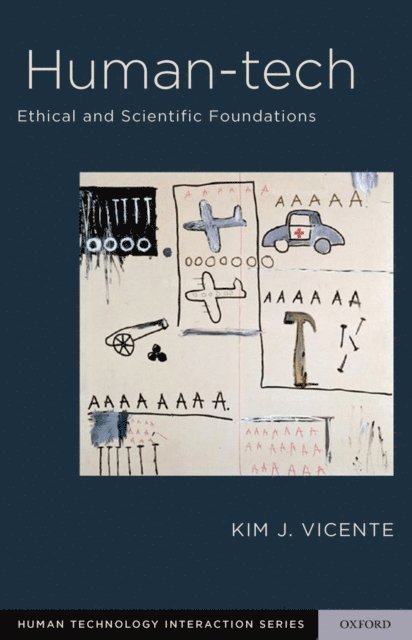
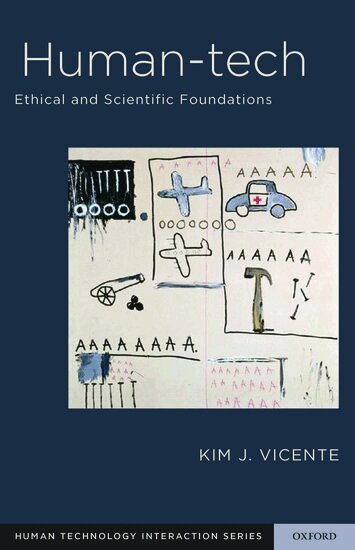
Human-Tech
Ethical and Scientific Foundations
E-bok, 2010
1009 kr
Lägg i varukorg
In The Human Factor , Kim Vicente coined the term ''Human-tech'' to describe a more encompassing and ambitious approach to the study of Human-Technology Interaction (HTI) than is now evident in any of its participating disciplines, such as human factors, human-computer interaction, cognitive …
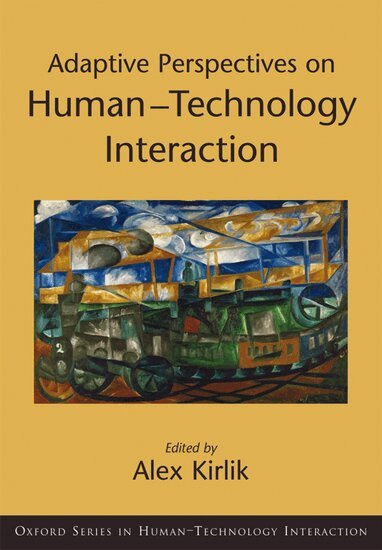
Adaptive Perspectives on Human-Technology Interaction
Methods and Models for Cognitive Engineering and Human-Computer Interaction
Av Alex Kirlik
Inbunden, 2006
1167 kr
Lägg i varukorg
In everyday life, and particularly in the modern workplace, information technology and automation increasingly mediate, augment, and sometimes even interfere with how humans interact with their environment. How to understand and support cognition in human-technology interaction is both a …
Attention
From Theory to Practice
Av Arthur F. Kramer, Douglas A. Wiegmann m. fl.
Inbunden, 2007
1600 kr
Lägg i varukorg
Attention has been one of the most popular subjects in basic cognitive-psychology research, and so its study has generated much empirical data and many theoretical explanations. It has also become a very important factor for those who study how we interact with technological systems and …
Adaptive Perspectives on Human-Technology Interaction
Methods and Models for Cognitive Engineering and Human-Computer Interaction
Av Alex Kirlik
E-bok, 2006
567 kr
Lägg i varukorg
In everyday life, and particularly in the modern workplace, information technology and automation increasingly mediate, augment, and sometimes even interfere with how humans interact with their environment. How to understand and support cognition in human-technology interaction is both a …
Adaptive Perspectives on Human-Technology Interaction
Methods and Models for Cognitive Engineering and Human-Computer Interaction
Av Alex Kirlik
Häftad, 2010
930 kr
Lägg i varukorg
In everyday life, and particularly in the modern workplace, information technology and automation increasingly mediate, augment, and sometimes even interfere with how humans interact with their environment. How to understand and support cognition in human-technology interaction is both a …
Attention
From Theory to Practice
Av Alex Kirlik, Douglas A. Wiegmann m. fl.
E-bok, 2006
1123 kr
Lägg i varukorg
The study of attention in the laboratory has been crucial to understanding the mechanisms that support several different facets of attentional processing: Our ability to both divide attention among multiple tasks and stimuli, and selectively focus it on task-relevant information, while ignoring …
The Oxford Handbook of Cognitive Engineering
Inbunden, 2013
3055 kr
Lägg i varukorg
Cognitive engineering is an interdisciplinary approach to the analysis, modeling, and design of engineered systems or workplaces in which humans and technologies jointly operate to achieve system goals. As individuals, teams, and organizations become increasingly reliant on information technology …
Human-Tech
Ethical and Scientific Foundations
Inbunden, 2010
1796 kr
Lägg i varukorg
In The Human Factor, Kim Vicente coined the term 'Human-tech' to describe a more encompassing and ambitious approach to the study of Human-Technology Interaction (HTI) than is now evident in any of its participating disciplines, such as human factors, human-computer interaction, cognitive science …
Human-Tech
Ethical and Scientific Foundations
E-bok, 2010
1009 kr
Lägg i varukorg
In The Human Factor , Kim Vicente coined the term ''Human-tech'' to describe a more encompassing and ambitious approach to the study of Human-Technology Interaction (HTI) than is now evident in any of its participating disciplines, such as human factors, human-computer interaction, cognitive …