Alexandre Fortes - Böcker
Visar alla böcker från författaren Alexandre Fortes. Handla med fri frakt och snabb leverans.
4 produkter
4 produkter
Del 25 - International Review of Social History Supplements
Brazilian Labour History
New Perspectives in Global Context
Häftad, Engelska, 2019
278 kr
Skickas inom 7-10 vardagar
This volume examines Brazilian labour history, integrating issues of gender, race, and ethnicity by addressing topics such as free and unfree labour in the nineteenth-century Amazon, the transnational contexts of urban sex work, the intersection of 'class' and 'community' in a São Paulo workers' bairro, and the (legal) struggles of sugar cane workers in Pernambuco. At the same time, this volume presents a renewed historiography of movements and organisations (often with an emphasis on transnational dimensions), covering issues from revolutionary syndicalism in Rio, through the role of World War II in the formation of Brazilian populism, to the intervention of US 'free unionism' during the military dictatorships in Brazil and Argentina. This volume goes beyond a survey of more recent Brazilian labour history and offers articles that enter into conscious dialogue with the debates and findings of scholarship in other world regions.
1 177 kr
Skickas inom 10-15 vardagar
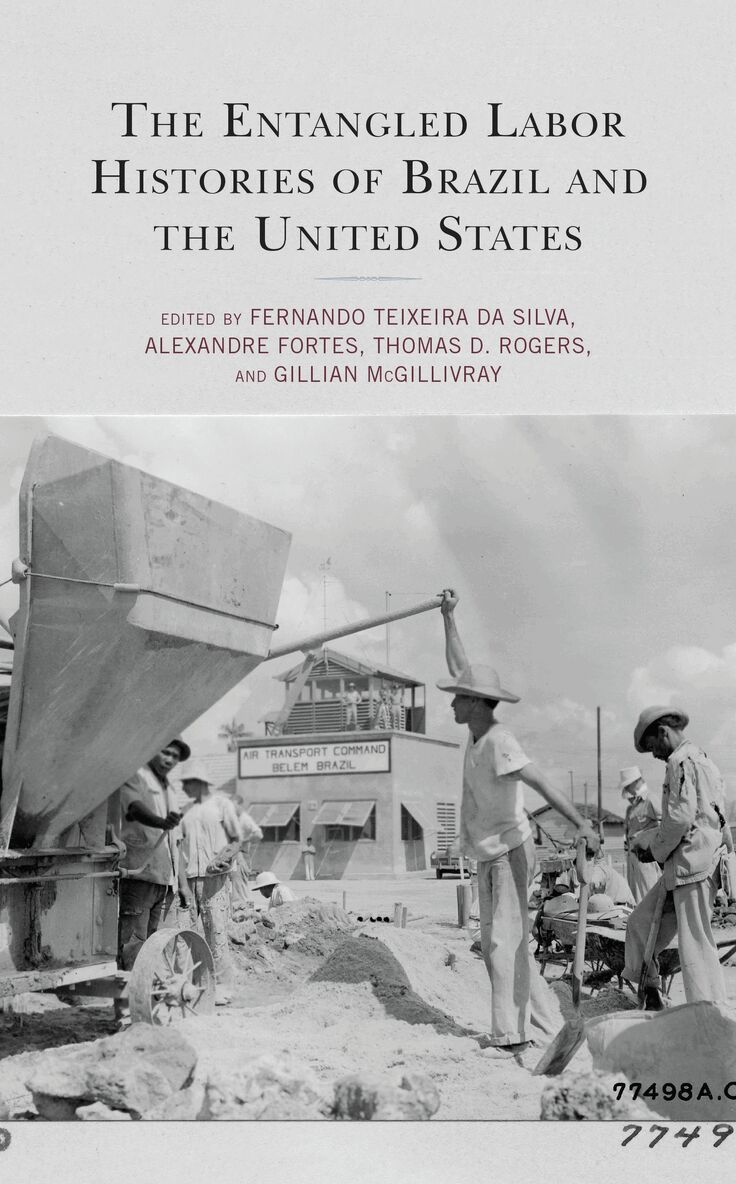
Workers in Brazil and the United States have followed parallel and entangled histories for many centuries. Recent experiences with progressive, popular presidents and authoritarian, populist presidents in the two most populous countries in the hemisphere have underscored important similarities. The contributors in this volume focus on the comparative and transnational histories of labor between and across Brazil and the United States. The countries’ histories bear the marks of slavery, racism, transoceanic immigration, and rapid urbanization, as well as strong regional differentiation and inequalities. These features decisively shaped the working classes. Brazilian and US labor history debates have erupted and subsided at different times. This collection synthesizes those debates while adding new topics and new sources from both countries. The international group of historians’ methodologically innovative chapters explore links, resonances, and divergences between US and Brazilian labor history. They widen the scope of analysis for themes and problems that have long been familiar to historians of work and workers in the two countries, but have not provoked close dialogues between scholars in the respective places. Though the histories themselves were often entangled, the debates about them have too rarely intertwined.
Second World War and the Rise of Mass Nationalism in Brazil
Class, Race and Citizenship
Inbunden, Engelska, 2024
1 550 kr
Skickas inom 5-8 vardagar
This book reexamines the socioeconomic and political transformation that occurred in Brazil during the 1940s as a result of the Second World War.
Second World War and the Rise of Mass Nationalism in Brazil
Class, Race and Citizenship
Häftad, Engelska, 2025
1 624 kr
Skickas inom 10-15 vardagar
This book reexamines the socioeconomic and political transformation that occurred in Brazil during the 1940s as a result of the Second World War. Integrating social and political history, the author explores the adoption of new policies around state-sponsored industrialisation, the consolidation of Brazilian labour law institutions, and the expanded influence of ‘racial democracy’ in the country's domestic and foreign policy. The book argues that the nature of the Brazilian state and its definitions of citizenship were redefined both from ‘the top’ – as a result of Brazil’s integration in the new international order following the War – and ‘from below’ - as antifascism and mass nationalism opened new spaces for subaltern agency. Challenging traditional narratives on Brazil’s transition from the Estado Novo dictatorship of Getúlio Vargas to a postwar democratic experience, this book highlights the extent to which political developments were shaped by key global processes and foreign relations with the USA. The book also focuses on the ‘bottom-up’ forces and actors that brought about change in Brazil, emphasising the role of workers, protestors, and popular actors in shaping history. Breaking new ground in Brazilian historiography, this book makes a significant contribution to studies of populism and democratisation in Latin America.