Alexis de Vos – författare
Visar alla böcker från författaren Alexis de Vos. Handla med fri frakt och snabb leverans.
12 produkter
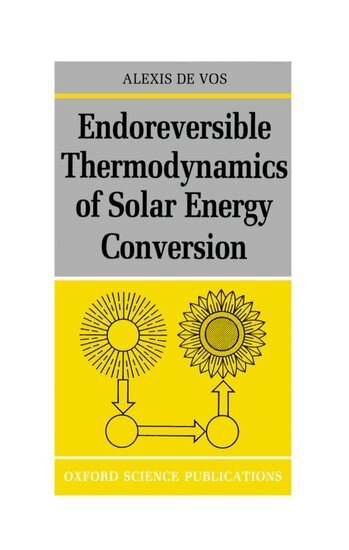
Endoreversible Thermodynamics of Solar Energy Conversion
Inbunden, 1992
1940 kr
Lägg i varukorg
The present book describes various forms of solar energy conversion techniques in a unified way. The physical framework used to describe the various conversions is endoreversible thermodynamics, a recently developed subset of irreversible thermodynamics. It thus studies situations which are not in …
Thermodynamics of Energy Conversion and Transport
Av S. Sieniutycz, A. de Vos m. fl.
Inbunden, 2000
1639 kr
Lägg i varukorg
It is becoming more and more important to manage energy resources effectively: to maximize their benefits while minimizing the negative environmental impacts. Scientist and engineers are thus faced with the problem of optimizing complex systems subject to constraints from, ecology, economics, and …
Thermodynamics of Energy Conversion and Transport
Av Alexis De Vos, Stanislaw Sieniutycz
E-bok, 2012
2111 kr
Lägg i varukorg
It is becoming more and more important to manage energy resources effectively: to maximize their benefits while minimizing the negative environmental impacts. Scientist and engineers are thus faced with the problem of optimizing complex systems subject to constraints from, ecology, economics, and …
Thermodynamics of Energy Conversion and Transport
Av Stanislaw Sieniutycz, Alexis De Vos
Häftad, 2012
1639 kr
Lägg i varukorg
It is becoming more and more important to manage energy resources effectively: to maximize their benefits while minimizing the negative environmental impacts. Scientist and engineers are thus faced with the problem of optimizing complex systems subject to constraints from, ecology, economics, and …
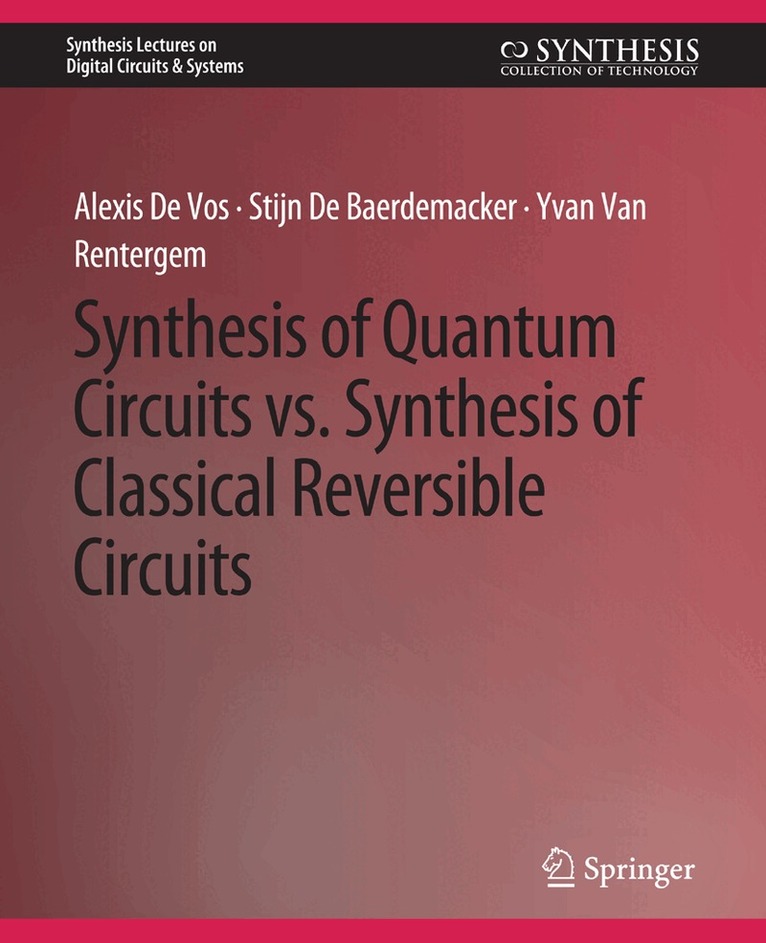
Synthesis of Quantum Circuits vs. Synthesis of Classical Reversible Circuits
Av Alexis De Vos, Stijn De Baerdemacker m. fl.
Häftad, 2018
660 kr
Lägg i varukorg
At first sight, quantum computing is completely different from classical computing. Nevertheless, a link is provided by reversible computation.Whereas an arbitrary quantum circuit, acting on ?? qubits, is described by an ?? × ?? unitary matrix with ??=2??, a reversible classical circuit, acting on …
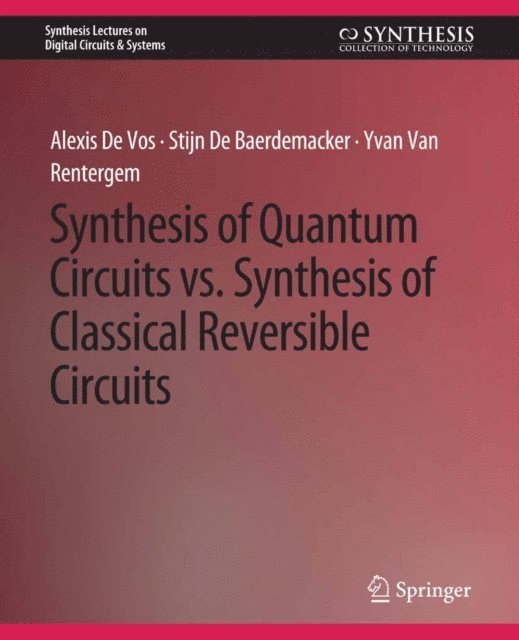
Synthesis of Quantum Circuits vs. Synthesis of Classical Reversible Circuits
Av Yvan Van Rentergem, Stijn De Baerdemacker m. fl.
E-bok, 2022
897 kr
Lägg i varukorg
At first sight, quantum computing is completely different from classical computing. Nevertheless, a link is provided by reversible computation. Whereas an arbitrary quantum circuit, acting on ?? qubits, is described by an ?? × ?? unitary matrix with ??=2??, a reversible classical circuit, acting on …
Thermodynamics of Solar Energy Conversion
Inbunden, 2008
1298 kr
Lägg i varukorg
An excellent and unique generalized introduction to the fundamental principles of future solar energy systems, based on good and consistent physics. In describing the various conversions, the author makes use of endoreversible thermodynamics - a subset of irreversible thermodynamics. In this way, …
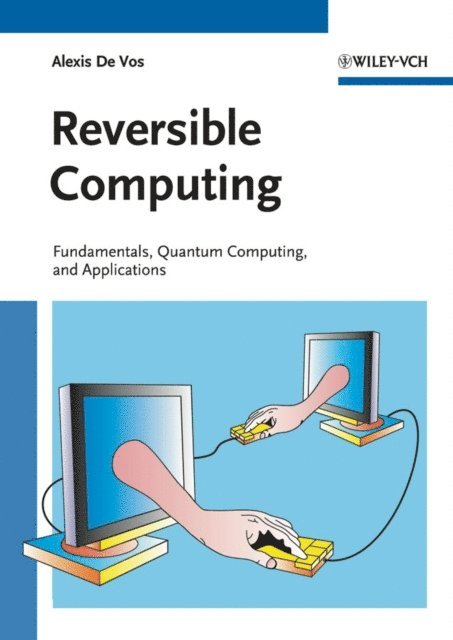
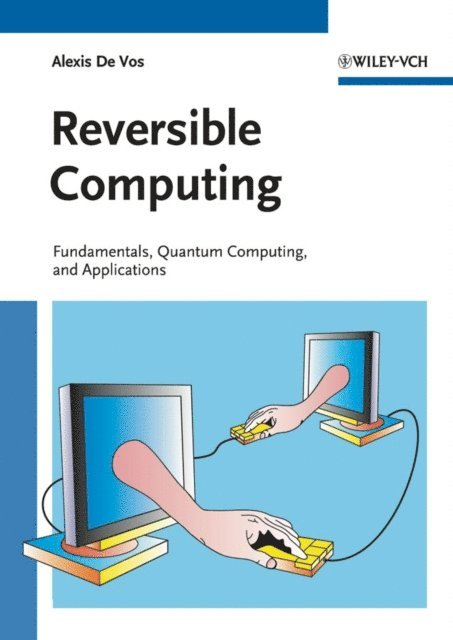
Reversible Computing
Fundamentals, Quantum Computing, and Applications
Inbunden, 2010
1583 kr
Lägg i varukorg
Written by one of the few top internationally recognized experts in the field, this book concentrates on those topics that will remain fundamental, such as low power computing, reversible programming languages, and applications in thermodynamics. It describes reversible computing from various …
Reversible Computing
Fundamentals, Quantum Computing, and Applications
E-bok, 2010
1786 kr
Lägg i varukorg
Written by one of the few top internationally recognized experts in the field, this book concentrates on those topics that will remain fundamental, such as low power computing, reversible programming languages, and applications in thermodynamics. It describes reversible computing from various …
Reversible Computing
Fundamentals, Quantum Computing, and Applications
E-bok, 2011
1825 kr
Lägg i varukorg
Written by one of the few top internationally recognized experts in the field, this book concentrates on those topics that will remain fundamental, such as low power computing, reversible programming languages, and applications in thermodynamics. It describes reversible computing from various …
Reversible Computation
Third International Workshop, Gent, Belgium, July 4-5, 2011, Revised Papers
Av Alexis De Vos, Robert Wille
Häftad, 2012
568 kr
Lägg i varukorg
This book constitutes the thoroughly refereed post-conference proceedings of the 7th International Reversible Computation, RC 2011, held in Gent, Belgium, in July 2011. The 10 revised full papers presented were carefully reviewed and selected from 25 initial submissions for inclusion in the book. …
Reversible Computation
Third International Workshop, Gent, Belgium, July 4-5, 2011, Revised Papers
Av Robert Wille, Alexis De Vos
E-bok, 2012
755 kr
Lägg i varukorg
This book constitutes the thoroughly refereed post-conference proceedings of the 7th International Reversible Computation, RC 2011, held in Gent, Belgium, in July 2011. The 10 revised full papers presented were carefully reviewed and selected from 25 initial submissions for inclusion in the book. …