Ali Pirzadeh - Böcker
Visar alla böcker från författaren Ali Pirzadeh. Handla med fri frakt och snabb leverans.
7 produkter
7 produkter
Del 13 - Innovation, Technology, and Knowledge Management
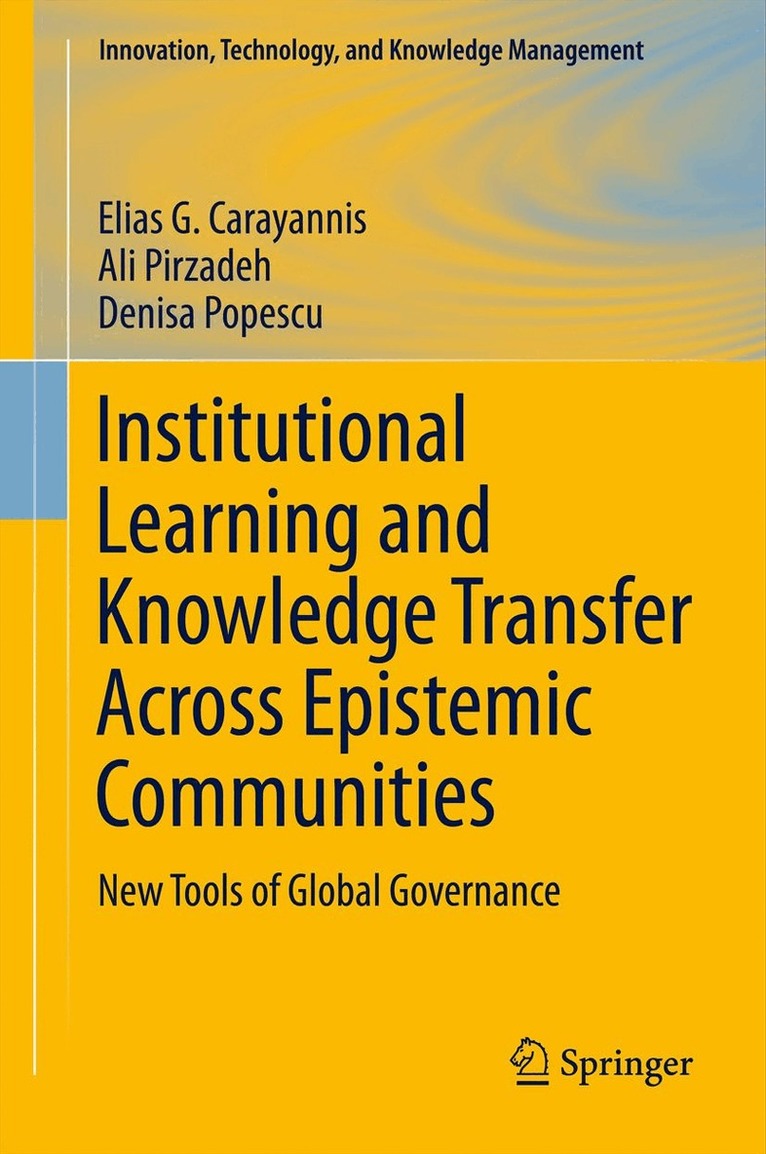
Institutional Learning and Knowledge Transfer Across Epistemic Communities
New Tools of Global Governance
Inbunden, Engelska, 2011
1 096 kr
Skickas inom 10-15 vardagar
Over the past several decades, as the pace of globalization has accelerated, operational issues of international coordination have often been overlooked. For example, the global financial crisis that began in 2007 is attributed, in part, to a lack of regulatory oversight. As a result, supranational organizations, such as the G-20, the World Bank, and the International Monetary Fund, have prioritized strengthening of the international financial architecture and providing opportunities for dialogue on national policies, international co-operation, and international financial institutions.Prevailing characteristics of the global economic systems, such as the increasing power of financial institutions, changes in the structure of global production, decline in the authority of nation-states over their national economy, and creation of global institutional setting, e.g., global governance have created the conditions for a naturally evolving process towards enabling national epistemic communities to create institutions that comply with global rules and regulations can control crises. In this context, transfer of technical knowledge from the larger organizations and its global epistemic communities to member communities is becoming a policy tool to “convince” participants in the international system to have similar ideas about which rules will govern their mutual participation. In the realm of finance and banking regulation, the primary focus is on transfer of specialized and procedural knowledge in technical domains (such as accounting procedures, payment systems, and corporate governance principles), thereby promoting institutional learning at national and local levels. In this volume, the authors provide in-depth analysis of initiatives to demonstrate how this type of knowledge generated at the internationalorganization level, is codified into global standards, and disseminated to members, particularly in the developing world, where the legal and regulatory infrastructure is often lacking. They argue that despite the challenges, when a country intends to join the global system, its institutions and economic structures need to move toward the global norms. In so doing, they shed new light on the dynamics of knowledge transfer, financial regulation, economic development, with particular respect to supporting global standards and avoiding future crises.
Del 13 - Innovation, Technology, and Knowledge Management
Institutional Learning and Knowledge Transfer Across Epistemic Communities
New Tools of Global Governance
Häftad, Engelska, 2014
1 096 kr
Skickas inom 10-15 vardagar
Over the past several decades, as the pace of globalization has accelerated, operational issues of international coordination have often been overlooked. For example, the global financial crisis that began in 2007 is attributed, in part, to a lack of regulatory oversight. As a result, supranational organizations, such as the G-20, the World Bank, and the International Monetary Fund, have prioritized strengthening of the international financial architecture and providing opportunities for dialogue on national policies, international co-operation, and international financial institutions.Prevailing characteristics of the global economic systems, such as the increasing power of financial institutions, changes in the structure of global production, decline in the authority of nation-states over their national economy, and creation of global institutional setting, e.g., global governance have created the conditions for a naturally evolving process towards enabling national epistemic communities to create institutions that comply with global rules and regulations can control crises. In this context, transfer of technical knowledge from the larger organizations and its global epistemic communities to member communities is becoming a policy tool to “convince” participants in the international system to have similar ideas about which rules will govern their mutual participation. In the realm of finance and banking regulation, the primary focus is on transfer of specialized and procedural knowledge in technical domains (such as accounting procedures, payment systems, and corporate governance principles), thereby promoting institutional learning at national and local levels. In this volume, the authors provide in-depth analysis of initiatives to demonstrate how this type of knowledge generated at the internationalorganization level, is codified into global standards, and disseminated to members, particularly in the developing world, where the legal and regulatory infrastructure is often lacking. They argue that despite the challenges, when a country intends to join the global system, its institutions and economic structures need to move toward the global norms. In so doing, they shed new light on the dynamics of knowledge transfer, financial regulation, economic development, with particular respect to supporting global standards and avoiding future crises.
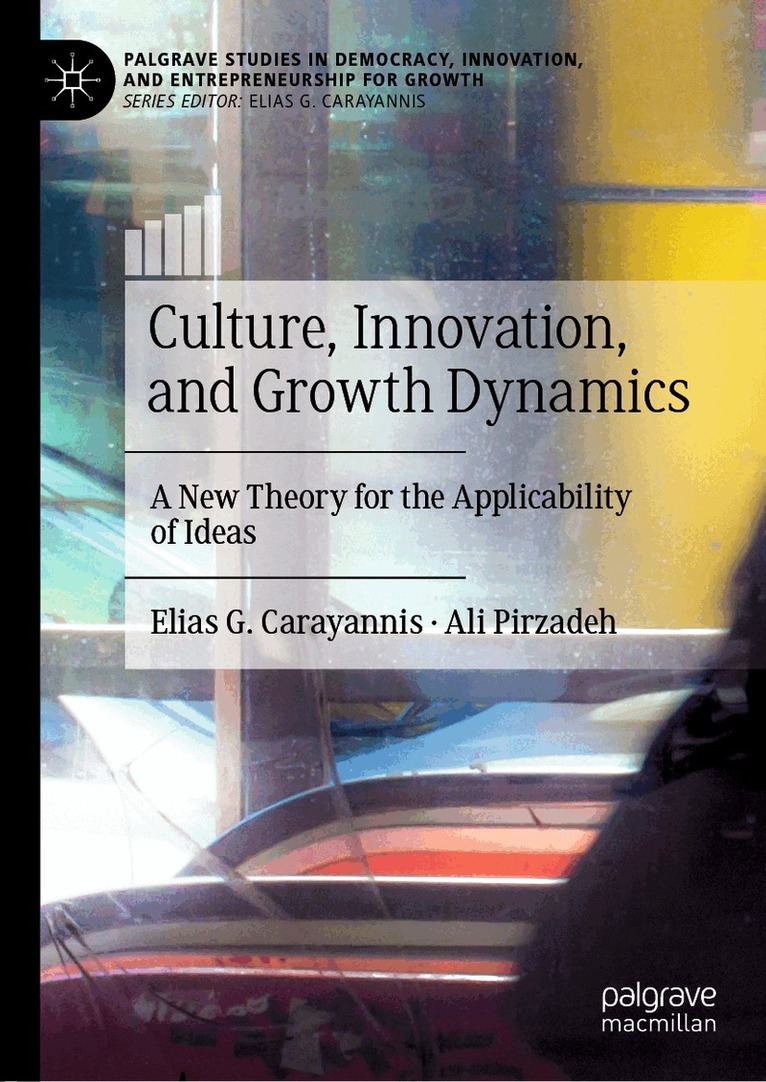
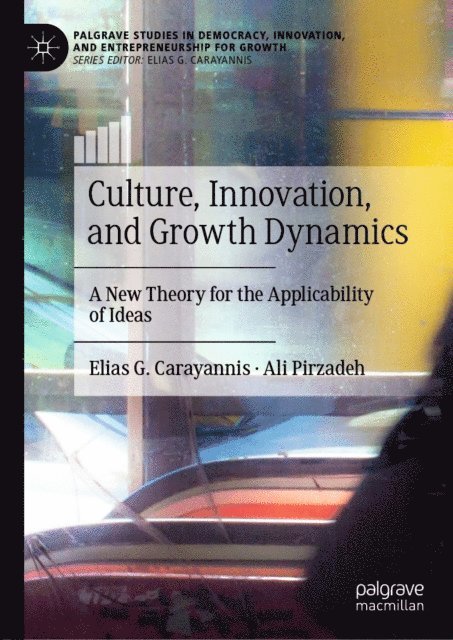
Culture, Innovation, and Growth Dynamics
A New Theory for the Applicability of Ideas
Inbunden, Engelska, 2021
1 517 kr
Skickas inom 10-15 vardagar
This book argues that ideas in the social realm are the context-bound products of distinct histories and cultures and thus cannot be co-opted across place and time. The book emphasizes that the dominant Western intellectual paradigm has not improved human society in either Western or non-Western parts of the world.
Culture, Innovation, and Growth Dynamics
A New Theory for the Applicability of Ideas
Häftad, Engelska, 2024
1 517 kr
Skickas inom 10-15 vardagar
This book argues that ideas in the social realm are the context-bound products of distinct histories and cultures and thus cannot be co-opted across place and time. The book emphasizes that the dominant Western intellectual paradigm has not improved human society in either Western or non-Western parts of the world.
536 kr
Skickas inom 10-15 vardagar
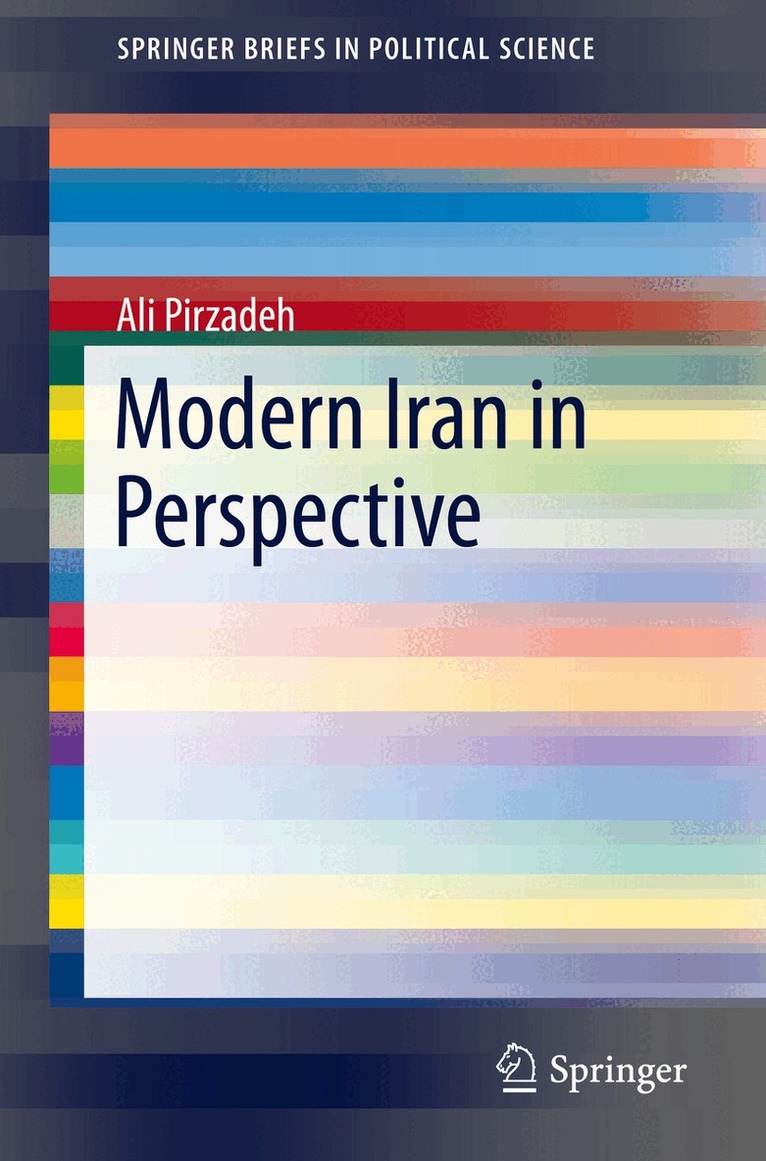
This book highlights fundamental, but often neglected, issues important for a better understanding of present-day Iran. It underlines the idea that the most effective means for a nation to meet challenges and practices of the modern era lies with the fundamental values and norms that resonate with its inhabitants.This book is meant to be a companion to the author’s published book Iran Revisited: Exploring the Historical Roots of Culture, Economics, and Society that expands upon that book’s ideas, without repeating its theoretical reasoning. Its goal is to offer a better understanding of the current and evolving situations in Iran. In this regard, the author tried to clarify his position through a host of suggestions, most notably, the need to consider social rights as the bare minimum but extremely imperative criteria in our contemporary discourse for the betterment of our society. These rights, he argues, are the most fundamental tenets of any community that strives to succeed and flourish. In this context, the underlying discussion rests on the following claim: the most persisting problems in Iran are the outcomes of the gradual regression of the people’ mindset that persistently overlooked their heritage and value system in favor of imitating ideas that were/are neither compatible with their culture and history, nor applicable to the country’s socioeconomic conditions. The author, therefore, presumed that these predicaments are self-inflicted: they were neither caused by a specific state, nor belong to a historical period, or individual(s); they cannot be characterized by political or economic terminologies, but are firmly rooted in people inability to recognize that the most vital principle in developing and propelling a nation forward is the existence of a unified people.
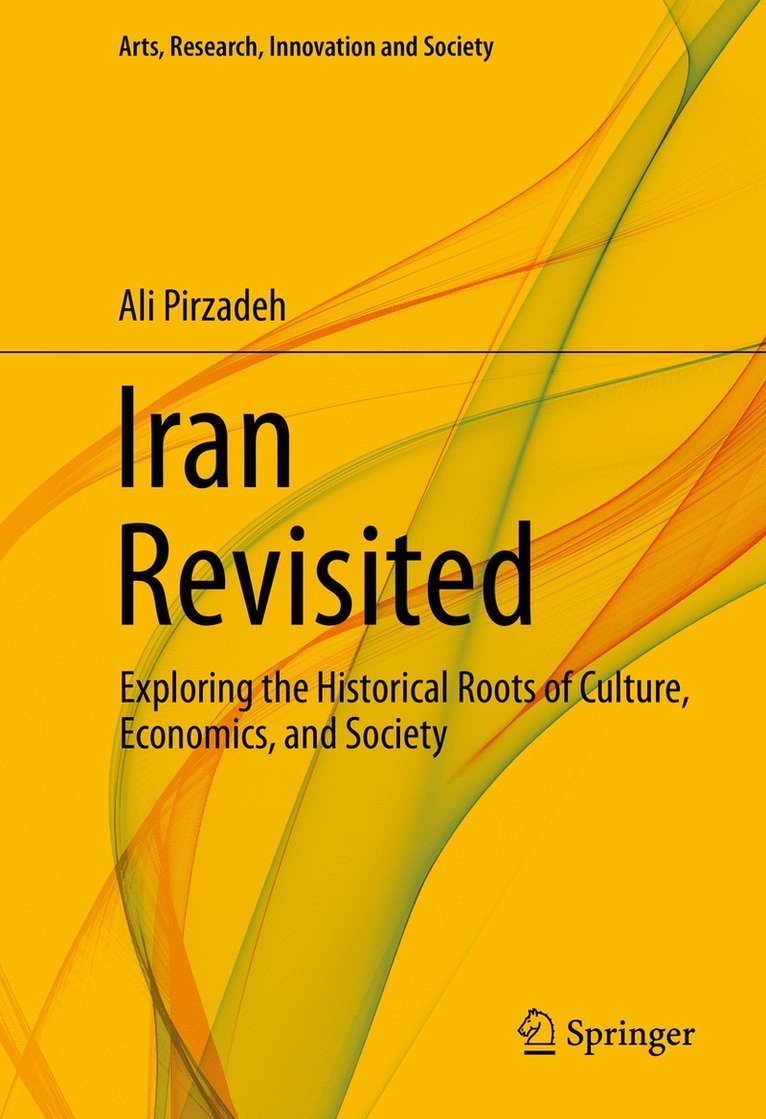
Iran Revisited
Exploring the Historical Roots of Culture, Economics, and Society
Inbunden, Engelska, 2016
1 096 kr
Skickas inom 10-15 vardagar
This book examines Modern Iran through an interdisciplinary analysis of its cultural norms, history and institutional environment. The goal is to underline strengths and weaknesses of Iranian society as a whole, and to illustrate less prescriptive explanations for the way Iran is seen through a lens of persistent collective conduct rather than erratic historical occurrences. Throughout its history, Iran has been subject to many studies, all of which have diagnosed the country’s problem and prescribed solutions based on certain theoretical grounds. This book intends to look inward, seeking cultural explanations for Iran’s perpetual inability to improve its society. The theme in this book is based on the eloquent words of Nasir Khusrau, a great Iranian poet: “az mast ki bar mast”. The words are from a poem describing a self-adoring eagle that sees its life abruptly ended by an arrow winged with its own feathers—the bird is doomed by its own vanity. The closest interpretation of this idiom in Western Christian culture is “you reap what you sow”, which conveys a similar message that underlines one’s responsibility in the sense that, sooner or later, we must face the choices we make. This would enable us to confront – and live up to – what Iran’s history and culture have taught us.
Iran Revisited
Exploring the Historical Roots of Culture, Economics, and Society
Häftad, Engelska, 2018
1 064 kr
Skickas inom 10-15 vardagar
This book examines Modern Iran through an interdisciplinary analysis of its cultural norms, history and institutional environment.