Alice Lovejoy – författare
Visar alla böcker från författaren Alice Lovejoy. Handla med fri frakt och snabb leverans.
6 produkter
6 produkter
Häftad, Engelska, 2014
374 kr
Skickas inom 5-8 vardagar
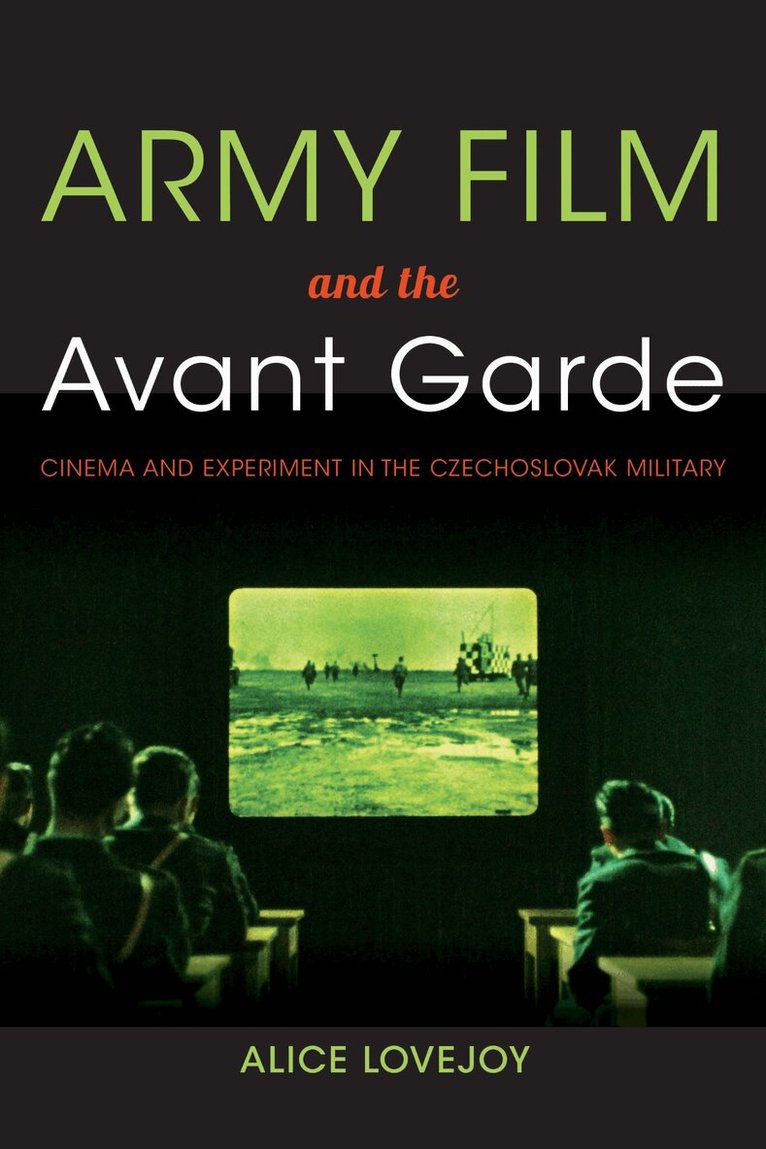
During the 1968 Prague Spring and the Soviet-led invasion and occupation that followed, Czechoslovakia's Army Film studio was responsible for some of the most politically subversive and aesthetically innovative films of the period. Although the studio is remembered primarily as a producer of propaganda and training films, some notable New Wave directors began their careers there, making films that considerably enrich the history of that movement. Alice Lovejoy examines the institutional and governmental roots of postwar Czechoslovak cinema and provides evidence that links the Army Film studio to Czechoslovakia's art cinema. By tracing the studio's unique institutional dimensions and production culture, Lovejoy explores the ways in which the "military avant-garde" engaged in dialogue with a range of global film practices and cultures. (The print version of the book includes a DVD featuring 16 short films produced by the Czechoslovak Ministry of Defense. The additional media files are not available on the eBook.)
Inbunden, Engelska, 2022
959 kr
Skickas inom 5-8 vardagar
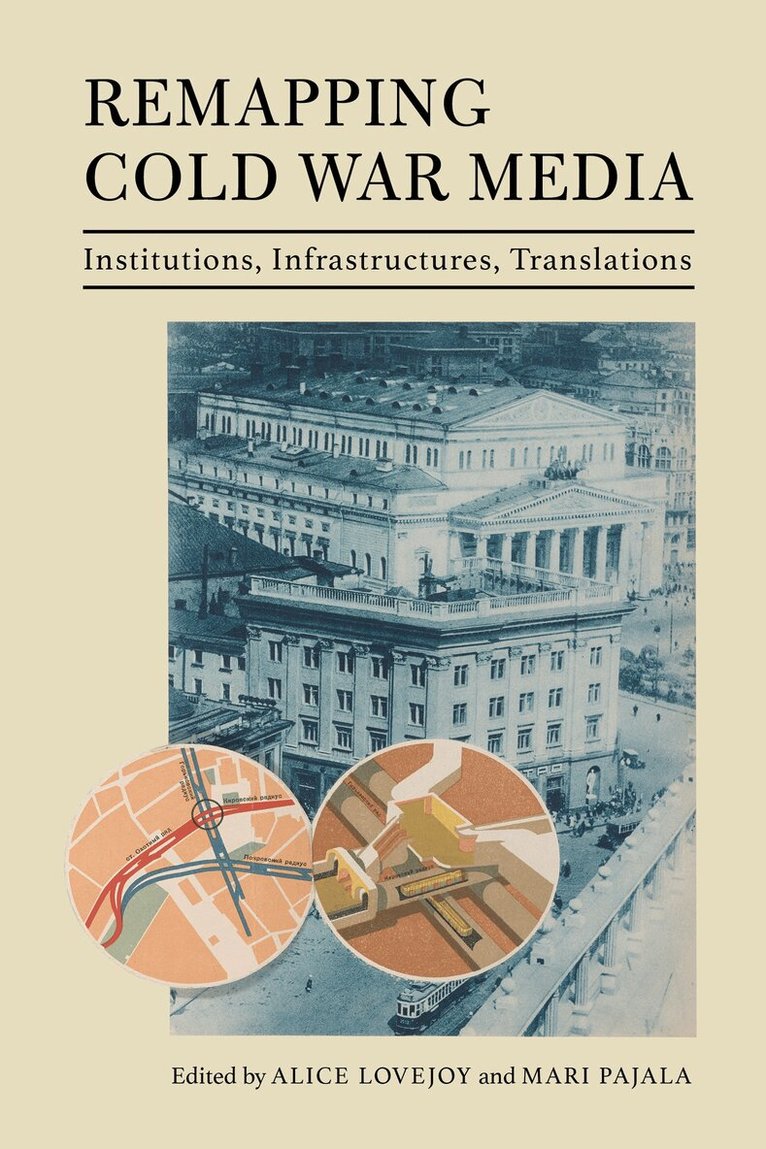
Why were Hollywood producers eager to film on the other side of the Iron Curtain? How did Western computer games become popular in socialist Czechoslovakia's youth paramilitary clubs? What did Finnish commercial television hope to gain from broadcasting Soviet drama?Cold War media cultures are typically remembered in terms of an East-West binary, emphasizing conflict and propaganda. Remapping Cold War Media, however, offers a different perspective on the period, illuminating the extensive connections between media industries and cultures in Europe's Cold War East and their counterparts in the West and Global South. These connections were forged by pragmatic, technological, economic, political, and aesthetic forces; they had multiple, at times conflicting, functions and meanings. And they helped shape the ways in which media circulates today—from film festivals, to satellite networks, to coproductions.Considering film, literature, radio, photography, computer games, and television, Remapping Cold War Media offers a transnational history of postwar media that spans Eastern and Western Europe, the Nordic countries, Cuba, the United States, and beyond. Contributors draw on extensive archival research to reveal how media traveled across geopolitical boundaries; the processes of translation, interpretation, and reception on which these travels depended; and the significance of media form, content, industries, and infrastructures then and now.
Häftad, Engelska, 2022
365 kr
Skickas
Why were Hollywood producers eager to film on the other side of the Iron Curtain? How did Western computer games become popular in socialist Czechoslovakia's youth paramilitary clubs? What did Finnish commercial television hope to gain from broadcasting Soviet drama?Cold War media cultures are typically remembered in terms of an East-West binary, emphasizing conflict and propaganda. Remapping Cold War Media, however, offers a different perspective on the period, illuminating the extensive connections between media industries and cultures in Europe's Cold War East and their counterparts in the West and Global South. These connections were forged by pragmatic, technological, economic, political, and aesthetic forces; they had multiple, at times conflicting, functions and meanings. And they helped shape the ways in which media circulates today—from film festivals, to satellite networks, to coproductions.Considering film, literature, radio, photography, computer games, and television, Remapping Cold War Media offers a transnational history of postwar media that spans Eastern and Western Europe, the Nordic countries, Cuba, the United States, and beyond. Contributors draw on extensive archival research to reveal how media traveled across geopolitical boundaries; the processes of translation, interpretation, and reception on which these travels depended; and the significance of media form, content, industries, and infrastructures then and now.
Inbunden, Engelska, 2025
317 kr
Skickas inom 5-8 vardagar
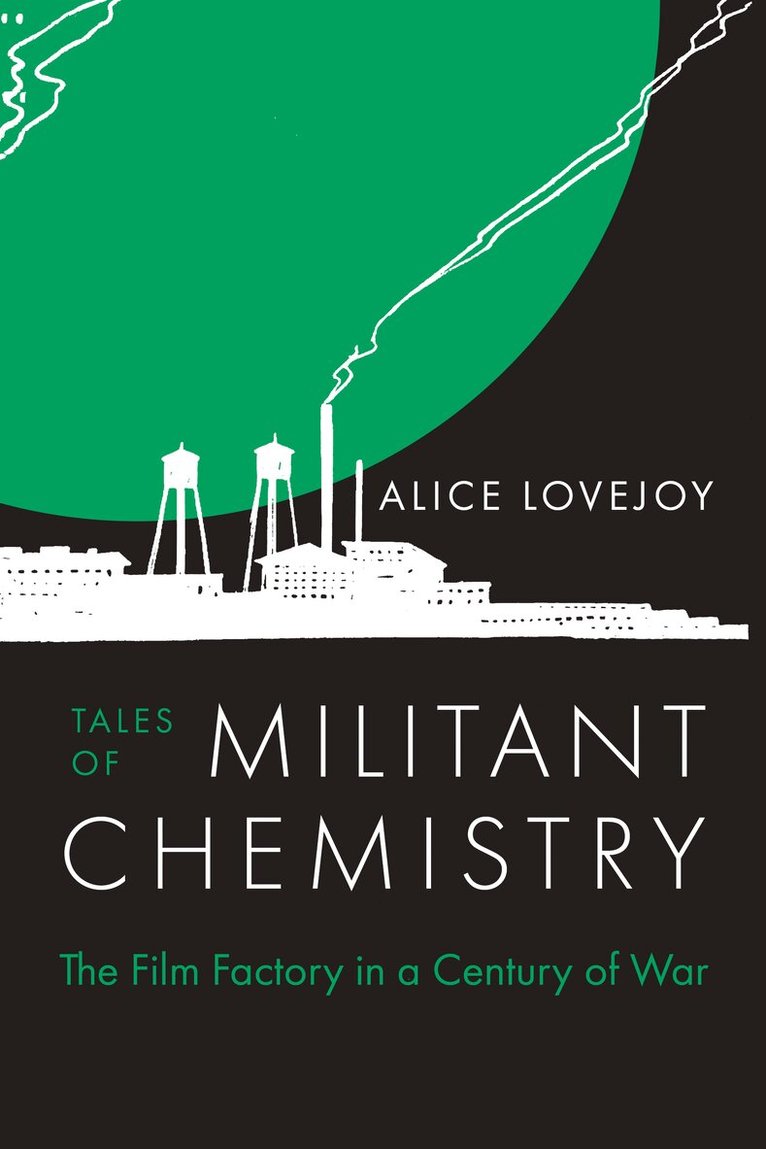
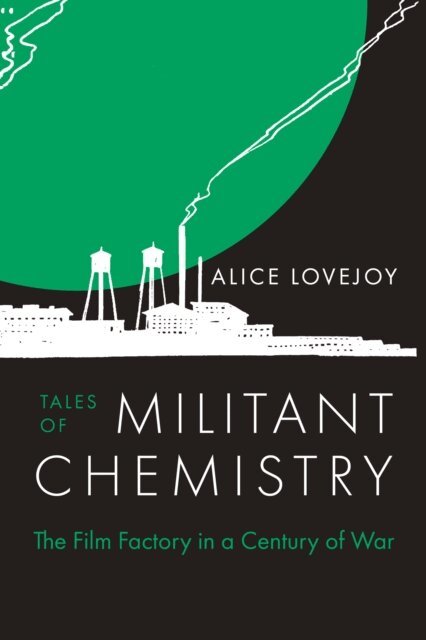
The untold story of film as a chemical cousin to poison gas and nuclear weapons, shaped by centuries of violent extraction. The history of film calls to mind unforgettable photographs, famous directors, and the glitz and hustle of the media business. But there is another tale to tell that connects film as a material to the twentieth century’s history of war, destruction, and cruelty. This story comes into focus during World War II at the factories of Tennessee Eastman, where photographic giant Kodak produced the rudiments of movie magic. Not far away, at Oak Ridge, Kodak was also enriching uranium for the Manhattan Project—uranium mined in the Belgian Congo and destined for the bomb that fell on Hiroshima. While the world’s largest film manufacturer transformed into a formidable military contractor, across the ocean its competitor Agfa grew entangled with Nazi Germany’s machinery of war. After 1945, Kodak’s film factories stood at the front lines of a new, colder war, as their photosensitive products became harbingers of the dangers of nuclear fallout. Following scientists, soldiers, prisoners, and spies through Kodak’s and Agfa’s global empires, Alice Lovejoy links the golden age of cinema and photography to colonialism, the military-industrial complex, radioactive dust, and toxic waste. Revelatory and chilling,Tales of Militant Chemistry shows how film became a weapon whose chemistry irrevocably shaped the world we live in today.
E-bok
Engelska, 2025401 kr
Läs direkt efter köp
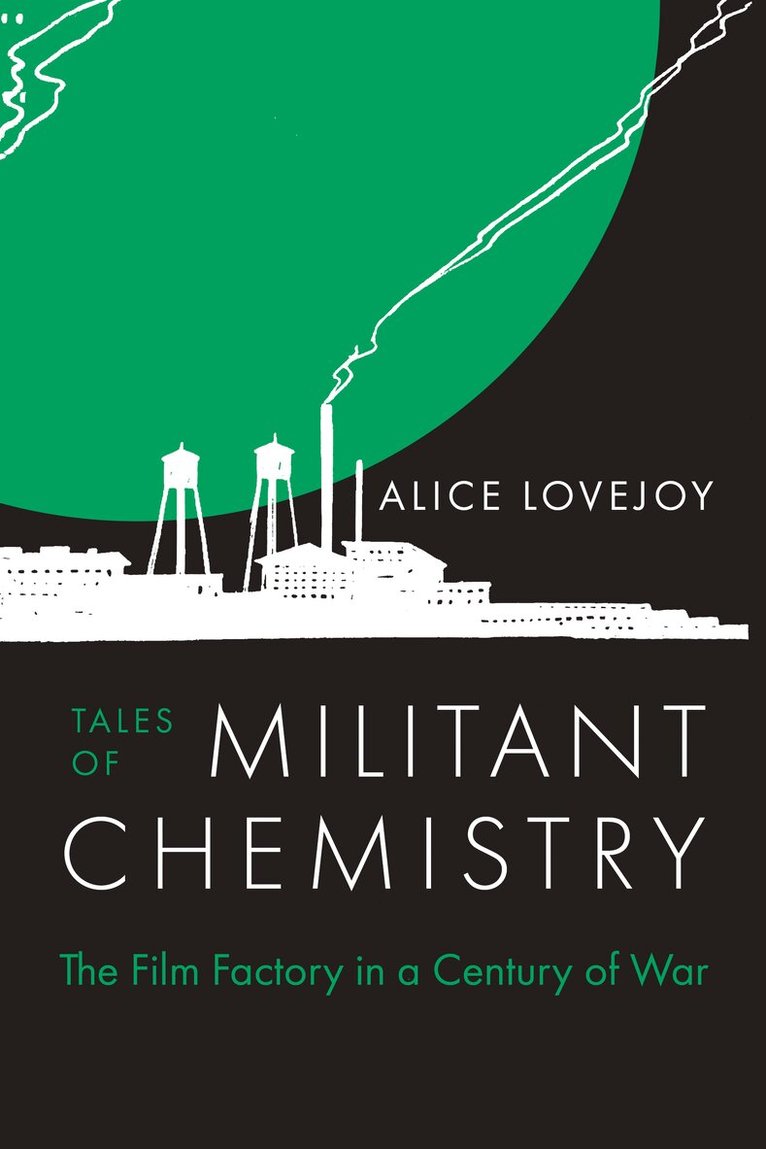
The untold story of film as a chemical cousin to poison gas and nuclear weapons, shaped by centuries of violent extraction. The history of film calls to mind unforgettable photographs, famous directors, and the glitz and hustle of the media business. But there is another tale to tell that connects film as a material to the twentieth century’s history of war, destruction, and cruelty. This story comes into focus during World War II at the factories of Tennessee Eastman, where photographic giant Kodak produced the rudiments of movie magic. Not far away, at Oak Ridge, Kodak was also enriching uranium for the Manhattan Project—uranium mined in the Belgian Congo and destined for the bomb that fell on Hiroshima. While the world’s largest film manufacturer transformed into a formidable military contractor, across the ocean its competitor Agfa grew entangled with Nazi Germany’s machinery of war. After 1945, Kodak’s film factories stood at the front lines of a new, colder war, as their photosensitive products became harbingers of the dangers of nuclear fallout. Following scientists, soldiers, prisoners, and spies through Kodak’s and Agfa’s global empires, Alice Lovejoy links the golden age of cinema and photography to colonialism, the military-industrial complex, radioactive dust, and toxic waste. Revelatory and chilling,Tales of Militant Chemistry shows how film became a weapon whose chemistry irrevocably shaped the world we live in today.
Häftad, Engelska, 2026
280 kr
Kommande
The untold story of film as a chemical cousin to poison gas and nuclear weapons, shaped by centuries of violent extraction. The history of film calls to mind unforgettable photographs, famous directors, and the glitz and hustle of the media business. But there is another tale to tell that connects film as a material to the twentieth century’s history of war, destruction, and cruelty. This story comes into focus during World War II at the factories of Tennessee Eastman, where photographic giant Kodak produced the rudiments of movie magic. Not far away, at Oak Ridge, Kodak was also enriching uranium for the Manhattan Project—uranium mined in the Belgian Congo and destined for the bomb that fell on Hiroshima. While the world’s largest film manufacturer transformed into a formidable military contractor, across the ocean its competitor Agfa grew entangled with Nazi Germany’s machinery of war. After 1945, Kodak’s film factories stood at the front lines of a new, colder war, as their photosensitive products became harbingers of the dangers of nuclear fallout. Following scientists, soldiers, prisoners, and spies through Kodak’s and Agfa’s global empires, Alice Lovejoy links the golden age of cinema and photography to colonialism, the military-industrial complex, radioactive dust, and toxic waste. Revelatory and chilling,Tales of Militant Chemistry shows how film became a weapon whose chemistry irrevocably shaped the world we live in today.