Alina Mungiu-Pippidi - Böcker
Visar alla böcker från författaren Alina Mungiu-Pippidi. Handla med fri frakt och snabb leverans.
11 produkter
11 produkter
1 087 kr
Skickas inom 7-10 vardagar
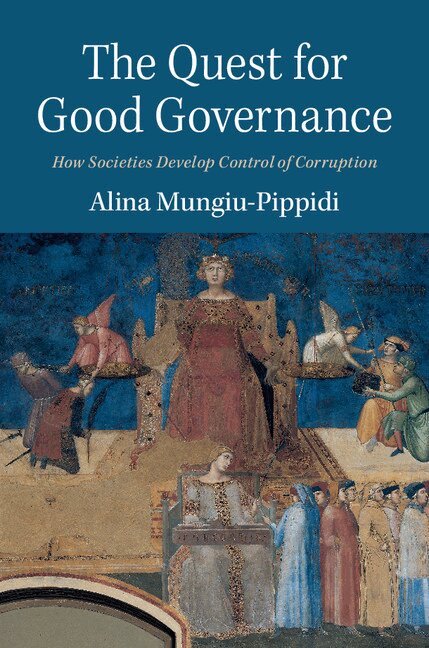
Why do some societies manage to control corruption so that it manifests itself only occasionally, while other societies remain systemically corrupt? This book is about how societies reach that point when integrity becomes the norm and corruption the exception in regard to how public affairs are run and public resources are allocated. It primarily asks what lessons we have learned from historical and contemporary experiences in developing corruption control, which can aid policy-makers and civil societies in steering and expediting this process. Few states now remain without either an anticorruption agency or an Ombudsman, yet no statistical evidence can be found that they actually induce progress. Using both historical and contemporary studies and easy to understand statistics, Alina Mungiu-Pippidi looks at how to diagnose, measure and change governance so that those entrusted with power and authority manage to defend public resources.
334 kr
Skickas inom 7-10 vardagar
Why do some societies manage to control corruption so that it manifests itself only occasionally, while other societies remain systemically corrupt? This book is about how societies reach that point when integrity becomes the norm and corruption the exception in regard to how public affairs are run and public resources are allocated. It primarily asks what lessons we have learned from historical and contemporary experiences in developing corruption control, which can aid policy-makers and civil societies in steering and expediting this process. Few states now remain without either an anticorruption agency or an Ombudsman, yet no statistical evidence can be found that they actually induce progress. Using both historical and contemporary studies and easy to understand statistics, Alina Mungiu-Pippidi looks at how to diagnose, measure and change governance so that those entrusted with power and authority manage to defend public resources.
410 kr
Skickas inom 7-10 vardagar
The EU is many things: a civilization ideal to emulate, an anchor of geopolitical stabilization, a generous donor and a historical lesson on cooperation across nations. A fixer of national governance problems, however, it is not. In this book, Mungiu-Pippidi investigates the efficacy of the European Union's promotion of good governance through its funding and conditionalities both within EU proper and in the developing world. The evidence assembled shows that the idea of European power to transform the quality of governance is largely a myth. From Greece to Egypt and from Kosovo to Turkey, EU interventions in favour of good governance and anti-corruption policy have failed so far to trigger the domestic political dynamic needed to ensure sustainable change. Mungiu-Pippidi explores how we can better bridge the gap between the Europe of treaties and the reality of governance in Europe and beyond. This book will interest students and scholars of comparative politics, European politics, and development studies, particularly those examining governance and corruption.
995 kr
Skickas inom 7-10 vardagar
The EU is many things: a civilization ideal to emulate, an anchor of geopolitical stabilization, a generous donor and a historical lesson on cooperation across nations. A fixer of national governance problems, however, it is not. In this book, Mungiu-Pippidi investigates the efficacy of the European Union's promotion of good governance through its funding and conditionalities both within EU proper and in the developing world. The evidence assembled shows that the idea of European power to transform the quality of governance is largely a myth. From Greece to Egypt and from Kosovo to Turkey, EU interventions in favour of good governance and anti-corruption policy have failed so far to trigger the domestic political dynamic needed to ensure sustainable change. Mungiu-Pippidi explores how we can better bridge the gap between the Europe of treaties and the reality of governance in Europe and beyond. This book will interest students and scholars of comparative politics, European politics, and development studies, particularly those examining governance and corruption.
1 990 kr
Skickas inom 7-10 vardagar
Why have so few countries managed to leave systematic corruption behind, while in many others modernization is still a mere facade? How do we escape the trap of corruption, to reach a governance system based on ethical universalism? In this unique book, Alina Mungiu-Pippidi and Michael Johnston lead a team of eminent researchers on an illuminating path towards deconstructing the few virtuous circles in contemporary governance. The book combines a solid theoretical framework with quantitative evidence and case studies from around the world. While extracting lessons to be learned from the success cases covered, Transitions to Good Governance avoids being prescriptive and successfully contributes to the understanding of virtuous circles in contemporary good governance. Offering a balanced but always grounded perspective, this collection combines analytic narratives of existing virtuous circles and how they were established, with an analysis of the global evidence. In doing so the authors explain why governance is so resistant to change, and describe the lessons to be remembered for international anti-corruption efforts. Exploring the primacy of politics over economic development, and in order to understand how vicious circles can be broken, the expert contributions trace the progress of countries that have successfully transitioned. Unprecedentedly, this book goes beyond the tests of different variables to showcase human agency on every continent, and reveals why some nations make the best and others the worst of the same development legacies. This comprehensive examination of virtuous circles of governance will appeal to all scholars with an interest in transitions, democratization, anti-corruption and good governance. Policy-makers and practitioners in the fields of international development, good governance and democracy support will find it an invaluable resource.Contributors include: A. Bozzini, D. Bupuet Corleto, C. Göbel, M. Johnston, V. Kalnins, L. Khatib, A. Kupatadze, M. Martini, A. Mungiu-Pippidi, P. Navia, R. Piñeiro, D. Sebudubudu, E. Villarreal, B.W. Wilson, J.-S. You
571 kr
Skickas inom 7-10 vardagar
Why have so few countries managed to leave systematic corruption behind, while in many others modernization is still a mere facade? How do we escape the trap of corruption, to reach a governance system based on ethical universalism? In this unique book, Alina Mungiu-Pippidi and Michael Johnston lead a team of eminent researchers on an illuminating path towards deconstructing the few virtuous circles in contemporary governance. The book combines a solid theoretical framework with quantitative evidence and case studies from around the world. While extracting lessons to be learned from the success cases covered, Transitions to Good Governance avoids being prescriptive and successfully contributes to the understanding of virtuous circles in contemporary good governance. Offering a balanced but always grounded perspective, this collection combines analytic narratives of existing virtuous circles and how they were established, with an analysis of the global evidence. In doing so the authors explain why governance is so resistant to change, and describe the lessons to be remembered for international anti-corruption efforts. Exploring the primacy of politics over economic development, and in order to understand how vicious circles can be broken, the expert contributions trace the progress of countries that have successfully transitioned. Unprecedentedly, this book goes beyond the tests of different variables to showcase human agency on every continent, and reveals why some nations make the best and others the worst of the same development legacies. This comprehensive examination of virtuous circles of governance will appeal to all scholars with an interest in transitions, democratization, anti-corruption and good governance. Policy-makers and practitioners in the fields of international development, good governance and democracy support will find it an invaluable resource.Contributors include: A. Bozzini, D. Bupuet Corleto, C. Göbel, M. Johnston, V. Kalnins, L. Khatib, A. Kupatadze, M. Martini, A. Mungiu-Pippidi, P. Navia, R. Piñeiro, D. Sebudubudu, E. Villarreal, B.W. Wilson, J.-S. You
1 700 kr
Skickas inom 7-10 vardagar
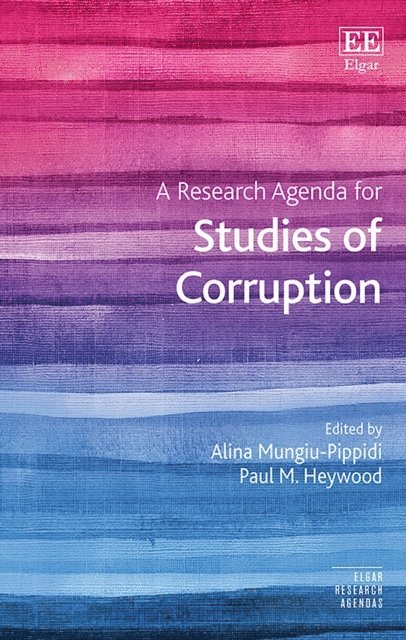
Elgar Research Agendas outline the future of research in a given area. Leading scholars are given the space to explore their subject in provocative ways, and map out the potential directions of travel. They are relevant but also visionary.Linked to declining levels of trust in core state actors and bodies, corruption has emerged as a key challenge to effective and legitimate governance, posing a growing threat to political stability. This comprehensive work addresses the most pressing debates in the field, covering the evolution of different concepts and approaches to analysing corruption, how it manifests in practice across key areas, and the prospects of different ways to tackle it. This interdisciplinary Research Agenda contains state-of-the-art surveys of the field of corruption and points towards an agenda for future research. Chapters explore top political and grassroots corruption, buying and stealing votes, corruption in relation to gender and the media, digital anti-corruption and an examination of whistleblowing and market-based tools. The book also offers the most advanced research in the measurement of corruption.Providing a detailed overview of the key questions and research areas in corruption studies, this Research Agenda will be a vital resource for scholars and students of corruption, governance and public administration. International anti-corruption NGOs and agencies will also benefit from the up-to-date survey of the core challenges they are seeking to address.Contributors include: C. Berti, M. Bocchiola, R. Bratu, E. Ceva, G.O Erlingsson, M. Fazekas, P.M. Heywood, D. Iragorri Carter, D. Jackson, N. Kossow, G.H. Kristinsson, I. Kubbe, N. Köbis, M. Loli, I. Mares, R.M.B. Kukutschka, O. Merkle, A. Mungiu-Pippidi, M.C. Vinciguerra, S. Wickberg, L. Young
1 426 kr
Skickas inom 7-10 vardagar
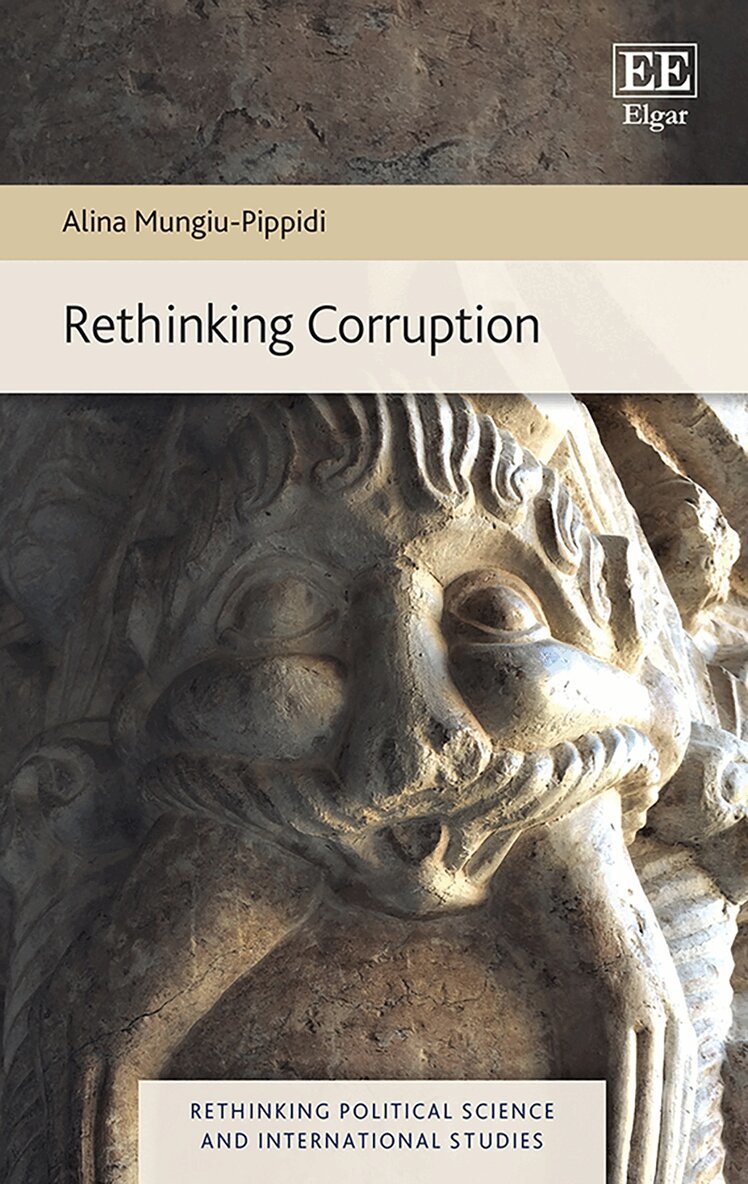
Driven by an international agenda, the act of ‘rethinking’ corruption has already taken place more than once in the past two decades, contributing further to a post-truth about corruption than to anything else. This book makes a clear argument in favor of rethinking corruption across any contingency and offers a forecasting method, alongside the latest generation of analytical, fact-based tools to map, assess and predict corruption risk.Mungiu-Pippidi argues that corruption is a policy problem frequently overriding individual choice, and can only be tackled by strong policy interventions, not by ‘nudging’ every individual into honesty. Chapters explain that corruption has not decreased despite unprecedented efforts because the international context presently creates far more opportunities for it than constraints: few nations, governments or international organizations have proven able to solve the social dilemma of corruption. Meanwhile, many countries, governments, businesses and politicians profit from a world order where integrity cannot be enforced and perpetuate the current status quo.Rethinking Corruption will be crucial reading for academics and students of political science, sociology and law seeking to understand the theoretical dimensions of corruption. It will also be an enlightening read for policy makers, administrators and practitioners looking to rethink how corruption can manifest.
Del 2 - Anticorruption Report
Anticorruption Frontline
The Anticorruption Report, volume 2
Häftad, Engelska, 2014
216 kr
Tillfälligt slut
From Turkey to Egypt, Bulgaria to Ukraine, and Brazil to India, we witness the rise of an angry urban middle class protesting against what they see as fundamental corruption of their political regimes, perceived as predatory and inefficient. Corruption is near the top of all global protesters’ list of grievances – from the Occupy movement to the Arab Spring. Their countries have benefited to varying degrees from globalization, but their regimes have all failed to evolve politically to meet their expectations. Corruption has become the main explanation for failures in government performance, for networks of patrons and clients subverting fair competition, and for billions of Euro in disappearing public funds, national or foreign assistance income. The economic crisis exposed the hypocrisy of rich countrieswhich control corruption at home but use it to advance their economic interests abroad. The rise in the last two decades of an international anti-corruption regime only raised awareness but failed so far to diminish corruption. There is increasing demand for good governance resulting in quality education and health systems, and denunciation of sheer bread and circus populism. Briefly put, governments unable to control corruption cannot get away with organizing football World Cups anymore. Volume 2 of the Anticorruption Report tackles these issues across key cases and developments.
Del 4 - Anticorruption Report
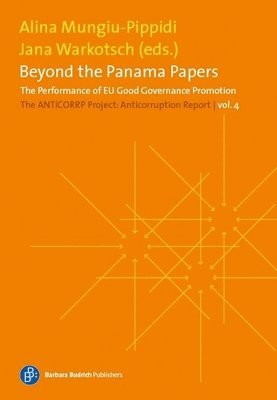
Beyond the Panama Papers. The Performance of EU Good Governance Promotion
The Anticorruption Report, volume 4
Häftad, Engelska, 2017
441 kr
Skickas inom 3-6 vardagar
This last title in the series covers the most important findings of the five yearsEU sponsored ANTICORRP project dealing with corruption and organized crime.How prone to corruption are EU funds? Has EU managed to improve governancein the countries that it assists? Using the new index of public integrity and avariety of other tools created in the project this issue looks at how EU funds andnorms affected old member states (like Spain), new member states (Slovakia,Romania), accession countries (Turkey) and the countries recipient of developmentfunds (Egypt, Tanzania, Tunisia). The data covers over a decade of structuraland development funds, and the findings show the challenges to changing governanceacross borders, the different paths that each country has experiencedand suggest avenues of reforming development aid for improving governance.
1 550 kr
Skickas inom 10-15 vardagar
This dramatic story of land and power from twentieth-century Eastern Europe is set in two extraordinary villages: a rebel village, where peasants fought the advent of Communism and became its first martyrs, and a model village turned forcibly into a town, Dictator Ceausescu's birthplace. The two villages capture among themselves nearly a century of dramatic transformation and social engineering, ending up with their charged heritage in the present European Union.