Alison Heppenstall – författare
454 kr
Skickas inom 5-8 vardagar
3 059 kr
Skickas inom 3-6 vardagar
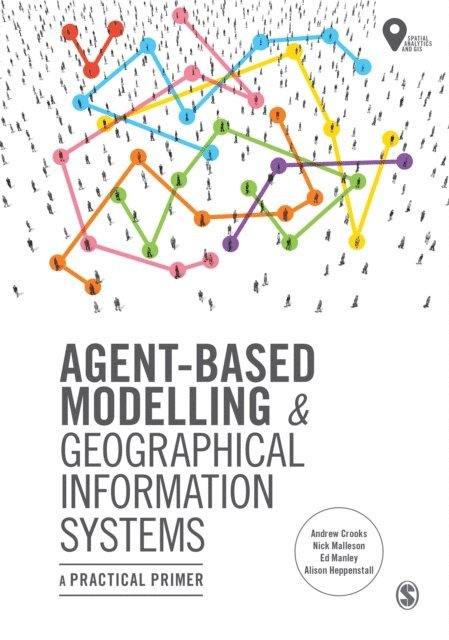
This is the era of Big Data and computational social science. It is an era that requires tools which can do more than visualise data but also model the complex relation between data and human action, and interaction. Agent-Based Models (ABM) - computational models which simulate human action and interaction – do just that.
This textbook explains how to design and build ABM and how to link the models to Geographical Information Systems. It guides you from the basics through to constructing more complex models which work with data and human behaviour in a spatial context. All of the fundamental concepts are explained and related to practical examples to facilitate learning (with models developed in NetLogo with all code examples available on the accompanying website). You will be able to use these models to develop your own applications and link, where appropriate, to Geographical Information Systems.
All of the key ideas and methods are explained in detail:
geographical modelling; an introduction to ABM; the fundamentals of Geographical Information Science; why ABM and GIS; using QGIS; designing and building an ABM; calibration and validation; modelling human behavior.An applied primer, that provides fundamental knowledge and practical skills, it will provide you with the skills to build and run your own models, and to begin your own research projects.
809 kr
Skickas
This is the era of Big Data and computational social science. It is an era that requires tools which can do more than visualise data but also model the complex relation between data and human action, and interaction. Agent-Based Models (ABM) - computational models which simulate human action and interaction – do just that.
This textbook explains how to design and build ABM and how to link the models to Geographical Information Systems. It guides you from the basics through to constructing more complex models which work with data and human behaviour in a spatial context. All of the fundamental concepts are explained and related to practical examples to facilitate learning (with models developed in NetLogo with all code examples available on the accompanying website). You will be able to use these models to develop your own applications and link, where appropriate, to Geographical Information Systems.
All of the key ideas and methods are explained in detail:
geographical modelling; an introduction to ABM; the fundamentals of Geographical Information Science; why ABM and GIS; using QGIS; designing and building an ABM; calibration and validation; modelling human behavior.An applied primer, that provides fundamental knowledge and practical skills, it will provide you with the skills to build and run your own models, and to begin your own research projects.
774 kr
Skickas
This is the era of Big Data and computational social science. It is an era that requires tools which can do more than visualise data but also model the complex relation between data and human action, and interaction. Agent-Based Models (ABM) - computational models which simulate human action and interaction – do just that.
This textbook explains how to design and build ABM and how to link the models to Geographical Information Systems. It guides you from the basics through to constructing more complex models which work with data and human behaviour in a spatial context. All of the fundamental concepts are explained and related to practical examples to facilitate learning (with models developed in NetLogo with all code examples available on the accompanying website). You will be able to use these models to develop your own applications and link, where appropriate, to Geographical Information Systems.
All of the key ideas and methods are explained in detail:
geographical modelling; an introduction to ABM; the fundamentals of Geographical Information Science; why ABM and GIS; using QGIS; designing and building an ABM; calibration and validation; modelling human behavior.An applied primer, that provides fundamental knowledge and practical skills, it will provide you with the skills to build and run your own models, and to begin your own research projects.
657 kr
Läs direkt efter köp
This is the era of Big Data and computational social science. It is an era that requires tools which can do more than visualise data but also model the complex relation between data and human action, and interaction. Agent-Based Models (ABM) - computational models which simulate human action and interaction – do just that.
This textbook explains how to design and build ABM and how to link the models to Geographical Information Systems. It guides you from the basics through to constructing more complex models which work with data and human behaviour in a spatial context. All of the fundamental concepts are explained and related to practical examples to facilitate learning (with models developed in NetLogo with all code examples available on the accompanying website). You will be able to use these models to develop your own applications and link, where appropriate, to Geographical Information Systems.
All of the key ideas and methods are explained in detail:
geographical modelling; an introduction to ABM; the fundamentals of Geographical Information Science; why ABM and GIS; using QGIS; designing and building an ABM; calibration and validation; modelling human behavior.An applied primer, that provides fundamental knowledge and practical skills, it will provide you with the skills to build and run your own models, and to begin your own research projects.
1 857 kr
Skickas inom 5-8 vardagar
430 kr
Läs direkt efter köp
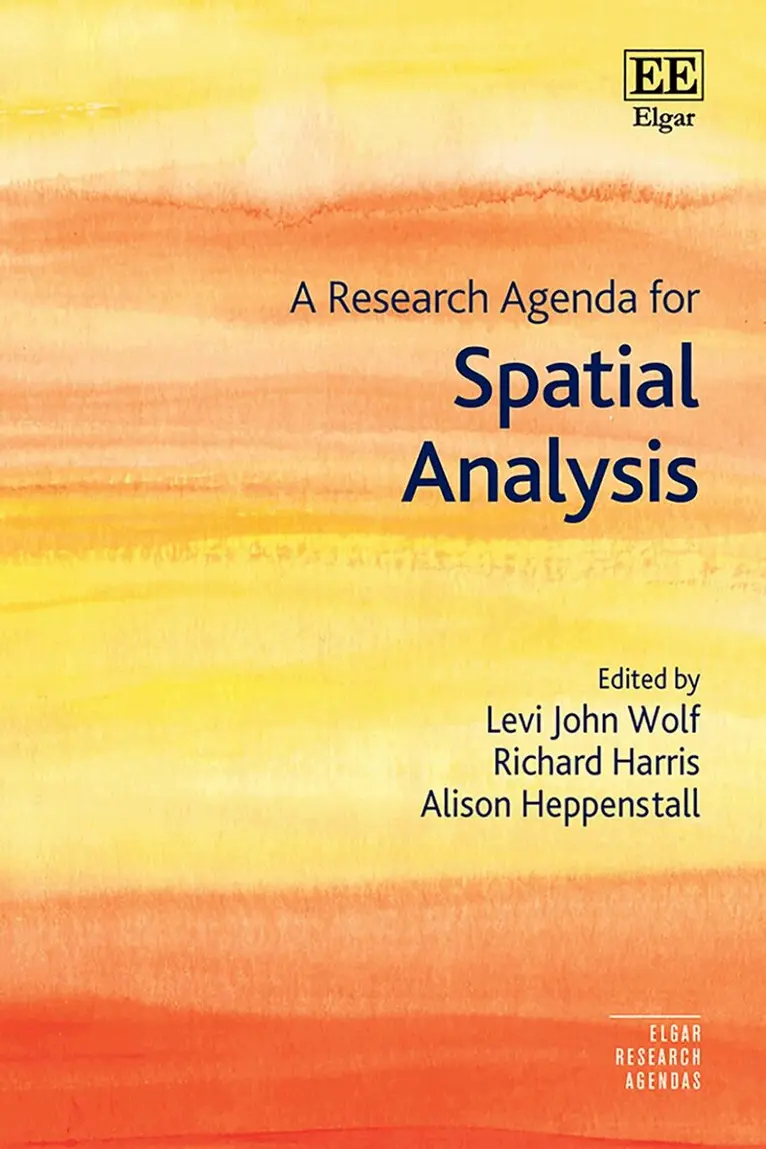
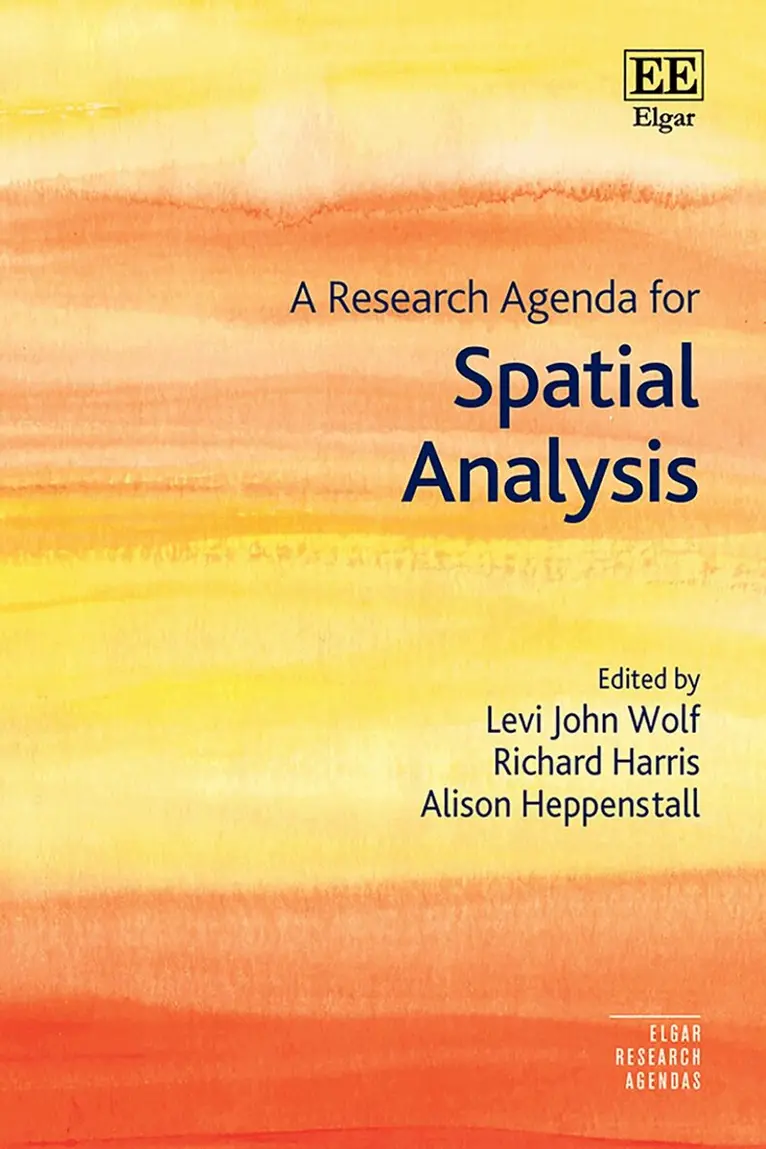
This Research Agenda explores the future of spatial analysis, and how the field informs and challenges the policy landscape. A wide range of contributors from different intellectual communities address the problem of causality in geographic analysis, arguing that diversity is crucial for the future success of the discipline.
Chapters define and explore specific concepts and practices within the field, for instance data science and geosimulation, providing perspectives on the current state of the art of these areas within geography, and how they will shift in the future. In the first section, contributors cover the fundamentals of the topic, as well as various ways to handle the ‘spatial variable’, including the concept of space, the scale of spatial patterns and what those patterns reveal. The book then analyses schools of practice, including geographical data science, causality, generative modelling and machine learning.
A Research Agenda for Spatial Analysis will prove an invaluable resource for spatial analysts and geographic information scientists interested in learning about the direction of future developments in the field. Additionally, scholars and students of human and urban geography and geographic research methods will benefit from this crucial overview of the topic.