Allen F. Roberts - Böcker
Visar alla böcker från författaren Allen F. Roberts. Handla med fri frakt och snabb leverans.
4 produkter
4 produkter
319 kr
Skickas inom 7-10 vardagar
A Dance of Assassins presents the competing histories of how Congolese Chief Lusinga and Belgian Lieutenant Storms engaged in a deadly clash while striving to establish hegemony along the southwestern shores of Lake Tanganyika in the 1880s. While Lusinga participated in the east African slave trade, Storms' secret mandate was to meet Henry Stanley's eastward march and trace "a white line across the Dark Continent" to legitimize King Leopold's audacious claim to the Congo. Confrontation was inevitable, and Lusinga lost his head. His skull became the subject of a sinister evolutionary treatise, while his ancestral figure is now considered a treasure of the Royal Museum for Central Africa. Allen F. Roberts reveals the theatricality of early colonial encounter and how it continues to influence Congolese and Belgian understandings of history today.
738 kr
Skickas inom 3-6 vardagar
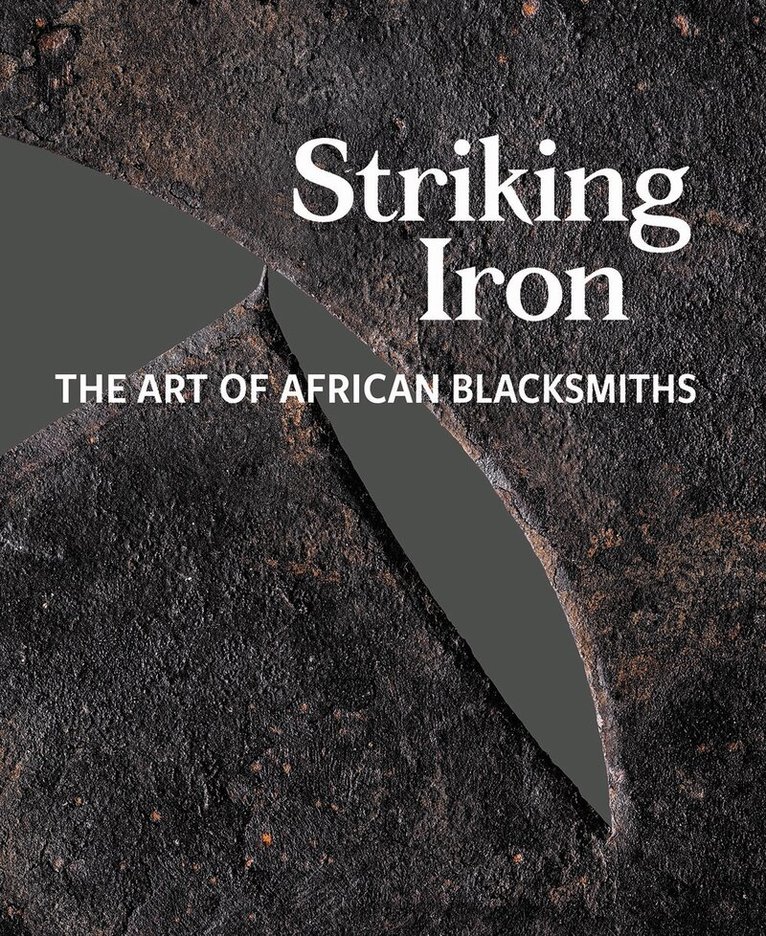
For more than two millennia, African blacksmiths have transformed one of Earth's most basic natural resources into objects of life-changing utility, empowerment, prestige, spiritual potency, and astonishing artistry—shaping African cultures in the most fundamental ways. Striking Iron combines interdisciplinary scholarship with vivid illustrations to offer the most comprehensive treatment to date of the blacksmith's art in sub-Saharan Africa. Interspersed throughout are photographs of more than 250 diverse works from over 100 ethnic groups—including tools, blades, currencies, wood sculptures studded with iron, musical instruments, and accoutrements—with field photographs documenting blacksmiths at work and objects in use. Seventeen contributors write from the disciplinary perspectives of art history, art, anthropology, archaeology, history, and astronomy, examining how the blacksmiths' virtuosity can harness powers of the natural and spiritual worlds, effect change and ensure protection, assist with life's challenges and transitions, and enhance the efficacies of sacred acts.Exhibition dates: Musée du Quai Branly-Jacques Chirac, Paris, November 19, 2019, to March 29, 2020
350 kr
Tillfälligt slut
This image-filled book features outstanding works of Luba art from the Democratic Republic of Congo. Major themes addressed include the role of visual and performance arts in Luba traditional politics; the symbolism of the female image and why 'the king is a woman' for Luba; the instrumentality of royal insignia in politics, problem-solving, and healing; and the use of art objects in the creation and transmission of historical knowledge in both the Luba heartland and its peripheries. Case studies from the authors' long research among Luba, Tabwa, and related peoples of Congo will illuminate the complex philosophical underpinnings of Luba through visual expression.
1 105 kr
Tillfälligt slut
Kifwebe masks are ceremonial objects used by the Songye and Luba societies (Democratic Republic of Congo), where they are worn with costumes consisting of a long robe and a long beard made of plant fibres. As in other central African cultures, the same mask can be used in either magical and religious or festive ceremonies. In order to understand Kifwebe masks, it is essential to consider them within the cosmogony of the python rainbow, metalworking in the forge, and other plant and animal signs.Among the Songye, benevolent female masks reveal what is hidden and balance white and red energy associated with two subsequent initiations, the bukishi. Aggressive male masks were originally involved in social control and had a kind of policing role, carried out in accordance with the instructions of village elders. These two male and female forces acted in a balanced way to reinforce harmony within the village. Among the Luba, the masked figures are also benevolent and appear at the new moon, their role being to enhance fertility.Although the male and female masks fulfil functions that do not wholly overlap, they do have features in common: a frontal crest, round and excessively protruding eyes, flaring nostrils, a cube-shaped mouth and lips, stripes, and colours.Art historians and anthropologists have taken increasing interest in Kifwebe masks in recent years.