Alon Harris – författare
Visar alla böcker från författaren Alon Harris. Handla med fri frakt och snabb leverans.
4 produkter
4 produkter
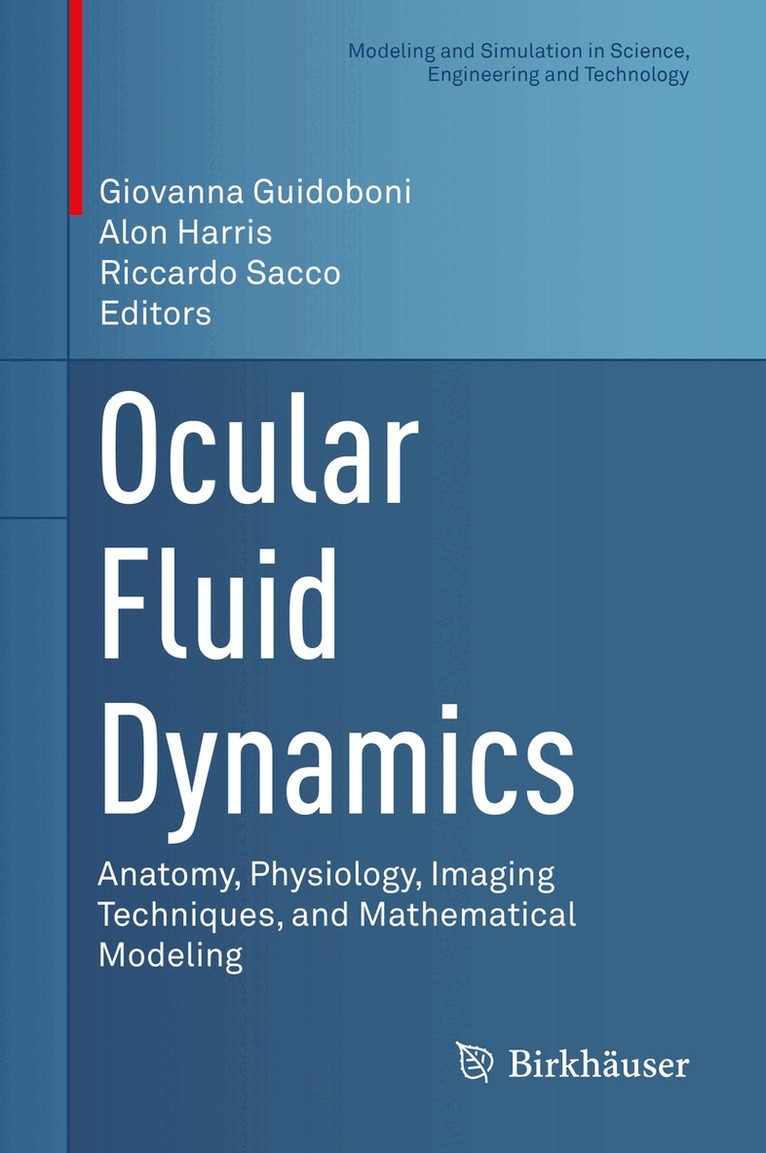
Inbunden, Engelska, 2019
1 616 kr
Skickas inom 10-15 vardagar
The chapters in this contributed volume showcase current theoretical approaches in the modeling of ocular fluid dynamics in health and disease. By including chapters written by experts from a variety of fields, this volume will help foster a genuinely collaborative spirit between clinical and research scientists. It vividly illustrates the advantages of clinical and experimental methods, data-driven modeling, and physically-based modeling, while also detailing the limitations of each approach. Blood, aqueous humor, vitreous humor, tear film, and cerebrospinal fluid each have a section dedicated to their anatomy and physiology, pathological conditions, imaging techniques, and mathematical modeling. Because each fluid receives a thorough analysis from experts in their respective fields, this volume stands out among the existing ophthalmology literature.Ocular Fluid Dynamics is ideal for current and future graduate students in applied mathematicsand ophthalmology who wish to explore the field by investigating open questions, experimental technologies, and mathematical models. It will also be a valuable resource for researchers in mathematics, engineering, physics, computer science, chemistry, ophthalmology, and more.
E-bok
Engelska, 20192 049 kr
Läs direkt efter köp
The chapters in this contributed volume showcase current theoretical approaches in the modeling of ocular fluid dynamics in health and disease. By including chapters written by experts from a variety of fields, this volume will help foster a genuinely collaborative spirit between clinical and research scientists. It vividly illustrates the advantages of clinical and experimental methods, data-driven modeling, and physically-based modeling, while also detailing the limitations of each approach. Blood, aqueous humor, vitreous humor, tear film, and cerebrospinal fluid each have a section dedicated to their anatomy and physiology, pathological conditions, imaging techniques, and mathematical modeling. Because each fluid receives a thorough analysis from experts in their respective fields, this volume stands out among the existing ophthalmology literature.Ocular Fluid Dynamics is ideal for current and future graduate students in applied mathematicsand ophthalmology who wish to explore the field by investigating open questions, experimental technologies, and mathematical models. It will also be a valuable resource for researchers in mathematics, engineering, physics, computer science, chemistry, ophthalmology, and more.
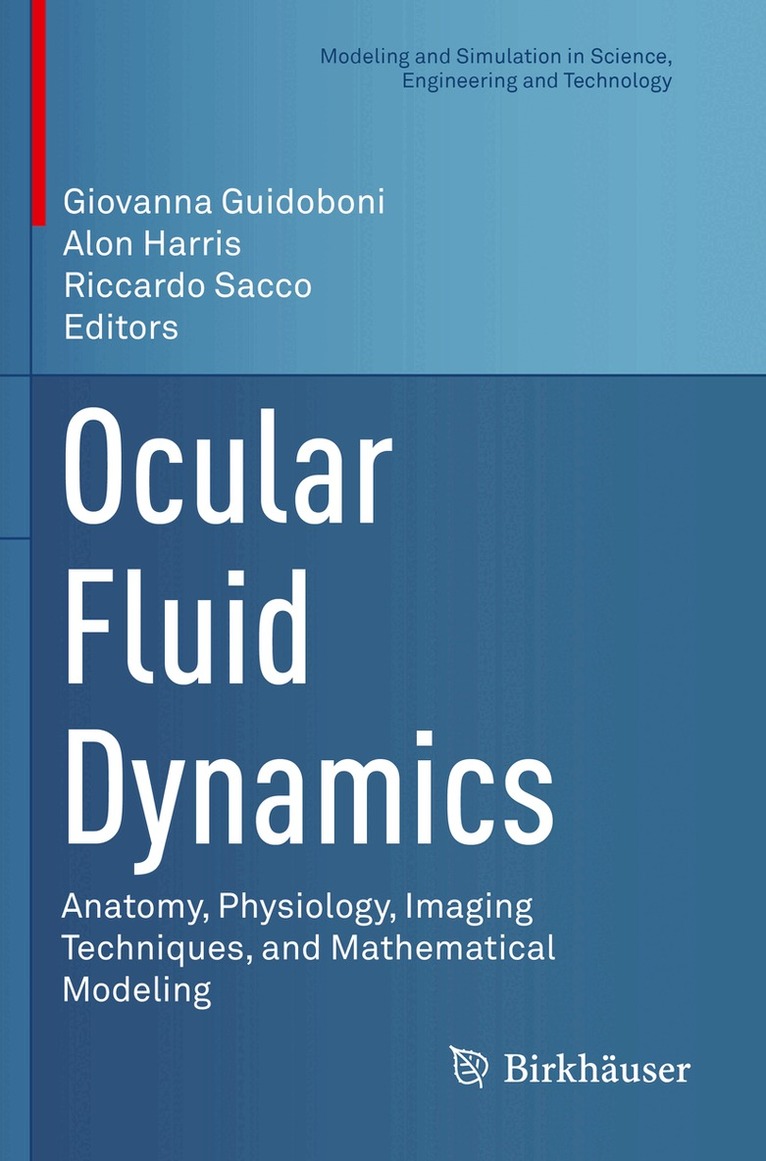
Häftad, Engelska, 2021
1 616 kr
Skickas inom 10-15 vardagar
The chapters in this contributed volume showcase current theoretical approaches in the modeling of ocular fluid dynamics in health and disease. By including chapters written by experts from a variety of fields, this volume will help foster a genuinely collaborative spirit between clinical and research scientists. It vividly illustrates the advantages of clinical and experimental methods, data-driven modeling, and physically-based modeling, while also detailing the limitations of each approach. Blood, aqueous humor, vitreous humor, tear film, and cerebrospinal fluid each have a section dedicated to their anatomy and physiology, pathological conditions, imaging techniques, and mathematical modeling. Because each fluid receives a thorough analysis from experts in their respective fields, this volume stands out among the existing ophthalmology literature.Ocular Fluid Dynamics is ideal for current and future graduate students in applied mathematicsand ophthalmology who wish to explore the field by investigating open questions, experimental technologies, and mathematical models. It will also be a valuable resource for researchers in mathematics, engineering, physics, computer science, chemistry, ophthalmology, and more.
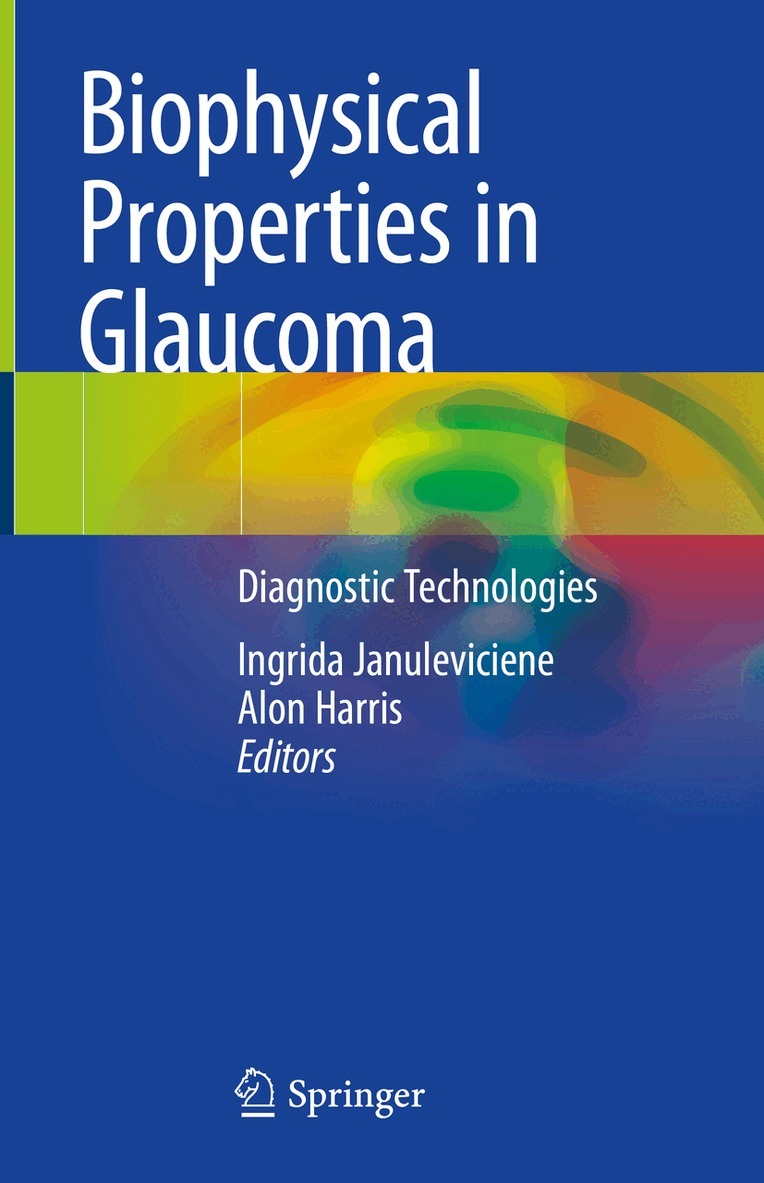
Inbunden, Engelska, 2019
559 kr
Skickas inom 10-15 vardagar
This book provides an overview on new insights in glaucoma, the latest technological developments, scientific achievements, and novel research leading to new paradigms in glaucoma diagnosis. Readers will discover a broad picture starting from theoretical perspectives in diagnostic criteria followed by practical examination and clinical interpretations while highlighting potential pitfalls and limitations in analysis. Non-invasive, modern technologies allowing visualization and quantification of various parts of the human eye are fast evolving and improving interpretation of modern diagnostic possibilities are essential to fill the gap between sophisticated equipment, complex clinical data, and the need for precision-medicine based interpretation. Issues such as the importance of intraocular, intracranial, and ocular perfusion pressures (IOP, ICP, OPP) in the pathogenesis of glaucoma; and imaging modalities for examination of the optic nerve head, retinal fiber layer,and visual field assessment in glaucoma are explored in these chapters. The problem-based learning approach presented herein offers a succinct go-to-guide to read and discover answers.