Alp Yenen – författare
Visar alla böcker från författaren Alp Yenen. Handla med fri frakt och snabb leverans.
5 produkter
5 produkter
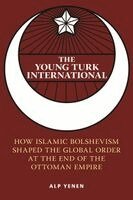
The Young Turk International
How Islamic Bolshevism Shaped the Global Order at the End of the Ottoman Empire
Inbunden, Engelska, 2026
1 632 kr
Kommande
The Great War ended with the Ottoman Empire’s defeat, its remaining territories destined for partition at the Paris Peace Conference. However, this settlement was complicated by a global moment of Muslim internationalism, as revolutions, revolts, and wars of independence swept across the Muslim world. Muslim internationalists resisted European imperialism, demanded self-determination, envisioned federations, and sought anticolonial alliances with Soviet Russia. Amid this crisis of empire, European powers grew alarmed by the specter of “Islamic Bolshevism”—any ideological, incidental, or imagined alignment between Muslim anticolonial movements and communism—which they saw as a threat to global order.Alp Yenen tells the story of a group of exiled “Young Turk” leaders—fugitive Ottoman statesmen wanted as war criminals for the Armenian Genocide—who sought to seize this moment by founding the Union of Muslim Revolutionary Societies. This “Young Turk International” connected Muslim revolutionaries with German revisionists and Russian Bolsheviks, forging transnational networks with Arabs and Indians and international alliances with Turkey, Iran, and Afghanistan to challenge European hegemony. Although their efforts ultimately failed, their story illuminates the lost possibilities of Muslim internationalism and the emergence of the post-Ottoman political landscape. Beyond this movement’s spectacular rise and fall between 1918 and 1922, this book explores how imperial security discourses, the agency of nonstate actors, and the consolidation of state hegemony shaped the global order. Based on extensive research in private papers and state archives, The Young Turk International offers a new global history of the post–World War I peace settlement.
The Young Turk International
How Islamic Bolshevism Shaped the Global Order at the End of the Ottoman Empire
Häftad, Engelska, 2026
432 kr
Kommande
The Great War ended with the Ottoman Empire’s defeat, its remaining territories destined for partition at the Paris Peace Conference. However, this settlement was complicated by a global moment of Muslim internationalism, as revolutions, revolts, and wars of independence swept across the Muslim world. Muslim internationalists resisted European imperialism, demanded self-determination, envisioned federations, and sought anticolonial alliances with Soviet Russia. Amid this crisis of empire, European powers grew alarmed by the specter of “Islamic Bolshevism”—any ideological, incidental, or imagined alignment between Muslim anticolonial movements and communism—which they saw as a threat to global order.Alp Yenen tells the story of a group of exiled “Young Turk” leaders—fugitive Ottoman statesmen wanted as war criminals for the Armenian Genocide—who sought to seize this moment by founding the Union of Muslim Revolutionary Societies. This “Young Turk International” connected Muslim revolutionaries with German revisionists and Russian Bolsheviks, forging transnational networks with Arabs and Indians and international alliances with Turkey, Iran, and Afghanistan to challenge European hegemony. Although their efforts ultimately failed, their story illuminates the lost possibilities of Muslim internationalism and the emergence of the post-Ottoman political landscape. Beyond this movement’s spectacular rise and fall between 1918 and 1922, this book explores how imperial security discourses, the agency of nonstate actors, and the consolidation of state hegemony shaped the global order. Based on extensive research in private papers and state archives, The Young Turk International offers a new global history of the post–World War I peace settlement.
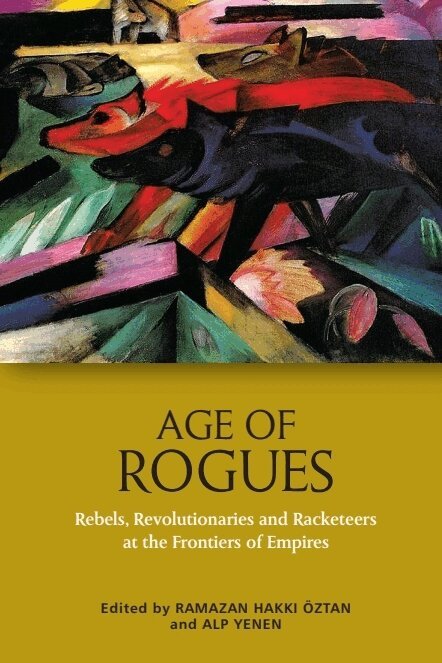
Age of Rogues
Rebels, Revolutionaries and Racketeers at the Frontiers of Empires
Inbunden, Engelska, 2021
1 361 kr
Skickas inom 7-10 vardagar
In Age of Rogues, leading scholars engage with themes of historical and cultural legacies, contentious interactions within imperial regimes, and the biographical trajectory of men and women who challenged the political status quo of their time. Rebels, revolutionaries and racketeers played central roles in the violent process of imperial disintegration as it unfolded in the frontiers of the Ottoman, Habsburg, Romanov and Qajar empires. This is a history of these transgressive actors from the late-19th century to the interwar years. This time was marked by similar, if not shared, revolutionary experiences and repertoires of contention across the connected geography of the Balkans, the Middle East and the Caucasus.
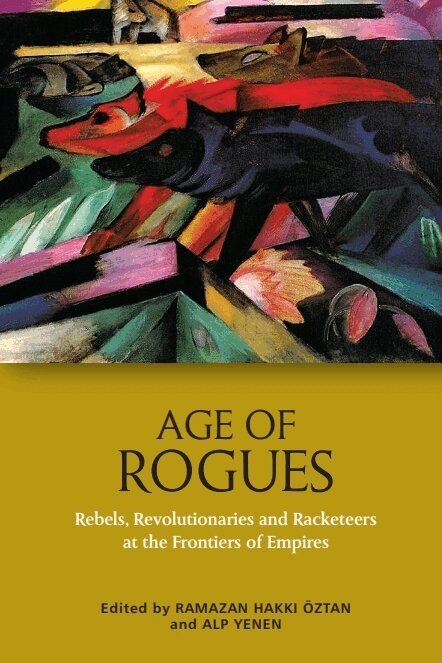
Age of Rogues
Rebels, Revolutionaries and Racketeers at the Frontiers of Empires
Häftad, Engelska, 2023
710 kr
Skickas inom 3-6 vardagar
Studies the frontier cultures of revolution that shaped the making of the modern Middle EastUses a novel conceptual framework that charts the rise of transgressive politics in the frontiers of empiresIncludes a variety of biographical approaches to the key disruptive figures during the crisis of imperial and post-imperial regimes in the regionRepresents a connected geography of imperial collapse and nation-state formation in 12 case study chaptersEngages with scholarship on intercommunal violence, revolutionary politics, and subaltern agencyIn Age of Rogues, leading scholars engage with themes of historical and cultural legacies, contentious interactions within imperial regimes, and the biographical trajectory of men and women who challenged the political status quo of their time.Rebels, revolutionaries and racketeers played central roles in the violent process of imperial disintegration as it unfolded in the frontiers of the Ottoman, Habsburg, Romanov and Qajar empires. This is a history of these transgressive actors from the late-19th century to the interwar years. This time was marked by similar, if not shared, revolutionary experiences and repertoires of contention across the connected geography of the Balkans, the Middle East and the Caucasus.
789 kr
Skickas inom 5-8 vardagar
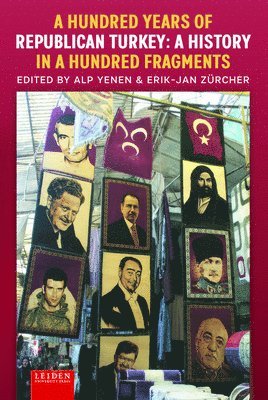
On October 29, 2023, the Republic of Turkey will celebrate its centennial. The foundation of the Turkish Republic in 1923 marks the catastrophic, yet triumphant, foundation of a new nation-state as the successor of the defeated and partitioned Ottoman Empire. Until today, Turkey remains to be the center of attention due to its continued state of crisis and its position between Europe and the Middle East. In the 100 years of its history, Turkey went through multiple political and social transformations. The Kemalist origins in the Interwar years were marked by an authoritarian nation-state building in a post-imperial society with cultural reforms and modernization projects which radically constructed a new national identity and a secular ethos. The tumultuous decades during the Cold War opened a more democratic and culturally diverse field, but rapid socio-economic developments and ideological radicalization contributed to political instability, which in return legitimized Turkey’s endemic military tutelage over civilian-democratic affairs. While post-Cold War Turkey suffered from corruption and intensified identity politics, the brief moment of political stability and opening as well as the economic growth reached in the 2000s proved to be a false promise under the Justice and Development Party. Contemporary Turkey under the President Recep Tayyip Erdo.an is suffering from multiple problems resulting from the authoritarian policies of the government, Muslim-conservative vulgar populism, and an aggressive foreign policy that feeds into Muslim-Turkish nationalism at home. This volume is the first of its kind in offering a history of hundred years of Republican history through expert introductions to 100 sources on various themes of politics, economy, society, culture, gender, and arts. In doing so, this project will not only tell a truly multi-facetted history under the guidance of prominent and promising scholars of Turkish Studies, but will also allow its readers to hear voices and see images of a fascinating Republican past.