Álvaro Moreno - Böcker
Visar alla böcker från författaren Álvaro Moreno. Handla med fri frakt och snabb leverans.
4 produkter
4 produkter
535 kr
Skickas inom 7-10 vardagar
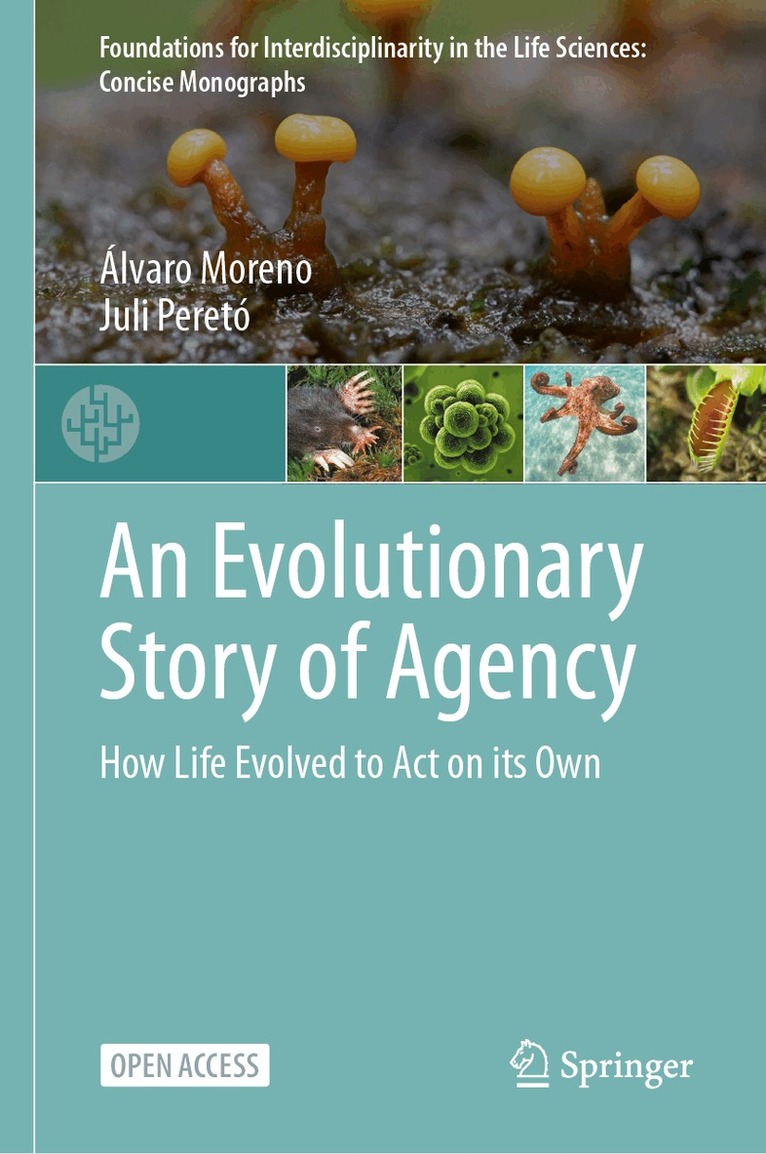
This open access book exposes the role of "agency" in the history of life. Agency is understood as the capacity of an organism to act, make decisions, and exercise control over its actions in order to achieve goals or to navigate and interact with its environment. The question of agency has become a hot and controversial topic in Biology and Philosophy of the Natural Sciences. This volume studies said topic through its historical expressions, investigating how and why it has appeared, and what was its selective advantage in the past, assuming a continuity in how it has evolved in different life forms. By also explaining how and why agency has evolved and become more complex in some branches of the tree of life, the authors show how life has made its way on our planet with forms of agency as diverse as those shown by bacteria, plants or animals, which are the most sophisticated and complex agents. The book is of great interest to a broad audience, whether philosophically or biologically inclined, interested in understanding fundamental aspects of how life works and in seeking explanations for why life has been so successful on planet Earth.
Advances in Artificial Life
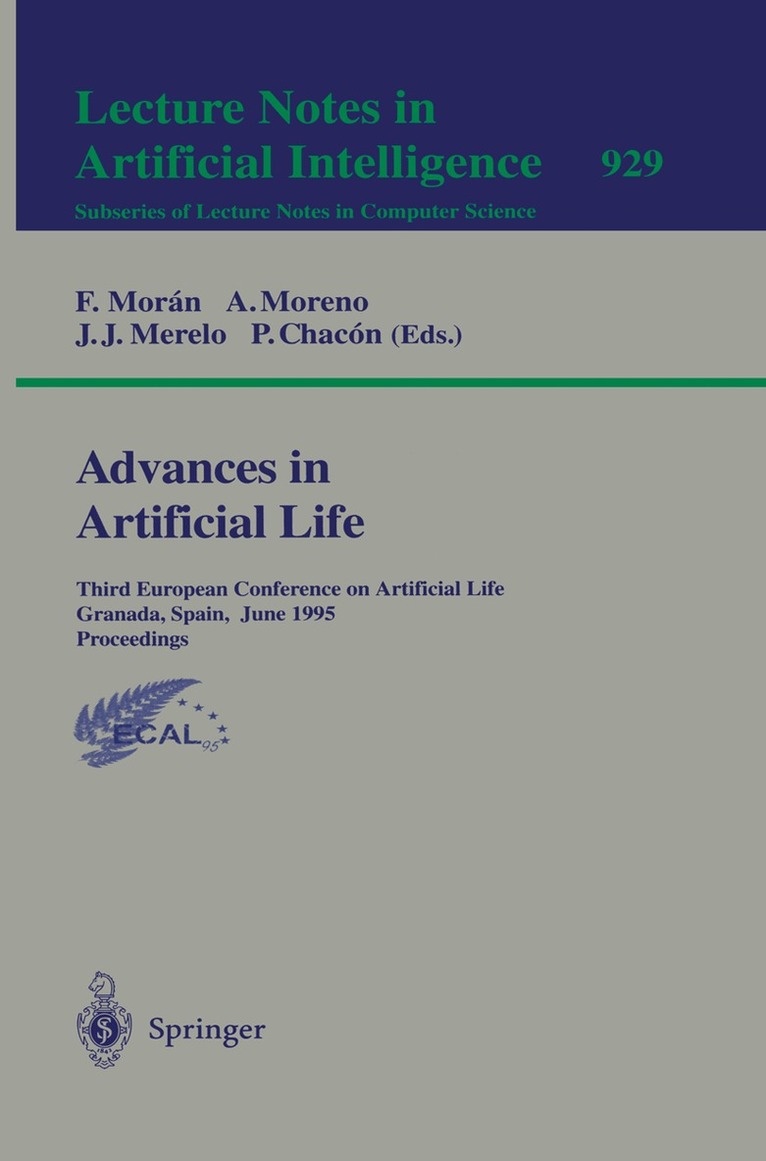
Third European Conference on Artificial Life, Granada, Spain, June 4 - 6, 1995 Proceedings
Häftad, Engelska, 1995
1 064 kr
Skickas inom 10-15 vardagar
This volume contains 71 revised refereed papers, including seven invited surveys, presented during the Third European Conference on Artificial Life, ECAL '95, held in Granada, Spain in June 1995. Originally AL was concerned with applying biologically inspired solutions to technology and with examining computational expertise in order to reproduce and understand life processes. Despite its short history, AL now is becoming a mature scientific field. The volume reports the state of the art in this exciting area of research; there are sections on foundations and epistemology, origins of life and evolution, adaptive and cognitive systems, artificial worlds, robotics and emulation of animal behavior, societies and collective behavior, biocomputing, and applications and common tools.
Del 12 - History, Philosophy and Theory of the Life Sciences
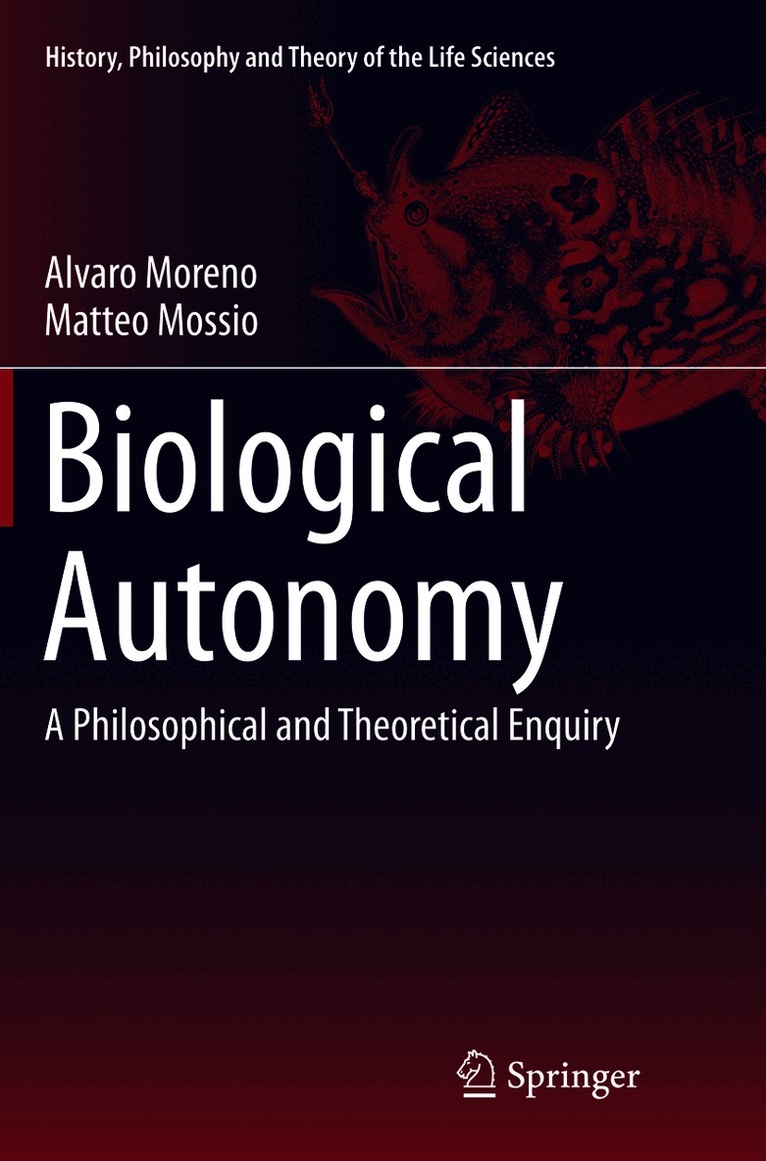
Biological Autonomy
A Philosophical and Theoretical Enquiry
Inbunden, Engelska, 2015
1 169 kr
Skickas inom 10-15 vardagar
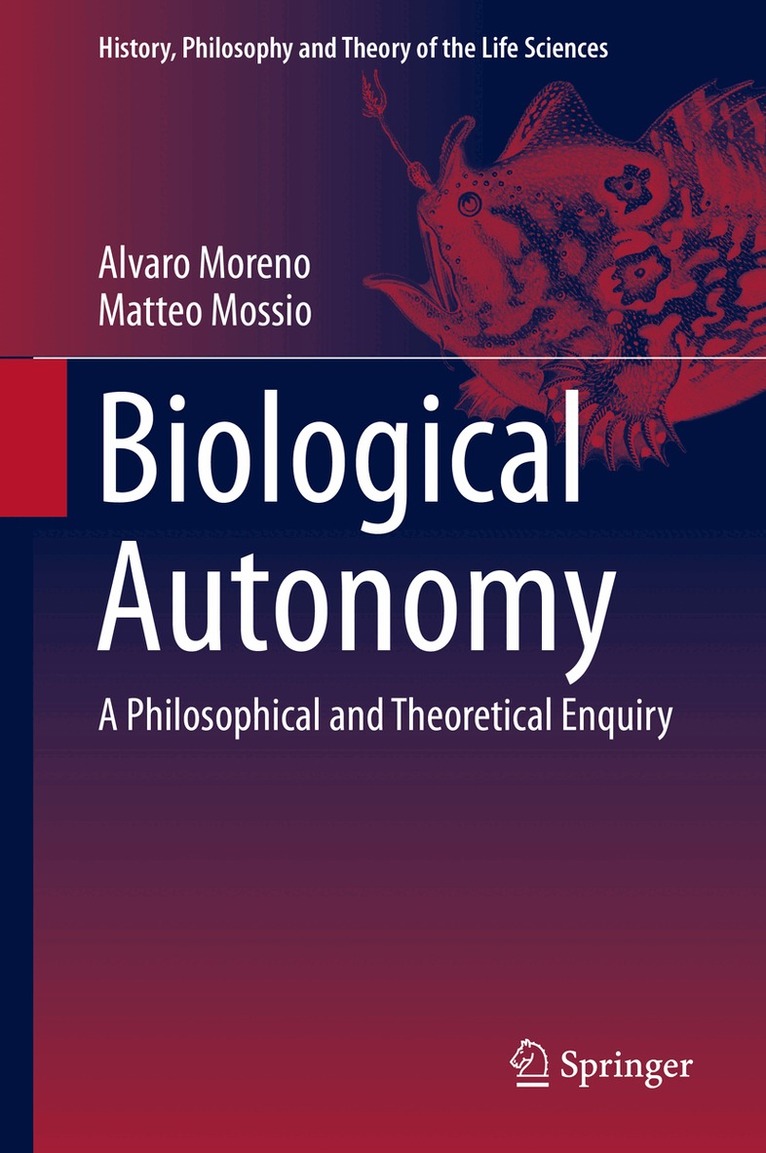
Since Darwin, Biology has been framed on the idea of evolution by natural selection, which has profoundly influenced the scientific and philosophical comprehension of biological phenomena and of our place in Nature. This book argues that contemporary biology should progress towards and revolve around an even more fundamental idea, that of autonomy. Biological autonomy describes living organisms as organised systems, which are able to self-produce and self-maintain as integrated entities, to establish their own goals and norms, and to promote the conditions of their existence through their interactions with the environment.Topics covered in this book include organisation and biological emergence, organisms, agency, levels of autonomy, cognition, and a look at the historical dimension of autonomy. The current development of scientific investigations on autonomous organisation calls for a theoretical and philosophical analysis. This can contribute to the elaboration of an original understanding of life - including human life - on Earth, opening new perspectives and enabling fecund interactions with other existing theories and approaches. This book takes up the challenge.
Del 12 - History, Philosophy and Theory of the Life Sciences
Biological Autonomy
A Philosophical and Theoretical Enquiry
Häftad, Engelska, 2016
1 169 kr
Skickas inom 10-15 vardagar
Since Darwin, Biology has been framed on the idea of evolution by natural selection, which has profoundly influenced the scientific and philosophical comprehension of biological phenomena and of our place in Nature. This book argues that contemporary biology should progress towards and revolve around an even more fundamental idea, that of autonomy. Biological autonomy describes living organisms as organised systems, which are able to self-produce and self-maintain as integrated entities, to establish their own goals and norms, and to promote the conditions of their existence through their interactions with the environment.Topics covered in this book include organisation and biological emergence, organisms, agency, levels of autonomy, cognition, and a look at the historical dimension of autonomy. The current development of scientific investigations on autonomous organisation calls for a theoretical and philosophical analysis. This can contribute to the elaboration of an original understanding of life - including human life - on Earth, opening new perspectives and enabling fecund interactions with other existing theories and approaches. This book takes up the challenge.