Alyssa Ayres – författare
Visar alla böcker från författaren Alyssa Ayres. Handla med fri frakt och snabb leverans.
16 produkter
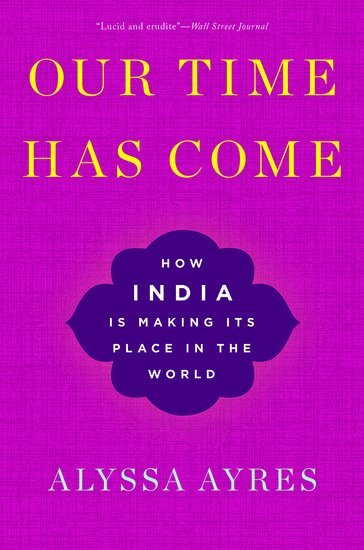
Our Time Has Come
How India is Making Its Place in the World
Av Alyssa Ayres
Häftad, 2020
338 kr
Lägg i varukorg
Over the last 25 years, India's explosive economic growth has vaulted it into the ranks of the world's emerging major powers. India's middle class has grown by leaps and bounds, and the country's sheer scale-possessing what will very soon be the world's largest population and an economy of more …
Our Time Has Come
How India is Making Its Place in the World
Av Alyssa Ayres
Inbunden, 2018
371 kr
Lägg i varukorg
Over the last 25 years, India's explosive economic growth has vaulted it into the ranks of the world's emerging major powers. Long plagued by endemic poverty, until the 1990s the Indian economy was also hamstrung by a burdensome regulatory regime that limited its ability to compete on a global …
Our Time Has Come
How India is Making Its Place in the World
Av Alyssa Ayres
E-bok, 2017
135 kr
Lägg i varukorg
Over the last 25 years, India''s explosive economic growth has vaulted it into the ranks of the world''s emerging major powers. India''s middle class has grown by leaps and bounds, and the country''s sheer scale-possessing what will very soon be the world''s largest population and an economy of …
Our Time Has Come
How India is Making Its Place in the World
Av Alyssa Ayres
E-bok, 2017
135 kr
Lägg i varukorg
Over the last 25 years, India''s explosive economic growth has vaulted it into the ranks of the world''s emerging major powers. India''s middle class has grown by leaps and bounds, and the country''s sheer scale-possessing what will very soon be the world''s largest population and an economy of …
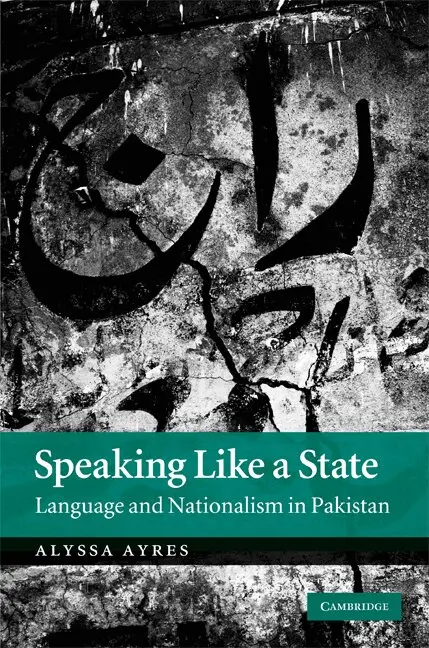
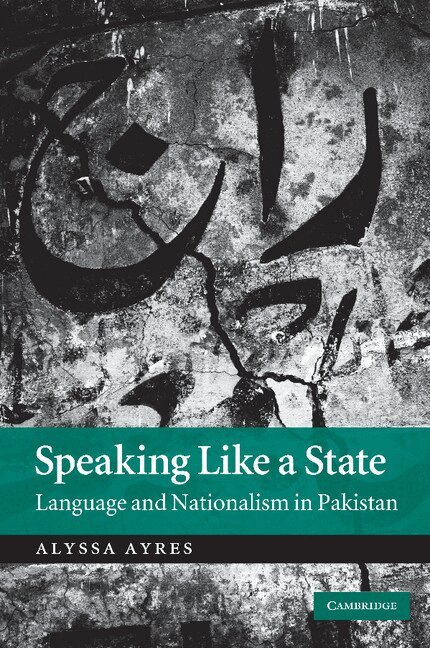
Speaking Like a State
Language and Nationalism in Pakistan
Av Alyssa Ayres
Inbunden, 2009
1563 kr
Lägg i varukorg
Alyssa Ayres' fascinating study examines Pakistan's troubled history by exploring the importance of culture to political legitimacy. Early leaders selected Urdu as the natural symbol of the nation's great cultural past, but due to its limited base great efforts would be required to make it truly …
India Briefing
2001
Av Alyssa Ayres, Philip Oldenburg
Inbunden, 2001
2590 kr
Lägg i varukorg
In the time between 1998 and the publication of this text, India held two national elections and began the second phase of economic reforms. This work examines these political, economic, social and cultural developments in India from 1998 to the end of 2000.
India Briefing
2001
Av Alyssa Ayres, Philip Oldenburg
Häftad, 2001
743 kr
Lägg i varukorg
In the time between 1998 and the publication of this text, India held two national elections and began the second phase of economic reforms. This work examines these political, economic, social and cultural developments in India from 1998 to the end of 2000.
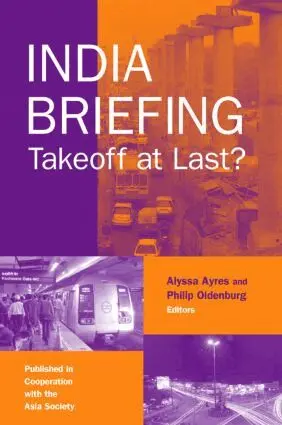
India Briefing
Takeoff at Last?
Av Alyssa Ayres, Philip Oldenburg
Inbunden, 2005
2479 kr
Lägg i varukorg
Since 2001, India has gained new attention as an emerging world power with a rapidly growing economy, a world-class science and technology sector, and a huge English-speaking labor pool. After a period of escalating tension with neighbor Pakistan, wide-ranging peace talks are underway. Within …
India Briefing
Takeoff at Last?
Av Alyssa Ayres, Philip Oldenburg
Häftad, 2005
740 kr
Lägg i varukorg
Since 2001, India has gained new attention as an emerging world power with a rapidly growing economy, a world-class science and technology sector, and a huge English-speaking labor pool. After a period of escalating tension with neighbor Pakistan, wide-ranging peace talks are underway. Within …
Working with a Rising India
A Joint Venture for the New Century
Av Alyssa Ayres, Charles R Kaye m. fl.
Häftad, 2015
316 kr
Lägg i varukorg
Speaking Like a State
Language and Nationalism in Pakistan
Av Alyssa Ayres
Häftad, 2012
557 kr
Lägg i varukorg
Alyssa Ayres' fascinating study examines Pakistan's troubled history by exploring the importance of culture to political legitimacy. Early leaders selected Urdu as the natural symbol of the nation's great cultural past, but due to its limited base great efforts would be required to make it truly …
India Briefing
Takeoff at Last?
Av Philip Oldenburg, Alyssa Ayres
E-bok, 2016
883 kr
Lägg i varukorg
Since 2001, India has gained new attention as an emerging world power with a rapidly growing economy, a world-class science and technology sector, and a huge English-speaking labor pool. After a period of escalating tension with neighbor Pakistan, wide-ranging peace talks are underway. Within …
India Briefing
Takeoff at Last?
Av Philip Oldenburg, Alyssa Ayres
E-bok, 2016
883 kr
Lägg i varukorg
Since 2001, India has gained new attention as an emerging world power with a rapidly growing economy, a world-class science and technology sector, and a huge English-speaking labor pool. After a period of escalating tension with neighbor Pakistan, wide-ranging peace talks are underway. Within …
India Briefing
2001
Av Philip Oldenburg, Alyssa Ayres
E-bok, 2016
818 kr
Lägg i varukorg
In the time between 1998 and the publication of this text, India held two national elections and began the second phase of economic reforms. This work examines these political, economic, social and cultural developments in India from 1998 to the end of 2000.
India Briefing
2001
Av Philip Oldenburg, Alyssa Ayres
E-bok, 2016
874 kr
Lägg i varukorg
In the time between 1998 and the publication of this text, India held two national elections and began the second phase of economic reforms. This work examines these political, economic, social and cultural developments in India from 1998 to the end of 2000.
India Briefing
Staying the Course
Av Alyssa Ayres, Philip Oldenburg
Inbunden, 1995
2513 kr
Lägg i varukorg
In the mid-1990s, India established an economic reform programme, initiated and sustained by a skilled yet quiet political leadership. This text provides an analysis of India's recent foreign policy, especially towards the United States.