Amit Bhardwaj - Böcker
Visar alla böcker från författaren Amit Bhardwaj. Handla med fri frakt och snabb leverans.
15 produkter
15 produkter
583 kr
Skickas inom 5-8 vardagar
861 kr
Skickas inom 5-8 vardagar
651 kr
Skickas inom 5-8 vardagar
858 kr
Skickas inom 5-8 vardagar
651 kr
Skickas inom 5-8 vardagar
643 kr
Skickas inom 5-8 vardagar
643 kr
Skickas inom 5-8 vardagar
643 kr
Skickas inom 5-8 vardagar
643 kr
Skickas inom 5-8 vardagar
741 kr
Skickas inom 5-8 vardagar
Thérapies complémentaires phytothérapeutiques et naturopathiques en parodontologie
Häftad, Franska, 2024
741 kr
Skickas inom 5-8 vardagar
741 kr
Skickas inom 5-8 vardagar
716 kr
Skickas inom 5-8 vardagar
1 064 kr
Skickas inom 10-15 vardagar
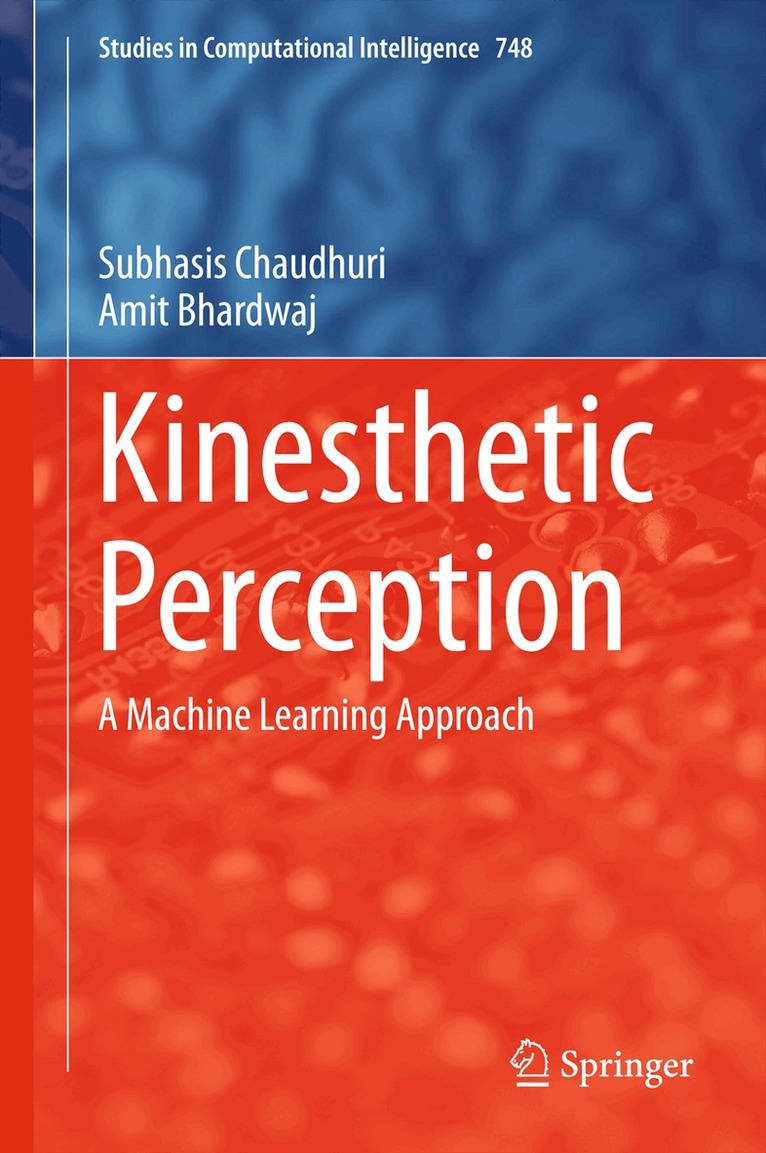
This book focuses on the study of possible adaptive sampling mechanisms for haptic data compression aimed at applications like tele-operations and tele-surgery. Demonstrating that the selection of the perceptual dead zones is a non-trivial problem, it presents an exposition of various issues that researchers must consider while designing compression algorithms based on just noticeable difference (JND). The book begins by identifying perceptually adaptive sampling strategies for 1-D haptic signals, and goes on to extend the findings on multidimensional signals to study directional sensitivity, if any. The book also discusses the effect of the rate of change of kinesthetic stimuli on the JND, temporal resolution for the perceivability of kinesthetic force stimuli, dependence of kinesthetic perception on the task being performed, the sequential effect on kinesthetic perception, and, correspondingly, on the perceptual dead zone. Offering a valuable resource for researchers, professionals,and graduate students working on haptics and machine perception studies, the book can also support interdisciplinary work focused on automation in surgery.
1 064 kr
Skickas inom 10-15 vardagar
The book also discusses the effect of the rate of change of kinesthetic stimuli on the JND, temporal resolution for the perceivability of kinesthetic force stimuli, dependence of kinesthetic perception on the task being performed, the sequential effect on kinesthetic perception, and, correspondingly, on the perceptual dead zone.