Ana Iglesias - Böcker
Visar alla böcker från författaren Ana Iglesias. Handla med fri frakt och snabb leverans.
3 produkter
3 produkter
1 497 kr
Skickas inom 11-20 vardagar
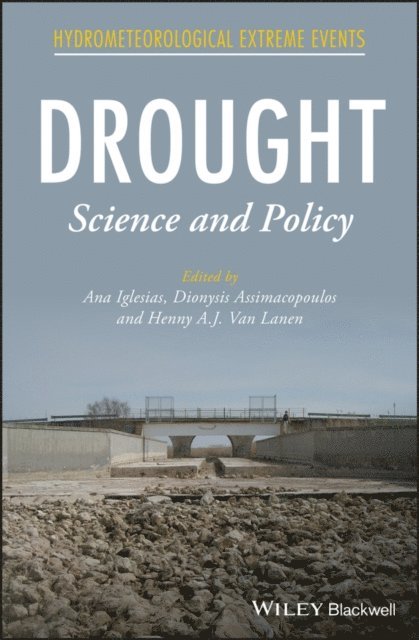
Comprehensive coverage of understanding, prevention, and risk management of extreme drought events, with examples of approaches followed in water-stressed regionsThis book describes the progress made in our understanding of severe drought and explains how we can deal with—and even avoid—complete devastation brought on by such punishing events. It brings forward advanced knowledge on drought hazard analysis and management, particularly from EU-funded research projects, to assist in the development of the corresponding drought management plans. In addition, this book addresses issues of social vulnerability to drought and science-policy interfaces, which are important elements of drought management.Divided into three sections, this book covers the diagnosis of physical processes, historic drought and the trends in historic drought, and perspectives of future drought. It takes an academic approach to risk evaluation, including characterization of drought episodes, development of indicators of risk in hydrological and agricultural systems, and analysis of the role of socio-economic instruments for risk mitigation. It also discusses the interactions that have resulted in the complex institutional framework, and highlights the importance of stakeholder involvement and awareness building for successful drought management. In addition, Drought: Science and Policy features a collection of case studies that include the description of effective measures taken in the past. Addresses the growing issue of drought preparedness planning, monitoring, and mitigationTeaches methodologies and lessons focused on specific, drought-prone regions so the applications have more significanceProvides examples of approaches followed in water-stressed regions (river basin and national scale) with drought analyses at the pan-European scaleDrought: Science and Policy will be an invaluable reference for researchers and practitioners in the field as well as Masters students taking relevant courses in drought management and natural disaster management.
Coping with Drought Risk in Agriculture and Water Supply Systems
Drought Management and Policy Development in the Mediterranean
Inbunden, Engelska, 2009
1 064 kr
Skickas inom 10-15 vardagar
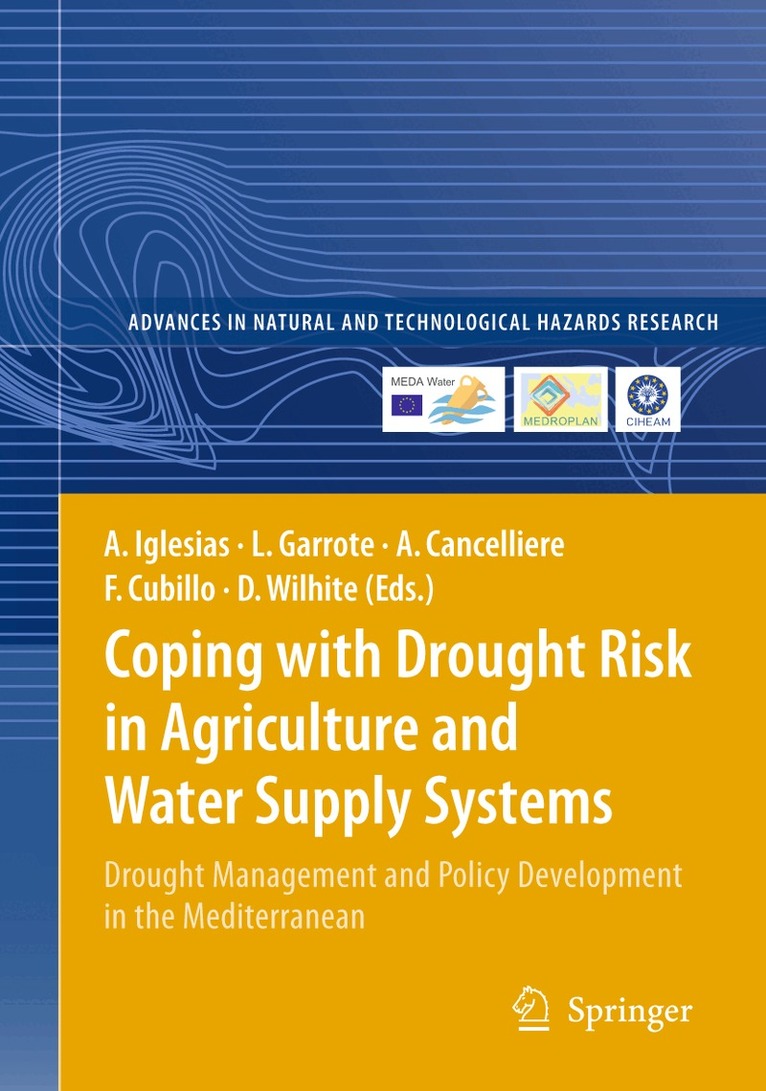
Over the last three decades drought episodes have resulted in severe social problems in Mediterranean countries, receiving broad attention from the international scientific and policy communities. The experiences in the development and implementation of drought management plans highlight the success and challenges of coping with drought for societies with different vulnerabilities and emphasize risk-based drought management as a critical approach to mitigate the impacts associated to drought-induced water shortages. Based on these experiences and the current methods for evaluating risk, the book synthesises guidelines for drought management that link science and policy and that can be applied to other regions. The book comprises a collection of papers divided into four sections that appeal to a broad audience. First, the social and hydrological context of Mediterranean countries is presented, discussing the interactions that have resulted in the complex institutional framework, and highlighting the importance of stakeholder involvement and awareness building for successful drought management. This section emphasises the role of organizations, institutions, and civil stakeholders involved in drought preparedness and mitigation and/or on water management for designing effective risk based strategies that mitigate the effects of drought in agriculture and water supply systems. Second, the book presents an academic approach to risk evaluation, including characterization of drought episodes, development of indicators of risk in hydrological and agricultural systems, and analysis of the role of economic instruments and groundwater for risk mitigation. This section finalises with the description of an integrated method for evaluating social vulnerability based on indicators that include the capacity to anticipate, cope, and respond to drought.The third section includes a collection of case studies that include the description of effective measures taken in the past. These case studies provide the context for developing demand driven guidelines that may be applied to other regions. The authors of these chapters can be viewed as stakeholders in drought management, since they represent a broad range of sectors and institutions from Mediterranean European and North African countries. The topics addressed have implications for the international policy community interested in disaster mitigation, agricultural policy, and development. Finally a synthesis of the management actions is presented in four chapters. Monitoring and preparedness planning is the essential first step for moving from disaster to risk management in response to drought. The management actions related to agriculture and water supply systems are presented in two different chapters but with a common conceptual framework based on the use of drought indicators for evaluating the levels of drought risk (pre-alert, alert, and emergency), that allow establishing linkages between science and policy. The final chapter discuses the lessons learned and application to other regions.
Coping with Drought Risk in Agriculture and Water Supply Systems
Drought Management and Policy Development in the Mediterranean
Häftad, Engelska, 2014
1 064 kr
Skickas inom 10-15 vardagar
Over the last three decades drought episodes have resulted in severe social problems in Mediterranean countries, receiving broad attention from the international scientific and policy communities. The experiences in the development and implementation of drought management plans highlight the success and challenges of coping with drought for societies with different vulnerabilities and emphasize risk-based drought management as a critical approach to mitigate the impacts associated to drought-induced water shortages. Based on these experiences and the current methods for evaluating risk, the book synthesises guidelines for drought management that link science and policy and that can be applied to other regions. The book comprises a collection of papers divided into four sections that appeal to a broad audience. First, the social and hydrological context of Mediterranean countries is presented, discussing the interactions that have resulted in the complex institutional framework, and highlighting the importance of stakeholder involvement and awareness building for successful drought management. This section emphasises the role of organizations, institutions, and civil stakeholders involved in drought preparedness and mitigation and/or on water management for designing effective risk based strategies that mitigate the effects of drought in agriculture and water supply systems. Second, the book presents an academic approach to risk evaluation, including characterization of drought episodes, development of indicators of risk in hydrological and agricultural systems, and analysis of the role of economic instruments and groundwater for risk mitigation. This section finalises with the description of an integrated method for evaluating social vulnerability based on indicators that include the capacity to anticipate, cope, and respond to drought.The third section includes a collection of case studies that include the description of effective measures taken in the past. These case studies provide the context for developing demand driven guidelines that may be applied to other regions. The authors of these chapters can be viewed as stakeholders in drought management, since they represent a broad range of sectors and institutions from Mediterranean European and North African countries. The topics addressed have implications for the international policy community interested in disaster mitigation, agricultural policy, and development. Finally a synthesis of the management actions is presented in four chapters. Monitoring and preparedness planning is the essential first step for moving from disaster to risk management in response to drought. The management actions related to agriculture and water supply systems are presented in two different chapters but with a common conceptual framework based on the use of drought indicators for evaluating the levels of drought risk (pre-alert, alert, and emergency), that allow establishing linkages between science and policy. The final chapter discuses the lessons learned and application to other regions.