Anantanand Rambachan – författare
Visar alla böcker från författaren Anantanand Rambachan. Handla med fri frakt och snabb leverans.
9 produkter
9 produkter
1 057 kr
Tillfälligt slut
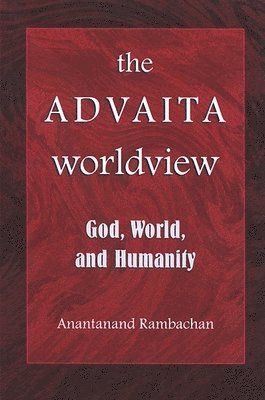
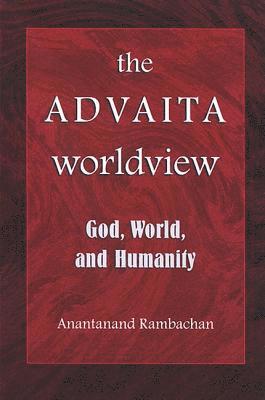
A new interpretation of Hindu tradition focusing on the nature of God, the value of the world, and the meaning of liberation.2007 CHOICE Outstanding Academic Title In this book, Anantanand Rambachan offers a fresh and detailed perspective on Advaita Vedanta, Hinduism's most influential and revered religious tradition. Rambachan, who is both a scholar and an Advaitin, attends closely to the Upanisads and authentic commentaries of Sankara to challenge the tradition and to reconsider central aspects of its current teachings. His reconstruction and reinterpretation of Advaita focuses in particular on the nature of brahman, the status of the world in relation to brahman, and the meaning and relevance of liberation.Rambachan queries contemporary representations of an impersonal brahman and the need for popular, hierarchical distinctions such as those between a higher (para) and lower (apara) brahman. Such distinctions, Rambachan argues, are inconsistent with the non-dual nature of brahman and are unnecessary when brahman's relationship with the world is correctly understood. Questioning Advaita's traditional emphasis on renunciation and world-denial, Rambachan expands the understanding of suffering (duhkha) and liberation (moksa) and addresses socioeconomic as well as gender and caste inequalities. Positing that the world is a celebrative expression of God's fullness, this book advances Advaita as a universal and uninhibited path to a liberated life committed to compassion, equality, and justice.
433 kr
Skickas inom 5-8 vardagar
A new interpretation of Hindu tradition focusing on the nature of God, the value of the world, and the meaning of liberation.2007 CHOICE Outstanding Academic Title In this book, Anantanand Rambachan offers a fresh and detailed perspective on Advaita Vedanta, Hinduism's most influential and revered religious tradition. Rambachan, who is both a scholar and an Advaitin, attends closely to the Upanisads and authentic commentaries of Sankara to challenge the tradition and to reconsider central aspects of its current teachings. His reconstruction and reinterpretation of Advaita focuses in particular on the nature of brahman, the status of the world in relation to brahman, and the meaning and relevance of liberation.Rambachan queries contemporary representations of an impersonal brahman and the need for popular, hierarchical distinctions such as those between a higher (para) and lower (apara) brahman. Such distinctions, Rambachan argues, are inconsistent with the non-dual nature of brahman and are unnecessary when brahman's relationship with the world is correctly understood. Questioning Advaita's traditional emphasis on renunciation and world-denial, Rambachan expands the understanding of suffering (duhkha) and liberation (moksa) and addresses socioeconomic as well as gender and caste inequalities. Positing that the world is a celebrative expression of God's fullness, this book advances Advaita as a universal and uninhibited path to a liberated life committed to compassion, equality, and justice.
194 kr
Skickas inom 10-15 vardagar
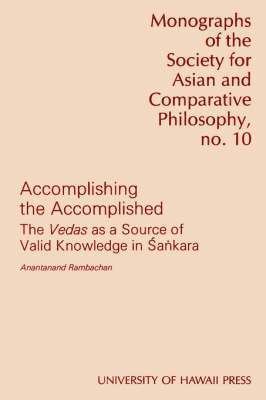
Sankara's non-dualistic system of Advaita Vedanta has long been recognized as one of the greatest philosophical achievements of the Indian tradition. At the heart of Sankara's system is the articulation of the means by which a human understanding of ultimate reality can be attained. Most scholarship has concluded that for Sankara, full knowledge of ultimate reality can be acquired only through personal experience. Through a careful analysis of the original commentaries, however, Anantanand Rambachan attempts to establish that Sankara regarded the ""Vedas"" as the unique and definitive source of valid knowledge of ultimate reality. All other sources of knowledge, including personal experience, are in fact to be understood as subordinate to the revelations of the ""Vedas"".
1 057 kr
Tillfälligt slut
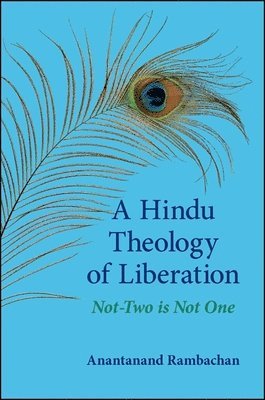
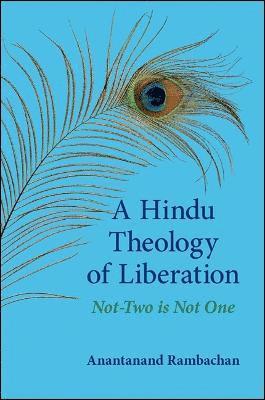
Discusses Hindu Advaita Vedānta as a philosophy of social justice for the modern world.Finalist for the 2016 Book Award for Excellence in the Study of Religion, in the Constructive-Reflective category presented by the American Academy of ReligionThis engaging and accessible work provides an introduction to the Hindu tradition of Advaita Vedānta and brings it into discussion with contemporary concerns. Advaita, the non-dual school of Indian philosophy and spirituality associated with Śaṅkara, is often seen as "other-worldly," regarding the world as an illusion. Anantanand Rambachan has played a central role in presenting a more authentic Advaita, one that reveals how Advaita is positive about the here and now. The first part of the book presents the hermeneutics and spirituality of Advaita, using textual sources, classical commentary, and modern scholarship. The book's second section considers the implications of Advaita for ethical and social challenges: patriarchy, homophobia, ecological crisis, child abuse, and inequality. Rambachan establishes how Advaita's non-dual understanding of reality provides the ground for social activism and the values that advocate for justice, dignity, and the equality of human beings.
353 kr
Skickas
Discusses Hindu Advaita Vedānta as a philosophy of social justice for the modern world.Finalist for the 2016 Book Award for Excellence in the Study of Religion, in the Constructive-Reflective category presented by the American Academy of ReligionThis engaging and accessible work provides an introduction to the Hindu tradition of Advaita Vedānta and brings it into discussion with contemporary concerns. Advaita, the non-dual school of Indian philosophy and spirituality associated with Śaṅkara, is often seen as "other-worldly," regarding the world as an illusion. Anantanand Rambachan has played a central role in presenting a more authentic Advaita, one that reveals how Advaita is positive about the here and now. The first part of the book presents the hermeneutics and spirituality of Advaita, using textual sources, classical commentary, and modern scholarship. The book's second section considers the implications of Advaita for ethical and social challenges: patriarchy, homophobia, ecological crisis, child abuse, and inequality. Rambachan establishes how Advaita's non-dual understanding of reality provides the ground for social activism and the values that advocate for justice, dignity, and the equality of human beings.
433 kr
Skickas inom 5-8 vardagar
325 kr
Skickas inom 5-8 vardagar
235 kr
Skickas inom 5-8 vardagar
216 kr
Skickas inom 5-8 vardagar