Anders Jägerskog - Böcker
Visar alla böcker från författaren Anders Jägerskog. Handla med fri frakt och snabb leverans.
9 produkter
9 produkter
671 kr
Skickas inom 10-15 vardagar
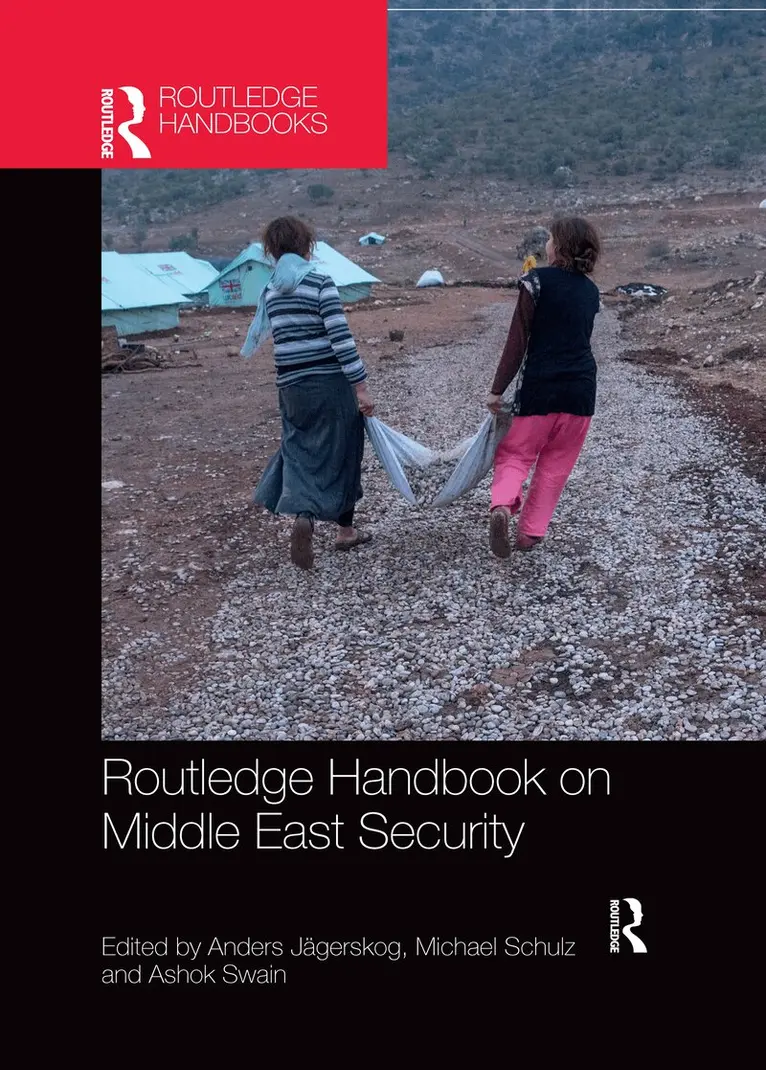
Routledge Handbook on Middle East Security provides the first comprehensive look at Middle East security issues that includes both traditional and emerging security threats. Taking a broad perspective on security, the volume offers both analysis grounded in the ‘hard’ military and state security discourse but also delves into the ‘soft’ aspects of security employing a human security perspective. As such the volume addresses imminent challenges to security, such as the ones relating directly to the war in Syria, but also the long-term challenges. The traditional security problems, which are deep-seated, are at risk of being exacerbated also by a lack of focus on emerging vulnerabilities in the region. While taking as a point of departure the prevalent security discourse, the volume also goes beyond the traditional focus on military or state security and consider non-traditional security challenges. This book provides a state-of-the-art review of research on the key challenges for security in the Middle East; it will be a key resource for students and scholars interested in Security Studies, International Relations, Political Science and Middle Eastern Studies.
1 954 kr
Skickas inom 10-15 vardagar
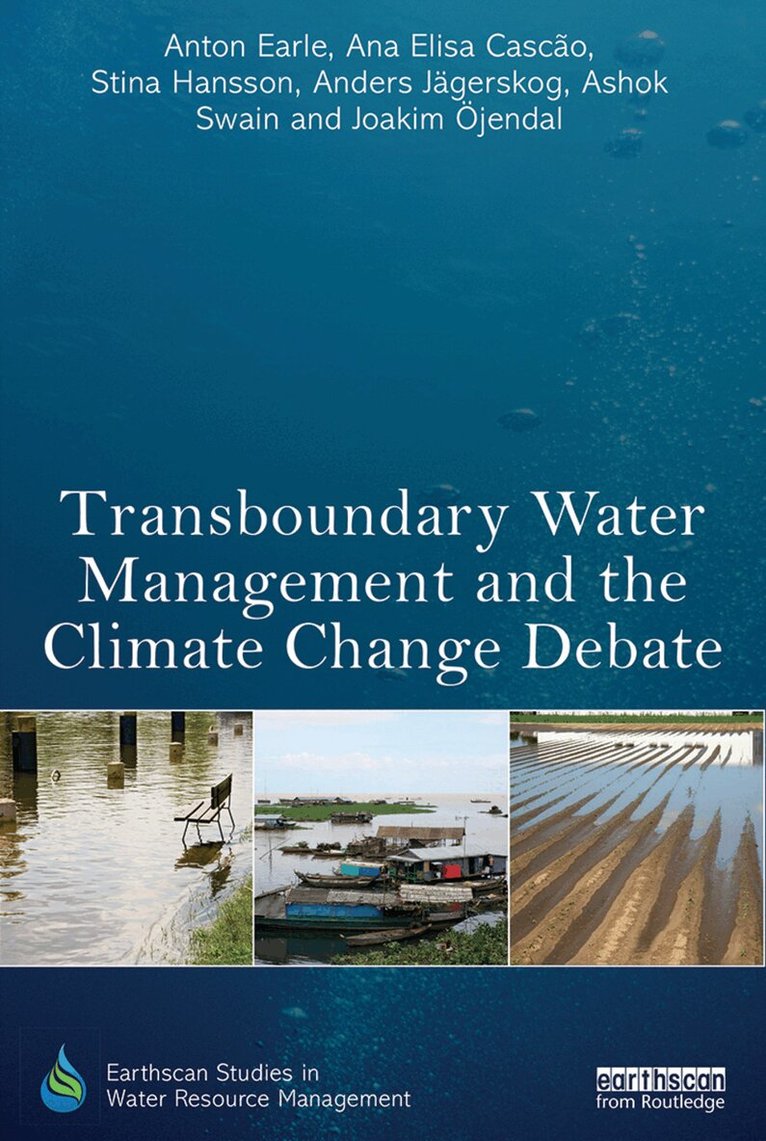
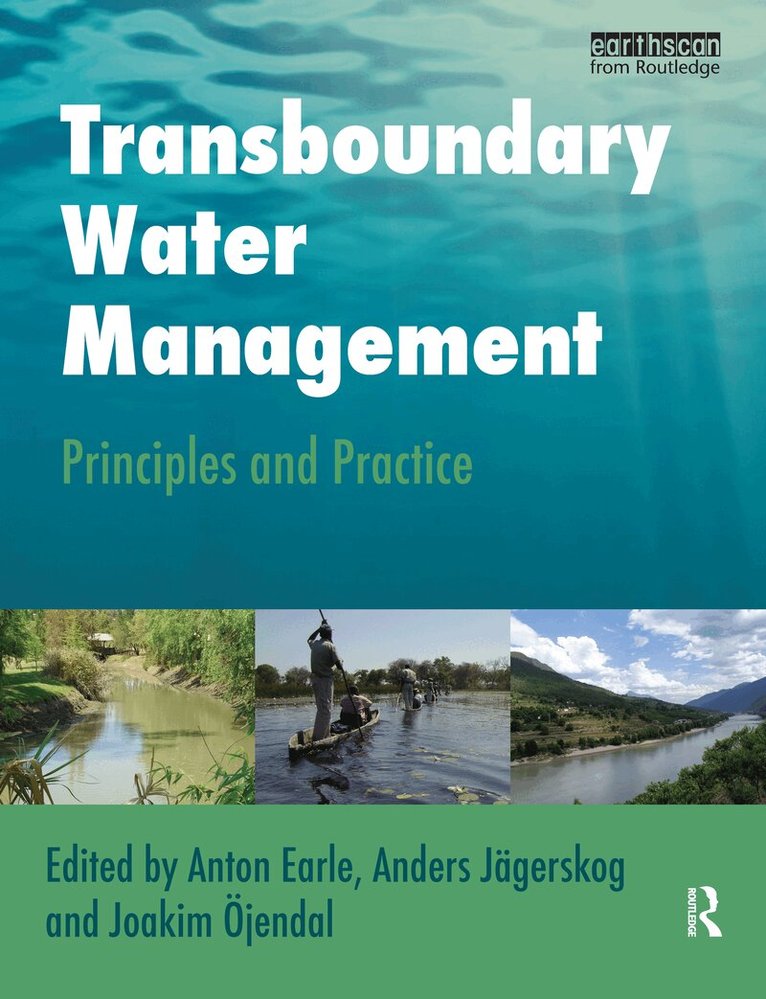
Climate change has an impact on the ability of transboundary water management institutions to deliver on their respective mandates. The starting point for this book is that actors within transboundary water management institutions develop responses to the climate change debate, as distinct from the physical phenomenon of climate change. Actors respond to this debate broadly in three distinct ways – adapt, resist (as in avoiding the issue) and subvert (as in using the debate to fulfil their own agenda). The book charts approaches which have been taken over the past two decades to promote more effective water management institutions, covering issues of conflict, cooperation, power and law. A new framework for a better understanding of the interaction between transboundary water management institutional resilience and global change is developed through analysis of the way these institutions respond to the climate change debate. This framework is applied to six river case studies from Africa, Asia and the Middle East (Ganges-Brahmaputra, Jordan, Mekong, Niger, Nile, Orange-Senqu) from which learning conclusions and policy recommendations are developed.
725 kr
Skickas inom 10-15 vardagar
Climate change has an impact on the ability of transboundary water management institutions to deliver on their respective mandates. The starting point for this book is that actors within transboundary water management institutions develop responses to the climate change debate, as distinct from the physical phenomenon of climate change. Actors respond to this debate broadly in three distinct ways – adapt, resist (as in avoiding the issue) and subvert (as in using the debate to fulfil their own agenda). The book charts approaches which have been taken over the past two decades to promote more effective water management institutions, covering issues of conflict, cooperation, power and law. A new framework for a better understanding of the interaction between transboundary water management institutional resilience and global change is developed through analysis of the way these institutions respond to the climate change debate. This framework is applied to six river case studies from Africa, Asia and the Middle East (Ganges-Brahmaputra, Jordan, Mekong, Niger, Nile, Orange-Senqu) from which learning conclusions and policy recommendations are developed.
3 163 kr
Skickas inom 10-15 vardagar
Routledge Handbook on Middle East Security provides the first comprehensive look at Middle East security issues that includes both traditional and emerging security threats.Taking a broad perspective on security, the volume offers both analysis grounded in the ‘hard’ military and state security discourse but also delves into the ‘soft’ aspects of security employing a human security perspective. As such the volume addresses imminent challenges to security, such as the ones relating directly to the war in Syria, but also the long-term challenges. The traditional security problems, which are deep-seated, are at risk of being exacerbated also by a lack of focus on emerging vulnerabilities in the region. While taking as a point of departure the prevalent security discourse, the volume also goes beyond the traditional focus on military or state security and consider non-traditional security challenges. This book provides a state-of-the-art review of research on the key challenges for security in the Middle East; it will be a key resource for students and scholars interested in Security Studies, International Relations, Political Science and Middle Eastern Studies.
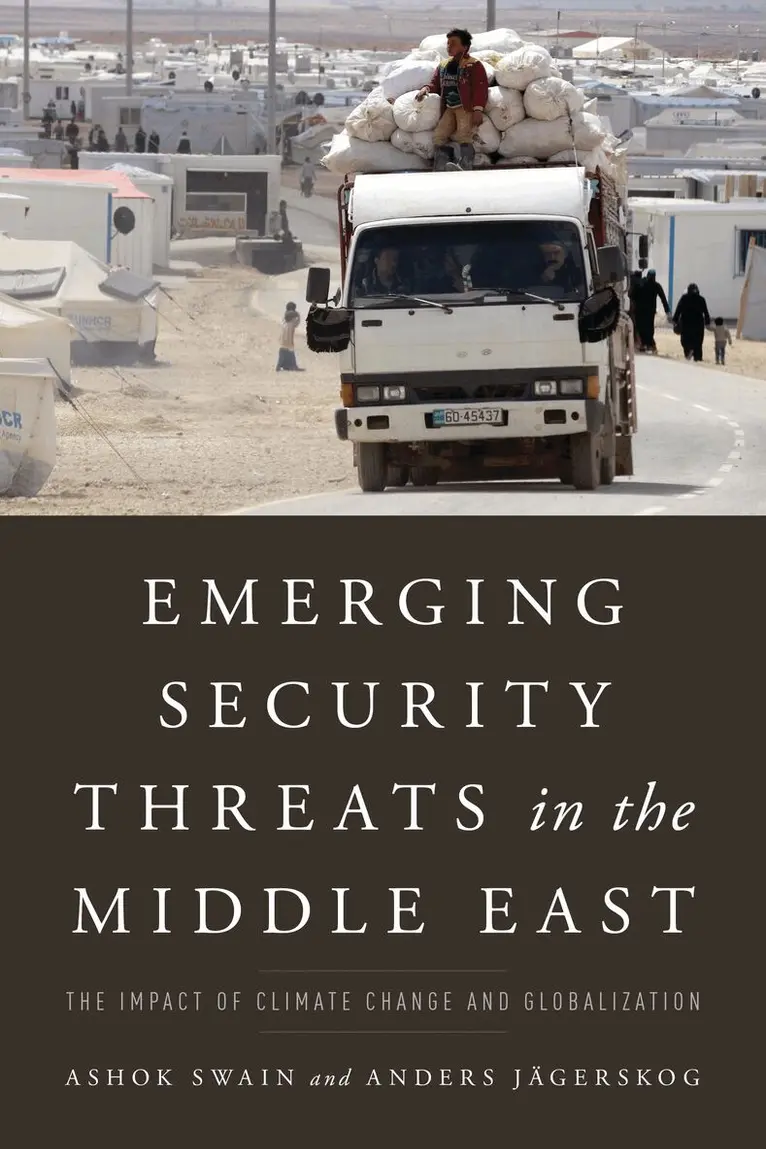
Emerging Security Threats in the Middle East
The Impact of Climate Change and Globalization
Inbunden, Engelska, 2016
1 209 kr
Skickas inom 10-15 vardagar
Increasingly the Middle East and its growing population face a highly complex and fragile security system. The rich deposits of natural resources, such as oil and gas, suffer from a strained renewable resource base that includes water and arable land. This leads to water scarcity, desertification, and land degradation. Increasing population, industrialization, and urbanization put more and more demand on the food supply. Energy insecurity may not be generally associated with the Middle East, but the countries in the eastern Mediterranean part have been traditionally vulnerable to it as their fossil fuel endowments have been low. Another issue is the large-scale temporary labor migration and the large number of forced migrants, refugees, and internally displaced persons. The book analyzes these emerging security challenges in a comprehensive and systematic manner. It draws national and regional security issues into both the global security and human security perspectives.
Emerging Security Threats in the Middle East
The Impact of Climate Change and Globalization
Häftad, Engelska, 2016
541 kr
Skickas inom 10-15 vardagar
Increasingly the Middle East and its growing population face a highly complex and fragile security system. The rich deposits of natural resources, such as oil and gas, suffer from a strained renewable resource base that includes water and arable land. This leads to water scarcity, desertification, and land degradation. Increasing population, industrialization, and urbanization put more and more demand on the food supply. Energy insecurity may not be generally associated with the Middle East, but the countries in the eastern Mediterranean part have been traditionally vulnerable to it as their fossil fuel endowments have been low. Another issue is the large-scale temporary labor migration and the large number of forced migrants, refugees, and internally displaced persons. The book analyzes these emerging security challenges in a comprehensive and systematic manner. It draws national and regional security issues into both the global security and human security perspectives.
447 kr
Skickas inom 10-15 vardagar
Ebb and Flow
Volume 2: Water in the Shadow of Conflict in the Middle East and North Africa
Häftad, Engelska, 2021
434 kr
Skickas inom 10-15 vardagar
The Middle East and North Africa Region encapsulates many of the issues surrounding water and human mobility. It is the most water-scarce region in the world and is experiencing unprecedented levels of forced displacement. Ebb and Flow: Volume 2. Water in the Shadow of Conflict in the Middle East and North Africa examines the links between water risks (harmful outcomes related to water, from droughts and floods to lack of sanitation), conflict, and forced displacement. It aims to better explain how to address the vulnerabilities of forcibly displaced persons and their host communities, and to identify water policy and investment responses. Contrary to common belief, the report finds that the evidence linking water risks with conflict and forced displacement in the region is not unequivocal. Water risks are more frequently related to cooperation than to conflict at both domestic and international levels. But while conflict is not necessarily a consequence of water risks, the reverse is a real and concerning phenomenon: conflict amplifies water risks. Since 2011, there have been at least 180 instances of intentional targeting of water infrastructure in conflicts in Gaza, Libya, the Syrian Arab Republic, and the Republic of Yemen. Forcibly displaced persons and their host communities face myriad water risks. Access to safe drinking water is a daily struggle for millions of forcibly displaced Iraqis, Libyans, Palestinians, Syrians, Yemenis, and international migrants in the region, heightening public health risks. Tanker trucks often help fill the gap; however, significant issues of water quality, reliability, and affordability remain. Host communities also face localized declines in water availability and quality as well as unplanned burdens on water services following the arrival of forcibly displaced persons. The reality of protracted forced displacement requires a shift from humanitarian support toward a development approach for water security, including structured yet flexible planning to deliver water services and sustain water resources for forcibly displaced persons and their host communities.
3 183 kr
Skickas inom 7-10 vardagar
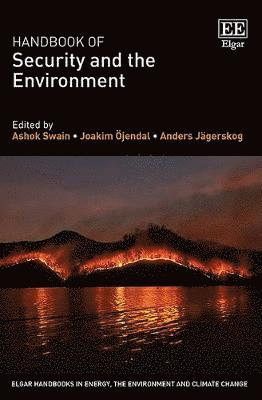
This comprehensive Handbook tackles the increasingly urgent problem of the impact of climate change on conflict and human security. It analyses the ways in which scarcity of resources leads to food, water and health insecurities, resulting in population migration. Chapters cover how these contribute globally to societal insecurity and violent conflict in a growing number of regions.Featuring contributions from leading international scholars, the Handbook is divided into thematic sections, examining first the effects of environmental scarcity on security at a macro level before delving into region-specific issues and challenges. The final section investigates the actors, institutions and processes engaged with environmental security, discussing the shifting international political discourse and how this is challenging the conservative military security paradigm.The combination of comparative global analysis alongside regionally focused studies makes this Handbook an invaluable resource for all scholars and students of environment and climate security. It will also be of interest to policy professionals working on issues of environmental scarcity and new security challenges.