Anders Klostergaard Petersen – författare
Visar alla böcker från författaren Anders Klostergaard Petersen. Handla med fri frakt och snabb leverans.
7 produkter
Emergence and Evolution of Religion
By Means of Natural Selection
Av Jonathan Turner, Alexandra Maryanski m. fl.
Inbunden, 2017
3070 kr
Lägg i varukorg
Written by leading theorists and empirical researchers, this book presents new ways of addressing the old question: Why did religion first emerge and then continue to evolve in all human societies? The authors of the book—each with a different background across the social sciences and …
Emergence and Evolution of Religion
By Means of Natural Selection
Av Jonathan Turner, Alexandra Maryanski m. fl.
Häftad, 2017
634 kr
Lägg i varukorg
Written by leading theorists and empirical researchers, this book presents new ways of addressing the old question: Why did religion first emerge and then continue to evolve in all human societies? The authors of the book—each with a different background across the social sciences and …
Emergence and Evolution of Religion
By Means of Natural Selection
Av Armin W. Geertz, Anders Klostergaard Petersen m. fl.
E-bok, 2017
658 kr
Lägg i varukorg
Written by leading theorists and empirical researchers, this book presents new ways of addressing the old question: Why did religion first emerge and then continue to evolve in all human societies? The authors of the book—each with a different background across the social sciences and …
Emergence and Evolution of Religion
By Means of Natural Selection
Av Armin W. Geertz, Anders Klostergaard Petersen m. fl.
E-bok, 2017
658 kr
Lägg i varukorg
Written by leading theorists and empirical researchers, this book presents new ways of addressing the old question: Why did religion first emerge and then continue to evolve in all human societies? The authors of the book—each with a different background across the social sciences and …
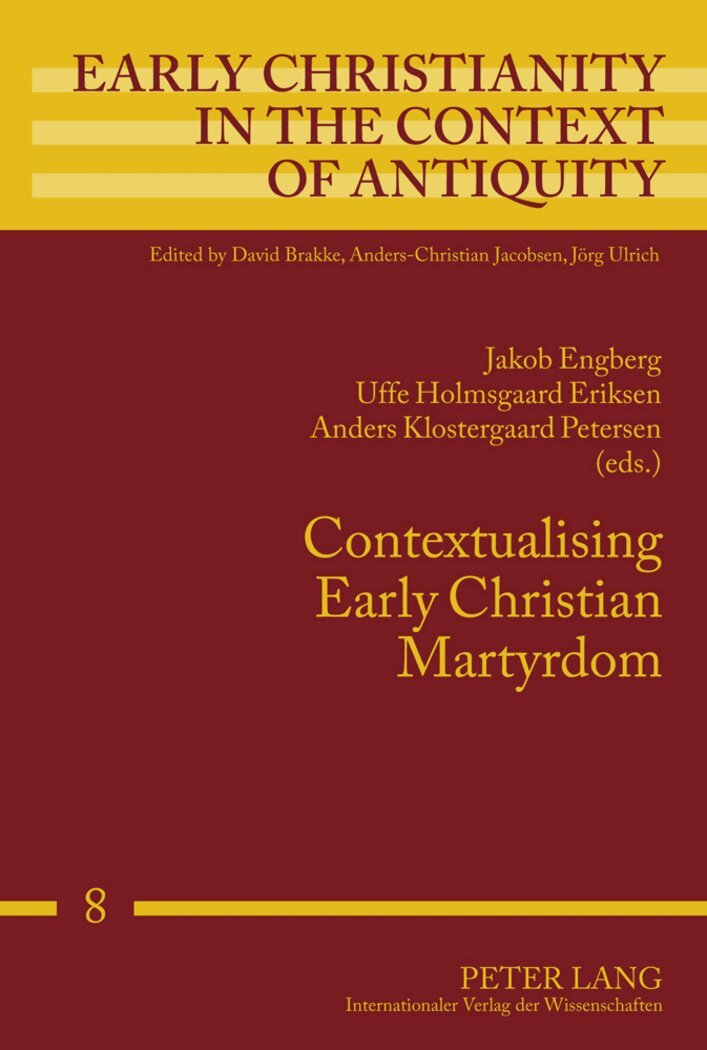
Contextualising Early Christian Martyrdom
Av Jakob Engberg, Uffe Holmsgaard Eriksen m. fl.
Inbunden, 2010
1346 kr
Lägg i varukorg
This collection of essays examines Christian martyrdom by locating it in different historical, cultural and social contexts. Chronologically, the book analyses traditions predating the Christian martyr literature and ideology proper, and studies an example of how this ideology was transformed in …
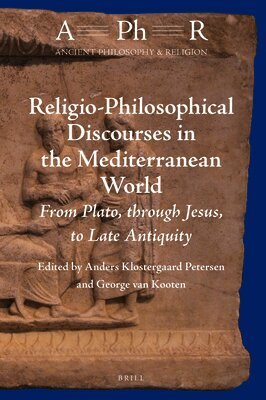
Religio-Philosophical Discourses in the Mediterranean World
From Plato, through Jesus, to Late Antiquity
Av Anders Klostergaard Petersen, George H. van Kooten
Inbunden, 2017
2791 kr
Lägg i varukorg
This first volume of the new Brill series “Ancient Philosophy & Religion” is a collection of articles by scholars of Classics, Ancient Philosophy, and Ancient Judaism and Early Christianity. The articles are based on papers presented at two colloquia on the interface between Ancient Philosophy and …
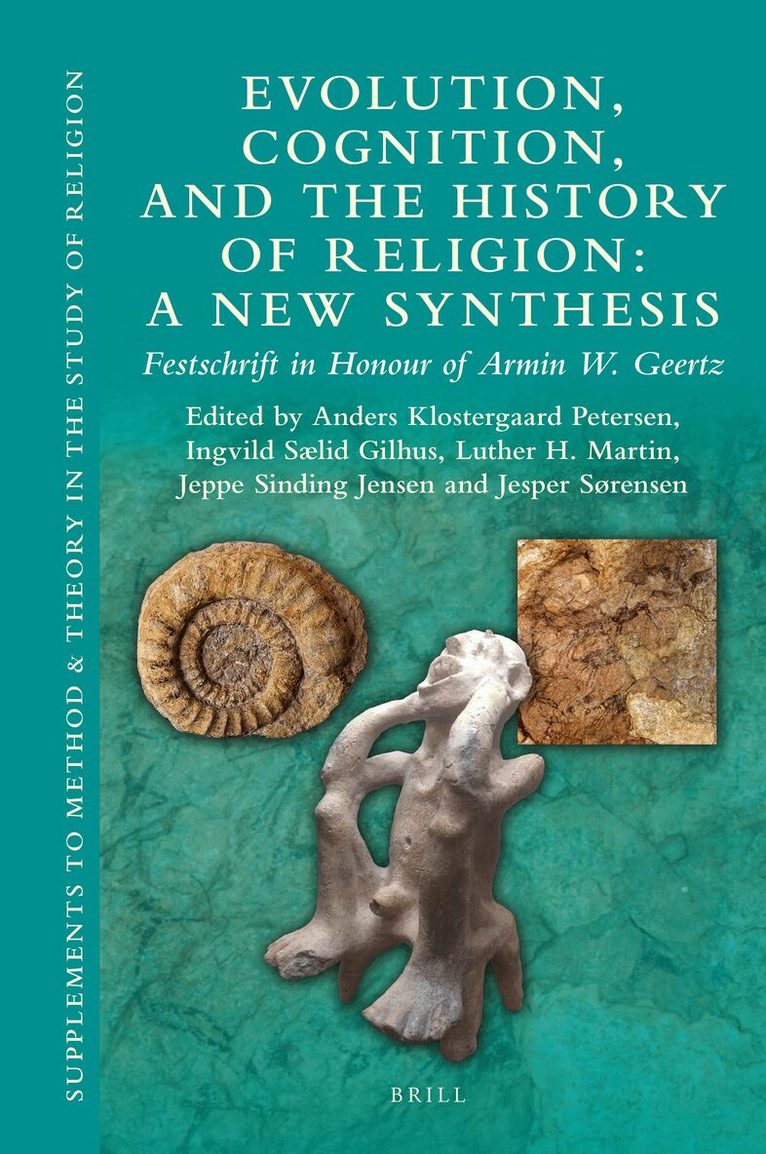
Evolution, Cognition, and the History of Religion: A New Synthesis
Festschrift in Honour of Armin W. Geertz
Av Anders Klostergaard Petersen, Gilhus Ingvild Sælid m. fl.
Inbunden, 2018
3981 kr
Lägg i varukorg
Evolution, Cognition, and the History of Religion: A New Synthesis comprises 41 chapters that push for a new way of conducting the study of religion, thereby, transforming the discipline into a genuine science of religion. The recent resurgence of evolutionary approaches on culture and the …