Anders Themnér - Böcker
Visar alla böcker från författaren Anders Themnér. Handla med fri frakt och snabb leverans.
5 produkter
5 produkter
446 kr
Skickas
Hur kan vi förstå uppkomsten och konsekvenserna av dagens konflikter? Vad kan göras för att förhindra att de bryter ut? Och hur kan pågående konflikter lösas på ett sätt som skapar varaktig fred? I denna breda grundbok presenteras centrala frågeställningar och analytiska perspektiv på krig, terrorism, konflikthantering och konfliktlösning, samt fredsbyggande och utveckling. Boken innehåller också illustrativa fallanalyser – allt ifrån första världskriget, kriget i Afghanistan, konflikthantering i Afrika, svensk säkerhetspolitik och försoningsprocesser i Bosnien-Hercegovina till fredsbyggande insatser i Palestina.I denna andra upplaga har samtliga kapitel uppdaterats och tre nyskrivna kapitel, som behandlar terrorism, religionens betydelse för konfliktlösning och fred samt fred och säkerhet ur ett jämställdhetsperspektiv, har tillkommit.Freds- och konfliktstudier har en flervetenskaplig karaktär, vilket i boken återspeglas i de olika kapitelbidragen och författarnas akademiska bakgrund. Boken vänder sig till de som är intresserade av frågor om krig och fred samt studenter vid universitet och högskolor som möter ämnet freds- och konfliktstudier för första gången.
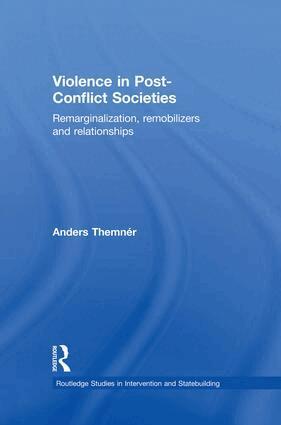
Violence in Post-Conflict Societies
Remarginalization, Remobilizers and Relationships
Inbunden, Engelska, 2011
2 171 kr
Skickas inom 10-15 vardagar
This book compares post-civil war societies to look at the presence or absence of organized violence, analysing why some ex-combatants return to organised violence and others do not.Even though former fighters have been identified as a major source of insecurity, there have been few efforts to systematically examine why some ex-combatants re-engage in organized violence, while others do not. This book compares the presence or absence of organized violence in different ex-combatant communities – former fighters that used to belong to the same armed faction and who share a common, horizontal identity based on shared war-and peacetime experiences – in the Republic of Congo (ex-Cobras, Cocoyes and Ninjas) and Sierra Leone (ex-Armed Forces Revolutionary Council, Civil Defense Force and Revolutionary United Front). The main determinants of ex-combatant violence are whether former fighters have access to elites and to second-tier individuals – such as former mid-level commanders – who can act as intermediaries between the two. By utilizing relationships based on selective incentives and social networks, these two kinds of remobilizers are able to generate the needed enticements and feelings of affinity, trust or fear to convince ex-combatants to resort to arms. These findings demonstrate that the outbreak of ex-combatant violence can only be understood by more clearly incorporating an actor perspective, focusing on three levels of analysis: the elite, midlevel and grass-root.This book will be of much interest to students of peacebuilding, civil wars, post-conflict reconstruction, war and conflict studies, security studies and IR.
Violence in Post-Conflict Societies
Remarginalization, Remobilizers and Relationships
Häftad, Engelska, 2015
805 kr
Skickas inom 10-15 vardagar
This book compares post-civil war societies to look at the presence or absence of organized violence, analysing why some ex-combatants return to organised violence and others do not.Even though former fighters have been identified as a major source of insecurity, there have been few efforts to systematically examine why some ex-combatants re-engage in organized violence, while others do not. This book compares the presence or absence of organized violence in different ex-combatant communities – former fighters that used to belong to the same armed faction and who share a common, horizontal identity based on shared war-and peacetime experiences – in the Republic of Congo (ex-Cobras, Cocoyes and Ninjas) and Sierra Leone (ex-Armed Forces Revolutionary Council, Civil Defense Force and Revolutionary United Front). The main determinants of ex-combatant violence are whether former fighters have access to elites and to second-tier individuals – such as former mid-level commanders – who can act as intermediaries between the two. By utilizing relationships based on selective incentives and social networks, these two kinds of remobilizers are able to generate the needed enticements and feelings of affinity, trust or fear to convince ex-combatants to resort to arms. These findings demonstrate that the outbreak of ex-combatant violence can only be understood by more clearly incorporating an actor perspective, focusing on three levels of analysis: the elite, midlevel and grass-root.This book will be of much interest to students of peacebuilding, civil wars, post-conflict reconstruction, war and conflict studies, security studies and IR.
414 kr
Skickas
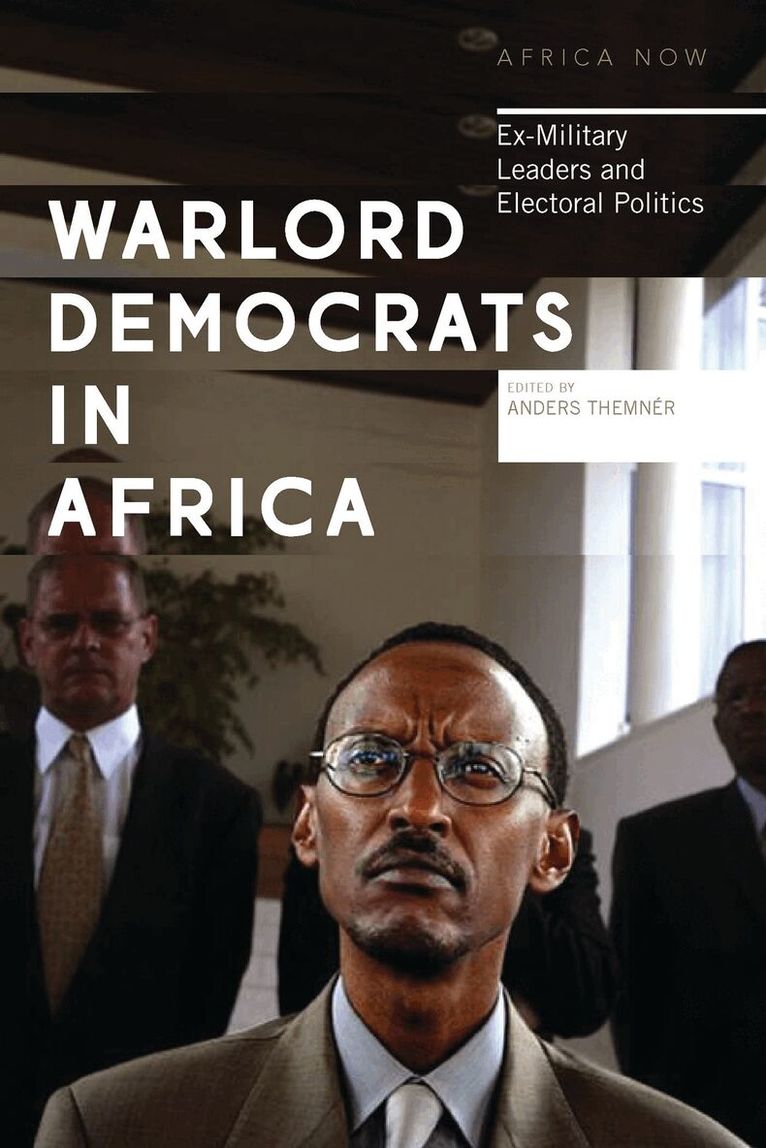
Post-war democratization has been identified as a crucial mechanism to build peace in war-ridden societies, supposedly allowing belligerents to compete through ballots rather than bullets. A byproduct of this process, however, is that military leaders often become an integral part of the new democratic system, using resources and networks generated from the previous war to dominate the emerging political landscape.The crucial and thus-far overlooked question to be addressed, therefore, is what effect the inclusion of ex-militaries into electoral politics has on post-war security. Can 'warlord democrats' make a positive contribution by shepherding their wartime constituencies to support the building of peace and democracy, or are they likely to use their electoral platforms to sponsor political violence and keep war-affected communities mobilized through aggressive discourses?This important volume, containing a wealth of fresh empirical detail and theoretical insight, and focussing on some of Africa's most high-profile political figures – from Paul Kagame to Riek Machar to Afonso Dhlakama – represents a crucial intervention in the literature of post-war democratization.
1 209 kr
Skickas inom 10-15 vardagar
Post-war democratization has been identified as a crucial mechanism to build peace in war-ridden societies, supposedly allowing belligerents to compete through ballots rather than bullets. A byproduct of this process, however, is that military leaders often become an integral part of the new democratic system, using resources and networks generated from the previous war to dominate the emerging political landscape.The crucial and thus-far overlooked question to be addressed, therefore, is what effect the inclusion of ex-militaries into electoral politics has on post-war security. Can 'warlord democrats' make a positive contribution by shepherding their wartime constituencies to support the building of peace and democracy, or are they likely to use their electoral platforms to sponsor political violence and keep war-affected communities mobilized through aggressive discourses?This important volume, containing a wealth of fresh empirical detail and theoretical insight, and focussing on some of Africa's most high-profile political figures – from Paul Kagame to Riek Machar to Afonso Dhlakama – represents a crucial intervention in the literature of post-war democratization.