Andrea Benvenuti – författare
Visar alla böcker från författaren Andrea Benvenuti. Handla med fri frakt och snabb leverans.
8 produkter
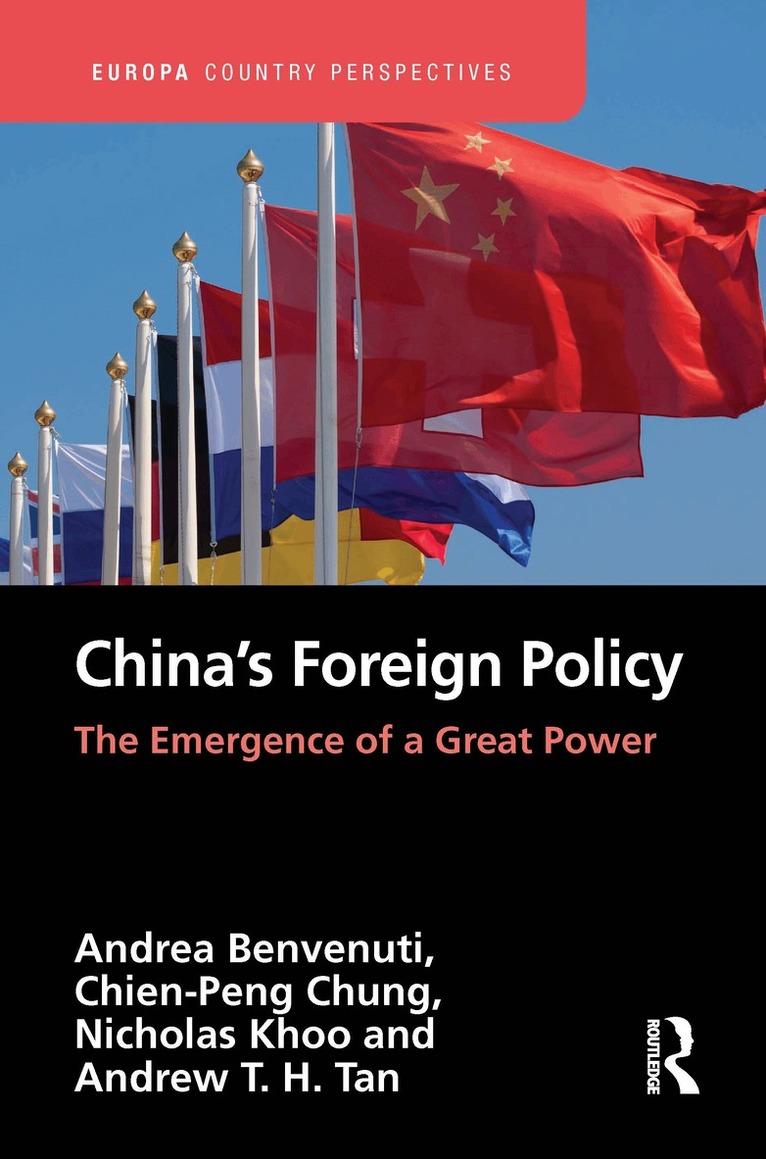
China’s Foreign Policy
The Emergence of a Great Power
Av Andrea Benvenuti, Chien-Peng Chung m. fl.
Inbunden, 2022
2118 kr
Lägg i varukorg
This volume explains China’s foreign policy from the perspective of its historical recovery after 1949 and the country’s subsequent rise as a great power, including its transformation into a global power. It also illuminates how China has, in tandem with its rise, developed an increasing array of …
China's Foreign Policy
The Emergence of a Great Power
Av Andrew Tan, Nicholas Khoo m. fl.
E-bok, 2022
706 kr
Lägg i varukorg
This volume explains China’s foreign policy from the perspective of its historical recovery after 1949 and the country’s subsequent rise as a great power, including its transformation into a global power. It also illuminates how China has, in tandem with its rise, developed an increasing array …
China's Foreign Policy
The Emergence of a Great Power
Av Andrew Tan, Nicholas Khoo m. fl.
E-bok, 2022
712 kr
Lägg i varukorg
This volume explains China’s foreign policy from the perspective of its historical recovery after 1949 and the country’s subsequent rise as a great power, including its transformation into a global power. It also illuminates how China has, in tandem with its rise, developed an increasing array …
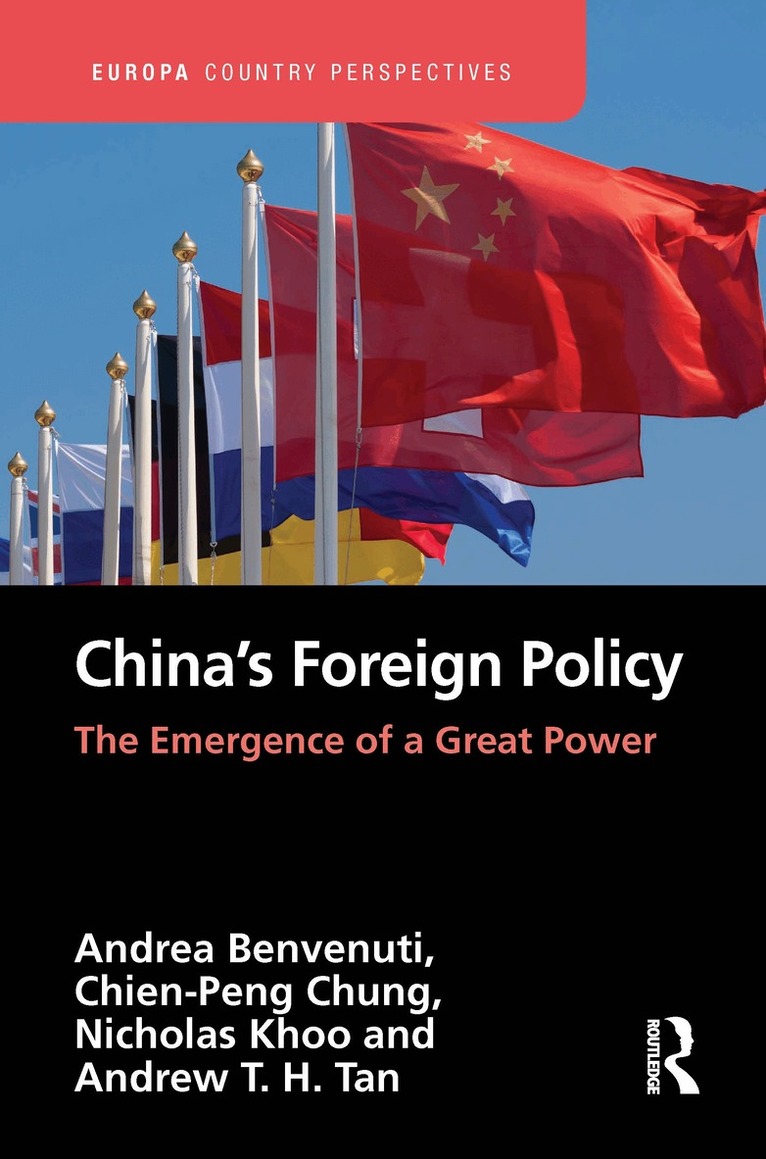
China’s Foreign Policy
The Emergence of a Great Power
Av Andrea Benvenuti, Chien-Peng Chung m. fl.
Häftad, 2024
619 kr
Lägg i varukorg
This volume explains China’s foreign policy from the perspective of its historical recovery after 1949 and the country’s subsequent rise as a great power, including its transformation into a global power. It also illuminates how China has, in tandem with its rise, developed an increasing array of …
Nehru's Bandung
Non-Alignment and Regional Order in Indian Cold War Strategy
E-bok, 2024
535 kr
Lägg i varukorg
This book sheds light on a neglected aspect of India’s Cold War diplomacy, starting with the role of Indian Prime Minister Jawaharlal Nehru and his Congress government in organising the first Asian-African Conference in Bandung in April 1955. Andrea Benvenuti shows how, in the early Cold War, Nehru …
Nehru's Bandung
Non-Alignment and Regional Order in Indian Cold War Strategy
Inbunden, 2024
553 kr
Lägg i varukorg
This book sheds light on a neglected aspect of India’s Cold War diplomacy, starting with the role of Indian Prime Minister Jawaharlal Nehru and his Congress government in organising the first Asian-African Conference in Bandung in April 1955. Andrea Benvenuti shows how, in the early Cold War, Nehru …
External Relations of the European Union
Av Pascaline Winand, Andrea Benvenuti m. fl.
Häftad, 2014
1063 kr
Lägg i varukorg
The book analyses the attitudes of non-EU countries towards European integration in historical and contemporary perspectives. The authors study a range of actors in Europe and beyond to explain the impact of the creation of the European Communities on the international system and how the EU is …
Cold War and Decolonisation
Australia's Policy Towards Britain's End of Empire in Southeast Asia
Häftad, 2017
353 kr
Lägg i varukorg
In this book, Andrea Benvenuti discusses the development of Australia’s foreign and defense policies toward Malaya and Singapore in light of the redefinition of Britain’s imperial role in Southeast Asia and the formation of new postcolonial states. Benvenuti sheds light on the impact of Britain on …