Andrea Worm – författare
Visar alla böcker från författaren Andrea Worm. Handla med fri frakt och snabb leverans.
4 produkter
4 produkter
Del 6 - Writing History in the Middle Ages
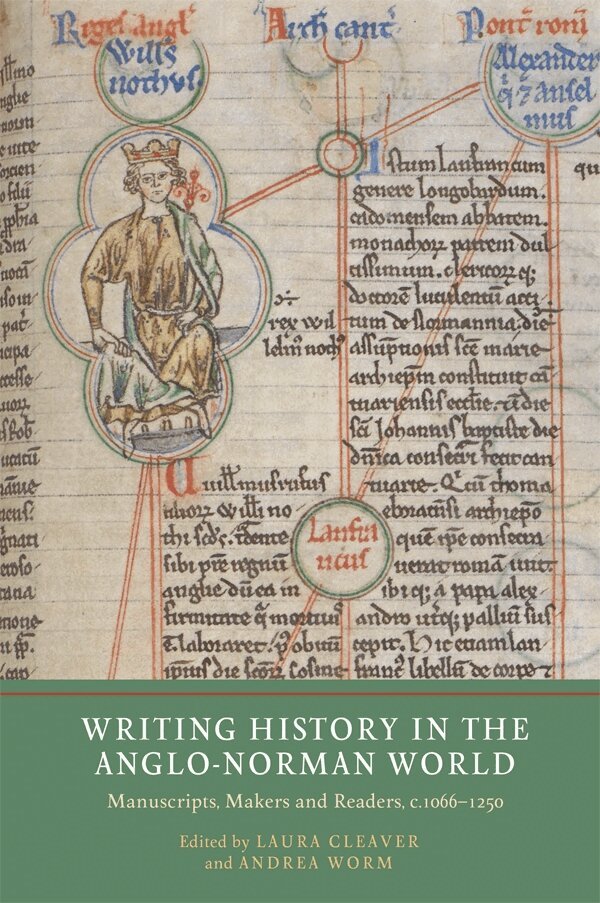
Writing History in the Anglo-Norman World
Manuscripts, Makers and Readers, c.1066-c.1250
Häftad, Engelska, 2022
356 kr
Skickas inom 5-8 vardagar
The contexts for the works of eleventh and twelfth-century historians are here brought to the fore.History was a subject popular with authors and readers in the Anglo-Norman world. The volume and richness of historical writing in the lands controlled by the kings of England, particularly from the twelfth century, has long attracted the attention of historians and literary scholars, whilst editions of works by such writers as Orderic Vitalis, John of Worcester, Symeon of Durham, William of Malmesbury, Gerald of Wales, Roger of Howden, and Matthew Paris has made them well known. Yet the easy availability of modern editions obscures both the creation and circulation of histories in the Middle Ages.This collection of essays returns to the processes involved in writing history, and in particular to the medieval manuscript sources in which the works of such historians survive. It explores the motivations of those writing about the past in the Middle Ages, and the evidence provided by manuscripts for the circumstances in which copies were made. It also addresses the selection of material for copying, combinations of text and imagery, and the demand for copies of particular works, shedding new light on how and why history was being read, reproduced, discussed, adapted, and written.LAURA CLEAVER is Senior Lecturer in Manuscript Studies, Institute of English Studies, University of London; ANDREA WORM is Professor of Art History. Kunsthistorischen Institut, Eberhard Karls University, Tubingen. Contributors: Stephen Church, Kathryn Gerry, Anne Lawrence-Mathers, Laura Pani, Charles C. Rozier, Gleb Schmidt, Laura Slater, Michael Staunton, Caoimhe Whelan, Andrea Worm
E-bok
PDF, Engelska, 20251 770 kr
Läs direkt efter köp
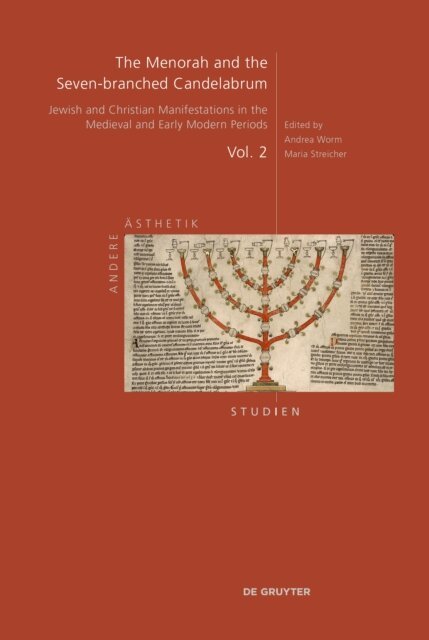
For both Judaism and Christianity, the Menorah is an iconic artefact. It played a crucial role as an implement of the Tabernacle in the desert and the Temple in Jerusalem. After the destruction of the Temple and the eventual loss of the Menorah, it became the quintessential symbol of the Jewish people. It also figures prominently in Christian thought and imagery. Especially Christian monumental seven-branched candelabra raise questions about their spatial aesthetics as well as their liturgical and performative functions. This volume offers interdisciplinary reflections on the Menorah in both Jewish and Christian traditions, and thus contributes not only to a better understanding of their cultural entanglement in pre-modern times, but also to a more differentiated view of their specific and contextualaesthetic qualities.
Inbunden, Tyska
1 896 kr
Skickas inom 3-6 vardagar
Del 6 - Writing History in the Middle Ages
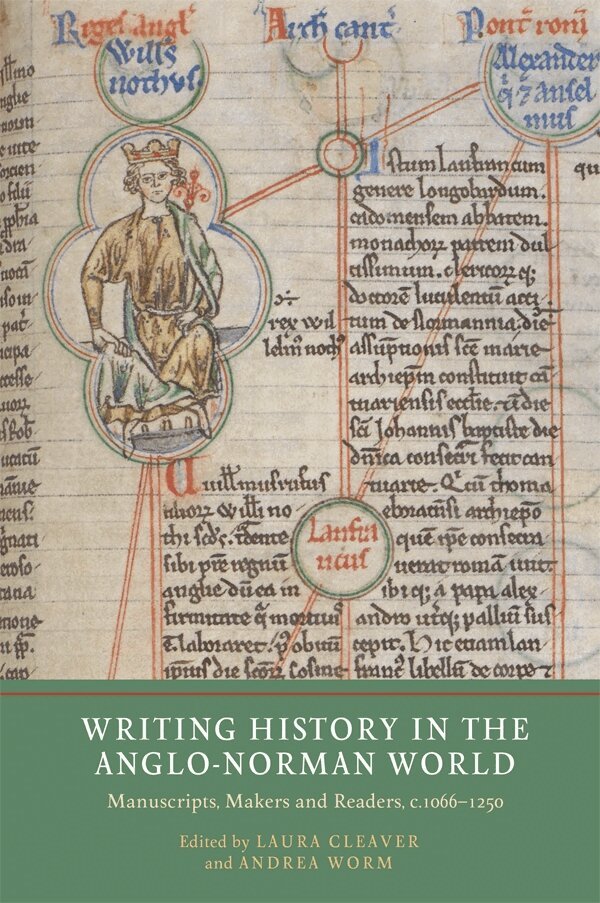
Writing History in the Anglo-Norman World
Manuscripts, Makers and Readers, c.1066-c.1250
Inbunden, Engelska, 2018
813 kr
Tillfälligt slut
The contexts for the works of eleventh and twelfth-century historians are here brought to the fore.History was a subject popular with authors and readers in the Anglo-Norman world. The volume and richness of historical writing in the lands controlled by the kings of England, particularly from the twelfth century, has long attracted the attention of historians and literary scholars, whilst editions of works by such writers as Orderic Vitalis, John of Worcester, Symeon of Durham, William of Malmesbury, Gerald of Wales, Roger of Howden, and Matthew Paris has made them well known. Yet the easy availability of modern editions obscures both the creation and circulation of histories in the Middle Ages.This collection of essays returns to the processes involved in writing history, and in particular to the medieval manuscript sources in which the works of such historians survive. It explores the motivations of those writing about the past in the Middle Ages, and the evidence provided by manuscripts for the circumstances in which copies were made. It also addresses the selection of material for copying, combinations of text and imagery, and the demand for copies of particular works, shedding new light on how and why history was being read, reproduced, discussed, adapted, and written.LAURA CLEAVER is Senior Lecturer in Manuscript Studies, Institute of English Studies, University of London; ANDREA WORM is Professor of Art History. Kunsthistorischen Institut, Eberhard Karls University, Tubingen. Contributors: Stephen Church, Kathryn Gerry, Anne Lawrence-Mathers, Laura Pani, Charles C. Rozier, Gleb Schmidt, Laura Slater, Michael Staunton, Caoimhe Whelan, Andrea Worm