Andreas Demetriou – författare
2 121 kr
Skickas inom 10-15 vardagar
757 kr
Skickas inom 10-15 vardagar
Intelligence, Mind, and Reasoning
Structure and Development
905 kr
Skickas inom 5-8 vardagar
The chapters are organized into two parts. Part I focuses on intelligence and mind and has reasoning at the background. The papers in this part present new theories and methods that systematically attempt to bridge psychometric theories of intelligence with theories of cognitive development or information processing theories. Part II focuses on mind and reasoning and has intelligence at the background. The papers in this part develop models of reasoning and attempt to show how reasoning interacts with mind and intelligence. Two discussion chapters are also included. These highlight the convergences and the divergences of the various traditions as represented in the book.
800 kr
Skickas inom 5-8 vardagar
Cognitive Developmental Change
Theories, Models and Measurement
530 kr
Skickas inom 7-10 vardagar
Cognitive Developmental Change
Theories, Models and Measurement
1 575 kr
Skickas inom 7-10 vardagar
628 kr
Skickas inom 5-8 vardagar
654 kr
Läs direkt efter köp
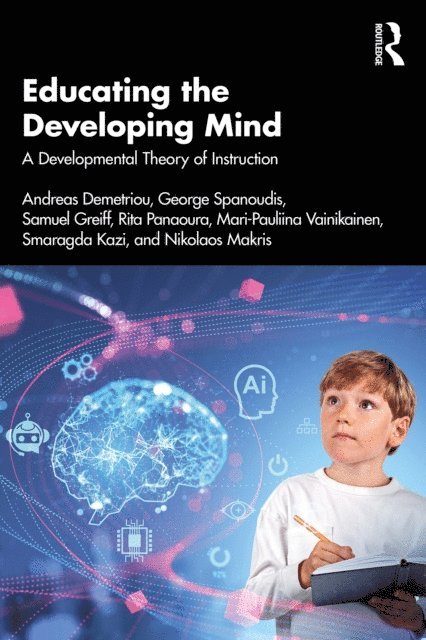
A must-read for anyone working within education or intellectual development, Educating the Developing Mind introduces and integrates classical and modern research with the theory of the developing mind, creating a robust theory of learning and instruction. Drawing on the theories of Piaget, Bruner, and Vygotsky, coupled with 40 years of empirical research, this book highlights the importance of individual and social construction in learning and proposes a robust framework and methodology for teaching and strengthening learner cognitive processes.
Filled with subject-specific research, this essential book highlights how cognitive development takes place and advocates a guided constructive approach to teaching. Topics explored span from the individual learner to the wider educational community, including but not limited to:
Development of the mind Personality and individuality The brain Predicting school performance Measuring and improving intelligence Problem-solving skills LanguageThis is an essential read for anyone working within education who wants to better understand the cognitive processes involved in the developing mind and to improve learning and instruction within their school, college, or university.
654 kr
Läs direkt efter köp
A must-read for anyone working within education or intellectual development, Educating the Developing Mind introduces and integrates classical and modern research with the theory of the developing mind, creating a robust theory of learning and instruction. Drawing on the theories of Piaget, Bruner, and Vygotsky, coupled with 40 years of empirical research, this book highlights the importance of individual and social construction in learning and proposes a robust framework and methodology for teaching and strengthening learner cognitive processes.
Filled with subject-specific research, this essential book highlights how cognitive development takes place and advocates a guided constructive approach to teaching. Topics explored span from the individual learner to the wider educational community, including but not limited to:
Development of the mind Personality and individuality The brain Predicting school performance Measuring and improving intelligence Problem-solving skills LanguageThis is an essential read for anyone working within education who wants to better understand the cognitive processes involved in the developing mind and to improve learning and instruction within their school, college, or university.
2 132 kr
Skickas inom 10-15 vardagar
555 kr
Skickas inom 10-15 vardagar
899 kr
Läs direkt efter köp
899 kr
Läs direkt efter köp
654 kr
Läs direkt efter köp
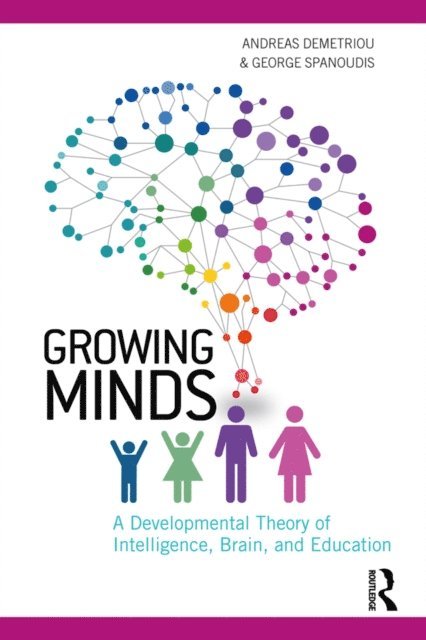
Interest in the human mind is a centuries-old fascination, dating back to Plato, Aristotle, and Descartes. While the theories proposed about the human mind have since advanced and evolved, the fascination remains. Growing Minds is a unique and interdisciplinary work that guides the reader through an examination of the human mind''s nature, performance, lifespan, and variations.
The book sets out to answer a variety of questions:
What are the cognitive processes underlying intelligence? What is general and what is specific in intelligence? What is stable and what is changing in intelligence as children grow older? Why do individuals differ in intelligence, and are differences genetically determined? How is intelligence and intellectual development related to the genome and the brain? How is intelligence related to personality? Can intelligence be enhanced by specific interventions?
The text is organised into three parts: the first provides a summary and evaluation of research conducted on the human mind by experimental cognitive psychology, differential psychology, and developmental psychology. The second presents an overarching theory of the growing mind, showing how mind and intelligence are at the crossroads of nature and nurture; and the third assesses the relationship between education and intelligence.
This book is the result of decades of extensive research and culminates in the proposal of a new overarching and integrated theory of the developing mind. For the first time, research is gathered and combined to form a comprehensive concept and fulfil the need for a fresh, integrative paradigm which both asks and answers questions about the human mind from a multi-faceted perspective.
654 kr
Läs direkt efter köp
Interest in the human mind is a centuries-old fascination, dating back to Plato, Aristotle, and Descartes. While the theories proposed about the human mind have since advanced and evolved, the fascination remains. Growing Minds is a unique and interdisciplinary work that guides the reader through an examination of the human mind''s nature, performance, lifespan, and variations.
The book sets out to answer a variety of questions:
What are the cognitive processes underlying intelligence? What is general and what is specific in intelligence? What is stable and what is changing in intelligence as children grow older? Why do individuals differ in intelligence, and are differences genetically determined? How is intelligence and intellectual development related to the genome and the brain? How is intelligence related to personality? Can intelligence be enhanced by specific interventions?
The text is organised into three parts: the first provides a summary and evaluation of research conducted on the human mind by experimental cognitive psychology, differential psychology, and developmental psychology. The second presents an overarching theory of the growing mind, showing how mind and intelligence are at the crossroads of nature and nurture; and the third assesses the relationship between education and intelligence.
This book is the result of decades of extensive research and culminates in the proposal of a new overarching and integrated theory of the developing mind. For the first time, research is gathered and combined to form a comprehensive concept and fulfil the need for a fresh, integrative paradigm which both asks and answers questions about the human mind from a multi-faceted perspective.
2 190 kr
Skickas inom 10-15 vardagar
552 kr
Skickas inom 10-15 vardagar
2 121 kr
Skickas inom 10-15 vardagar
552 kr
Skickas inom 10-15 vardagar
654 kr
Läs direkt efter köp
Piagetian theory was once considered able to describe the structure and development of human thought. As a result, it generated an enthusiasm that it could direct education to develop new teaching methods, particularly in science and mathematics. However, disillusionment with Piagetian theory came rather quickly because many of its structural and developmental assumptions appeared incongruent with empirical evidence.
In recent years several neo-Piagetian theories have been proposed which try to preserve the strengths of Piaget’s theory, while eliminating its weaknesses. At the same time several other models have been advanced originating from different epistemological traditions, such as cognitive/differential psychology or socio-historical approaches.
Originally published in 1992, this title was unique in representing most of these theories and traditions. Specifically, the authors focus their work on the educational implications of their research. The chapters are organised in three parts: the first part presents some widely known models of cognitive development and discusses their implications for different aspects of education; the second part is devoted to learning and cognitive acceleration; while part three highlights teaching methods that would improve the acquisition of particular skills in specific areas.
Written by an eminent group of truly international contributors, this title will still be useful to students and researchers in cognitive development and education, as well as educational policy makers.
654 kr
Läs direkt efter köp
Piagetian theory was once considered able to describe the structure and development of human thought. As a result, it generated an enthusiasm that it could direct education to develop new teaching methods, particularly in science and mathematics. However, disillusionment with Piagetian theory came rather quickly because many of its structural and developmental assumptions appeared incongruent with empirical evidence.
In recent years several neo-Piagetian theories have been proposed which try to preserve the strengths of Piaget’s theory, while eliminating its weaknesses. At the same time several other models have been advanced originating from different epistemological traditions, such as cognitive/differential psychology or socio-historical approaches.
Originally published in 1992, this title was unique in representing most of these theories and traditions. Specifically, the authors focus their work on the educational implications of their research. The chapters are organised in three parts: the first part presents some widely known models of cognitive development and discusses their implications for different aspects of education; the second part is devoted to learning and cognitive acceleration; while part three highlights teaching methods that would improve the acquisition of particular skills in specific areas.
Written by an eminent group of truly international contributors, this title will still be useful to students and researchers in cognitive development and education, as well as educational policy makers.
575 kr
Skickas inom 5-8 vardagar