Andreas Kalyvas - Böcker
Visar alla böcker från författaren Andreas Kalyvas. Handla med fri frakt och snabb leverans.
6 produkter
6 produkter
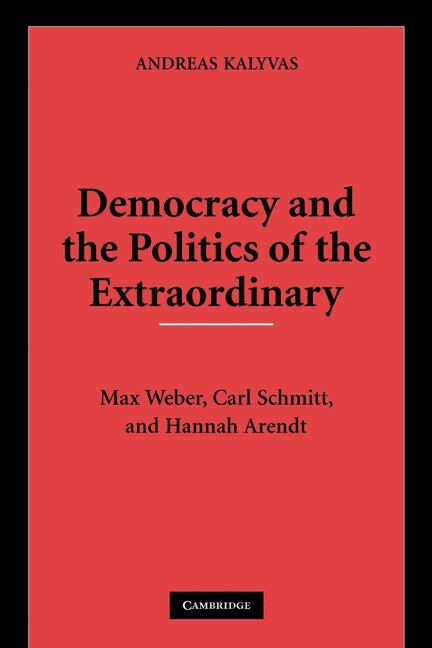
Democracy and the Politics of the Extraordinary
Max Weber, Carl Schmitt, and Hannah Arendt
Häftad, Engelska, 2009
347 kr
Skickas inom 7-10 vardagar
Although the modern age is often described as the age of democratic revolutions, the subject of popular founding has not captured the imagination of contemporary political thought. Most of the time, democratic theory and political science treat as the object of their inquiry normal politics, institutionalized power, and consolidated democracies. This study shows why it is important for democratic theory to rethink the question of democracy's beginnings. Is there a founding unique to democracies? Can a democracy be democratically established? What are the implications of expanding democratic politics in light of the question of whether and how to address democracy's beginnings? Kalyvas addresses these questions and scrutinizes the possibility of democratic beginnings in terms of the category of the extraordinary, as he reconstructs it from the writings of Max Weber, Carl Schmitt, and Hannah Arendt and their views on the creation of new political, symbolic, and constitutional orders.
309 kr
Skickas inom 7-10 vardagar
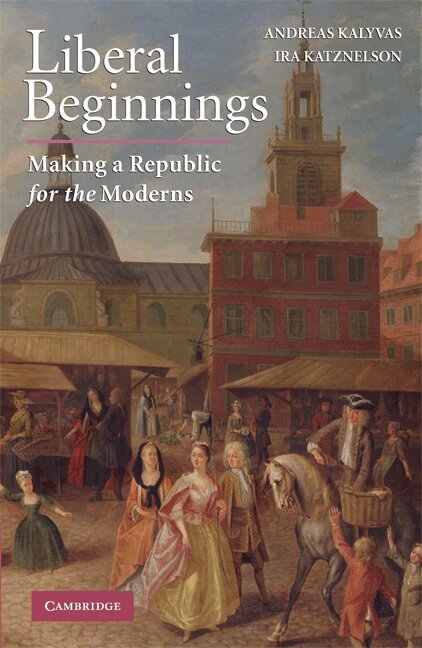
The book examines the origins and development of the modern liberal tradition and explores the relationship between republicanism and liberalism between 1750 and 1830. The authors consider the diverse settings of Scotland, the American colonies, the new United States, and France and examine the writings of six leading thinkers of this period: Adam Smith, Adam Ferguson, James Madison, Thomas Paine, Germaine de Staël, and Benjamin Constant. The book traces the process by which these thinkers transformed and advanced the republican project, both from within and by introducing new elements from without. Without compromising civic principles or abandoning republican language, they came to see that unrevised, the republican tradition could not grapple successfully with the political problems of their time. By investing new meanings, arguments, and justifications into existing republican ideas and political forms, these innovators fashioned a doctrine for a modern republic, the core of which was surprisingly liberal.
Democracy and the Politics of the Extraordinary
Max Weber, Carl Schmitt, and Hannah Arendt
Inbunden, Engelska, 2008
1 245 kr
Skickas inom 7-10 vardagar
Although the modern age is often described as the age of democratic revolutions, the subject of popular founding has not captured the imagination of contemporary political thought. Most of the time, democratic theory and political science treat as the object of their inquiry normal politics, institutionalized power, and consolidated democracies. This study shows why it is important for democratic theory to rethink the question of democracy's beginnings. Is there a founding unique to democracies? Can a democracy be democratically established? What are the implications of expanding democratic politics in light of the question of whether and how to address democracy's beginnings? Kalyvas addresses these questions and scrutinizes the possibility of democratic beginnings in terms of the category of the extraordinary, as he reconstructs it from the writings of Max Weber, Carl Schmitt, and Hannah Arendt and their views on the creation of new political, symbolic, and constitutional orders.
1 034 kr
Skickas inom 7-10 vardagar
The book examines the origins and development of the modern liberal tradition and explores the relationship between republicanism and liberalism between 1750 and 1830. The authors consider the diverse settings of Scotland, the American colonies, the new United States, and France and examine the writings of six leading thinkers of this period: Adam Smith, Adam Ferguson, James Madison, Thomas Paine, Germaine de Staël, and Benjamin Constant. The book traces the process by which these thinkers transformed and advanced the republican project, both from within and by introducing new elements from without. Without compromising civic principles or abandoning republican language, they came to see that unrevised, the republican tradition could not grapple successfully with the political problems of their time. By investing new meanings, arguments, and justifications into existing republican ideas and political forms, these innovators fashioned a doctrine for a modern republic, the core of which was surprisingly liberal.
599 kr
Skickas inom 7-10 vardagar
Written in the early stages of the Cold War by one of the most controversial political and legal thinkers of the twentieth century, Carl Schmitt�s two short dialogues on power and space bring together several dimensions of his work in new ways. The dialogues renew Schmitt�s engagement with the questions of political power and geo-politics that had been a persistent concern throughout his intellectual life. As a basis on which to think through the historical role of human agency in relation to power and its new geographies, the dialogues condense and rework key concepts in Schmitt�s political theory during a transitional period between his Weimar and fascist years to the post-war writings.In this book, Schmitt develops a new �dialectics� of modern power and an original understanding of the global spatial transformations of the Cold War period. Equally important, the dialogues anticipate the debates on the new geo-political possibilities and threats related to cosmic spaces, overpowering technological advances, and the existential predicament of the human in an increasingly multipolar world.
204 kr
Skickas inom 7-10 vardagar
Written in the early stages of the Cold War by one of the most controversial political and legal thinkers of the twentieth century, Carl Schmitt�s two short dialogues on power and space bring together several dimensions of his work in new ways. The dialogues renew Schmitt�s engagement with the questions of political power and geo-politics that had been a persistent concern throughout his intellectual life. As a basis on which to think through the historical role of human agency in relation to power and its new geographies, the dialogues condense and rework key concepts in Schmitt�s political theory during a transitional period between his Weimar and fascist years to the post-war writings.In this book, Schmitt develops a new �dialectics� of modern power and an original understanding of the global spatial transformations of the Cold War period. Equally important, the dialogues anticipate the debates on the new geo-political possibilities and threats related to cosmic spaces, overpowering technological advances, and the existential predicament of the human in an increasingly multipolar world.